A discreet buyer’s guide to planning a calmer yoga room at ORA by Casa Tua Brickell, with practical household sound-control ideas for wellness routines in a dense urban high-rise setting.
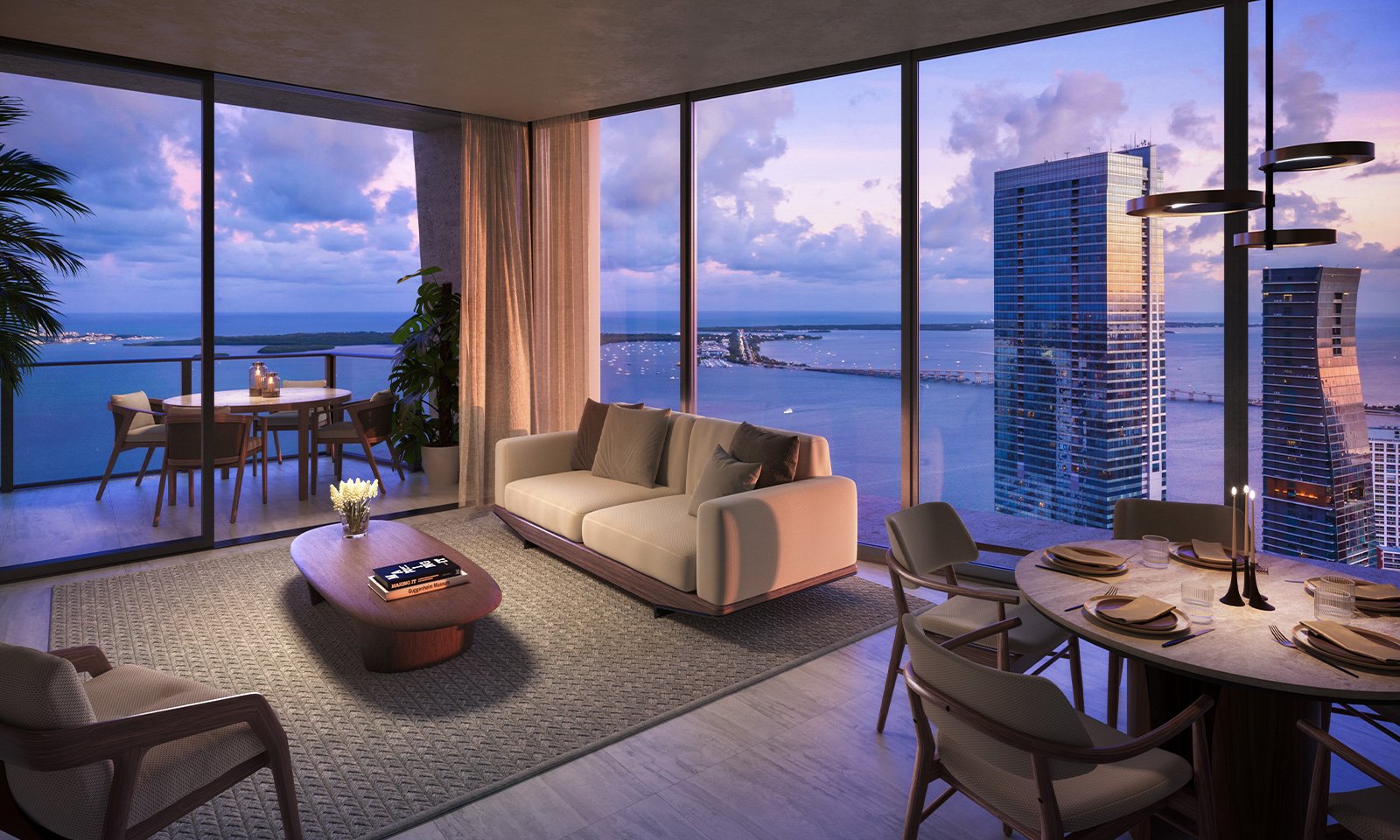
At ORA by Casa Tua Brickell, the yoga room should be understood as part of the home’s lifestyle architecture, not simply a room with a mat, a mirror, and a view. In a luxury residence, wellness is experienced through details: the softness underfoot, the quality of morning light, the privacy of a closed door, and the way sound behaves as the household shifts from city pace to restorative practice.
That distinction matters in Brickell. A private residence in a dense urban high-rise carries different sensory expectations than a detached estate. Elevator corridors, adjoining rooms, mechanical systems, household conversations, entertainment areas, and the city itself can all shape how calm a yoga, meditation, stretching, or breathwork session feels. Sound control, therefore, becomes a practical household decision. It is less about pursuing total silence than creating predictable, comfortable conditions.
For buyers considering New-construction or Pre-construction residences, the best time to address this is early. Once furniture plans, lighting, storage, and audiovisual systems are underway, acoustic questions can become harder to resolve elegantly. A yoga room works best when the household defines what quiet means before the room is assigned.
The first sound-control decision is not the rug or the wall panel. It is the room itself. A yoga space near a kitchen, media room, children’s play area, laundry zone, or frequently used circulation path may be convenient, but convenience can compete with calm. A room slightly removed from the most active parts of the residence may better support a daily routine.
Buyers should think in layers. What is above, below, and adjacent to the proposed yoga room? Which rooms share its walls? Does the door open toward a busy corridor or a quieter private wing? If the space has exterior glass, does the household expect to practice during peak city hours, early morning, or an evening wind-down? None of these questions require technical language to be useful. They simply clarify where sound is likely to travel.
At ORA by Casa Tua Brickell, the larger point is to align the wellness room with the household’s actual rituals. A person practicing breathwork at dawn has different needs than a family using the room for stretching, virtual instruction, and occasional fitness recovery. The better the room matches the routine, the less corrective work the household needs later.
Sound control often improves when owners stop asking only, “What is making noise?” and start asking, “How is sound moving?” In a residence, sound may pass through door gaps, hard surfaces, glass, vents, shared walls, open-plan layouts, and adjoining spaces. A polished floor, bare wall, and minimal furniture can look serene yet still feel acoustically lively.
This is where luxury restraint becomes useful. Soft finishes can absorb some of the room’s sharpness without turning the yoga room into a studio. A dense rug, upholstered bench, fabric window treatment, quiet storage pieces, and carefully chosen wall textures can make the room feel more composed. The goal is not theatrical soundproofing. The goal is a quieter sensory envelope that supports concentration.
Door behavior deserves particular attention. A beautiful door with substantial gaps may not support privacy as well as expected. Households can ask designers about seals, thresholds, door weight, and how the door interacts with adjacent flooring. These details are best discussed before final selections are made, especially when the wellness space sits near social areas.
Brickell’s appeal is tied to energy, skyline, movement, and proximity. Those same qualities make it important to think carefully about rooms with extensive glazing or outdoor access. A yoga room with a dramatic view can be deeply restorative, but the household should consider how exterior sound, sun exposure, and daily traffic patterns influence its use.
A Balcony door, for example, may add fresh air and atmosphere, but it can also become a sound path if opened during practice or if the room is used at louder times of day. A Terrace adjacent to a wellness room can feel luxurious for post-practice cooling down, yet the planning should recognize that outdoor and indoor calm are not identical. Families should decide whether the room’s purpose is quiet interior retreat, indoor-outdoor movement, or flexible wellness use.
This is not a reason to avoid views or outdoor connections. It is a reason to be intentional. In a high-rise setting, a beautiful yoga room may depend on when it is used, what it touches, and how the household manages transitions between open city exposure and inward focus.
One common mistake is asking a single room to serve too many acoustic personalities. A room that functions as yoga studio, home office, guest overflow, children’s movement room, and online workout space may never feel fully settled. Flexibility is valuable, but wellness benefits from a clear hierarchy of use.
If yoga and meditation are the priority, the room should avoid equipment or furniture that encourages louder activities. If virtual instruction is important, speaker placement and volume discipline matter. If the space doubles as a recovery room, quieter materials and controlled lighting may matter more than open storage or hard decorative surfaces.
Households should also think about time. A room does not need to be perfectly isolated all day to succeed. It needs to support the chosen ritual reliably. Morning practice may call for separation from breakfast noise. Evening meditation may require distance from entertaining areas. Weekend family use may need a different approach altogether.
Because acoustic performance is highly specific, buyers should avoid assuming that any luxury residence automatically resolves every sound concern. The refined approach is to ask thoughtful questions early and direct them to the right professionals. Sales teams, designers, and acoustical consultants can each help clarify different parts of the decision.
Useful questions include: Which rooms are best suited for quiet use? Where are the most likely sound paths? Can door details be improved? Are softer finishes appropriate for the design language? Should the room be separated from media or entertaining zones? Would an acoustical consultant be helpful before millwork, lighting, or flooring choices are finalized?
The answers do not need to make the yoga room overly technical. In fact, the best solutions often disappear into the design. A quieter room can still feel warm, elegant, and residential. Sound control succeeds when the household notices the practice, not the intervention.
For ORA by Casa Tua Brickell households, the yoga-room conversation sits at the intersection of luxury real estate, wellness routines, and the sensory experience of living in Brickell. The value is not merely having space for a mat. It is having a room that supports the nervous system, protects privacy, and respects the rhythm of the home.
In that sense, sound control is a form of daily hospitality. It allows a residence to shift from social to restorative, from public-facing to personal, from city energy to interior stillness. The most successful wellness rooms are not necessarily the most elaborate. They are the ones planned with enough care that calm feels natural.
Does ORA by Casa Tua Brickell have verified soundproof yoga rooms? This article does not claim verified soundproof yoga rooms or specific acoustic ratings. Buyers should ask project representatives and design professionals for details relevant to a specific residence.
When should a household plan yoga-room sound control? The best moment is before the layout, finishes, doors, and furniture are finalized. Early planning gives the household more discreet options.
Is the quietest room always the best yoga room? Not always. The best room balances quiet, privacy, light, circulation, and the way the household actually practices.
Can soft finishes help a yoga room feel calmer? Yes. Soft furnishings and textured materials can reduce harshness and make the room feel more composed. They should be chosen to fit the overall design language.
Should a yoga room be near a Balcony or Terrace? It can be appealing, especially for light and air, but exterior access may affect sound conditions. Households should decide how much indoor-outdoor connection they want during practice.
What household areas should be kept away from a yoga room? Media rooms, kitchens, laundry areas, play spaces, and busy corridors can introduce unwanted noise. Separation from louder uses usually supports better wellness routines.
Is sound control the same as soundproofing? No. Sound control is a practical effort to manage noise paths and room comfort, while soundproofing implies a higher level of technical performance.
Should buyers hire an acoustical consultant? For households highly sensitive to sound or planning a dedicated wellness room, a consultant can be useful. The decision depends on expectations, room location, and design complexity.
How does Brickell affect yoga-room planning? Brickell’s dense high-rise environment makes room choice, glazing, doors, and household routines especially important. The goal is to create calm within an energetic urban setting.
Can a yoga room remain flexible for other uses? Yes, but the primary wellness purpose should guide the layout. Too many competing uses can make the room feel less restorative.
If you'd like a private walkthrough and a curated shortlist, connect with MILLION.
If branded residences are on your mind — as a home or as an allocation — we would be glad to share what we are seeing, privately.
Begin a quiet conversation