A buyer-focused guide to clarifying terrace maintenance, outdoor design approvals, and storm preparation at Palazzo del Sol, with particular attention to long-term and seasonal ownership.
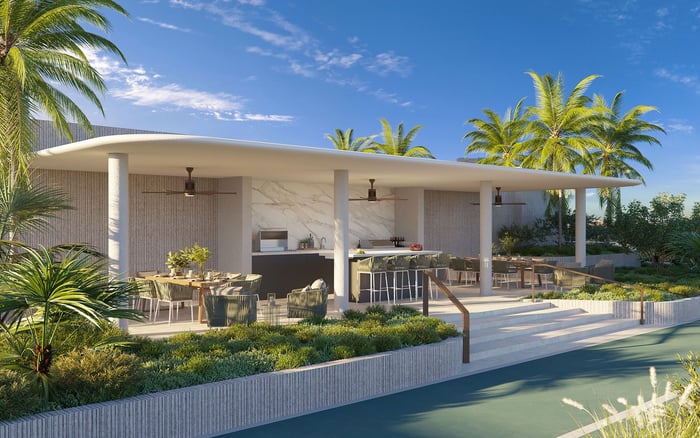
At Palazzo del Sol, completed in 2016 on Fisher Island, residences include flow-through layouts with terraces on both the bay and ocean sides. The connection between interior space and open air is part of the appeal. For a long-term owner, however, the terrace warrants a review distinct from finishes, views, and the interior floor plan.
The essential questions are practical: who maintains the drains, what can remain outdoors, and who prepares the residence when a storm approaches? Exclusive use does not necessarily mean maintenance responsibility. Before purchasing, obtain written answers tied to the declaration, current rules, and the specific residence. Existing furnishings are not evidence of permission.
Florida's condominium framework distinguishes limited common elements: common elements reserved for the exclusive use of specified units. Maintenance generally rests with the association unless the declaration validly assigns responsibility otherwise. Assigning that duty to an owner requires identification of the limited common element and an express maintenance obligation. Have Florida condominium counsel confirm the current law and how the declaration applies.
A terrace should not be treated as a single maintenance item. Ask how the governing documents classify the surface, waterproofing, drains, and shared drainage components. Then establish who must inspect, clean, repair, and replace each part. A duty to keep a drain clear does not necessarily extend to everything beneath it.
Request a written allocation covering:
Routine drain cleaning and access for inspection.
Waterproofing maintenance, repair, and replacement.
Shared drainage components serving more than one residence.
Owner-installed tile, decking, or other finishes.
Investigation and payment when water affects a neighboring residence.
For the unit itself, request available maintenance records and information about prior water incidents or terrace alterations. Ask an appropriately qualified professional to evaluate visible drainage conditions and recommend any further investigation. Before commissioning work, clarify who authorizes testing and who pays.
An outdoor room can be as carefully composed as a salon, but aesthetic compatibility is not formal permission. Before ordering furniture, submit a complete proposed layout for written review, including planters, rugs, seating, shade elements, and any intended attachments.
Ask which items require approval and whether restrictions address dimensions, placement, materials, weight, or access to drains. Outdoor kitchens, pergolas, and anchoring methods warrant explicit answers. Do not assume that a freestanding object is exempt or that an installation already present in a resale residence carries continuing authorization.
On Fisher Island, neighborhood associations and the club must maintain landscaped grounds to island standards, with maintenance services and schedules under the island's landscaping director. Those requirements should not be read as a private-terrace furnishing policy. Confirm the applicable current amendments and building-level requirements separately.
Contractors and subcontractors must obtain approval from the relevant neighborhood association or club representative and the island community association before work begins. Distinguish design approval from contractor approval. Request both processes, including documentation and scheduling requirements, before placing nonrefundable orders.
A storm plan is useful only if someone can carry it out. Obtain the building's written hurricane instructions and establish which belongings must be removed, which may be secured outside, and whether any tie-down method requires advance approval. Furniture marketed for outdoor use should not be assumed permissible on the terrace during a storm.
The plan should answer three operational questions. First, what triggers preparation, and what deadline applies? Second, where will removed items be stored? Third, who confirms completion? Ask specifically about planters, cushions, rugs, decorative objects, and any approved permanent installations.
Shutters and other protective systems require separate clarification. Request the policy governing permitted systems, installation approvals, operation, and maintenance. Establish who may access the residence, what authorization is required, and whether management offers a preparation service. Do not assume any service, storage arrangement, or response deadline without written confirmation.
For buyers also considering The Residences at Six Fisher Island, use the same questions but request a separate set of answers. An island address does not establish identical terrace rules or storm procedures.
Seasonal ownership makes the chain of responsibility especially important. Name a primary local contact and a backup, then confirm that each can obtain access and engage approved personnel when needed. Ask whether the association requires an absent-owner authorization, and clarify any limits on staff entering the residence or moving personal property.
A useful private checklist records the approved furniture layout, removal instructions, storage location, contact details, and the person responsible for confirming completion. Test the practicalities before an extended absence: can the selected pieces fit through the doors, and is there an agreed place for them indoors? These are planning questions, not assumed building requirements.
Permission to keep a pet is not permission to alter a terrace. Seek explicit written clearance for fencing, artificial turf, or a pet-relief installation, including any cleaning, drainage, and removal conditions. Apply the same discipline to irrigation and substantial planting schemes: before proceeding, ask how they affect drain access and waterproofing obligations.
A monthly association payment does not establish that a particular terrace repair is covered. Request the current budget, reserve information, relevant engineering assessments, and insurance provisions. Ask how planned terrace or waterproofing work would be funded and whether owner-installed finishes would be restored at association expense or at the owner's cost.
Financial comparisons with Palazzo della Luna require particular care. Fee figures that combine the two buildings should not be treated as a Palazzo del Sol schedule. Obtain the current assessment for the exact residence and clarify any additional obligations disclosed in the transaction documents.
Have counsel and an insurance adviser distinguish routine maintenance, damage liability, insurance coverage, and deductibles. Each category can raise different questions. A single assurance that the terrace is covered is no substitute for reviewing them individually.
Before closing, assemble the declaration and amendments, current terrace rules, approved alteration records, written storm instructions, and unit-specific financial information. Resolve conflicts between a seller's description and the governing documents before relying on either for a design or ownership decision.
The objective is not to diminish the pleasure of outdoor living. It is to make that pleasure easier to sustain through clear responsibilities, approved furnishings, and a preparation plan that works when the owner is elsewhere.
For a considered approach to Fisher Island ownership, explore MILLION.
If branded residences are on your mind — as a home or as an allocation — we would be glad to share what we are seeing, privately.
Begin a quiet conversationPalazzo del Sol was completed in 2016 on Fisher Island.
Residences include flow-through layouts with terraces on both the bay and ocean sides. Confirm the configuration of the specific residence under consideration.
Not by itself. The declaration's classification and express maintenance provisions are critical to determining responsibility.
Obtain a written allocation under the governing documents. Separate routine drain cleaning from repairs to waterproofing and shared drainage components.
No. Request applicable furnishing rules and written approval records rather than relying on the current layout.
They do not establish the private-terrace furnishing policy. Confirm the building's requirements separately.
Contractors and subcontractors must obtain approval from the relevant neighborhood association or club representative and the island community association. Design approval should be clarified separately.
Obtain written building instructions specifying removal or securement requirements. Confirm approved methods, storage arrangements, and preparation deadlines.
Designate a local contact and backup, confirm access authorization, and establish who prepares the terrace and verifies completion. Do not assume management provides this service.
No. Review the declaration, budget, reserves, and insurance provisions to establish responsibility for specific repairs and owner-installed finishes.