A buyer-focused editorial guide to evaluating restaurant and food-service exhaust at One Park Tower by Turnberry North Miami, with emphasis on odor control, acoustics, terminations, maintenance, and governing documents.

One Park Tower by Turnberry North Miami sits within the broader promise of North Miami’s SoLé Mia master-planned environment, where the residence is only one part of the lifestyle proposition. The appeal is not simply a private home in the sky. It is the resort sensibility surrounding it: the lagoon-front setting, the outdoor amenities, the sense of arrival, and the expectation that common spaces will feel composed from morning coffee through evening dining.
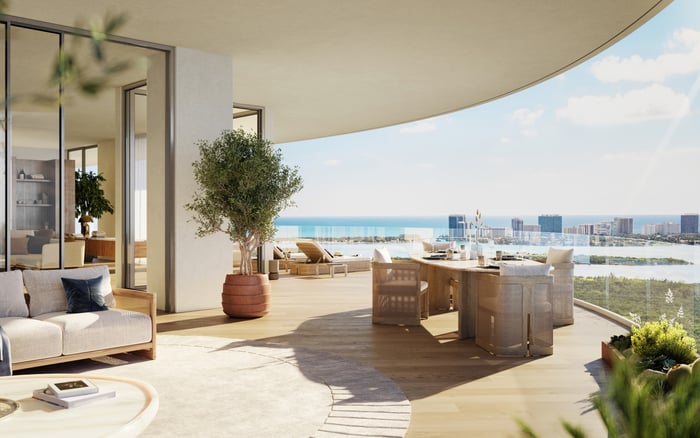
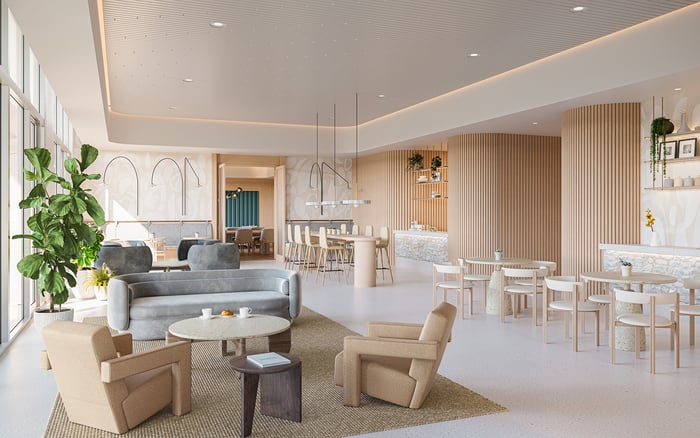
That is precisely why restaurant exhaust deserves scrutiny before a buyer falls in love with a rendering. Renderings can express water, light, landscaping, furnishings, and atmosphere. They do not show how food-and-beverage exhaust is routed, filtered, discharged, silenced, maintained, or paid for over time. In a luxury tower, those hidden systems can shape whether terraces remain serene, whether amenity decks feel fresh, and whether the building’s exterior retains the polished character buyers expect.
For buyers comparing North Miami with Aventura or other waterfront enclaves, the question is not whether dining amenities are desirable. They often are. The more important question is whether the mechanical design allows restaurants, bars, poolside grills, club kitchens, or other food-service uses to coexist gracefully with private residences.
The first diligence step is straightforward: identify the food-service uses being planned. A buyer should verify whether restaurants, bars, poolside grills, club kitchens, catering kitchens, or similar uses are contemplated within the tower, podium, amenity deck, or adjacent mixed-use areas. The concern is not limited to a formal restaurant. Even a club kitchen or poolside grill can require exhaust pathways, grease handling, fan equipment, and maintenance protocols.
This is especially relevant in a new-project, new-construction, or pre-construction purchase, where the lifestyle narrative may arrive before every operational detail is visible to the buyer. A refined sales-gallery experience is not a substitute for a written explanation of food-service exhaust design. Buyers should ask for mechanical drawings where available, or at minimum a clear description of how exhaust will move from kitchen hoods to shafts, fans, filters, and final discharge points.
At One Park Tower by Turnberry North Miami, the lagoon-front lifestyle context heightens the issue. Outdoor living is central to the value proposition. If cooking odors, fan noise, or warm exhaust air affect a terrace, pool edge, walkway, lobby approach, or lagoon-facing deck, the impact is not a technical footnote. It is a daily quality-of-life concern.
A kitchen exhaust system is not only the vent cap at the end. It is a vertical and horizontal route through the building, and that route matters. Buyers should ask whether kitchen exhaust shafts run near residential stacks, private terraces, amenity spaces, service corridors, or mechanical air intakes. Proximity does not automatically signal a problem, but it does deserve explanation.
The most refined buildings tend to handle these systems discreetly. That means planning for access, separation, sound control, vibration isolation, grease management, and serviceability without allowing the back-of-house reality to become a front-of-house nuisance. A luxury buyer does not need to become a mechanical engineer. The buyer does need to know whether the design team has considered how exhaust behaves in the actual building, not only in the marketing image.
Re-entrainment is a useful term to understand. It describes the possibility that discharged air, including cooking odors, can be drawn back into occupied areas through balconies, corridors, lobbies, amenity zones, or fresh-air intakes. In a lagoon-front setting, where breezes, outdoor seating, and open-air circulation are part of the appeal, buyers should ask how the project addresses the risk of odors returning to the spaces residents actually use.
Exhaust terminations should be reviewed in relation to balconies, rooftop amenities, lagoon-facing decks, neighboring towers, public outdoor areas, and air intakes. The question is not only where the exhaust exits, but what it exits toward. A termination that is code-compliant may still create an unwelcome experience if it sits too close to a quiet seating area or if wind conditions carry odors across a favored outdoor zone.
Odor control should be part of the conversation. Grease filtration should be part of the conversation. So should fan noise, vibration isolation, façade staining risk, and maintenance access. Grease-laden exhaust is not a decorative issue, but over time it can become an aesthetic one if systems are poorly placed, insufficiently maintained, or difficult to service.
Noise matters as well. A fan that is acceptable in a service yard may be intrusive near a private outdoor room. Vibration can be equally problematic, especially if equipment is connected to structural elements without adequate isolation. In the luxury market, comfort-level performance should guide the evaluation, not merely the minimum threshold of code compliance.
The hidden cost of exhaust is rarely the duct itself. It is the ongoing responsibility. Association stakeholders should verify who will own, maintain, clean, inspect, repair, and pay for shared exhaust shafts, fans, grease ducts, odor-control equipment, roof terminations, and related access areas. Those obligations should not be left to assumption.
If restaurant uses are leased, expanded, or modified after turnover, the governing documents should clarify approval rights. Who can approve changes to hood capacity? Who controls duct connections? What happens if a tenant wants a different cooking format? Are operating hours regulated where food-service activity could affect residential quiet enjoyment? These are not adversarial questions. They are the practical architecture of long-term harmony.
Buyers should also consider whether maintenance access has been designed elegantly. A system that is hard to reach is a system that may be deferred, negotiated, or serviced in ways that disrupt residents. The strongest outcomes come when cleaning, inspection, repair, and replacement can occur without compromising the resident experience or the appearance of the property.
A disciplined buyer should ask for a concise, written explanation of the food-service exhaust strategy. Where are the food-service uses? Where do the ducts run? Where are the terminations? What odor-control measures are contemplated? How is fan noise mitigated? How is vibration isolated? Who pays for cleaning and repair? What approval rights exist if food-service uses evolve after turnover?
The point is not to diminish the appeal of resort-style living. It is to protect it. Dining, hospitality, and outdoor leisure can be among the great pleasures of a waterfront luxury community when the building systems are thoughtfully coordinated. At One Park Tower by Turnberry North Miami, the rendering may introduce the dream, but the mechanical and governance details help determine how well that dream lives.
Why should buyers ask about restaurant exhaust before closing? Because exhaust design can affect odor, sound, vibration, outdoor comfort, and maintenance obligations long after the sales presentation is over.
Does code compliance fully answer the exhaust question? No. Code compliance is the baseline. Luxury buyers should also evaluate comfort, aesthetics, serviceability, and long-term operations.
What food-service uses should be reviewed? Buyers should ask about restaurants, bars, poolside grills, club kitchens, catering kitchens, and any adjacent mixed-use food-service areas.
Why do exhaust terminations matter? Their location can influence whether odors, warm air, noise, or visible equipment affect balconies, amenities, public spaces, or neighboring buildings.
What is re-entrainment? It is the possibility that discharged exhaust air is drawn back into terraces, corridors, lobbies, amenity spaces, or mechanical air intakes.
Should buyers request mechanical drawings? Yes, where available. If drawings are not provided, buyers should request a written explanation of the exhaust routing and discharge strategy.
Who should pay for exhaust maintenance? The governing documents should clarify whether costs fall to commercial users, the association, shared budgets, or another defined party.
Can restaurant uses change after turnover? They can be leased or modified, so approval rights for kitchen equipment, hood capacity, duct connections, and operating hours should be clear.
Why is lagoon-front living especially sensitive to this issue? Outdoor enjoyment is central to the lifestyle, so odor, grease, fan noise, and discharge locations can directly affect daily residential use.
What is the buyer’s best practical takeaway? Treat restaurant exhaust as a core due-diligence item, not a technical afterthought hidden behind the amenity narrative.
If you'd like a private walkthrough and a curated shortlist, connect with MILLION.
If branded residences are on your mind — as a home or as an allocation — we would be glad to share what we are seeing, privately.
Begin a quiet conversation