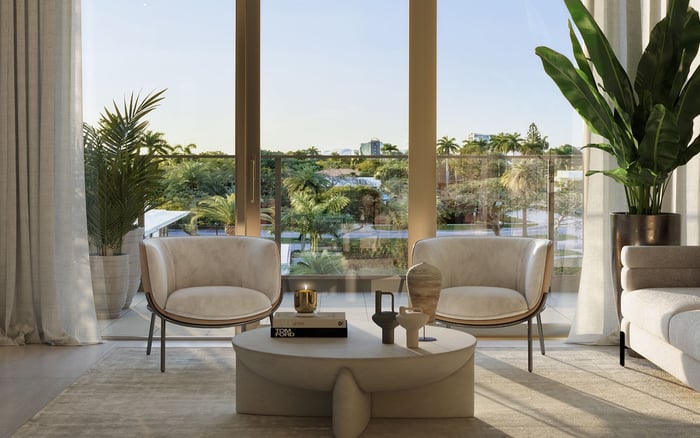
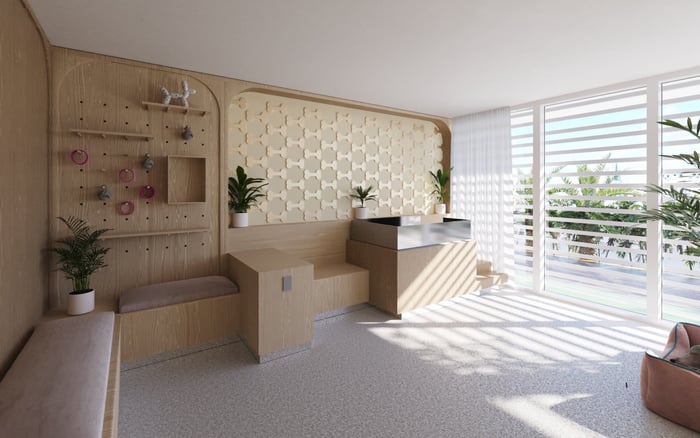
In Miami’s upper-tier condo market, a dog-wash room can represent more than a pet amenity. For many buyers, it signals a building designed around daily ease, privacy, and service.
A view can seduce in seconds. A dog-wash room wins more gradually, through the rhythm of a life actually lived. For the Miami condo buyer with a large dog, a beach routine, a rainy-season schedule, or a preference for seamless housekeeping, the question is no longer only whether the skyline is dramatic enough. It is whether the building supports the household with the discretion and intelligence expected at the top of the market.
This is where a pet-washing room becomes more than a niche amenity. It becomes a proxy for practical luxury. It suggests that the building has considered circulation, wet zones, staff support, privacy, and the small frictions that can make a beautiful residence feel inconvenient. A dazzling Biscayne Bay panorama may still matter, but it does not rinse sand from a golden retriever, protect marble floors, or prevent an awkward elevator ride after a storm.
The vocabulary of the search has changed. Pets, dog parks, Brickell, Miami Beach, Coconut Grove, and balconies can now belong in the same serious conversation as exposures, ceiling heights, and finishes. For a certain buyer, that is not a downgrade in priorities. It is refinement.
Miami has long traded on the theater of outlooks: ocean, bay, skyline, garden, marina, sunset. Those views still command attention, especially when paired with scale, privacy, and a floor plan that frames water elegantly. Yet a view is largely passive. It is experienced from the residence, while the rest of the building either supports daily life or complicates it.
Pet ownership makes that distinction especially clear. A buyer may enjoy the view every morning, but the dog still needs to be walked several times a day. After the beach, the park, a humid afternoon, or a sudden downpour, the return home becomes a test of the building’s design. Is there a practical route from exterior areas to the pet-wash space? Is the room located with discretion? Does it feel clean, properly ventilated, and easy to use? Is it finished in a way that suggests it will be maintained well over time?
For buyers who travel with household staff, divide time between residences, or expect hotel-level ease, these details matter. Luxury is not only what is photographed at sunset. It is what happens on a Tuesday evening when the elevator is full, the dog is wet, and dinner guests are arriving in an hour.
At its best, a dog-wash room signals operational maturity. The amenity itself may be compact, but its implications are broad. A well-conceived pet-wash area requires water management, durable surfaces, appropriate drainage, practical lighting, and a location that does not conflict with formal arrival spaces. It also reflects a building culture that treats pets as part of upscale residential life, not as an afterthought.
That matters in Miami, where condo living often blends resort sensibility with private-home expectations. Buyers are not simply purchasing square footage. They are purchasing a daily operating system: valet, lobby, elevators, service corridors, wellness areas, terraces, and the rules that govern how all of it functions. A pet amenity can reveal whether the building is attentive to actual residents rather than only to renderings.
The best version is not flamboyant. It is calm, hygienic, and intuitive. It allows an owner or staff member to clean a dog before entering the residence. It reduces wear on private bathrooms. It protects flooring and furnishings. It also helps preserve the elegance of shared spaces by giving residents an appropriate place to handle a routine task.
The buyer most likely to prioritize a dog-wash room is not necessarily indifferent to views. More often, this buyer has already experienced enough high-end property to understand the limits of spectacle. They know that a residence can be visually extraordinary and operationally frustrating. They may have owned waterfront homes, lived in full-service towers, or managed multiple properties. Their sensitivity is not to glamour, but to friction.
For these buyers, convenience has become a form of status. A private elevator is valuable because it controls arrival. A deep terrace is valuable because it extends living. A service entrance is valuable because it separates household logistics from entertaining. A dog-wash room belongs to the same category. It may not dominate a brochure, but it improves the choreography of everyday life.
This is especially true for buyers moving from single-family homes into vertical living. They may be giving up a yard, garage, mudroom, or side entrance. A building with thoughtful pet infrastructure helps soften that transition. It tells the buyer that the condo is not simply a compromise for location. It can be a more managed, more elegant way to live.
A buyer should look beyond the phrase “pet spa” and examine how the space works. Location is the first test. If the dog-wash room sits far from the practical path of entry, it may be used less often than expected. If it is too close to the formal lobby, it may feel conspicuous. The best placement balances convenience with discretion.
Ventilation is another priority. A refined pet space should feel fresh, not perfumed into submission. Materials matter as well. Floors should be slip-conscious and durable. Surfaces should be easy to clean. The bathing station should suit a range of dog sizes, with enough room to maneuver without making the experience feel improvised.
Buyers should also ask how the amenity is maintained. A dog-wash room is only luxurious if it is kept immaculate. The rules around access, hours, cleaning, and use will shape the experience as much as the design itself. In a high-end building, the amenity should feel integrated into the service standard, not appended to satisfy a trend.
Finally, consider the route back to the residence. The journey from pet-wash room to elevator to private entry should feel dignified. If that path crosses too many social or formal spaces, the amenity may not deliver the ease it promises.
There are still moments when the view should remain the priority. If a residence has a rare exposure, exceptional privacy, or an outlook that is central to the buyer’s emotional connection with Miami, it can justify compromise elsewhere. Views can also influence resale appeal, especially when paired with a strong floor plan and an address that continues to feel relevant.
The point is not that pet amenities always outweigh outlooks. It is that the old hierarchy is no longer automatic. A buyer choosing between two compelling residences may reasonably prefer the one that performs better. If the view is marginally stronger in one building, but the other offers superior daily logistics, the latter may be the more sophisticated choice.
In luxury real estate, value is increasingly tied to the absence of irritation. The better building is often the one that removes more decisions, shortens more routines, and lets the owner live with less negotiation.
Pet-friendly infrastructure can broaden a residence’s appeal without overwhelming its identity. A building does not need to market itself around dogs to benefit from thoughtful pet design. In fact, the most elegant execution is usually understated. It reassures buyers who need the function, while remaining unobtrusive to those who do not.
This matters because future buyers may evaluate lifestyle support as closely as they evaluate finishes. A dog-wash room, secure pet circulation, nearby outdoor access, and sensible building policies can all make a residence feel more complete. Even buyers without pets may read these features as evidence of a better-run property.
For Miami, where buyers often compare urban convenience, beach access, and private-home comforts in a single search, these details can become decisive. A condo that anticipates real life has a different kind of elegance. It is not merely seen. It is felt.
Why would a buyer choose a dog-wash room over a better view? Because daily convenience can outweigh a slightly stronger outlook, especially for owners with pets, staff routines, or active outdoor lifestyles.
Is a dog-wash room considered a luxury amenity? In a high-end condo, yes. When designed and maintained well, it reflects service-oriented planning rather than novelty.
What should buyers inspect in a pet-wash room? Look at location, ventilation, drainage, surfaces, lighting, and the path from entry to elevator.
Does pet infrastructure help resale value? It can support appeal by making the building feel more livable and operationally complete for a wider pool of buyers.
Should the view ever remain the top priority? Yes. Rare outlooks, privacy, and exceptional exposure can still justify prioritizing the view.
Are pet amenities only important for large dogs? No. They can benefit owners of small dogs as well, especially after rain, beach outings, or frequent walks.
How does a dog-wash room affect private interiors? It helps reduce wear on bathrooms, flooring, rugs, and upholstered furnishings by keeping cleanup outside the residence.
What makes a pet amenity feel discreet? Thoughtful placement, controlled access, strong maintenance, and a route that avoids overly formal shared spaces.
Is this more relevant in condos than single-family homes? Often yes, because condo residents share elevators and common areas, making pet logistics more visible and important.
How should buyers balance amenities and views? Compare the emotional value of the outlook with the daily value of the building’s service, circulation, and convenience.
For a confidential assessment and a building-by-building shortlist, connect with MILLION.
If branded residences are on your mind — as a home or as an allocation — we would be glad to share what we are seeing, privately.
Begin a quiet conversation