A privacy-focused comparison of Onda Bay Harbor and Four Seasons Hotel & Private Residences Fort Lauderdale for buyers weighing boutique residential discretion against branded hotel service depth.
For a certain South Florida buyer, luxury is assumed. The sharper question is whether ownership still feels private after the elevator doors open, after the valet returns the keys, and after the weekend crowd arrives. That is where Onda Bay Harbor and Four Seasons Hotel & Private Residences Fort Lauderdale diverge in meaningful ways.
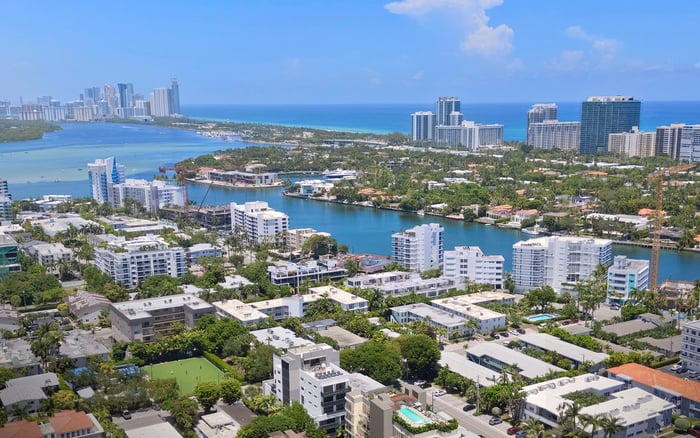
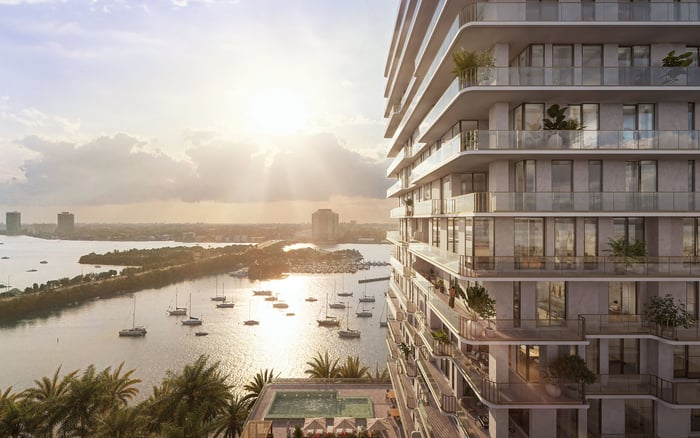
Onda Bay Harbor is positioned as an intimate bayfront residential address in Bay Harbor Islands, not a hotel-residence hybrid. Its appeal rests on boutique scale, a limited residential atmosphere, and the absence of a hotel component. Four Seasons Hotel & Private Residences Fort Lauderdale, by contrast, is a branded mixed-use tower that pairs private residences with a Four Seasons hotel operation. Its promise is not seclusion by scarcity alone, but service depth within a managed hospitality ecosystem.
For buyers comparing Bay Harbor calm with Fort Lauderdale resort energy, the decision should be less about finishes and more about practical daily circulation: who uses the building, which amenities are reserved, how service is delivered, and how clearly residents are separated from hotel guests.
Onda’s strongest privacy argument is its residential purity. With no hotel component, the building is not organized around transient guest flow, lobby turnover, or resort-style public volume. The owner experience is framed around resident-only amenities and a more club-like atmosphere, which can be especially compelling for buyers who value quiet arrivals, familiar faces, and a rhythm that feels private rather than performative.
This is the essence of boutique privacy. Onda does not need to solve the same separation challenge as a mixed-use branded tower because its user base is inherently narrower. Its discretion comes from fewer categories of users, not from managing the boundary between residents and hotel guests. For owners who spend extended periods in South Florida, entertain selectively, and prefer a residential waterfront setting over a hospitality campus, that distinction can matter more than a longer menu of services.
The tradeoff is equally clear. A smaller residential environment may not deliver the same breadth of operational support as a full hotel-connected brand. Buyers should expect a quieter, more private residential feeling, but should not mistake that for the deep staffing model of a major luxury hospitality operation.
Four Seasons Hotel & Private Residences Fort Lauderdale offers a different ownership proposition. Its appeal lies in branded-hotel service depth: hospitality infrastructure, refined operating standards, and access to a broader resort-style environment. For buyers who want their residence to function with the ease of a managed luxury destination, that can be decisive.
The privacy proposition, however, is more operationally complex. Because the tower combines hotel and residential uses, privacy depends on clear segregation among hotel guests, private residents, shared building functions, and resident-only areas. That does not make the model less luxurious. It simply means privacy is engineered through protocol rather than achieved primarily through low density.
This structure may be ideal for owners who want service to be highly present and highly capable. A resident who values room-service-style convenience, a hospitality-trained staff culture, and a resort ecosystem may see the larger user base as an acceptable exchange. The building will generally feel more active than a boutique residential bayfront property, but that activity is part of the branded resort proposition.
Elevator privacy is often discussed loosely, but serious buyers should treat it as a due-diligence topic. The right questions are practical: Are there resident-dedicated elevator routes? How are guests, hotel patrons, service staff, and residents separated? Are access points key-controlled? Where do deliveries move? How does a resident arrive from parking or valet to the private residence level?
For Onda Bay Harbor, the privacy advantage begins with the absence of hotel guests and a smaller residential population. That can reduce the number of people moving through the property and create a calmer daily arrival sequence. Still, buyers should verify elevator configuration, service access, and amenity-level circulation through current building materials or sales disclosures rather than assuming every boutique building functions the same way.
For Four Seasons, the question is not simply whether the tower has private residences. The question is how those residences are operationally protected inside a larger hospitality environment. In a mixed-use branded property, elevator separation, lobby experience, and back-of-house routing become central to whether ownership feels private or merely exclusive in name.
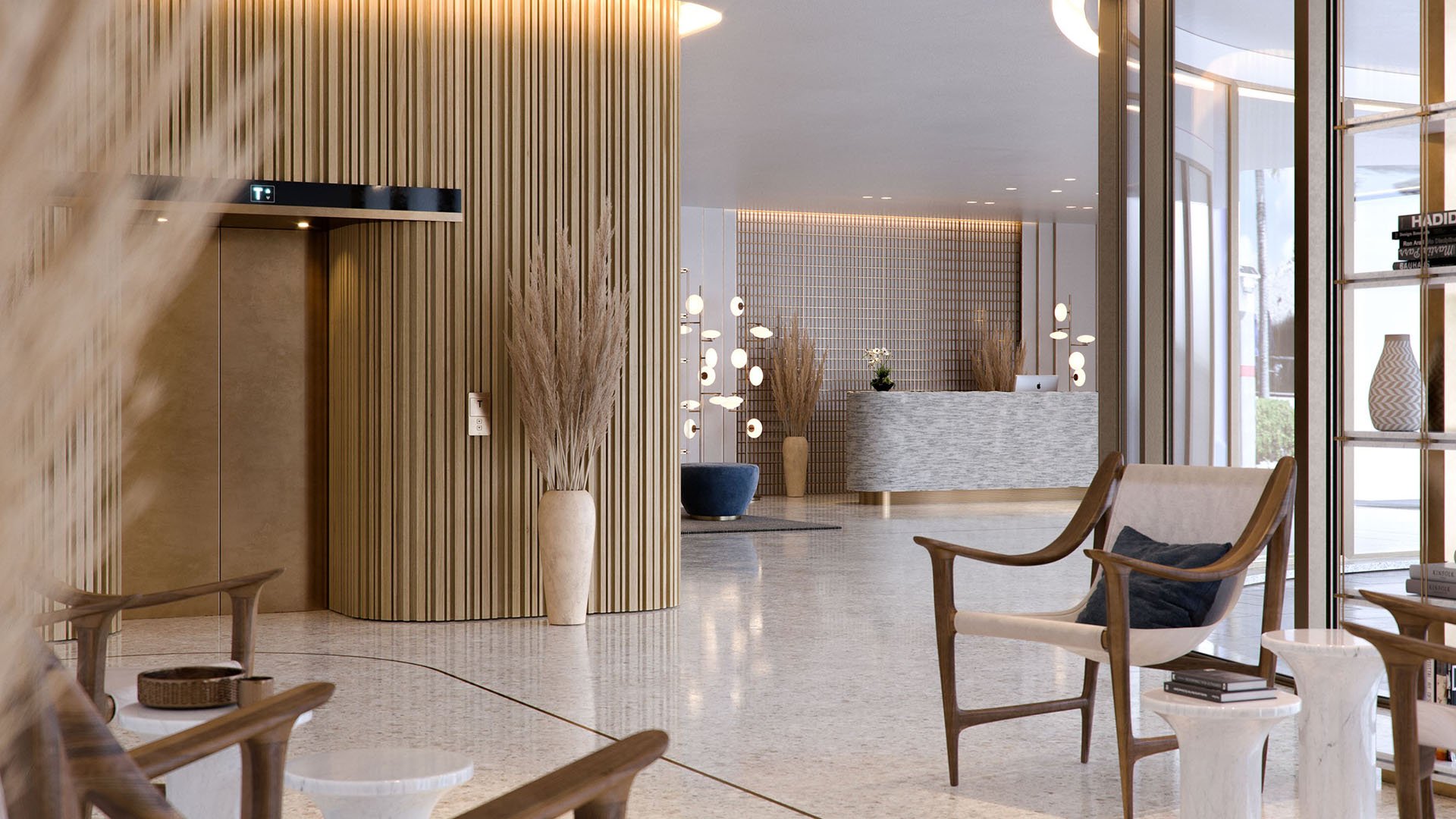
Onda’s owner experience is framed around resident-only amenities, supporting a quieter residential identity. The emphasis is on access for the people who live there, rather than a layered environment where private and hotel-facing spaces coexist. For many privacy-focused buyers, this is the cleanest model: fewer audiences, fewer transitions, and fewer moments where ownership overlaps with visitors who are only passing through.
Four Seasons uses a layered amenity model. Private residential areas can coexist with shared hotel or resort-style spaces, creating a wider service and lifestyle offering. That layering is attractive when buyers want the energy, staffing, and polish of a branded hospitality destination. It is less ideal for those who want every amenity interaction to feel owner-only by default.
Water view, wellness, dining access, and service can all influence perception, but the core question remains simple: does the owner want a private residential club feeling, or the comfort of being inside a professionally managed resort environment? Neither answer is inherently superior. They serve different definitions of privacy.
Service depth is where Four Seasons has the advantage. A full Four Seasons hospitality operation supports a more expansive service model than a boutique residential building can typically offer. For owners who travel frequently, use the residence seasonally, or want a seamless hotel-caliber standard, that may outweigh the presence of more total users.
Onda is better suited to buyers who do not want their home to feel like part of a hotel. Its appeal is quieter and more residential: discretion, bayfront intimacy, and a lower-density atmosphere. The owner who chooses Onda may be less interested in constant service visibility and more interested in the confidence that the building’s daily life is not shaped by hotel guests.
This is the central comparison: Onda offers privacy through scarcity of users, while Four Seasons offers privacy through professional management and separation. The first feels closer to private ownership in a boutique waterfront building. The second feels closer to ownership within a luxury resort ecosystem.
Choose Onda Bay Harbor if the priority is calm, residential discretion, and a building identity that does not revolve around hotel operations. It is the more natural fit for buyers who want Bay Harbor Islands to feel like a private retreat, not a branded destination with multiple user groups.
Choose Four Seasons Hotel & Private Residences Fort Lauderdale if the priority is service depth, resort infrastructure, and the assurance of a globally recognized hospitality operating style. It is better suited to buyers who accept a more active building environment in exchange for deeper service and a broader amenity ecosystem.
For the most privacy-sensitive buyer, the deciding factor may not be the brand or the view. It may be the comfort of knowing who else is in the elevator, who is using the amenity level, and whether the building’s daily rhythm feels residential first.
Is Onda Bay Harbor more private than Four Seasons Fort Lauderdale? Onda’s privacy case is stronger for buyers who prioritize low-density residential seclusion and no hotel component.
Does Four Seasons Fort Lauderdale offer better service depth? Yes. Its connection to a full Four Seasons hospitality operation supports a deeper branded service model.
Is Four Seasons Fort Lauderdale a condo-hotel? It is a mixed-use branded tower combining a hotel with private residences, so buyers should review ownership and use structure carefully.
Does Onda Bay Harbor have hotel guests? Onda is described as having no hotel component, which reduces transient guest circulation compared with a hotel-residence tower.
Are Onda’s amenities resident-only? The owner experience is framed around resident-only amenities rather than shared hotel-style facilities.
Are Four Seasons amenities all private to residents? Four Seasons uses a layered amenity model, with distinctions between resident-only areas and shared hotel or resort-style spaces.
Should buyers assume private elevators in either property? No. Elevator routing, key access, and service circulation should be verified through current project disclosures.
Which property is better for a quiet second home? Onda is likely the stronger fit for buyers who want quiet, discretion, and a residential atmosphere.
Which property is better for a serviced lifestyle? Four Seasons is better suited to buyers who want branded-hotel service depth and a managed resort ecosystem.
What is the best way to shortlist comparable options for touring? Start with location fit, delivery status, and daily lifestyle priorities, then compare stacks and elevations to validate views and privacy.
When you're ready to tour or underwrite the options, connect with MILLION.
If branded residences are on your mind — as a home or as an allocation — we would be glad to share what we are seeing, privately.
Begin a quiet conversation