At Onda Bay Harbor, the right waterfront purchase begins with the vessel, not the view. Match your everyday boat to a specific slip, confirm ownership and navigation requirements, then choose the residence that best supports life ashore.
The most compelling waterfront residence is not necessarily the one with the widest view. For an owner who spends meaningful time aboard, it is the one that makes a familiar departure feel effortless. At Onda Bay Harbor, the starting point is therefore not the penthouse or rooftop pool. It is the boat you expect to use most often-and the specific berth that could accommodate it.
A vessel suited to an afternoon on the bay creates a different buying brief from one intended for offshore outings. A household that mainly paddles has another set of priorities entirely. Before comparing residences, define your usual outing, passenger needs and tolerance for preparation. The right home should support that routine, not an imagined boating life.
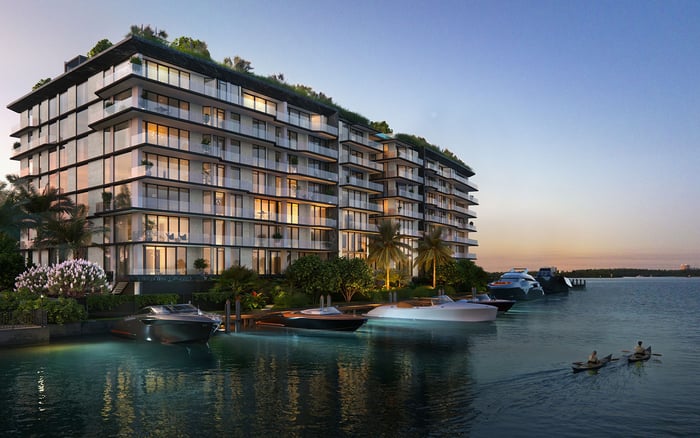
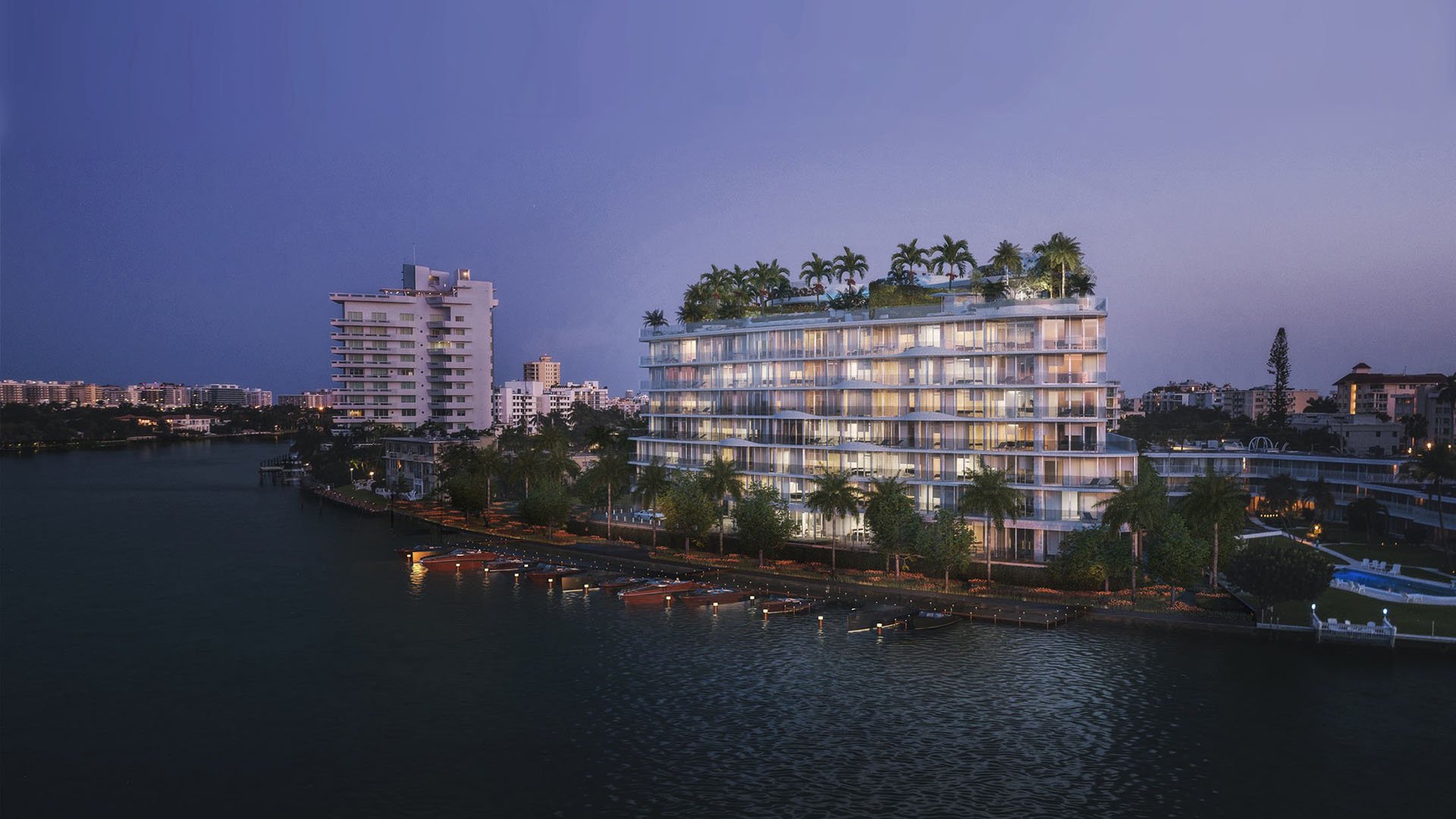
Completed in 2024, Onda occupies 1135 103rd Street in Bay Harbor Islands, on Biscayne Bay near Bal Harbour and Miami Beach. Developed by CMC Group and Morabito Properties, with architecture by Arquitectonica, it contains 41 residences, including two-, three- and four-bedroom homes and penthouses. Approximately 300 feet of bay frontage defines the waterfront setting.
The private marina is central to Onda’s appeal, but waterfront ownership and docking rights are separate questions. Slips have been offered for residents to purchase; do not assume a residence includes one. Establish availability and the terms of the specific berth before treating on-site boating as part of the purchase.
For a buyer also considering Bay Harbor Towers, keep the comparison disciplined: evaluate the residence separately from the docking arrangement you can actually secure. A neighborhood shortlist does not establish equivalent marina rights or vessel suitability.
Onda’s completion-era marina count is 15 slips, though a 14-slip figure also exists. Request the final marina plan and current association records rather than relying on a headline. The stated vessel-length range of 30 to 55 feet is likewise a starting point, not approval for an individual boat.
Bring a specification sheet showing actual overall length, beam, draft and height. Include platforms, outboards, bow projections and other equipment that affect the vessel’s operating envelope. Ask the marina representative to match those dimensions to the offered slip, its permitted vessel size and the available maneuvering space.
A nominal model length is not enough. Have your captain or a qualified marine professional inspect the berth and approach with the intended vessel in mind. Confirm boarding arrangements and how the boat would be secured. If the purchase depends on keeping that boat downstairs, resolve compatibility before committing to the residence-not after selecting finishes.
The marina’s stated direct ocean access is through Haulover Inlet. That description does not establish passage time, bridge clearance or all-tide suitability for your boat. Obtain current navigation guidance covering the intended route, bridge clearances, tides and no-wake zones, then review it with someone qualified to assess your vessel.
For bay cruising, consider how much preparation you are willing to undertake for a short afternoon outing. For offshore use, examine the full departure and return, not just proximity to the inlet. Height and draft deserve the same attention as length. Do not build a purchase decision around an assumed ocean-running time.
If kayaks or paddleboards are the household’s primary craft, the separate water-sports launch dock may matter more than a motorboat berth. The stated watersports offering includes kayaks, paddleboards and inflatables. Confirm current access, equipment arrangements, launch procedures and storage rules before deciding how well the program serves your family.
Ask whether the particular slip is deeded, assigned or governed through another arrangement. Establish whether it transfers with the residence, whether a separate transaction is required and what restrictions apply to a future transfer. Purchase price alone does not capture the obligation: request recurring charges, insurance requirements and applicable operating rules.
Services also require individual confirmation. Ask about shore power, freshwater, pump-out, fuel access and maintenance permissions without assuming any is available on site. Review guest docking, commercial-use restrictions and contractor access if they affect how you use the boat. Written answers are more useful than a general assurance that the marina accommodates residents.
Buyers weighing La Maré Bay Harbor Islands alongside Onda should keep the same questions separate. First establish the home’s appeal, then examine any proposed marine arrangement on its own terms. Do not infer docking entitlements from a waterfront address.
Once the boat and berth are compatible, return to the residence. Onda’s homes feature floor-to-ceiling impact-resistant glass doors and windows, terraces and waterfront views. Select residences offer private gardens or expansive terraces. Compare those configurations with how you spend time after returning from the water: quiet meals outside, space for guests or a more intimate outdoor setting.
Walk the route between the offered residence and the marina. Consider carrying provisions, moving with guests and returning with wet equipment. Private storage areas are among the listed amenities, but neither storage rooms nor gardens and terraces should be treated as approved boat-gear storage without checking condominium rules.
Life ashore matters, too. Rooftop amenities include a pool deck, lounge areas, summer kitchen and bar. The wellness offering includes a fitness center, yoga studio, spa treatment facilities, sauna and steam room. These features can enrich days ashore, but they cannot resolve an unsuitable berth.
Before proceeding, assemble a compact decision file: the vessel’s specifications, the identified slip and marina plan, written docking terms, current charges, navigation guidance and relevant condominium rules. Review the marine questions with an appropriate professional and the ownership documents with your legal adviser. Then revisit the residence with the practical questions settled.
Onda’s appeal lies in the possibility of bringing home and boating into one coherent routine. The strongest choice is not the largest stated berth or the most expansive terrace. It is a residence whose docking rights, access and daily logistics fit the boat you genuinely enjoy using.
For a considered waterfront search shaped around your boating priorities, explore MILLION.
If branded residences are on your mind — as a home or as an allocation — we would be glad to share what we are seeing, privately.
Begin a quiet conversationOnda is at 1135 103rd Street in Bay Harbor Islands, on Biscayne Bay near Bal Harbour and Miami Beach.
Onda was completed in 2024. It was developed by CMC Group and Morabito Properties, with architecture by Arquitectonica.
Onda contains 41 residences, including two-, three- and four-bedroom homes and penthouses.
The completion-era figure is 15 slips, although a 14-slip figure also exists. Confirm the final marina plan and current association records before purchasing.
The stated vessel-length range is 30 to 55 feet, but that does not establish suitability for a specific slip. Verify actual overall length, beam, draft and height against the berth and access route.
No slip should be assumed to accompany a residence. Slips have been offered for residents to purchase, and availability, ownership structure and transfer terms require confirmation.
The marina’s stated direct ocean access is through Haulover Inlet. Check the intended vessel’s route, bridge clearances, tides and operating requirements rather than assuming a passage time.
A separate water-sports launch dock is part of the amenity program, with kayaks, paddleboards and inflatables included in the stated offering. Confirm current equipment access, launch procedures and storage rules.
Verify shore power, freshwater, pump-out, fuel access, maintenance permissions and guest docking. Also review recurring charges, insurance requirements and commercial-use restrictions.
Do not assume that they can. Check condominium rules before treating a terrace, private garden or storage area as approved boat-gear storage.