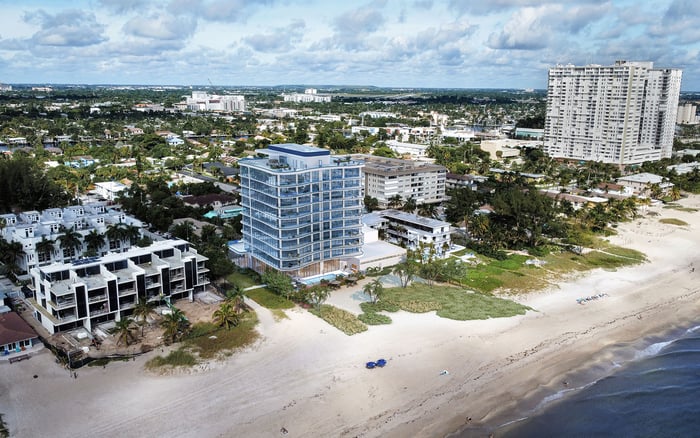
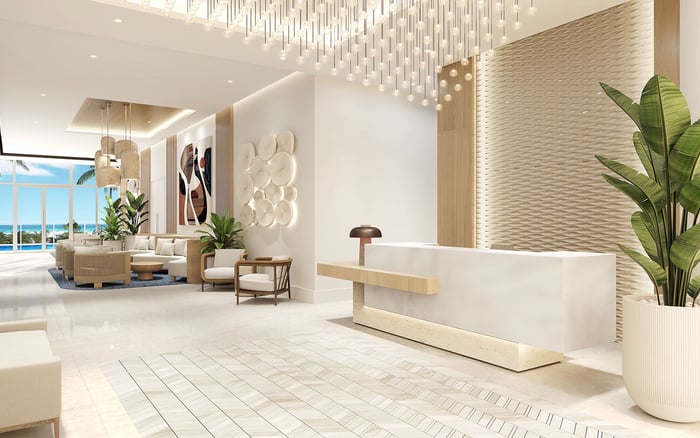
Ocean 580 in Pompano Beach offers a useful lens for evaluating wellness-retail proximity as a lifestyle and asset-quality question, not merely a matter of nearby shops.
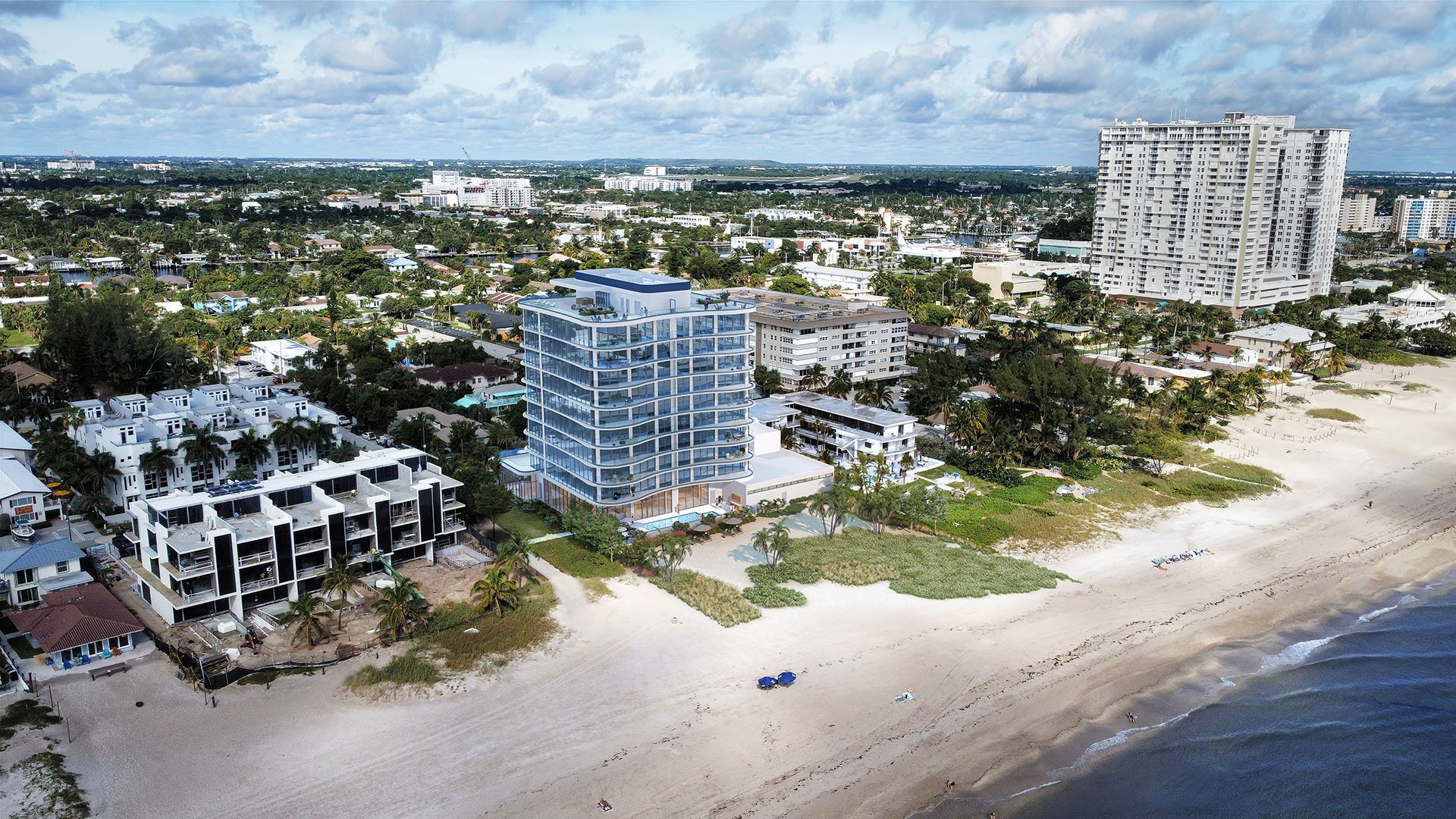
For households considering Ocean 580 Pompano Beach, wellness-retail proximity should be treated as a luxury living variable, not a simple convenience metric. The question is not merely whether cafés, fitness studios, pharmacies, dining, and services exist nearby. The sharper question is whether those places support how a household actually lives, recovers, hosts, works, and moves through the week.
Pompano Beach has a distinct coastal South Florida character, shaped by oceanfront living, boating culture, and a quieter pace that can appeal to end-users seeking a less frenetic daily rhythm. That makes the wellness-retail equation more nuanced. Some buyers want close-in energy and the ability to step out often. Others prefer enough separation to preserve calm, privacy, and the residential feeling that makes a home feel like a true retreat.
In that context, oceanfront appeal, second-home practicality, resale sensitivity, and investment discipline can all intersect. A buyer comparing Pompano Beach residences should think beyond a map pin and ask whether the surrounding lifestyle ecosystem feels durable, refined, and aligned with household standards.
The most refined way to evaluate Ocean 580 is not to assume that closer is always better. For luxury households, proximity can be excellent when the nearby offering is clean, discreet, service-oriented, and genuinely useful. It can be less compelling when it brings traffic, noise, inconsistent service, or an ambiance that does not match the household’s expectations for privacy and tone.
The better framework is right distance, right quality, right rhythm. Right distance means essential routines can be handled without friction, whether by walking, cycling, a short drive, or a broader regional trip. Right quality means nearby places feel worthy of regular use. Right rhythm means the area works not only on a quiet Tuesday morning, but also during peak winter and spring periods when South Florida can feel more active.
A luxury buyer should therefore evaluate proximity in layers. The first layer is immediate convenience: what can be reached easily and comfortably. The second is weekly lifestyle support: fitness, grooming, dining, errands, and service appointments. The third is regional depth: specialized healthcare, private medical providers, luxury shopping, destination wellness, private clubs, and other resources that may sit outside the immediate micro-district.
A single walkability score can obscure the realities of daily living. For Ocean 580 households, the useful evaluation radius should include walking, cycling, short-drive access, and regional-drive access. Each mode serves a different purpose and should be judged on its own terms.
Walking access matters most when the route feels pleasant, safe, shaded where possible, and compatible with how the household dresses and moves. A café may be close on paper, but if the walk feels exposed, inconvenient, or unappealing, it may not become part of daily life. Cycling can extend the practical radius, but only if the household is comfortable with the routes and the storage routine.
Short-drive access is often underestimated. In South Florida, a five-to-fifteen-minute drive can define the true lifestyle field for errands, wellness appointments, dining, and services. For some households, that is entirely acceptable. For others, the goal is to reduce short car trips as much as possible. The distinction matters because an area can have plenty nearby while still feeling auto-oriented in practice.
Regional access remains important even for buyers who love a coastal setting. Specialized healthcare, luxury retail, private wellness providers, and destination restaurants may require movement across broader South Florida. The ideal Ocean 580 household understands that local convenience and regional sophistication can coexist, but they are not the same thing.
In luxury real estate, wellness has become a broad household infrastructure question. Everyday wellness includes fitness options, spa services, personal care, outdoor movement, restorative routines, and quick access to basic health needs. Higher-order wellness includes hospitals, specialty clinics, private medical providers, and the ability to reach trusted practitioners when the need is more serious or more personal.
For Ocean 580 buyers, the analysis should begin with frequency. Which wellness needs occur daily, weekly, monthly, and only occasionally? A daily fitness routine should carry a different proximity threshold than a specialist visit. A household with aging parents, young children, or a health-conscious remote professional may prioritize the wellness map differently than a seasonal couple who spends part of the year elsewhere.
Quality control is equally important. The question is not only whether a provider exists nearby, but whether the experience feels consistent. Cleanliness, appointment reliability, discretion, service tone, and parking ease can determine whether a nearby option becomes part of the household routine or remains merely theoretical.
Retail access should be evaluated by category, not as a general concept. Daily essentials are one category. Pharmacies are another. Gourmet markets, dining, boutique services, personal care, and luxury shopping each play a distinct role in the household experience.
A buyer should ask which retail categories must be immediate and which can sit farther away. A pharmacy or basic errand, for example, may need to be highly convenient. Destination luxury shopping may be acceptable as a regional outing. Dining depends on the household: some buyers want regular local restaurants for weeknight use, while others dine privately at home and reserve restaurant visits for special occasions.
Service consistency is a key luxury filter. A household may tolerate distance for excellence, but it rarely tolerates unreliable service simply because it is close. The best retail ecosystem around a residence is not always the densest. It is the one that delivers the right mix of everyday convenience, tasteful options, and dependable execution.
Pompano Beach may feel different across the year. During peak winter and spring periods, restaurants, retail services, and wellness providers can feel busier than in quieter months. That seasonal rhythm should be part of the decision-making process, especially for buyers who plan to occupy during high season.
Privacy also shapes the value of proximity. A household that values calm may prefer a residence with some separation from high-traffic dining or retail nodes. A household that enjoys energy may want amenities closer, even if that brings more movement nearby. Neither preference is inherently superior. The asset-quality question is whether the setting serves its likely buyer pool over time.
For long-term holding value, buyers should consider whether the surrounding wellness and retail ecosystem appears stable, improving, or vulnerable to turnover. This does not require speculation. It requires disciplined observation of the lived environment: the caliber of operators, the maintenance of nearby corridors, the consistency of patronage, and the degree to which the area supports repeat use.
Ocean 580 is best understood through that lens. The residence is not only a home in a coastal market. It is a lifestyle platform whose value is influenced by how convincingly the surrounding environment supports daily ease, discretion, health, and pleasure.
Retirees may give greater weight to healthcare access, pharmacy convenience, quiet dining, and low-friction errands. Remote professionals may care more about wellness routines, coffee, lunch options, and the ability to reset between work blocks. Families may focus on practical services, cleanliness, safety, and the predictability of short drives.
Seasonal owners may value lock-and-leave simplicity and the ability to re-enter their routine quickly after arrival. Investors may evaluate wellness-retail proximity through a broader demand lens, considering whether the location story is easy for future buyers or renters to understand. End-users, by contrast, should be more personal and less generic. The best fit is the one that feels effortless in the household’s actual rhythm.
This is where Ocean 580 rewards a thoughtful buyer. The correct answer is not universal. The right wellness-retail profile for a privacy-oriented couple may differ from that of a hospitality-driven owner who entertains frequently. A buyer should tour the surrounding area at different times of day and, ideally, during both busier and quieter seasonal conditions.
Before making a decision, households should evaluate five practical dimensions. First, map actual routines rather than theoretical amenities. Second, separate walkable convenience from short-drive convenience. Third, judge ambiance, clientele, cleanliness, service consistency, and privacy. Fourth, compare everyday wellness needs with higher-order medical access. Fifth, consider whether the retail and wellness ecosystem appears durable enough to support future resale appeal.
The most compelling proximity story is never just about being near things. It is about being near the right things, at the right distance, with the right level of refinement. For Ocean 580 Pompano Beach, that is the distinction between convenience as a brochure phrase and convenience as a lived luxury.
What does wellness-retail proximity mean at Ocean 580? It means the relationship between daily health routines, services, dining, errands, privacy, and long-term lifestyle quality.
Is closer always better for luxury buyers? No. The better standard is the right distance, right quality, and right rhythm for the household.
Should buyers rely on a walkability score? No. Walking, cycling, short-drive access, and regional connectivity should all be evaluated separately.
What wellness categories matter most? Buyers should consider everyday fitness and spa needs along with hospitals, specialty clinics, and private medical providers.
How should retail access be judged? Retail should be sorted by category, including essentials, pharmacies, gourmet markets, dining, boutique services, and luxury shopping.
Why does seasonality matter in Pompano Beach? Restaurants, services, and wellness providers may feel different during peak winter and spring periods than in quieter months.
Who may prefer more separation from retail nodes? Households that prioritize calm, privacy, and a quieter residential atmosphere may value some distance from high-traffic areas.
Who may prioritize closer retail and dining? Owners who enjoy energy, frequent dining, and spontaneous errands may prefer tighter proximity to active nodes.
Does proximity affect resale appeal? It can, especially when nearby wellness and retail options are stable, improving, and aligned with luxury expectations.
How should seasonal owners evaluate Ocean 580? They should focus on how quickly the location restores their preferred routine after arrival and how it performs in peak season.
For a discreet conversation and a curated building-by-building shortlist, connect with MILLION.
If branded residences are on your mind — as a home or as an allocation — we would be glad to share what we are seeing, privately.
Begin a quiet conversation