A family-focused guide to comparing North Bay Village and Edgewater before touring, with emphasis on routines, building fit, amenity value, privacy, commute testing, and long-term flexibility.

For family buyers, the choice between North Bay Village and Edgewater should begin with the shape of ordinary days. A glittering view can be persuasive during a late-afternoon showing, but the better question is how the home performs at breakfast, school departure, after-work pickup, homework, dinner, and bedtime. The strongest purchase is not simply the most beautiful residence. It is the one that removes friction.
Before touring, write down the family’s real schedule. Include school runs, caregiver arrivals, extracurricular activities, pet needs, grocery patterns, fitness habits, visiting grandparents, weekend beach plans, and the number of cars that must function without negotiation. Then measure each residence against that rhythm. A home that looks elegant online can lose its appeal if the elevator sequence, parking flow, storage, or secondary bedrooms do not support daily life.
North Bay Village and Edgewater can both be compelling for families seeking a Miami condominium lifestyle, but they frame the decision differently. One search may feel more residential and water-oriented; the other may feel more urban and connected to a larger daily circuit. The right answer depends less on prestige than on fit.
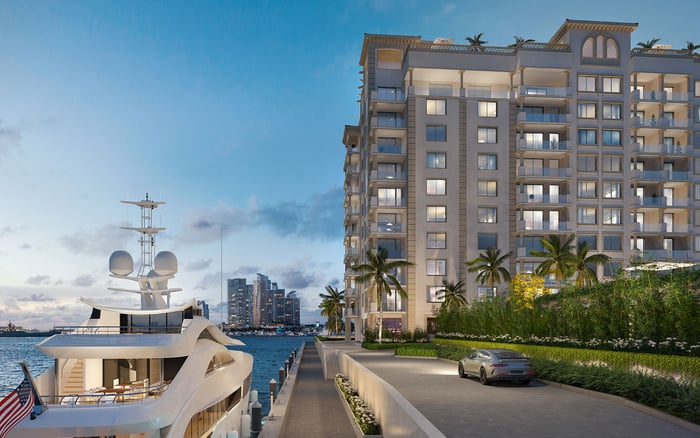
North Bay Village is best approached by families who want calm, separation, and a sense of arrival to matter. During a tour, pay attention to how the building handles transitions. Is there an intuitive route from parking to residence? Does the lobby feel manageable with children, pets, strollers, bags, and guests? Are the amenity spaces positioned to be easy to use, not merely impressive to describe?
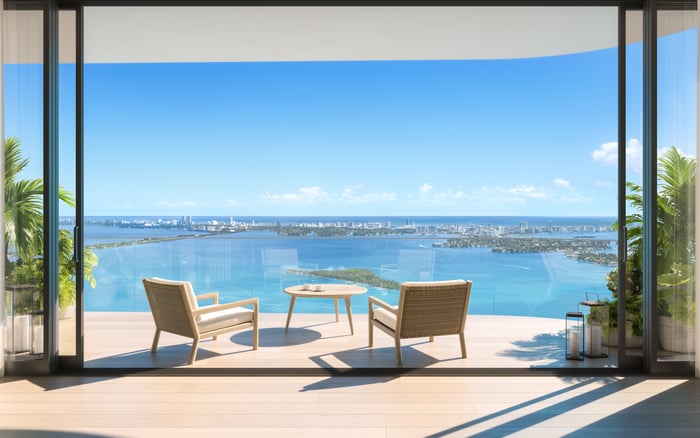
For family buyers, water-facing residences can offer emotional value beyond aesthetics. A quieter morning, a more open outlook, or a terrace that becomes part of the daily ritual can change how a home lives. Still, the premium should be tested with practical questions. Does the layout allow adults and children to coexist comfortably? Can one parent take a call while another helps with homework? Is there a bedroom that can evolve from nursery to study to guest room?
The most successful North Bay Village tour is unhurried. Families should revisit the building at different moments if possible, listen for ambient noise, observe circulation, and ask how residents use shared spaces. A polished sales presentation will not reveal everything. The family’s own pace through the property often reveals more.
Edgewater often attracts families who want a Miami base with a more active urban cadence. For these buyers, the appeal is not only the residence itself, but the feeling of being close to dining, culture, fitness, friends, and city energy. That convenience can be powerful, especially for families with older children, working parents, or frequent visitors.
The essential question is whether the urban energy feels like an advantage or an intrusion. During an Edgewater tour, families should study the arrival experience carefully. Parking, valet rhythm, package handling, elevator timing, lobby volume, and guest access all deserve attention. A residence can have extraordinary views and finishes, yet still be less suitable if the building’s daily choreography feels too complex.
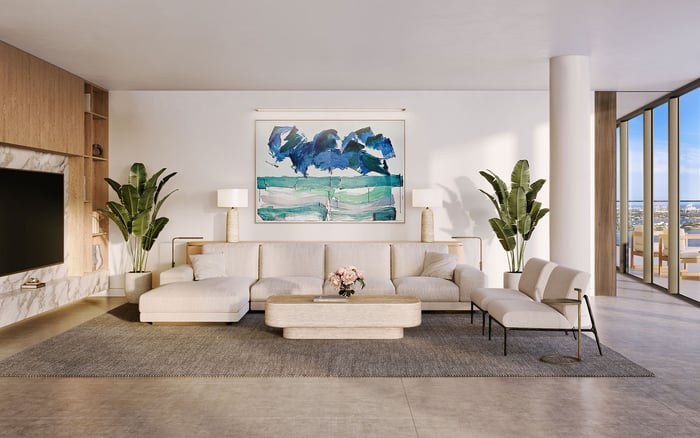
Interior planning matters as much as location. Look closely at bedroom separation, acoustic privacy, laundry placement, kitchen storage, terrace safety, and where school bags, sports gear, scooters, and luggage will actually live. In a high-design residence, the difference between a beautiful plan and a family-ready plan is often measured in closets, circulation, and the ability to close a door.
Touring should not begin with a loose wish list. It should begin with a decision framework. For a disciplined search, label your notes with North Bay Village or Edgewater, then add filters such as Waterview, Balcony, Pool, and New-construction only when they genuinely shape daily life.
First, compare commute reality. Do not estimate. Drive the routes your family will actually use at the times you will actually use them. Second, compare school logistics, whether the plan involves public, private, international, or specialized education. The question is not only distance. It is the daily burden of drop-off, pickup, traffic, parking, and backup plans.
Third, compare amenity usefulness. A pool, fitness studio, children’s room, lounge, spa, or co-working suite should be judged by how often the family will use it. Some families need generous shared spaces because the residence is meant to live larger than its square footage. Others prefer privacy and will rarely use building amenities. Paying for amenities that do not fit the family’s rhythm can weaken the long-term value proposition.
Fourth, compare building culture. Families should ask how many residents live there full time, how guest access is managed, how pets are accommodated, and how the building handles noise, deliveries, moves, and renovations. The best luxury buildings feel calm because the rules and operations are clear.
In family real estate, square footage is only the beginning. A smaller residence with a more intelligent plan can live better than a larger residence with awkward transitions. Look for a kitchen that supports real meals, not only entertaining. Notice whether the living area can hold both adult seating and child activity without feeling improvised. Study whether the terrace is usable at the hours your family would actually be outside.
Bedroom placement is critical. Younger children may need to be close to the primary suite. Older children may benefit from separation. Guests, caregivers, and grandparents add another layer. If the residence must serve multiple generations or seasonal visitors, privacy becomes a daily asset.
Storage is often underappreciated during glamorous tours. Families should ask where holiday items, sports equipment, beach gear, luggage, cleaning supplies, school materials, and bulk household purchases will go. If the answer requires constant off-site solutions, the home may become less graceful over time.
Luxury family buyers often value privacy as much as design. In both neighborhoods, examine how the building manages entry. The experience should feel secure without feeling cumbersome. Children, grandparents, drivers, tutors, trainers, and guests may all interact with the building. A refined property makes those movements feel orderly.
Parking deserves more attention than it usually receives. Ask how assigned spaces work, how additional vehicles are handled, how guest parking functions, and whether the route from garage to residence is comfortable with children and packages. If the household relies on frequent deliveries, understand the package protocol before falling in love with the kitchen.
Families should also consider the resilience of daily use. Elevators, service access, staff communication, maintenance response, and management tone all influence quality of life. A residence may photograph beautifully, but the building’s operations determine how it feels on a rainy Tuesday.
Family buyers are often long-horizon buyers, but resale should still be part of the conversation. The most durable residences tend to offer flexible floor plans, meaningful outdoor space, strong natural light, sensible bedroom count, usable amenities, and a location narrative that future buyers can understand quickly.
That does not mean every decision must be financial. A home that improves family life has its own return. The key is to avoid overpaying for features that are personally exciting but narrowly useful. A dramatic finish package may age faster than a balanced layout. A remarkable view may matter more if the terrace and living room are genuinely usable. A prestigious address may be less important than a building that helps the family move through the week with ease.
For many buyers, the best answer becomes clear only after touring both neighborhoods in the same week. Seeing North Bay Village and Edgewater close together sharpens the contrast. One may feel calmer, the other more connected. One may offer a more private sense of home, the other a stronger urban rhythm. The right choice is the one your family can repeat, comfortably, for years.
Should families tour North Bay Village or Edgewater first? Tour the neighborhood that best matches your current routine first, then use the second tour as a contrast. This helps separate lifestyle fit from momentary excitement.
Is North Bay Village better for families than Edgewater? Not universally. North Bay Village may appeal to buyers seeking a calmer residential feel, while Edgewater may suit families who prefer a more urban daily base.
What should parents prioritize during condo tours? Prioritize layout, storage, arrival sequence, parking, elevator flow, acoustic privacy, and how amenities support real family habits.
How important is a balcony for family buyers? A balcony can be meaningful if it is usable, comfortable, and integrated with the living area. Treat it as lifestyle space, not just a view platform.
Should families pay a premium for amenities? Only when the amenities will be used consistently. A beautiful amenity deck has limited value if it does not support the family’s actual routine.
How can buyers compare commute convenience? Test the routes at the same times your household would use them. A quiet midday drive may not reflect school or workday conditions.
What layout works best for children? The best layout depends on age and household structure. Younger children may need proximity, while older children may benefit from separation and privacy.
Are newer buildings always better for families? Not always. Newer residences may offer modern systems and amenities, but families should still test storage, room proportions, operations, and monthly costs.
What is the biggest touring mistake? Focusing on finishes before understanding daily function. Family buyers should imagine ordinary mornings and evenings, not only the showing moment.
When should a family involve an advisor? Involve an advisor before touring if you need help comparing buildings, layouts, contracts, and neighborhood fit with discipline.
For a tailored shortlist and next-step guidance, connect with MILLION.
If branded residences are on your mind — as a home or as an allocation — we would be glad to share what we are seeing, privately.
Begin a quiet conversation