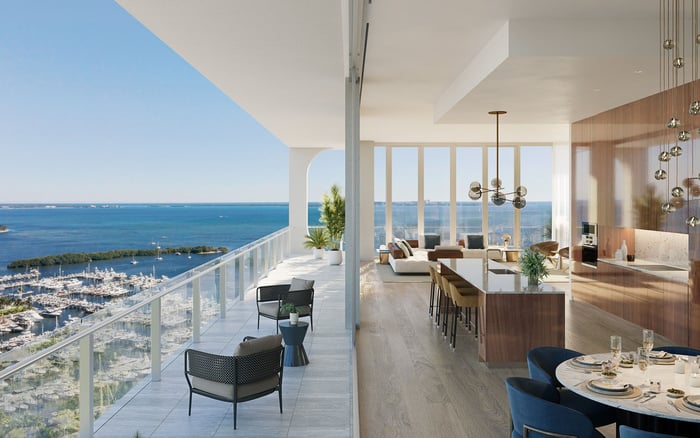
A discreet buyer’s guide to selecting Coconut Grove waterfront residences for seasonal use, with a focus on service, privacy, arrival readiness, and careful operational due diligence.

For an owner who divides time among several homes, the most valuable luxury may be a residence that feels composed from the moment of arrival. In Coconut Grove, the proposition is especially compelling: a waterfront address can offer visual calm and a strong sense of retreat, while staffed service can reduce the friction of maintaining a South Florida home from afar.
Yet “lock-and-leave” should never be treated as shorthand for effortless ownership. It is a demanding operating standard. The right building must support secure departures, orderly arrivals, responsive communication, and clear accountability for what happens inside the residence while the owner is away. Buyers should evaluate service with the same rigor they apply to views, privacy, plan efficiency, and finish quality.
This buyer’s guide considers the Grove through an operational lens. It is not simply about choosing a beautiful waterfront home. It is about identifying the residence whose management structure, service culture, and ownership rules align with the buyer’s intended way of living.
A useful starting point is Four Seasons Residences Coconut Grove. For service-minded buyers, the inquiry should be precise: Which residential services are included, which are available separately, and how consistently can they be coordinated while an owner is away? Brand familiarity may open the conversation, but the governing documents and current service program should close it.
Park Grove Coconut Grove also belongs in a focused Grove search. Rather than relying on broad amenity language, buyers should test the everyday mechanics of ownership. Ask how deliveries are handled, who may enter a residence with prior authorization, how after-hours matters are escalated, and which protocols apply before a seasonal return.
For buyers drawn to a polished hospitality vocabulary, Mr. C Tigertail Coconut Grove merits close operational review. The key is to separate atmosphere from scope. Concierge assistance, residence monitoring, housekeeping coordination, engineering access, and arrival preparation are distinct functions; each should be confirmed independently.
Island-minded buyers may wish to examine Vita at Grove Isle as part of the same comparison. Here, as with any residence involving controlled access and waterfront exposure, due diligence should extend beyond the front door. Guest procedures, vendor access, storm protocols, emergency communication, and continuity of building operations all matter to an absent owner.
Finally, Opus Coconut Grove may suit buyers seeking a contemporary Grove option without losing sight of practical stewardship. The decisive questions remain consistent: Who is accountable? What is documented? How quickly are requests acknowledged? Which tasks remain solely the owner’s responsibility?
A staffed lobby is not automatically a residence-management program. Buyers should map the entire service chain, from the first call through final resolution. A concierge may arrange access, engineering personnel may address building systems, and an outside vendor may handle work within the unit. Understanding those boundaries prevents expensive assumptions.
For a second-home owner, the ideal operating model is legible. It should provide a defined contact path, written authorization procedures, dependable incident reporting, and a clear distinction between included service and billable assistance. If the buyer expects groceries placed before arrival, linens refreshed, vehicles prepared, or terraces checked after severe weather, each expectation should be discussed and documented before purchase.
Service quality is also revealed in the handoffs. Ask who supervises third-party vendors, whether staff can retain keys or digital credentials, and how completed work is verified. Discretion matters, but so does an auditable process. A refined lifestyle depends on both.
Water views can be emotionally decisive, but the ownership review should remain technical. Orientation, glazing, terrace configuration, exposure, and privacy can materially shape how a residence feels. Buyers should visit at different times of day and consider how the home will be secured and inspected during extended absences.
Building-level questions deserve equal attention. Review insurance obligations, maintenance responsibilities, reserve planning, emergency procedures, and any rules affecting alterations or protective measures. Determine where association responsibility ends and owner responsibility begins. Legal counsel, insurance advisers, inspectors, and tax professionals should review the relevant materials in light of the buyer’s circumstances.
Waterfront convenience can also mean different things to different owners. One buyer may prioritize an uninterrupted outlook; another may care more about controlled access, ease of arrival, or proximity to boating. Establish those preferences before comparing floor plans, because even the most impressive view cannot compensate for an operating model that conflicts with the owner’s routine.
Begin with a realistic absence scenario. Tell the sales or management team that the residence may remain unoccupied for weeks or months, then ask them to explain what happens before, during, and after that period. Who notices a leak, power interruption, air-conditioning issue, or unauthorized access? Who contacts the owner, and what authority does staff have to act?
Next, test arrival readiness. Can staff coordinate approved vendors? Are housekeeping and maintenance services building-operated or merely referred? Is there a fee schedule? Do limitations apply during holidays, storms, or peak occupancy? The answers can distinguish a genuinely serviceable residence from one with little more than an elegant front desk.
Finally, compare total carrying obligations rather than headline fees alone. Staffing, reserves, insurance, valet or parking arrangements, storage, and optional residence services may all shape the annual ownership experience. The best choice is the building whose costs and service boundaries are transparent, sustainable, and appropriate for the buyer’s pattern of use.
The shortlist should ultimately be tested against four priorities: privacy, responsiveness, resilience, and simplicity. Privacy concerns access and discretion. Responsiveness concerns the speed and quality of assistance. Resilience concerns the building’s operational readiness. Simplicity concerns how many calls, approvals, and vendors stand between a request and its completion.
No single residence will suit every owner. A buyer who spends only occasional weekends in Miami may value arrival preparation over expansive amenity programming. A family maintaining the home for longer seasonal stays may place greater weight on storage, guest access, and recurring household support. The right residence is the one that performs quietly in the owner’s absence and intuitively upon return.
What does lock-and-leave ownership mean? It describes a home that can be secured and left for extended periods with minimal owner intervention.
Does a staffed lobby guarantee residence care? No. Buyers should confirm which services extend beyond common areas and which require outside vendors.
Which service terms should buyers verify? Confirm staffing coverage, access authorization, emergency escalation, fees, exclusions, and response procedures.
Should service promises appear in writing? Yes. Material expectations should be checked against current agreements, rules, disclosures, and service schedules.
Why are waterfront homes different for absent owners? Exposure and terrace conditions can add inspection, maintenance, insurance, and storm-preparation considerations.
Are housekeeping and arrival preparation always included? No. They may be optional, separately billed, referred to third parties, or unavailable.
What should owners ask about vendor access? Ask how vendors are approved, admitted, supervised, documented, and authorized to enter the residence.
How should buyers compare carrying costs? Review recurring fees, insurance obligations, reserves, parking, storage, and optional services together.
Can service programs change after purchase? They can evolve, so buyers should review governing authority and avoid relying solely on informal representations.
Who should assist with due diligence? Buyers should consult qualified legal, inspection, insurance, tax, and real-estate advisers.
For a tailored shortlist and next-step guidance, connect with MILLION.
If branded residences are on your mind — as a home or as an allocation — we would be glad to share what we are seeing, privately.
Begin a quiet conversation