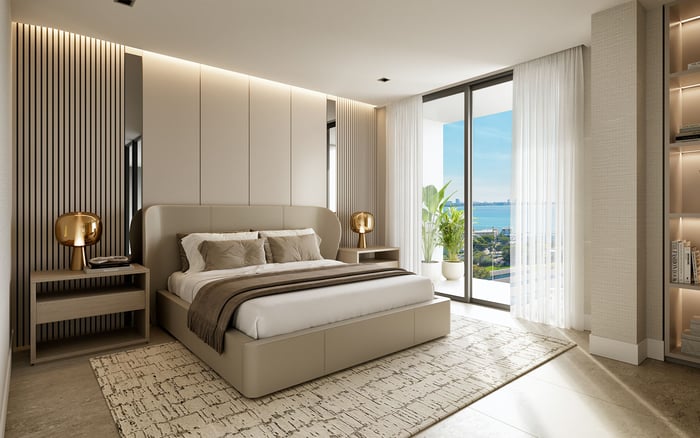
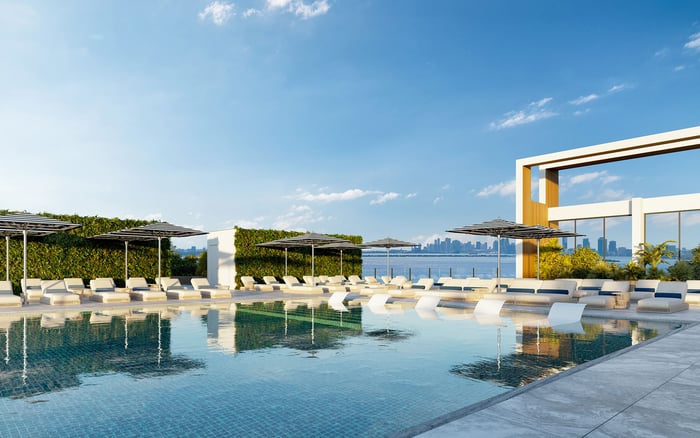
A discreet buyer’s guide to evaluating terraces, balconies, waterview comfort, and maintenance obligations in North Bay Village’s luxury condominium market.
In North Bay Village, outdoor space is often the emotional center of a residence. A terrace can turn a well-proportioned floor plan into a daily ritual: coffee facing the water, late dinners in the breeze, or a quiet hour after the city has gone luminous across the bay. For luxury buyers, however, the most valuable terrace is not simply the largest or most photogenic. It is the one that performs gracefully over time.
Terrace due diligence belongs beside views, ceiling heights, parking, amenities, and finish quality. The outdoor area is exposed to South Florida’s climate, so sun, rain, humidity, wind, and salt air all become part of ownership. A beautiful exterior room must be evaluated as architecture, lifestyle asset, and maintenance responsibility at once.
Buyer shorthand often reduces the brief to terrace, balcony, waterview, new construction, and pool, but the stronger conversation is more precise. How does the space drain after rain? Where will furniture sit without blocking doors? Is there enough covered area to make the terrace usable in midday sun? Can the association access it for facade, railing, or waterproofing work? These questions are not unromantic. They preserve the romance.
Buyers comparing residences such as Continuum Club & Residences North Bay Village and Shoma Bay North Bay Village should approach the outdoor space with the same discipline they bring to interiors. A terrace is a room without walls, and in a coastal market, that room needs a plan.
A generous terrace is appealing, but square footage alone can mislead. The most functional outdoor spaces have usable depth, logical access from living areas, and a clear relationship to the interior. A narrow balcony may photograph beautifully yet offer limited flexibility. A deeper terrace can support dining, lounging, planters, and circulation without feeling staged.
Pay close attention to door placement. If the main sliding doors open at the center of the terrace, furniture may need to work around a traffic path. If access is split between a living room and primary suite, the terrace may function as two outdoor zones. Corner terraces can feel more expansive because sightlines move in more than one direction, while linear balconies can be elegant when the view is uninterrupted and the furniture plan is disciplined.
The best test is simple: imagine the terrace on an ordinary Tuesday, not only during a cocktail hour. Where does breakfast happen? Where do wet cushions go after a storm? Can two people pass comfortably behind dining chairs? Does the outdoor space support the life you actually intend to live?
In any coastal condominium, drainage is central. A terrace should move water away efficiently and predictably. Standing water can become more than an inconvenience; it may affect finishes, furnishings, planters, and daily comfort. Buyers should study drains, slopes, thresholds, and any visible signs of staining or wear.
Waterproofing is equally important, though much of it is not visible during a showing. Ask how terrace membranes, balcony surfaces, railings, and exterior components are maintained under the condominium documents. Some items may be treated as common elements, while others may fall partly to the individual owner. The distinction can affect both cost and responsibility.
Furniture choices should also respect maintenance realities. Heavy planters, outdoor kitchens, decorative screens, umbrellas, and built-in elements may be restricted or require approval. Even when allowed, they should be selected with drainage, wind, weight, and long-term access in mind. An elegant terrace is not the one with the most objects. It is the one with the fewest future complications.
Terrace rules are often where lifestyle expectations meet building governance. Buyers should review restrictions on grills, flooring overlays, planters, lighting, shades, pets, storage, and seasonal decor. These rules can vary by condominium and may affect how private, flexible, or entertaining-friendly the outdoor space feels.
Privacy deserves special attention. In dense waterfront settings, terraces can face neighboring residences, amenities, or passing boats. Glass railings may preserve views but offer less screening. Deep overhangs can create shade and a sense of enclosure, while exposed terraces may feel more open and dramatic. Neither is inherently better. The right choice depends on whether the buyer prioritizes openness, discretion, or all-day usability.
Noise is another practical factor. A terrace near an amenity deck, pool area, arrival court, bridge corridor, or mechanical zone may carry a different rhythm than one oriented toward open water. Visit at more than one time of day when possible, and stand outside long enough to hear the building, not just see the view.
A waterview is one of North Bay Village’s defining pleasures, but exposure shapes comfort. Morning light, afternoon sun, prevailing breezes, and storm-season practicality all matter. Some buyers love dramatic western sunsets; others prefer softer morning conditions. Some want constant cross-breezes, while others prefer a more sheltered outdoor room.
The key is to think in seasons, not moments. South Florida outdoor living changes throughout the year. A terrace that feels perfect in January may require shade planning in August. A breezy balcony may be delightful most days and less comfortable during strong weather. Luxury ownership is about anticipating those variations rather than being surprised by them.
For comparison, buyers sometimes look beyond North Bay Village to nearby bayfront enclaves. Projects such as La Baia North Bay Harbor Islands and Onda Bay Harbor can help frame how different waterfront neighborhoods handle scale, privacy, and outdoor orientation. The goal is not to chase the largest terrace, but to understand what kind of exterior living suits the buyer’s habits.
New-construction residences can offer contemporary terrace proportions, updated materials, and a fresh building envelope, but new does not mean effortless. Buyers should still review warranties, association responsibilities, rules, projected maintenance standards, and any limitations on owner modifications.
A newly delivered terrace may feel pristine, yet its performance will be tested over years. Drainage, railings, doors, exterior lighting, glass, flooring, and facade access all require a building-wide maintenance culture. The most sophisticated buyers look beyond the model residence and ask how the condominium intends to preserve the outdoor experience over time.
For resale buyers, the terrace can reveal how a building has aged. Look for consistency in railings, surface condition, door operation, and evidence of deferred work. A well-kept balcony often suggests attentive ownership, but the broader building condition and documentation remain essential.
Before making an offer, buyers should understand whether the terrace is deeded, limited common element, or otherwise governed by the condominium structure. They should ask who maintains surfaces, railings, drains, waterproofing, exterior doors, and any fixed components. They should also determine whether the association has planned facade, balcony, or waterproofing projects that could affect access, assessments, or usability.
Insurance and reserves also deserve attention. Outdoor elements are exposed, and buildings that plan carefully for exterior maintenance can create a more predictable ownership experience. A polished lobby is welcome, but a disciplined maintenance program is what keeps terraces livable and values resilient.
Finally, buyers should bring lifestyle questions to the showing. If entertaining is important, measure dining clearances. If pets are part of the household, ask about terrace safety and rules. If the terrace will be used as a quiet retreat, test privacy and acoustics. Luxury is personal, and outdoor space should be evaluated through the buyer’s actual routine.
Are terraces in North Bay Village worth prioritizing? Yes, especially for buyers who value outdoor living, water views, and entertaining. The key is to evaluate usability and maintenance, not size alone.
What is the difference between a terrace and a balcony? The terms are often used loosely, but a terrace usually suggests more depth and outdoor-room potential. A balcony may still be highly valuable if it is well oriented and functional.
Should I inspect terrace drainage before buying? Yes. Drainage, slope, thresholds, and visible staining can reveal how the space performs after rain and how carefully it has been maintained.
Can I add planters or outdoor furniture freely? Not always. Condominium rules may regulate weight, placement, materials, wind safety, and the appearance of items visible from outside.
Are grills usually allowed on condo terraces? Rules vary by building and should be reviewed before purchase. Never assume grilling is permitted without written confirmation.
Do waterview terraces require different upkeep? They can. Salt air, sun, moisture, and wind exposure should influence furniture, fabrics, metals, and maintenance habits.
Is a larger terrace always better? No. Depth, privacy, shade, door placement, and furniture layout can matter more than raw square footage.
What documents should I review? Review condominium rules, maintenance responsibilities, budgets, reserves, and any planned exterior work that could affect terrace access or cost.
How should I compare new construction and resale terraces? For new construction, review warranties and rules. For resale, study condition, building maintenance history, and any upcoming exterior projects.
What is the most important buyer takeaway? Treat the terrace as a living system, not decoration. The best outdoor space combines view, comfort, governance, and long-term care.
When you're ready to tour or underwrite the options, connect with MILLION.
If branded residences are on your mind — as a home or as an allocation — we would be glad to share what we are seeing, privately.
Begin a quiet conversation