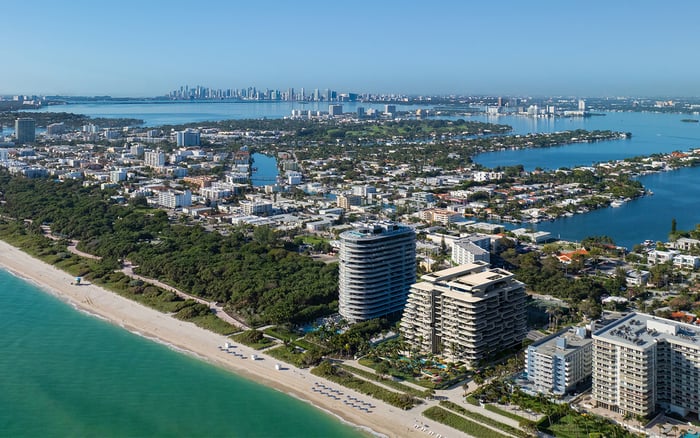
A refined buyer’s guide for New Yorkers choosing a South Florida second home around Surfside, with emphasis on arrival rituals, building service, floor plan discipline, and weekly rhythm rather than speculation.

For a New York buyer considering Surfside, the most elegant second-home decision begins before the showing. It starts with the cadence of departure: the car to the airport, the preferred flight window, the bags that move back and forth, the family members arriving separately, and the quiet expectation that the home will feel composed the moment the door opens.
That is the difference between buying a beautiful South Florida residence and buying a workable second-home rhythm. The former can impress in a single afternoon. The latter proves itself over repeated weekends, school breaks, winter stays, holidays, and the unscheduled Thursday evening when the city feels too compressed and the ocean feels necessary.
Surfside appeals because it can support that polished rhythm without demanding theatrical reinvention. It occupies the mental space many New Yorkers want from Miami: beach-oriented, discreet, service-conscious, and close enough to surrounding luxury enclaves to feel connected without losing its softer residential character. The best purchase is not simply the highest floor or the broadest view. It is the home that makes the transition from Manhattan pace to coastal ease feel almost invisible.
Surfside has a particular appeal for buyers who want oceanfront living with a calmer emotional temperature. It is not about withdrawing from Miami’s energy. It is about editing that energy into a more private daily composition. Morning beach walks, terrace breakfasts, spa appointments, family lunches, and quiet evenings can coexist with dinners in Bal Harbour, Miami Beach, or the broader mainland social circuit.
For some buyers, a residence such as The Delmore Surfside will enter the conversation because it reflects the current appetite for low-density, design-forward coastal living. Others may compare the established prestige of Fendi Château Residences Surfside or the club-like aura of The Surf Club Four Seasons Surfside. The point is not to chase names. It is to understand which building philosophy best supports the way you actually live when you are not in New York.
A polished buyer should test the neighborhood in intervals. Arrive on a Friday. Leave on a Monday. Spend one morning doing nothing. Notice whether the building, lobby, staff, parking sequence, elevator privacy, beach access, and terrace orientation create ease or friction. Surfside is at its best when the residence becomes less of a destination and more of a second operating system.
A serious second-home search should include an arrival rehearsal. Ask what happens from the moment the car pulls in. Is the entrance intuitive for guests and drivers? Is there a secure, graceful way to receive luggage? Does the staff understand repeat-owner routines? Can groceries, flowers, wardrobe deliveries, and housekeeping be coordinated without turning the first hour into management?
New York buyers often underestimate how much building operations shape the pleasure of ownership. A magnificent living room loses some power if every arrival feels improvised. A slightly more restrained residence can feel superior when the service culture is calm, discreet, and consistent.
Consider the household split as well. One spouse may arrive from New York after a late meeting. Children or guests may come on a different day. Grandparents may need a simpler path from porte cochere to elevator. The more often the home will be used, the more these details matter. Second-home living is not vacation living. It is repeat living, and repeat living rewards choreography.
The most successful Surfside second homes rarely feel like hotel rooms, even when they offer hotel-level ease. They need space for repeated use: owner closets that remain stocked, beach gear that does not migrate into formal rooms, a kitchen that supports both chef-prepared evenings and casual breakfasts, and guest rooms that function without turning every visit into a logistical puzzle.
Flow matters. A New York buyer may be accustomed to formal separation, but South Florida living often depends on indoor-outdoor movement. The terrace is not decorative. It is part of the daily plan. Evaluate how the primary suite wakes up, how the living room opens, where the sun feels strongest, and whether outdoor dining is comfortable enough to become habitual.
At Ocean House Surfside, buyers may be drawn to a more intimate residential setting. Nearby, Eighty Seven Park Surfside may appeal to those who want a design language connected to landscape and coastal quiet. Each option should be judged less by brochure vocabulary and more by the practical question: can you leave on Monday and return on Friday without the residence needing to be reinvented?
Surfside should be compared thoughtfully with Bal Harbour, Miami Beach, Bay Harbor Islands, and Sunny Isles Beach, not as a contest but as a lifestyle calibration. Bal Harbour may feel more retail-adjacent and internationally established. Miami Beach offers a broader spectrum of dining, art, architecture, and nightlife. Bay Harbor Islands can provide a quieter residential counterpoint with a different waterfront mood. Sunny Isles Beach often speaks to buyers who want a more vertical skyline and a resort-residential atmosphere.
If Bal Harbour is part of the comparison set, Rivage Bal Harbour may help frame the distinction between neighboring luxury markets. The exercise is not to decide which enclave is most impressive. It is to decide where your family’s lifestyle will feel most natural on the third, tenth, and fiftieth visit.
A disciplined buyer should ask: where will we dine when we want no planning? Where will friends expect to meet us? Where will visiting family feel comfortable without constant coordination? Which location makes a quiet Sunday feel complete? The right answer is personal, but it should be reached through rhythm rather than spectacle.
In a primary residence, owners can compensate for imperfections through routine. In a second home, the building must carry more weight. Staff responsiveness, package handling, vendor coordination, valet reliability, maintenance communication, and owner privacy all become central to the experience.
This is especially true for buyers who intend to move between New York and South Florida frequently. The residence may sit empty between visits, then become fully active within hours. Air conditioning, terrace furniture, linens, pantry items, and technology should all be part of a planned operating standard. The question is not whether a building feels luxurious on tour. The question is whether it remains graceful when life is in motion.
Ask direct questions during diligence. How are recurring owner preferences handled? How are deliveries managed when an owner is away? What is the process for approved vendors? How does the building communicate before storms or maintenance events? Polished ownership depends on invisible competence.
Many New York buyers first imagine South Florida through winter. That is understandable, but it is incomplete. A second home should work across shifting family calendars: long weekends, spring holidays, summer resets, business trips extended into personal time, and occasional remote work weeks.
This is where emotional clarity matters. If the home is only appealing during peak social season, it may not be the right home. If it feels restorative during a quiet weekday morning, it is more likely to become a true second base. The best Surfside residence lets the owner choose between engagement and retreat without friction.
Also consider how the home will age with your household. Children grow into different routines. Guests change. Work demands fluctuate. A residence chosen only for today’s glamour may feel narrow later. A residence chosen for flexible use, privacy, service, and calm can remain relevant through multiple chapters.
Before signing, reduce the decision to a single practical scenario. Imagine arriving from New York with little notice. The apartment is prepared, the terrace is ready, the refrigerator is stocked, the primary closet contains what you need, and dinner can be either effortless at home or nearby without planning. If the building and location can support that scenario repeatedly, the purchase is aligned with a polished second-home rhythm.
Surfside rewards buyers who value refinement over noise. It is not the loudest South Florida choice, and that is precisely its strength. For the right New York owner, it offers a rare combination: coastal immediacy, privacy, service potential, and access to the wider Miami world without surrendering the feeling of retreat.
Is Surfside a practical choice for a New York second home? Yes, for buyers who want beach proximity, privacy, and a calmer residential mood while staying connected to neighboring luxury enclaves.
Should I prioritize views or building service? Views matter, but repeat ownership often depends more on service, arrival flow, maintenance standards, and staff consistency.
How should I compare Surfside with Bal Harbour? Compare daily rhythm rather than prestige alone, including dining habits, privacy preferences, guest comfort, and how often you want retail nearby.
Is Miami Beach too active for a second-home buyer? Not necessarily. Miami Beach can suit buyers who want broader cultural and dining access, while Surfside may feel more residential and discreet.
What floor plan works best for repeated visits? Look for generous owner storage, practical guest separation, terrace usability, and easy movement between indoor and outdoor living areas.
How important is staff familiarity? Very important. A second home feels effortless when staff understand recurring preferences, access protocols, deliveries, and owner privacy.
Should I buy for winter use only? A stronger purchase should work beyond winter, including long weekends, remote work periods, family visits, and quieter off-season stays.
What should I test during a showing? Test the arrival sequence, elevator experience, natural light, terrace comfort, acoustic privacy, storage, and how the building handles daily logistics.
Can Surfside support a discreet lifestyle? Yes. Surfside is well suited to buyers who want coastal access and refinement without making every day feel publicly staged.
What is the biggest mistake New York buyers make? They sometimes buy the most impressive residence on tour instead of the home that will operate smoothly across repeated arrivals and departures.
When you're ready to tour or underwrite the options, connect with MILLION.
If branded residences are on your mind — as a home or as an allocation — we would be glad to share what we are seeing, privately.
Begin a quiet conversation