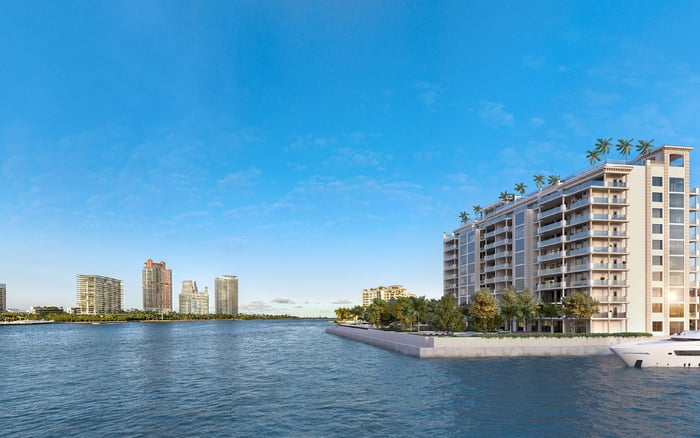
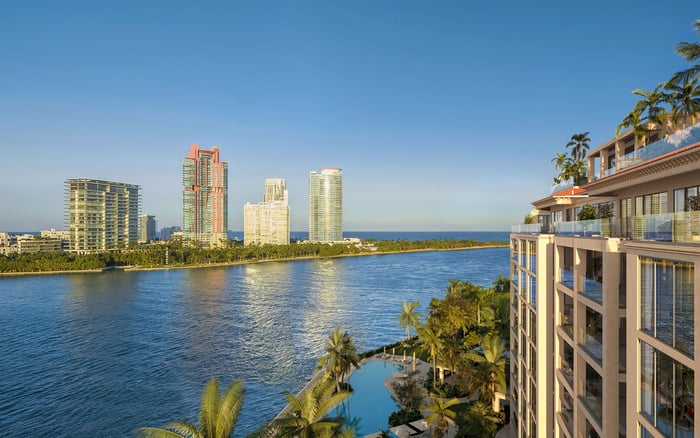
A discreet buyer’s guide for New Yorkers evaluating bayfront residences on Fisher Island, with emphasis on privacy, views, daily rhythm, service, and long-term fit.

For a New York buyer, Fisher Island is not simply a warmer address. It is a different residential tempo. The decision is less about leaving Manhattan than choosing a South Florida base that can hold privacy, water, service, family, and a measured social life within one controlled setting.
The strongest bayfront residences are not always the most dramatic on first impression. A buyer coming from a Park Avenue co-op, a West Village townhouse, or a Tribeca loft may already understand discretion, but bayfront living adds another layer: exposure to light, water, horizon, boating activity, and seasonal use. The residence has to work in January and August, for a three-day visit and for a month-long stay.
This is why the search should begin with a personal operating brief. Is the home a primary residence, a second home, or a family compound in gradual formation? Will it be used for quiet weekends, school breaks, extended remote work, or entertaining? Once those questions are clear, Fisher Island becomes easier to read.
Bayfront buyers often say they want water, but water is not a single category. A water view can be broad and cinematic, narrow and intimate, active and nautical, or serene and almost private. The most useful exercise is to visit at different times of day and ask what the view gives back. Morning light may feel restorative; evening reflections may feel glamorous; midday glare may be less forgiving.
Equally important is what the residence does not show. Privacy is a form of luxury that cannot be added later. Study sightlines from neighboring buildings, terraces, common areas, docks, and paths. A beautiful balcony that feels exposed may become decorative rather than useful. A quieter terrace with a more restrained angle can become the room everyone uses.
On Fisher Island, the appeal is often the ability to feel removed while remaining connected to Miami’s cultural and financial orbit. That balance should be tested physically. Walk the building. Sit near the glass. Open the doors. Listen. The right bayfront residence has a calm that is perceptible before any discussion of finishes.
A New York buyer may arrive with strong preferences shaped by vertical living. Full-service condominium life feels familiar: staff, security, lock-and-leave simplicity, and a clear separation between private space and operational responsibility. On Fisher Island, residences such as The Residences at Six Fisher Island speak to buyers who want a highly composed island experience with the convenience of contemporary residential living.
Others want a more estate-like posture, especially if the purchase is meant to anchor a multigenerational South Florida life. The Links Estates at Fisher Island is relevant for buyers who think in terms of privacy, scale, and a home that behaves less like a pied-à-terre and more like a long-term family address.
There is also a middle ground: a residence that feels private and substantive, yet does not demand the full operational burden of a standalone house. For many New Yorkers, that hybrid is the sweet spot. It allows the home to be used spontaneously, maintained consistently, and enjoyed without turning ownership into a second profession.
Fisher Island should be chosen deliberately, not by default. A buyer should compare it with the best versions of Miami Beach, Coconut Grove, Brickell, and other waterfront enclaves before committing. Each option answers a different emotional brief.
Miami Beach offers proximity to restaurants, hotels, clubs, and oceanfront energy. Brickell offers financial-district convenience, skyline views, and a more urban cadence. A project such as Una Residences Brickell may appeal to buyers who want bayfront living without leaving the city’s vertical rhythm. Fisher Island, by contrast, is for the buyer who values removal as part of the luxury proposition.
That removal is not a limitation for the right household. It is the point. If your ideal South Florida day begins with quiet water, private routines, and controlled movement, the island will feel natural. If you want a walk-out urban lifestyle with constant restaurant choice at the doorstep, Fisher Island may become more retreat than base.
In the ultra-prime market, the residence is only part of the asset. The invisible architecture matters: staffing, maintenance, arrival sequence, parking, storage, guest handling, package flow, pet routines, private dining habits, and the ease with which a household can arrive from New York and be settled within minutes.
This is where due diligence should become practical. Ask how the residence functions when the owner is absent. Ask how outdoor spaces are maintained. Ask how seasonal closures, storms, repairs, and vendor access are handled. Ask whether the building’s service culture feels anticipatory or reactive. Luxury is often revealed in the absence of friction.
A buyer who keeps a boat, or expects to spend time around boating culture, should also think carefully about marina adjacency and the rhythm it brings. Water activity can be elegant and energizing, but it is still activity. The ideal residence aligns the view, sound, and access pattern with the owner’s personal tolerance for movement.
Some buyers want the fresh precision of new construction: larger glass, contemporary layouts, modern mechanical systems, and amenities designed around current expectations. Others prefer established prestige, mature landscaping, proven service patterns, and the confidence that comes from seeing how a building lives over time.
On Fisher Island, Palazzo del Sol and Palazzo della Luna are useful reference points for buyers comparing the feel of established island condominium life with newer design expectations. The key is not which category is universally better. The key is which one matches the way you actually live.
New York buyers should be especially attentive to floor plan psychology. A residence may have the correct bedroom count and still feel wrong if the primary suite lacks separation, the kitchen is too visible for catered entertaining, or the family room does not relate naturally to the terrace. In bayfront homes, the best plans create a sequence from entry to water without making every room feel like a showroom.
A Fisher Island purchase should be quiet, prepared, and exacting. Before making an offer, understand your must-haves, your trade-offs, and your walk-away points. The strongest buyers are not always the loudest. They are the ones who can move decisively because their criteria are already resolved.
Your advisory team should evaluate the residence from several angles: building culture, financial obligations, renovation potential, view permanence, lifestyle fit, and resale logic. Even if the purchase is emotionally driven, the analysis should be unemotional. Bayfront property rewards taste, but it also rewards restraint.
Do not over-index on a single room, a single sunset, or a single amenity. Spend time in the residence. Consider how luggage arrives, where guests gather, where children or grandchildren disappear after dinner, and whether the terrace will be used as often as imagined. The right home should feel impressive on arrival and sensible after the third visit.
Is Fisher Island best for full-time living or seasonal use? It can suit either, but the right residence depends on how often you plan to be in South Florida and how much daily infrastructure you expect around you.
What should New York buyers prioritize first? Begin with lifestyle rhythm, privacy, and view quality before focusing on finishes or furniture. Those fundamentals are harder to change later.
Is a bayfront residence different from an oceanfront residence? Yes. Bayfront living often feels calmer and more protected, while oceanfront living is typically defined by surf, horizon, and beach energy.
How important is terrace usability? Very important. A terrace should be evaluated for privacy, wind, shade, furniture placement, and whether it will genuinely become part of daily life.
Should I compare Fisher Island with Brickell? Yes, especially if you are deciding between retreat-like privacy and urban convenience. The two lifestyles serve very different priorities.
Does building culture matter? It matters greatly. Service rhythm, privacy expectations, guest flow, and resident profile can shape the ownership experience as much as the floor plan.
What makes a residence feel suitable for entertaining? Look for natural circulation, separation between service and social areas, comfortable outdoor space, and rooms that do not compete with the view.
Is newer always better for a bayfront purchase? Not necessarily. Newer residences may offer contemporary planning, while established buildings may offer proven operations and mature character.
How should buyers think about resale? Focus on timeless attributes: view, privacy, layout, building quality, and scarcity of comparable settings. Avoid relying only on decorative upgrades.
When should I begin the search? Begin before the need is urgent. The most suitable bayfront residences often require patience, discretion, and a clearly defined acquisition brief.
When you're ready to tour or underwrite the options, connect with MILLION.
If branded residences are on your mind — as a home or as an allocation — we would be glad to share what we are seeing, privately.
Begin a quiet conversation