A buyer-focused Pompano Beach shortlist centered on terrace usability, layout discipline, exposure, privacy, and the practical questions that distinguish a true outdoor room from a decorative balcony.
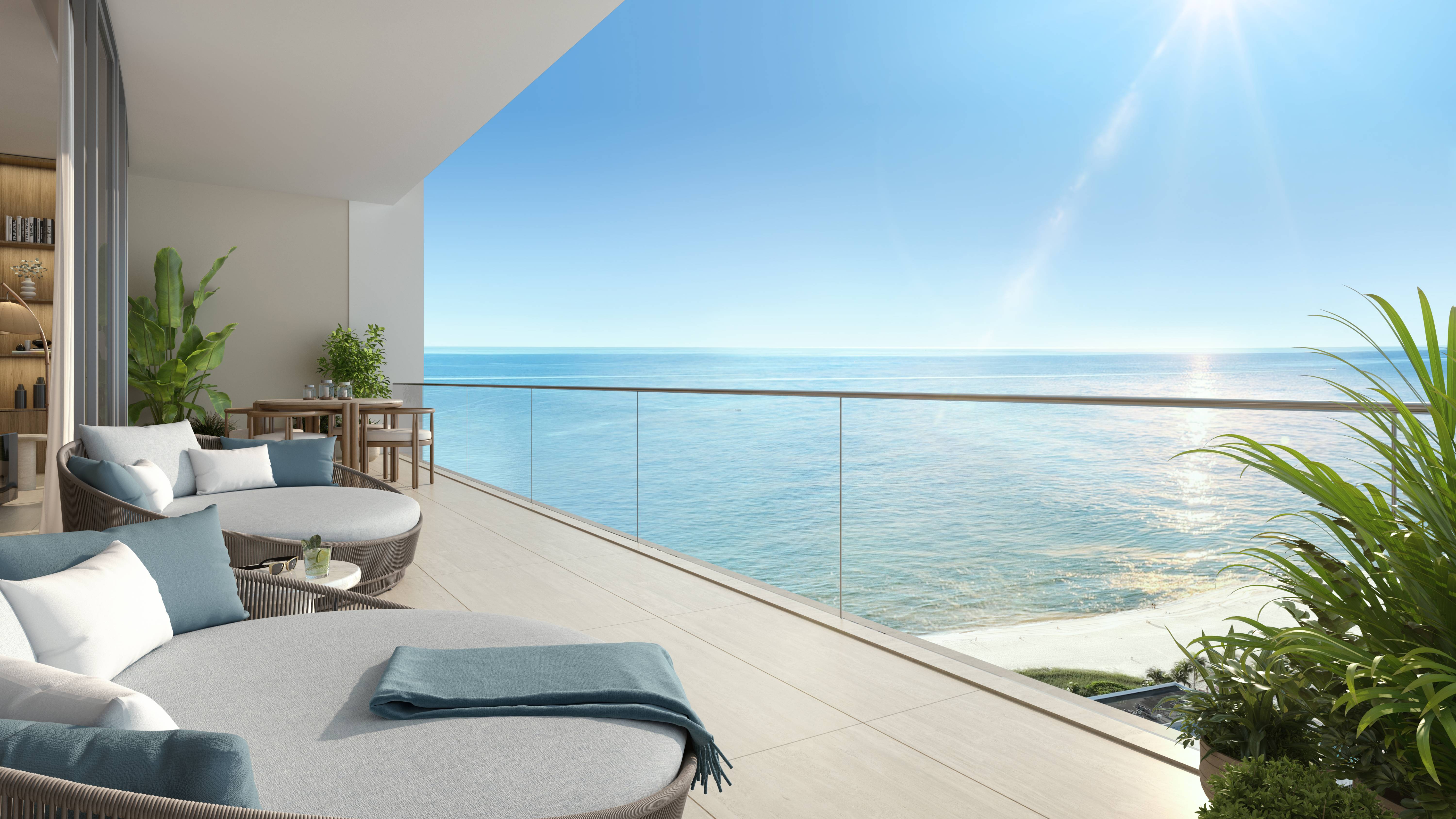
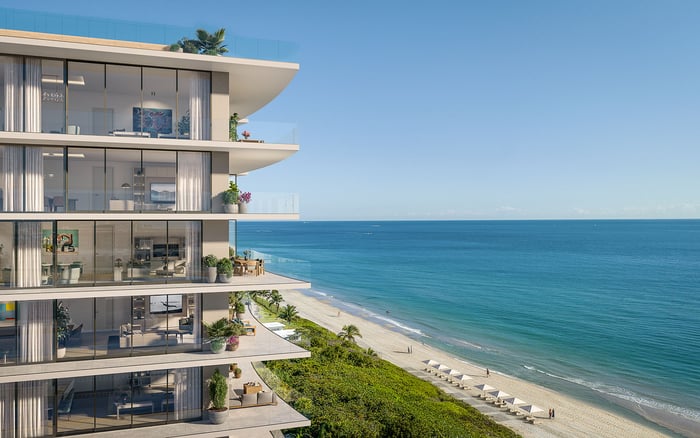
In Pompano Beach, a terrace can be more than a place to step outside. For buyers who entertain, dine outdoors, work in the fresh air, or simply want a generous transition between interior and horizon, it can function as a second living room. The essential distinction is usability: square footage alone does not reveal whether a table, lounge grouping, planters, and comfortable circulation can coexist.
This Buyer's Guide treats terrace and balcony space as architecture rather than decoration. The strongest candidate is not automatically the residence with the most dramatic photograph. It is the one whose proportions, access points, exposure, privacy, and operating rules support the buyer's actual routine.
1. Armani Casa Residences Pompano Beach - design-led review
Place this building first when the brief calls for a disciplined relationship between interior design and outdoor furnishing. Buyers should compare terrace depth across preferred residences, map a realistic furniture plan, and confirm whether the principal rooms open directly to the exterior space.
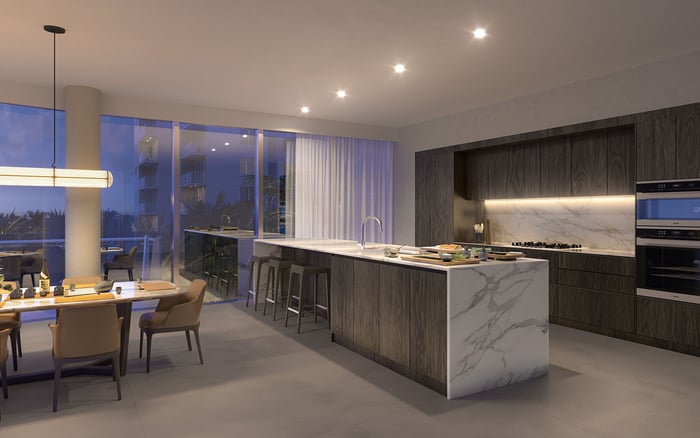
Continuity is the decisive test. Door placement, structural elements, thresholds, and the route from the kitchen to the dining area can matter more than an impressive total area.
2. The Ritz-Carlton Residences® Pompano Beach - entertaining-first review
Evaluate whether the outdoor area can accommodate distinct dining and lounging zones without narrowing circulation or crowding the façade.
Request plans for the exact residence under consideration. Similar-looking layouts can perform differently once furniture dimensions, door swings, planters, and service access are drawn accurately.
3. W Pompano Beach Hotel & Residences - entertaining test
Approach the terrace as a furnished room rather than leftover exterior space. Map a dining table, lounge seating, planters, and clear walking paths at scale before deciding whether the layout suits intimate dinners, larger gatherings, or quiet private use.
4. Waldorf Astoria Residences Pompano Beach - exposure review
Review orientation, shade, wind, and sightlines at the residence level. The most desirable choice is not automatically the highest or largest option; it is the one whose exposure aligns with the hours and seasons when the owner expects to use it.
5. Ocean 580 Pompano Beach - practical usability check
Test each plan individually, paying particular attention to door placement, structural interruptions, and circulation. A large stated area can feel less useful when access routes divide the furnishing zone or narrow sections dominate the plan.
Examine how the outdoor space connects to the rooms used most often. Buyers should also confirm railing conditions, privacy relationships, drainage points, exterior lighting provisions, and any rules affecting furnishings or installations before assigning value to the terrace.
A disciplined search begins with documents, not renderings. Buyers exploring these five Pompano Beach buildings should request the current plan for the exact residence, then mark usable furniture zones and circulation paths.
The project name establishes context, but the individual floor plan determines whether the outdoor space functions as a genuine extension of the home.
First, distinguish terrace depth from total area. A deep rectangular space is often easier to furnish than a larger but irregular balcony. Second, examine access. Multiple openings may strengthen indoor-outdoor flow, provided they do not consume the best furniture walls or interrupt movement.
Next, consider comfort at the times that matter. Morning coffee, midday shade, sunset dining, and evening entertaining place different demands on orientation and exposure. Finally, review building rules and residence documents before planning grills, screens, planters, lighting, or other additions. Comparison is essential, but the decisive analysis remains residence-specific.
Outdoor space deserves a separate value discussion. Buyers should weigh the terrace premium against how frequently the space will be used, whether it replaces an interior function, and how well it supports the intended ownership pattern. A second home may prioritize low-maintenance lounging, while a primary residence may require dedicated areas for dining, working, planting, and entertaining.
The strongest choice is therefore personal rather than universal. Measure the space, test a scaled furniture plan, visit under relevant conditions when possible, and make written verification of sound and work performed outside the residence part of due diligence.
Finally, separate emotional value from practical value. A sweeping outlook may justify compromise for one buyer; another may prefer greater privacy, shade, or depth. Pompano Beach offers several names for consideration, but the right answer is ultimately residence-specific.
What is the first terrace measurement a buyer should request? Ask for clear usable depth, not only total area, because depth determines whether furniture and circulation can coexist.
Is a larger terrace always more functional? No. Proportion, structural interruptions, access, exposure, and privacy can make a smaller space work more effectively.
Why should furniture be drawn on the floor plan? Scaled furniture reveals whether dining, lounging, planters, and walking paths fit without crowding one another.
Does floor level determine terrace quality? Not by itself. Buyers should weigh outlook, wind, privacy, shade, surrounding structures, and personal comfort.
What access pattern works best for entertaining? Convenient movement from the kitchen and living area is usually more useful than an isolated exterior doorway.
Which terrace rules should buyers review? Examine restrictions involving furniture, grills, shade devices, planters, flooring, lighting, sound, and alterations.
Should buyers visit at more than one time of day? Yes. Light, shade, wind, privacy, and neighboring activity may feel different throughout the day.
How should coastal maintenance affect the decision? Consider the durability and care requirements of outdoor furniture, fabrics, fixtures, finishes, and plantings.
Can two residences in the same building have different terrace appeal? Yes. Layout, orientation, floor, stack, neighboring sightlines, and access points can produce distinct experiences.
What should define the final choice? Choose the residence whose outdoor space supports the buyer's real routines, furnishings, privacy needs, and maintenance preferences.
If you'd like a private walkthrough and a curated shortlist, connect with MILLION.
If branded residences are on your mind — as a home or as an allocation — we would be glad to share what we are seeing, privately.
Begin a quiet conversation