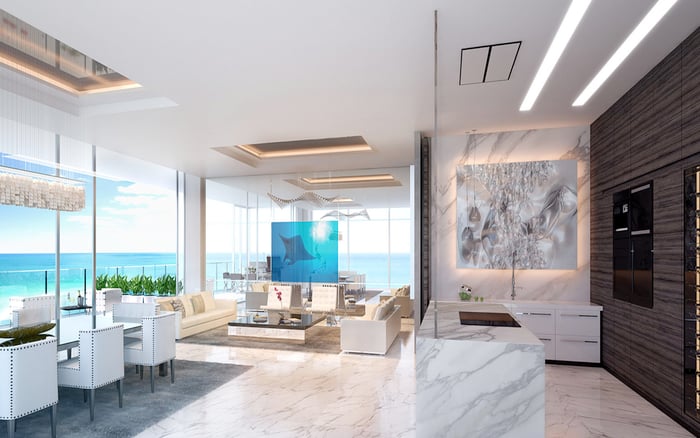
A buyer-focused look at how households should evaluate sauna and steam-room traffic at Muse Residences Sunny Isles Beach, from privacy and peak-use patterns to hygiene, governance, and day-to-day resort-style living.

At Muse Residences Sunny Isles Beach, the meaningful buyer question is not simply whether a sauna or steam room appears in the amenity program. For a household considering a luxury condominium in Sunny Isles Beach, the sharper question is how those spaces feel in daily life: calm or crowded, private or performative, restorative or operationally strained.
That distinction matters because wellness amenities are not passive. A view is always there. A terrace remains private to the residence. A spa facility, by contrast, depends on timing, etiquette, cleaning cadence, guest rules, and the behavior of a relatively small resident community. In a coastal tower shaped around resort-style living, the difference between nominal access and lived access can influence the entire rhythm of ownership.
Muse is best understood through a Boutique lens rather than as a mass-density condominium. That does not eliminate traffic questions, but it changes them. In a large building, the concern is often volume. In a boutique tower, a small group of frequent users can still define the perceived sauna and steam-room experience during certain hours. For households that prize discretion, that nuance is essential.
Within the practical vocabulary of South Florida searches, Muse often sits at the intersection of Sunny Isles, Oceanfront, Pool, Second-home, and wellness-driven lifestyle expectations. The spa should therefore be evaluated not as a decorative amenity line, but as a shared extension of the private residence.
Low-density living is one of the most important variables in evaluating shared spa traffic. Fewer residences generally mean fewer potential users competing for the same amenities, which can support a more serene experience. Yet lower density is not guaranteed solitude. It simply narrows the field of possible demand.
At Muse Residences Sunny Isles Beach, households should think in patterns. Are sauna and steam-room visits concentrated around morning workouts? Do residents tend to use the spa before dinner? Are weekends more active because owners, guests, or extended family are in residence? Does seasonal occupancy change the atmosphere during peak South Florida months?
These are not minor lifestyle questions. For some owners, a steam room is part of a daily recovery routine after training. For others, it is an occasional indulgence after beach time or poolside afternoons. For a household with multiple family members, visiting guests, or wellness staff, access expectations may be higher. A buyer who expects near-private use should ask different questions than one who is comfortable with occasional overlap.
The boutique context also makes social familiarity more noticeable. Seeing the same residents repeatedly may feel warm and club-like to one household, but less private to another. Luxury is personal in this regard. The same traffic level can feel gracious, intimate, or intrusive depending on the buyer’s temperament.
A sauna or steam room can feel entirely different at 10:30 in the morning than it does at 6:15 in the evening. Buyers should not rely only on the existence of the facility. The better test is whether the household’s preferred use window aligns with the building’s quieter periods.
The most relevant questions usually involve mornings, early evenings, weekends, and holiday periods. Mornings may draw residents who train before work or beach time. Early evenings may attract those winding down after the day. Weekends can add guests and family members. Holiday periods may bring more second-home owners into residence, shifting a typically quiet building into a more active resort atmosphere.
For high-net-worth households, this is not only about crowding. It is about perceived privacy. A sauna or steam room used by one or two people may feel like a sanctuary. The same space used by a steady rotation of residents and guests may feel less aligned with the quiet luxury expected from an oceanfront Sunny Isles Beach address.
The key is to ask about actual patterns rather than assuming that boutique positioning automatically solves everything. Management or the association may be able to describe typical use windows, rules, and the character of demand without disclosing anything inappropriate about individual residents.
Steam rooms and saunas ask more of a building than many passive amenities. Heat, humidity, surfaces, towels, drainage, air flow, and cleaning discipline all matter. A beautifully designed spa can lose its appeal quickly if the operational standard does not match the aesthetic promise.
Households should therefore pair traffic questions with questions about cleaning schedules, inspection routines, access control, towel management, and maintenance responsiveness. In a steam environment, freshness is not cosmetic. It is part of comfort, confidence, and perceived value.
Ventilation deserves particular attention. A steam room should feel immersive, not stale. A sauna should feel controlled, not neglected. If a household expects regular use, it should understand how the building handles downtime, repairs, and communication when a feature is temporarily unavailable.
Rules matter as well. Guest access, trainer access, spa-service access, and family use can all influence the atmosphere. Owner-driven use tends to create one kind of rhythm. Guest-heavy use can create another. Trainer or service-driven patterns may be convenient for some residents, but they may also increase scheduling pressure at certain times. Seasonal use can add yet another layer.
The most sophisticated buyers approach wellness amenities with the same seriousness they bring to elevators, parking, residence layout, and views. The spa is part of quality of life, and quality of life is part of value.
Useful questions include: When is the sauna typically busiest? When is the steam room quietest? Are guests allowed, and under what conditions? Are there sign-in procedures or access controls? How often are the spaces cleaned during active periods? What is the process for reporting a maintenance concern? Are towels, surfaces, and humidity-related systems checked throughout the day?
Buyers should also ask how the building handles etiquette. Shared spa areas depend on resident behavior. A clear rule set can preserve discretion and calm, especially in a boutique environment where even modest traffic is noticeable. The goal is not to over-regulate the experience. The goal is to protect serenity.
For households evaluating Muse as a primary residence, the spa may become part of a weekday routine. For Second-home owners, it may be most relevant during concentrated stays. For wellness-oriented buyers, it may be a deciding factor. Each use case should be tested against real operating conditions, not simply the amenity language.
The sauna and steam room should not be viewed in isolation. They belong to a broader lifestyle ecosystem that includes the oceanfront setting, pool environment, fitness habits, beach access expectations, elevator privacy, and the general tone of the resident community.
A household that spends significant time outdoors may use the steam room as a reset after sun, salt, and swimming. Another may treat the sauna as a recovery ritual after fitness. Another may rarely use either, but still value their presence as part of the building’s wellness identity. The correct conclusion depends on the household, not on a universal luxury checklist.
For Muse, the central lens is alignment. Does the actual sauna and steam-room experience match the household’s expectations for serenity, privacy, hygiene, and convenience? If the answer is yes, the spa becomes a meaningful extension of the residence. If the answer is uncertain, the buyer should clarify the operating details before treating the amenity as part of the purchase rationale.
In South Florida’s ultra-premium market, discretion often lives in the details. The calmest buildings are not merely the ones with the most amenities. They are the ones where design, density, rules, maintenance, and resident behavior work together quietly.
Why does sauna and steam-room traffic matter at Muse Residences Sunny Isles Beach? It affects privacy, calm, hygiene, and whether the amenity feels genuinely restorative in daily life.
Does boutique density automatically mean the spa will feel private? Not automatically. Boutique density can reduce potential demand, but a few frequent users can still shape the experience.
When should buyers ask about peak spa use? The most relevant windows are mornings, early evenings, weekends, and holiday periods.
Should guest policies be part of the spa conversation? Yes. Guest access can materially affect traffic, atmosphere, and the level of privacy residents experience.
Why is steam-room maintenance especially important? Heat and humidity require strong cleaning, ventilation, and maintenance discipline to preserve comfort and confidence.
Is sauna traffic a financial issue or a lifestyle issue? It is primarily a lifestyle and operations issue, but lifestyle quality can influence perceived value.
What should wellness-focused households verify before buying? They should ask about peak-use patterns, cleaning schedules, access controls, rules, and maintenance responsiveness.
Can seasonal occupancy change the spa experience? Yes. Second-home patterns and holiday periods can make shared amenities feel more active than usual.
How should owners compare nominal access with lived access? Nominal access means the amenity exists; lived access means it is available in the way the household actually wants to use it.
What is the best buyer lens for evaluating the spa at Muse? The best lens is whether the real experience matches expectations for serenity, privacy, hygiene, and convenience.
When you're ready to tour or underwrite the options, connect with MILLION.
If branded residences are on your mind — as a home or as an allocation — we would be glad to share what we are seeing, privately.
Begin a quiet conversation