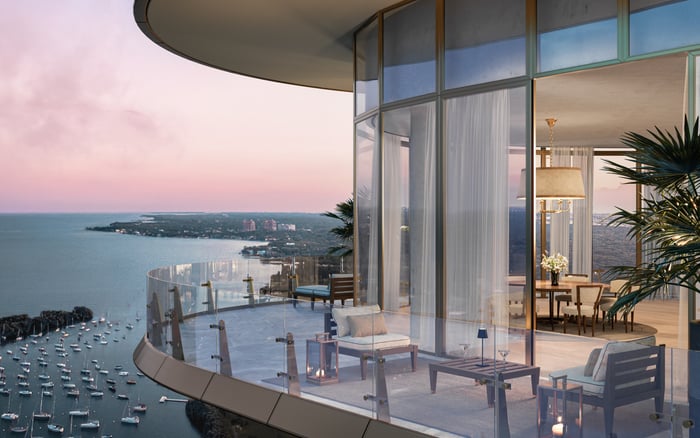
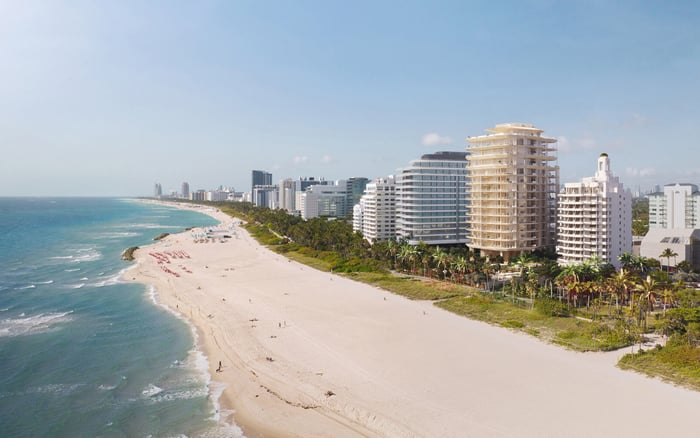
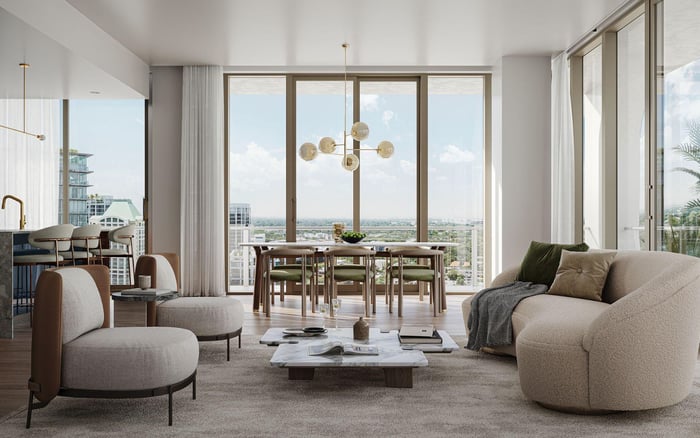
In Coconut-grove, entertaining is less about square footage for its own sake and more about how a residence frames the evening: ceiling height, glass-to-terrace transitions, and kitchens designed to perform without dominating the room. Two addresses frequently compared by design-minded buyers are Mr. C Residences Tigertail and Grove at Grand Bay. Both lean into indoor-outdoor living, both typically specify premium appliance suites, and both are built for a Miami social calendar that moves fluidly from cocktails to dinner to a final conversation outdoors. This editorial breaks down the hosting experience in each building through the lens of layout, volume, terrace usability, and amenity spillover, so you can choose the product that aligns with how you actually entertain.
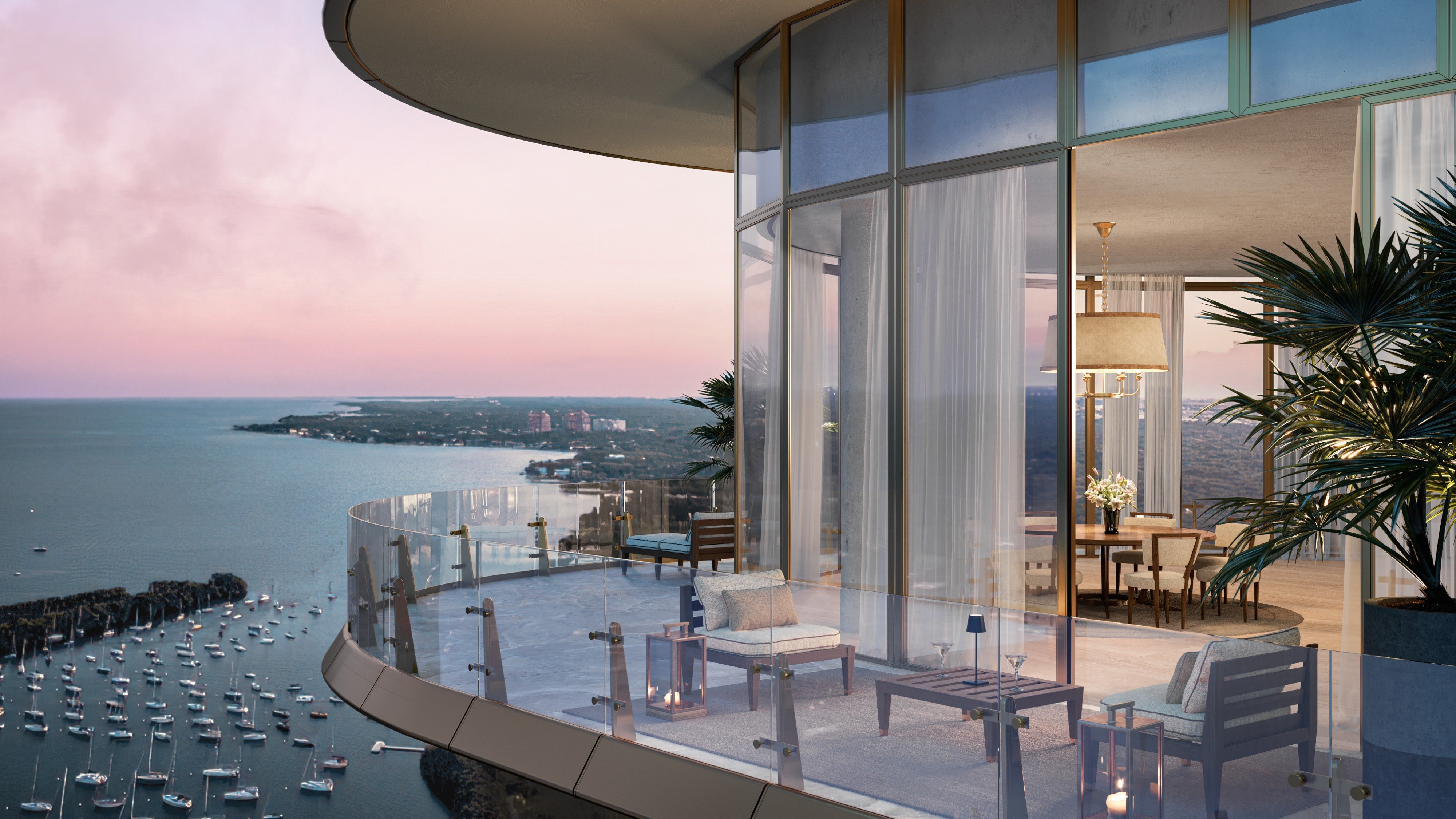
Coconut-grove entertaining rewards subtlety. The neighborhood’s best nights are rarely about a “ballroom” interior; they hinge on effortless movement from kitchen to living to terrace, the ability to reset quickly, and a residence that stays calm even when the guest list does not.
When buyers compare Mr. C Residences Tigertail and Grove at Grand Bay, they are typically weighing two hosting philosophies. One is hospitality-minded - “Cipriani style” - where gatherings feel curated and service-forward. The other is architectural theatre: gallery-like volume, expansive glazing, and a building identity rooted in design.
Both can entertain beautifully. The better fit depends on whether you host with intimacy and precision, or with scale and visual drama.
Mr. C Residences Tigertail is located at 2678 Tigertail Ave, Miami, and is marketed around private-terrace indoor/outdoor living. Interiors are positioned for contemporary ease, with floor-to-ceiling glass, 10-foot ceilings, and kitchens specified with Italian cabinetry plus Sub-Zero and Wolf appliances.
Grove at Grand Bay, on Bayshore Drive, is defined by its two-tower form and the way the architecture turns toward Biscayne Bay views. Designed by Bjarke Ingels Group (BIG), the building uses a rotating strategy to orient residences to the water. Listings and marketing materials commonly highlight 12-foot ceilings, terraces intended to function as outdoor rooms, and kitchens specified with Snaidero Italian cabinetry along with premium appliance packages that often include Sub-Zero and Wolf, with Miele appearing in some unit packages.
Those headline elements translate into very different entertaining energy once the door closes.
In a truly entertaining-capable home, the kitchen has to do two things at once: read as refined from the living area and perform like a working kitchen when the tempo picks up.
At Mr. C Residences Tigertail, Italian cabinetry paired with Sub-Zero and Wolf establishes a deliberate, professional baseline. The cabinetry language typically supports a streamlined, contemporary workspace - important when guests gather near the kitchen and you want the space to feel integrated, not back-of-house.
At Grove at Grand Bay, the Snaidero specification reads as more overtly design-forward: a kitchen that can sit comfortably within the room’s visual composition. The appliance story is similarly premium. Sub-Zero and Wolf are commonly cited, and some listings reference Miele, suggesting certain residences lean into a mixed European and American pro-grade stack.
Hosting impact: Mr. C tends to deliver discreet capability, while Grove at Grand Bay’s kitchen often registers as a design feature within a larger, more dramatic volume.
Ceiling height is not a bragging-rights metric. It is an atmosphere metric.
Mr. C Residences Tigertail is marketed with 10-foot ceilings. For entertaining, that can favor a more intimate, conversational style. A 10-foot volume can feel airy without becoming acoustically “big,” which helps keep voices, music, and lighting feeling controlled through dinner parties and smaller gatherings.
Grove at Grand Bay is marketed with 12-foot ceilings, pushing the experience toward a gallery-like room. That extra volume changes how art reads, how pendant lighting performs, and how a crowd naturally disperses. If you host larger groups, the space can feel less compressed, and the architecture carries the event before you set the table.
If your entertaining style is quiet-luxury, Mr. C’s scale can feel more deliberate. If you prefer a room that announces itself, Grove at Grand Bay’s volume does that work for you.
In Coconut-grove, the terrace is rarely optional. It is the second living room.
Mr. C Residences Tigertail emphasizes floor-to-ceiling glass and terrace access, reinforcing a hosting plan that expands from living and dining into outdoor space. This is most noticeable in the transitions between courses: the drift outside for cocktails, the return inside for dinner, and the final conversation back on the terrace. A residence that makes those shifts feel effortless will host better than one that simply offers outdoor square footage.
Grove at Grand Bay leans even harder into the terrace as a true outdoor room, with marketing that emphasizes wide, deep terraces. Practically, that can support more than a token seating group. It is the difference between a terrace that is “a view” and a terrace that is “a venue.”
For buyers who want to host across multiple micro-settings in one evening, Grove’s terrace programming can feel more expansive. For buyers who want an indoor-outdoor extension that stays controlled and private, Mr. C’s approach often reads as more restrained and lifestyle-driven.
Some buildings entertain on your behalf by giving guests something to talk about before the first drink.
Grove at Grand Bay’s BIG design, with its rotating form strategy oriented to Biscayne Bay views, consistently creates that effect. Even the choice to leave some structural columns exposed as a design feature can shape how living spaces read once furnished, making the interior feel intentionally architectural rather than simply finished.
For hosts, that identity is an asset. A strong architectural point of view anchors an evening, especially for visitors who know Miami’s design scene. It also encourages a particular furnishing strategy: pieces that hold their own in a high-volume room, with art and lighting scaled accordingly.
By contrast, Mr. C’s entertaining narrative is less architectural statement and more lifestyle statement - a home that reads as an extension of hospitality.
Mr. C Residences Tigertail is positioned as “Cipriani style” living, signaling a hospitality- and service-driven lifestyle. For entertaining, that positioning can shape the way you host: fewer visible moving parts, more curated touches, and gatherings that feel edited rather than maximal.
In practice, buyers drawn to this narrative often want a home that pivots from private to social without losing composure. The residence becomes a setting for hosted moments, not merely a container for them.
If you routinely entertain with a caterer, a chef, or even a consistent set of rituals, the “Cipriani style” lens tends to align with that preference.
Even the best private residence has limits. The smartest hosts use the building.
Grove at Grand Bay’s amenity programming is notable for entertaining spillover. Marketing materials describe multiple pools and highlight social spaces such as a resident lounge and private dining or entertaining rooms. That matters if your guest list fluctuates, or if you want to separate the main event from the more casual parts of the evening.
The building’s spa and wellness positioning also broadens the definition of entertaining. In South Florida, hosting can be wellness-adjacent: treatments, recovery, and a slower, more curated daytime rhythm.
Mr. C’s strengths are more directly tied to the in-residence lifestyle narrative. Grove at Grand Bay’s strengths include the option to scale beyond the unit - valuable if you host frequently.
Coconut-grove entertaining is terrace-forward and residential. Miami-beach entertaining can be more hospitality-inflected, even when it is private.
For buyers who split time across neighborhoods, it helps to notice the parallels. A branded, service-led approach in Coconut Grove can feel closer in spirit to the way a private-residence owner might entertain at Casa Cipriani Miami Beach, where the expectation is a particular cadence and discretion.
If your entertaining style is more scene-adjacent - where arrival, setting, and design identity are part of the evening - you may also recognize the appeal of Shore Club Private Collections Miami Beach. And if your preference leans toward quiet, composed luxury with strong hospitality DNA, the broader Miami Beach market offers equivalents like The Ritz-Carlton Residences® Miami Beach.
These references are not about copying Miami Beach in Coconut Grove. They are about clarifying your own hosting signature.
Mr. C Residences Tigertail tends to entertain best for buyers who prioritize curated intimacy: a contemporary kitchen that performs, 10-foot ceilings that keep conversation cohesive, and floor-to-ceiling glass with terrace access that lets the evening breathe without becoming sprawling. The “Cipriani style” positioning supports a serviced, discreet approach to hosting.
Grove at Grand Bay tends to entertain best for buyers who want architectural drama and scale: 12-foot ceilings that create gallery-like volume, terraces positioned as true outdoor rooms, and amenity spaces that can extend the social program beyond the residence. The BIG-designed identity adds a layer of design credibility that guests feel immediately.
The most revealing question is not which building is “better.” It is whether your ideal evening ends with an intimate table and a controlled soundscape, or with a larger flow between indoor settings, outdoor rooms, and building-level spaces.
Which building has higher ceilings for entertaining? Grove at Grand Bay is marketed with 12-foot ceilings, while Mr. C Residences Tigertail is marketed with 10-foot ceilings.
Do both buildings offer premium kitchen appliances? Both commonly cite Sub-Zero and Wolf; Grove at Grand Bay listings also sometimes mention Miele.
Which is more indoor-outdoor focused? Both emphasize terrace living, with Grove at Grand Bay highlighting wide, deep terraces as outdoor rooms.
Is Mr. C Residences Tigertail designed for a serviced lifestyle? It is positioned as “Cipriani style” living, suggesting a hospitality and service-driven approach.
Does Grove at Grand Bay have notable architecture? Yes, it was designed by Bjarke Ingels Group (BIG) and uses a rotating form to orient views.
Are terrace sizes identical across residences in either building? Terrace and layout details can vary by unit type, so it is best to review the specific residence line.
Which building is better for larger gatherings? Grove at Grand Bay’s 12-foot ceilings and amenity entertaining spaces can suit bigger events.
Which building feels more intimate for dinner parties? Mr. C’s 10-foot ceiling scale can support a more controlled, conversation-forward atmosphere.
Do amenities matter for entertaining in Coconut Grove? Yes, especially when buildings offer lounges or private entertaining rooms for overflow.
What is one practical way to choose between them? Think about whether you want architectural drama and scale, or a more curated, service-led home.
For a confidential assessment and a building-by-building shortlist, connect with MILLION Luxury.
If branded residences are on your mind — as a home or as an allocation — we would be glad to share what we are seeing, privately.
Begin a quiet conversation