A practical comparison of Mr. C Residences Boca Raton and Fendi Château Residences Surfside for buyers who value service rhythm, privacy, guest control, and calm access to South Florida culture.
For a buyer already fluent in South Florida luxury, the question is rarely whether Boca Raton or Surfside is more desirable in the abstract. The more useful question is operational: which address will make the household feel composed on a Tuesday morning, a Friday dinner hour, or a high-season weekend with guests, staff, drivers, deliveries, and overlapping family schedules?
Mr. C Residences Boca Raton and Fendi Château Residences Surfside occupy different chapters of the regional luxury story. Mr. C brings a branded-residence lens to a Boca Raton setting shaped by downtown waterfront activity and a more measured civic pace. Fendi Château Residences Surfside brings fashion-coded ultra-luxury to an established Miami-area coastline address, with a quieter Surfside tone and proximity to the Bal Harbour luxury retail orbit.
The distinction is not simply Boca Raton versus Surfside, or downtown versus oceanfront. It is the difference between a newer branded residence whose household culture should be evaluated carefully as it forms, and an established oceanfront building whose real-world rhythms can be observed through daily use.
Mr. C Residences Boca Raton appeals to the buyer who wants the polish of hospitality without surrendering the household to the sharper tempo of Greater Miami beach traffic and nightlife. Its sensibility is residential, service-oriented, and tied to Boca Raton’s downtown waterfront environment.
In daily life, that matters. A household drawn to Mr. C is likely considering how the residence supports dinner in town, cultural access, easy hosting, and a quieter return home. Boca’s downtown waterfront setting creates a rhythm distinct from a direct beachfront tower. The day may involve cafés, meetings, marina-adjacent movement, wellness routines, and dining, but it does not have to be organized around oceanfront resort circulation.
For operations, buyers should study how arrivals are choreographed, how guests are identified and received, where household staff enter, how deliveries are handled, and how private spaces are buffered from the public-facing energy that branded residences naturally create. The appeal is grace without excess friction. The risk, as with any newer development in a market still defining its ultra-luxury residential habits, is that the culture of the building may take time to settle.
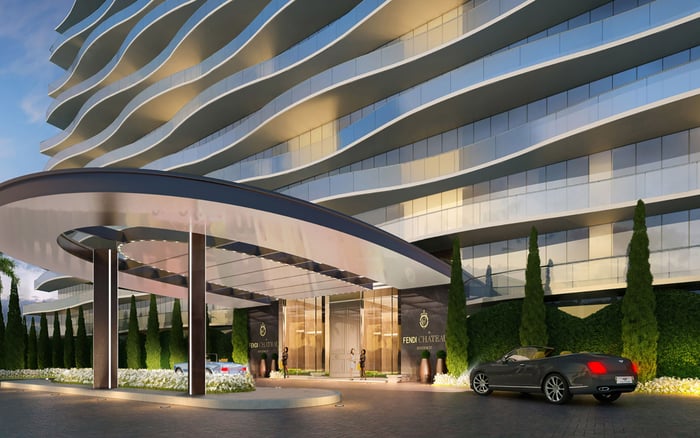
Fendi Château Residences Surfside is the more established operational case in this comparison. Its appeal rests on a specific combination: oceanfront privacy, design-driven atmosphere, and access to Miami’s cultural, dining, shopping, and nightlife ecosystem without living in the most publicly intense part of that ecosystem.
Surfside is quieter than many Miami Beach settings, but it remains tied to the coastal traffic logic of Bal Harbour and the broader Miami luxury corridor. A buyer considering Fendi Château should examine arrival and valet flow during season, how guests are controlled, how staff coordinate access, and how the household manages beach use without allowing the residence to feel like a resort lobby.
That last point is central. Fendi Château is likely the stronger fit for the buyer who wants an oceanfront home first, with Miami energy available by choice rather than imposed at the front door. Its operational advantage is that the building is not theoretical. An occupied residence reveals itself through patterns: how residents arrive, how service teams anticipate demand, how privacy holds up during peak periods, and how the building feels when guests, vendors, and family life overlap.
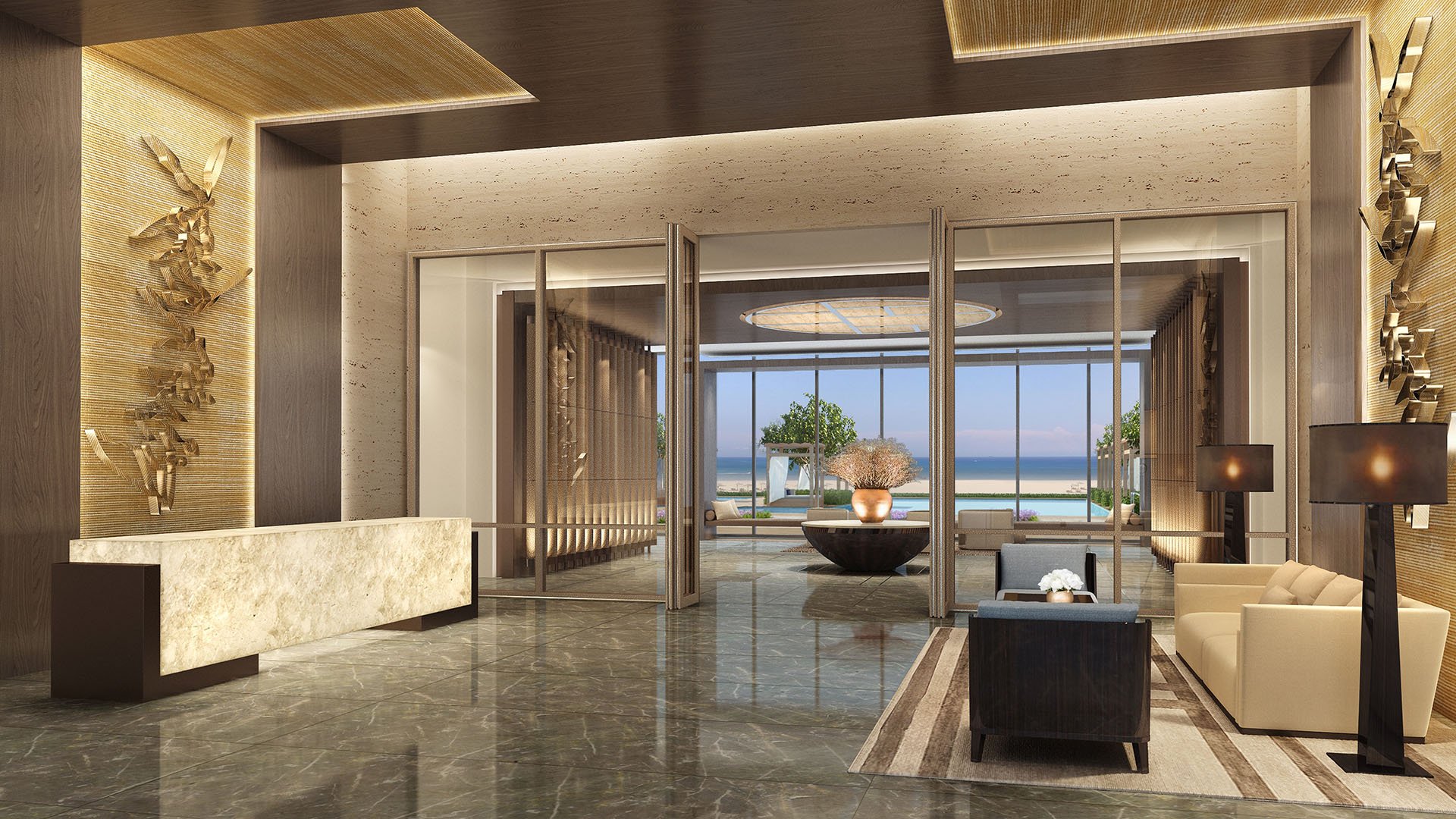
In ultra-prime residential life, the first test of calm is the arrival sequence. At Mr. C Boca Raton, the buyer should evaluate how the project meets downtown Boca’s pedestrian and vehicle patterns. A successful operation will make hospitality feel smooth without turning the residence into a public stage. The question is whether the building can absorb dinners, visitors, household help, packages, and owners returning from daily routines while preserving a private residential tone.
At Fendi Château, the arrival question is more coastal. Beachfront buildings must balance privacy with higher visibility, seasonal visitors, drivers, and the gravitational pull of nearby retail and dining. The most valuable operation makes the ocean feel immediate while keeping the lobby, valet, and guest path disciplined.
Staff access is equally important. A household with chefs, assistants, nannies, stylists, wellness practitioners, or security support should not focus only on amenity photography. It should ask how service entries work, whether staff movement feels discreet, how recurring vendors are recognized, and how the building handles the daily choreography of people who keep a home functioning.
Mr. C’s advantage is emotional: branded hospitality can make guests feel beautifully received. For buyers who entertain often but prefer a softer Boca cadence, that may be the point. The residence can offer access to cultural and dining energy without the constant sense that the surrounding neighborhood is accelerating beyond the household’s preferred pace.
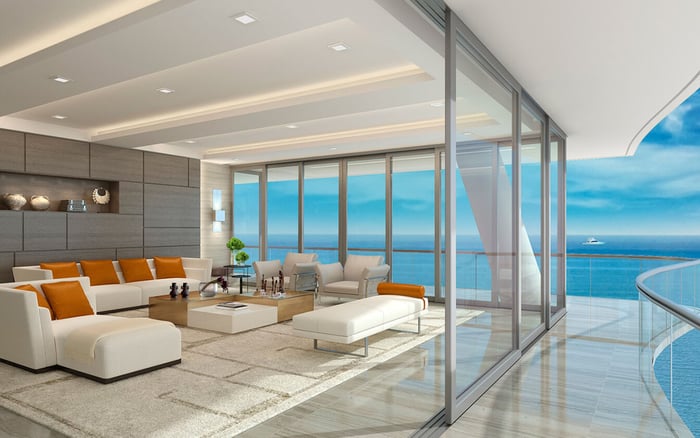
Fendi Château’s advantage is spatial and experiential: the oceanfront setting gives guests an immediate sense of arrival, and Surfside allows proximity to Miami without choosing the city’s most charged residential environments. The building’s more established operating history may comfort buyers who want to see how privacy, guest procedures, and service norms have already matured.
The choice depends on the household’s social temperature. If the family wants a refined, hospitality-inflected residence near downtown Boca activity, Mr. C reads as a compelling match. If the family wants quieter beachfront living with Bal Harbour and Miami close at hand, Fendi Château reads as the more natural fit.
Neither comparison should rest on assumptions about exact fees, staffing ratios, internal association practices, or undisclosed budgets. Those items require private review. The intelligent buyer asks for the documents, asks the manager precise questions, and watches the building at different hours.
For Mr. C Boca Raton, the essential inquiry is how the branded promise translates into residential discipline as the building culture forms. For Fendi Château Residences Surfside, the essential inquiry is how the established operation performs under real seasonal pressure. Both may deliver calm. They simply define calm differently: Boca’s hospitality-adjacent downtown waterfront calm versus Surfside’s established oceanfront privacy near Greater Miami energy.
Which residence is calmer for daily life? Mr. C Boca Raton is likely calmer for buyers who want branded hospitality near downtown activity without Greater Miami beach intensity.
Which residence is better for oceanfront privacy? Fendi Château Residences Surfside is the stronger fit for buyers who prioritize established oceanfront living and controlled beachfront privacy.
Is Fendi Château more operationally proven? It is treated here as the more established case because its real residential patterns can be observed over time.
Is Mr. C Boca Raton still forming its building culture? Buyers should evaluate how its residential culture and service rhythm are taking shape in Boca Raton’s luxury market.
Which is better for access to Miami culture? Fendi Château has the edge for proximity to the broader Miami dining, shopping, nightlife, and cultural ecosystem.
Which is better for avoiding Miami-area traffic intensity? Mr. C Boca Raton is likely the better fit for buyers seeking cultural access with less exposure to Greater Miami beach traffic.
Should buyers compare HOA budgets from public information alone? No. Exact budgets, staffing ratios, and internal association practices should be reviewed privately with proper documents.
What operational questions matter most? Focus on arrivals, valet flow, staff access, guest control, delivery handling, privacy, and peak-season traffic patterns.
Which residence is better for frequent entertaining? Mr. C may suit buyers who want guests received through a hospitality-influenced environment, while Fendi Château may suit buyers who want beachfront entertaining with a quieter coastal tone.
What is the best way to shortlist comparable options for touring? Start with location fit, delivery status, and daily lifestyle priorities, then compare stacks and elevations to validate views and privacy.
If you'd like a private walkthrough and a curated shortlist, connect with MILLION.
If branded residences are on your mind — as a home or as an allocation — we would be glad to share what we are seeing, privately.
Begin a quiet conversation