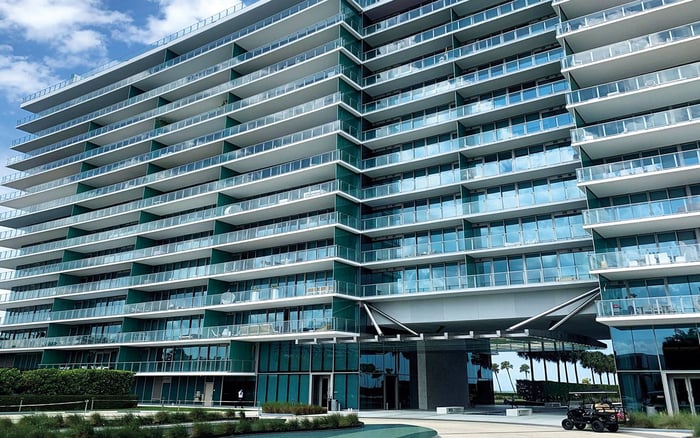
A disciplined first-year budget for a Monaco-to-Key Biscayne move separates association obligations, owner insurance, property taxes and discretionary services from furnishing, relocation and contingency cash.

Rebasing from Monaco to Key Biscayne is as much an exercise in household organization as property selection. Financial comfort in the first year depends on distinguishing the cost of owning the residence from the cost of making it ready, staffed and effortless to use.
For a purchase at Oceana Key Biscayne, begin with the specific residence and its association documents, not a generalized island ownership allowance. A disciplined first-year plan separates contractual obligations, elective services and unresolved exposures, then assigns each payment a date.
Define the planning period as the first twelve months after closing, with pre-closing deposits shown separately. Keep a second view by calendar year for property-tax assumptions. This prevents an annual expense estimate from being mistaken for the cash required during the move.
Use a worksheet with four categories rather than one all-inclusive ownership figure:
Closing cash: acquisition funds, transaction charges, prorations and any confirmed deposits, as detailed in the closing estimate.
Recurring operations: association dues, owner insurance, property taxes, utilities and approved household-service contracts.
Furnishing and relocation: design, procurement, shipping, storage, delivery and installation, supported by written estimates.
Contingency liquidity: cash held against identified uncertainties, separate from committed expenditure.
For every line, record the payee, payment date, amount, supporting document and whether the figure is confirmed or provisional. Show refundable deposits separately from expenses, and distinguish money reserved for a future bill from money already paid.
If funding will come from euro assets, ask the banking adviser to model dollar payment dates and conversion charges. Keep exchange-rate assumptions explicit rather than folding them into furnishing or operating allowances.
The association contribution should be supported by documents, not marketing shorthand. Request the current budget, the residence's payment schedule, reserve study, structural inspection documentation, assessment notices and master-policy deductibles. Ask what ordinary dues include and which charges are billed separately.
Maintain separate lines for ordinary dues, confirmed special assessments and unresolved potential expenditure. Record assessment installment dates and have the transaction team confirm responsibility between buyer and seller. Do not bury a known assessment in a generic contingency.
If the search extends to Coconut Grove, apply the same discipline to Park Grove Coconut Grove. Compare documented obligations rather than assuming equivalence between buildings or neighborhoods.
Reserve-study timing deserves legal review. Many owner-controlled condominium and cooperative associations existing on or before July 1, 2022, faced a December 31, 2025 structural-integrity reserve-study deadline. A conditional December 31, 2026 deadline applies to some associations in connection with milestone-inspection timing; it is not universal. Confirm the building's applicable obligations before relying on either date.
Key Biscayne's adopted municipal millage for 2025 was 2.8846 mills. The proposed 2026 municipal rate was 3.0066 mills, a proposed increase of 4.23%. That proposal does not establish the final adopted rate.
Municipal millage is only one component of the bill. School Board, countywide and other taxing-district levies also contribute. Neither municipal rate supports a complete annual tax estimate on its own.
Ask for a property-specific estimate reflecting the contemplated ownership and relevant assessment year. Treat homestead eligibility as a separate determination: a seasonal household relocating part of its life from Monaco should not assume it qualifies as a permanent owner of a primary residence.
For qualifying owners, the first $25,000 of homestead exemption applies to all taxing authorities. The additional portion generally applies to assessed value above $50,000 and excludes School Board levies. Confirm eligibility and the applicable exemption before budgeting savings.
Assessment limits also require precision. The homestead assessment-increase limit identified for 2026 is 2.70%, compared with 2.90% for 2025. The identified 2026 non-homestead limit is 10%. These are assessment limitations, not guaranteed caps on total tax bills. The 2026 limitations do not apply to new construction.
Separate the association's insurance expenditure from the owner's proposed coverage. Ask an insurance adviser to reconcile the master policy with the owner's needs; do not assume the association contribution resolves every exposure.
The quote request should address the intended occupancy pattern, interior improvements, contents, valuable items, liability and relevant wind or flood considerations. Request written explanations of exclusions, deductibles and any proposed loss-assessment protection.
Enter the premium according to the quoted payment schedule. Consider deductible exposure separately when setting contingency liquidity. A premium is a scheduled cost; a deductible is a potential cash requirement. Neither should be estimated from another residence's experience.
Create two service schedules: one for occupied periods and another for absences. Obtain tailored estimates for housekeeping, household management and any requested arrival preparation or property checks. Specify frequency, scope, supplies, supervision and cancellation terms.
For buyers also considering Brickell, a residence at Una Residences Brickell should receive the same included-versus-optional review. A project name is not a substitute for a written service schedule.
Before approving a contract, reconcile it against association inclusions. This helps avoid paying twice for an assumed service or leaving an essential responsibility unassigned. Budget elective services only after defining the household's expected use.
Treat furnishing as a procurement schedule, not a single decorative allowance. Request separate estimates for design, furniture, lighting, window treatments, household equipment, delivery and installation, as applicable to the residence.
For possessions moving from Monaco, obtain itemized shipping, insurance, storage and customs-related estimates from the relevant specialists. Do not assume a uniform allowance or customs treatment. Confirm building access procedures and installation requirements before authorizing dispatch.
Ask the design team to distinguish essentials for initial occupancy from pieces that can arrive later. Record deposits, production-stage payments and final balances by date. If shipping, access and occupancy schedules do not align, obtain a storage or interim-accommodation estimate rather than absorbing the gap into contingency cash.
Before closing, reconcile the worksheet with the legal, tax, insurance and household advisers. Every material line should have a confirmed amount, a current quote or an explicit provisional assumption, with someone responsible for resolving it.
Stress-test payment timing as well as totals: an assessment installment, insurance payment and furnishing balance may all need funding within the same period. Review the schedule after closing and whenever a material quote or obligation changes.
The objective is not a universal first-year number. It is a residence-specific plan that preserves discretion, liquidity and the freedom to enjoy the move.
For a discreet conversation about your South Florida residential search, connect with MILLION.
If branded residences are on your mind — as a home or as an allocation — we would be glad to share what we are seeing, privately.
Begin a quiet conversationSeparate closing cash, recurring operating costs, furnishing and relocation outlays, and contingency liquidity. Assign payment dates and distinguish confirmed amounts from provisional assumptions.
No. Municipal millage is only one component; School Board, countywide and other taxing-district levies also contribute.
The 3.0066-mill figure is a proposed 2026 rate, not confirmation of the final adopted rate. The adopted municipal rate for 2025 was 2.8846 mills.
No. Eligibility is limited to qualifying permanent owners of a primary residence and should be confirmed before budgeting tax savings.
No. The identified 2026 limits of 2.70% for homesteaded properties and 10% for non-homesteaded properties concern assessments, not guaranteed limits on total tax bills.
No. The identified 2026 assessment-increase limitations do not apply to new construction, so the tax estimate should address the property's circumstances.
Request the current budget, payment schedule, reserve study, structural inspection documentation, assessment notices and master-policy deductibles. Confirm what ordinary dues include and what is charged separately.
No. That conditional deadline applies to some associations in connection with milestone-inspection timing; building-specific obligations require confirmation.
Use a property-specific quote and its payment schedule, reconciled with the association's master policy. Consider deductible exposure separately from the premium when setting contingency liquidity.
Obtain itemized estimates for procurement, shipping, insurance, storage, customs-related costs and installation as applicable. Schedule deposits and balances around confirmed access and delivery arrangements.