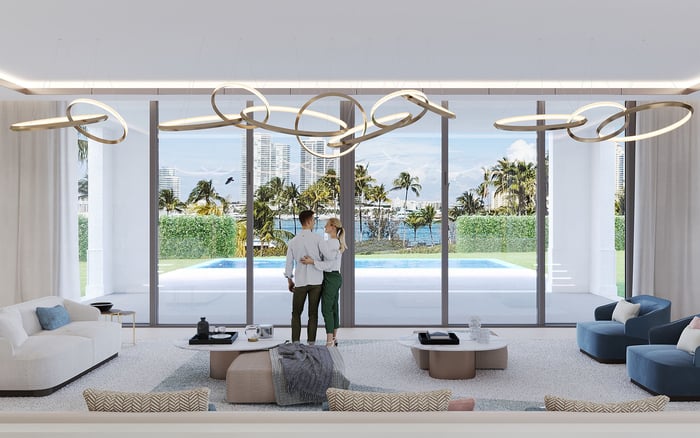
For global families evaluating Palm Beach and South Florida property, intergenerational planning begins before the residence is chosen. Ownership, governance, privacy, liquidity, and lifestyle fit should be aligned as carefully as the architecture.

For families accustomed to Monaco’s discretion, Palm Beach offers a distinct but complementary proposition: privacy, climate, culture, proximity to Miami, and a residential rhythm that can accommodate children, parents, advisors, guests, and staff without forcing a single definition of home. The decision is rarely only about square footage. It is about continuity.
Intergenerational wealth planning begins with a simple question: what role should the residence play in the family system? For some, it is a seasonal retreat. For others, it is a long-term family base, a gathering place, a lifestyle hedge, or a future transfer asset. The distinction matters because each purpose creates different expectations around ownership, occupancy, governance, maintenance, and eventual succession.
Palm Beach buyers arriving from Monaco, London, Geneva, São Paulo, New York, and other global wealth centers often bring sophisticated advisory teams. The strongest real estate decisions tend to emerge when those teams are involved early, before negotiations become emotional and before a preferred property narrows the planning options.
In luxury real estate, taste can move faster than structure. A buyer may be drawn to a water view, a building’s service culture, or the intimacy of a particular neighborhood before the family has decided who should own the asset, who may use it, and how future generations will participate.
Before signing, families should determine whether the residence is intended for personal use only, shared family use, partial rental flexibility, future sale, or long-term retention. These are not merely legal questions. They shape the daily experience of the home. A residence held for one couple has a different operating logic than a residence expected to host adult children, grandchildren, household staff, and rotating guests across seasons.
This is where an investment lens becomes useful, even when the purchase is emotionally driven. A family office may evaluate carry costs, insurance, reserves, association rules, renovation flexibility, privacy, and liquidity alongside design. A home that is beautiful but difficult to govern can become a burden. A home that is slightly less theatrical but easier to manage may become the more enduring legacy asset.
The most refined families often plan the least visible details. Who approves capital improvements? Who schedules holiday use? What happens if one branch of the family uses the residence more than another? Who pays for staff, repairs, assessments, or redesign? What level of guest access is acceptable?
These questions can feel unromantic, but they preserve harmony. Clear governance can protect a Palm Beach home from becoming a source of resentment. For families with multiple residences, a written use policy can be as important as the purchase contract. It does not need to feel corporate. It can be elegant, simple, and aligned with family culture.
Buyer’s guides often focus on neighborhoods and floor plans. For this category of buyer, the more important guide is internal: a family charter for how the asset will be enjoyed. The best version is practical enough to be used and discreet enough to reflect the family’s values.
Palm Beach and West Palm Beach serve different lifestyle preferences, and some families will want exposure to both. Palm Beach is often prized for its residential composure, established social texture, and sense of separation. West Palm Beach offers a more urban cadence, with easier access to dining, culture, offices, and newer residential formats.
For buyers who want a Palm Beach identity with a curated residential point of entry, Palm Beach Residences may appeal as part of a broader conversation about ease, lock-and-leave living, and long-term family usability. Across the water, Forté on Flagler West Palm Beach reflects the appeal of a waterfront West Palm Beach setting for families who want service, views, and access without the operating complexity of a large single-family estate.
The planning question is not which address is more prestigious. It is which rhythm the family will actually sustain. A legacy residence succeeds when it is used with pleasure, not merely admired.
Many Monaco to Palm Beach buyers also consider Miami as a complementary axis. Brickell may suit families with business interests, younger adult children, or a preference for a more vertical, international lifestyle. Fisher Island may appeal to those seeking a private-island environment with controlled access and a resort-like cadence.
A family might choose Palm Beach for seasonal continuity and maintain a Miami residence for work, entertaining, or next-generation independence. In Brickell, St. Regis® Residences Brickell can enter the discussion for buyers who value branded service and a central location. For a more secluded Miami posture, The Residences at Six Fisher Island speaks to families considering Fisher Island as part of a wider South Florida footprint.
This multi-address strategy should be planned carefully. More residences mean more calendars, staff, capital calls, and decision points. The goal is not accumulation. The goal is intelligent distribution of lifestyle, privacy, and family utility.
The most delicate planning often concerns the future. Parents may intend to transfer a property, but heirs may not share the same emotional attachment, tax posture, or lifestyle needs. A residence that feels essential to one generation may feel impractical to the next. That is why succession planning should begin while the family is aligned and the purchase is still fresh.
Families should discuss whether the property is meant to remain in the family, be sold at a defined point, or be evaluated periodically. They should also consider whether one heir might have a right to acquire another’s interest, how valuations would be determined, and how disputes would be resolved. These discussions are best handled privately with counsel, tax advisors, and governance professionals.
Privacy also deserves attention. Ultra-prime buyers often prefer anonymity, but confidentiality is not achieved by wishful thinking. It requires coordinated communications, careful vendor selection, disciplined digital behavior, and a clear plan for how ownership and occupancy are described to outsiders.
Before committing, a family should pressure-test five points. First, define the residence’s purpose. Second, align the ownership structure with that purpose. Third, create rules for use, cost-sharing, and improvements. Fourth, evaluate the property’s long-term operational demands. Fifth, decide how and when the asset may transition to the next generation.
The finest homes in South Florida are not simply purchased. They are stewarded. For global families moving between Monaco and Palm Beach, the winning strategy is measured, advisory-led, and deeply personal. When planning is done well, the residence becomes more than a statement. It becomes an instrument of continuity.
Should a family decide ownership structure before choosing a property? Yes. Structure can influence privacy, financing, succession, and family governance, so it should be addressed before emotions narrow the options.
Is Palm Beach better for legacy planning than Miami? It depends on the family’s rhythm. Palm Beach may suit residential continuity, while Miami may support business, culture, and next-generation independence.
Can one residence serve multiple generations well? Yes, but only if use rights, cost responsibilities, guest policies, and future transfer plans are clear from the beginning.
What should heirs discuss before a purchase is finalized? They should discuss intended use, long-term interest, maintenance expectations, liquidity needs, and whether the property should remain in the family.
Why is governance important for a luxury residence? Governance reduces ambiguity. It helps prevent disputes over scheduling, spending, renovations, guests, and future ownership transitions.
Should buyers involve advisors early? Yes. Legal, tax, insurance, financing, and family office advisors can identify issues before a preferred property limits flexibility.
Is a condominium easier to manage than an estate? Often it can be, but association rules, assessments, privacy, staffing, and renovation limits still require careful review.
How should families think about liquidity? They should consider how easily the property could be held, refinanced, transferred, or sold if family needs change.
Does privacy require special planning? Yes. Privacy depends on structure, communications discipline, vendor discretion, and coordinated family protocols.
What is the best way to shortlist comparable options for touring? Start with location fit, delivery status, and daily lifestyle priorities, then compare stacks and elevations to validate views and privacy.
For a discreet conversation and a curated building-by-building shortlist, connect with MILLION.
If branded residences are on your mind — as a home or as an allocation — we would be glad to share what we are seeing, privately.
Begin a quiet conversation