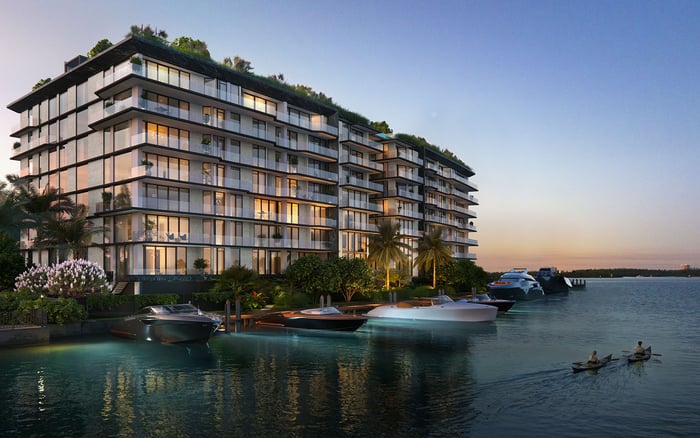
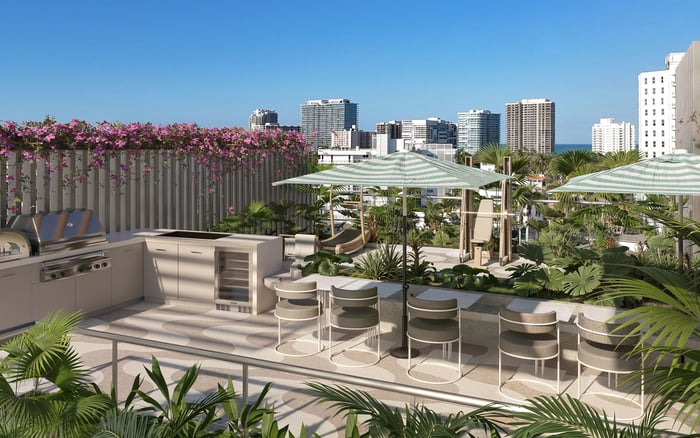
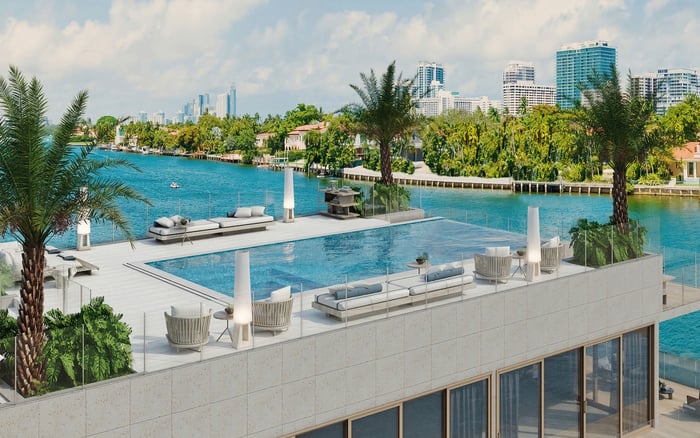
An analytical look at Mila Bay Harbor Islands and the buyer question behind boutique bayfront living: whether privacy, waterfront presence, and true lock-and-leave ownership can coexist without the burdens of a larger home.
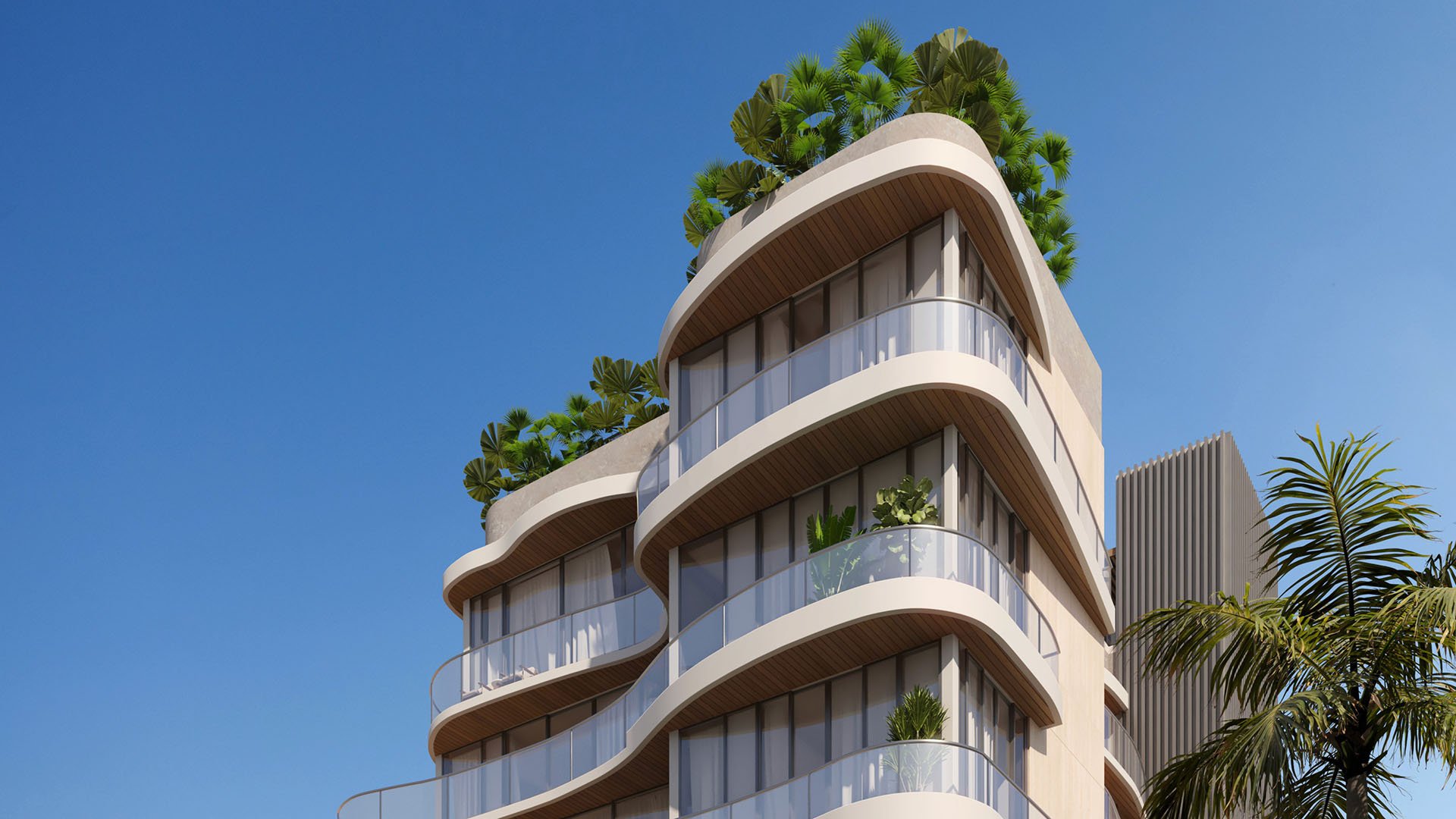
Mila Bay Harbor Islands sits in a category that has become increasingly important to South Florida’s upper-tier buyer: the boutique bayfront condominium designed around discretion, convenience, and lower-friction ownership. The appeal is clear. A waterfront residence offers daily proximity to light, breeze, and open water, while the condominium format suggests that the building is being watched when the owner is elsewhere.
But the more sophisticated question is not whether the setting feels private at first impression. It is whether a bayfront condo can deliver the right forms of privacy while also operating as a true lock-and-leave residence over a multi-year hold. For seasonal owners, part-time residents, and buyers moving on from a larger single-family property, that distinction matters.
Mila’s positioning is less about the scale of a large high-rise and more about the intimacy of a boutique bayfront concept. That changes the diligence. Instead of asking only about views, finishes, or prestige, buyers should examine how daily life will feel when arriving, entertaining, leaving for extended periods, receiving packages, coordinating staff, and returning after months away.
Bayfront privacy is often misunderstood. Water can feel like a protective buffer, but open water also creates sightlines. Neighboring buildings, passing vessels, and balcony geometry can all influence how exposed a residence feels. A bayfront address may reduce certain forms of street-level visibility while increasing others across the water.
For Mila Bay Harbor Islands, the analysis begins with the type of privacy a buyer actually wants. Visual privacy from adjacent residences is different from privacy on a terrace. Privacy from public sidewalks is different from privacy from boat traffic. Discretion at arrival is different from social anonymity within the building. A buyer who entertains often may prioritize a different privacy profile than an owner using the residence as a quiet retreat.
In search behavior, this buyer may filter for Bay-harbor, Boutique, Waterview, Second-home, New-construction, and Terrace, but the real diligence is more nuanced than any label. The practical test is whether the residence allows an owner to enjoy water proximity without feeling continuously on display.
A boutique condominium can create a more controlled residential experience than a larger tower. Fewer moving parts may mean fewer incidental encounters, less circulation through lobbies and amenities, and a stronger sense of residential identity. In a quieter, lower-scale market such as Bay Harbor Islands, that boutique quality can feel especially aligned with buyers who want waterfront living without the intensity of denser coastal districts.
Still, boutique does not automatically mean private. Orientation, amenity placement, arrival sequence, service access, and the relationship between residences all matter. A smaller building can feel highly discreet when circulation is well composed, but it can also feel exposed if terraces face directly into neighboring sightlines or if shared amenities sit too visibly along the waterfront.
For Mila, the strongest buyer lens is not simply, “Is it private?” The better question is, “What kinds of privacy does it provide, and where are the tradeoffs?” A residence may be visually protected from the street yet more open to activity on the water. It may offer a calm building culture while still requiring careful planning around service providers and guests. Privacy is not a single feature. It is a sequence of experiences.
The phrase lock-and-leave is too often treated as a slogan. For affluent buyers, it should be tested like an operating system. Can the residence remain secure and orderly when the owner is away? Is access control clear? Are packages, deliveries, and maintenance visits handled without constant intervention? Does the building’s management structure reduce the emotional burden of ownership, or merely shift that burden to phone calls and coordination?
This is where the condominium format can be compelling. A bayfront single-family home may offer greater physical separation, but it usually carries higher management demands. Landscaping, exterior maintenance, pool care, security checks, storm preparation, vendors, and staff coordination all require attention. A well-run condominium can compress many of those obligations into a more predictable ownership framework.
For Mila Bay Harbor Islands, the lock-and-leave question should be viewed through the lens of seasonal ownership. The ideal part-time residence should feel complete on arrival, quiet while occupied, and professionally cared for while vacant. It should not require the owner to rebuild the household rhythm after every absence.
Luxury privacy begins before the front door. The arrival sequence determines whether a building feels calm or performative. Buyers should consider how visible the entry is, how guests are received, how service providers move through the property, and whether the transition from car to residence feels controlled.
In a boutique bayfront setting, this sequence can be a major advantage. If the building experience is composed and residential rather than theatrical, owners gain a sense of ease that is difficult to replicate in a busier tower. For buyers who value low visibility, the most meaningful luxury may be the absence of attention.
The same applies to staff access. Housekeepers, maintenance teams, delivery personnel, and occasional vendors are part of real ownership life. A lock-and-leave residence must handle that flow without compromising owner privacy or the quiet of common areas. The more clearly a building separates resident life from service logistics, the more persuasive its lock-and-leave claim becomes.
Waterfront living carries a paradox. It creates distance, openness, and serenity, but it also removes certain screens. On land, landscaping, walls, and setbacks can soften exposure. Across water, sightlines may travel farther and feel less predictable. A terrace that seems secluded in the morning may feel different when vessels pass or when lights come on in neighboring buildings at night.
This does not diminish the appeal of a bayfront residence. It means privacy must be evaluated at different times and from different angles. Buyers should think about morning routines, evening dining, weekend boat traffic, and the way interior lighting affects visibility after dark. A residence that is exceptional for one lifestyle may be imperfect for another.
Mila’s boutique bayfront positioning makes this inquiry especially relevant. The project speaks to buyers seeking waterfront living with discretion, yet discretion depends on more than the address. It depends on orientation, floor height, glazing, outdoor space design, and the degree to which private and shared zones are separated.
The likely buyer is not simply chasing a view. This is an owner who values water proximity, a quieter setting, reduced operational friction, and a lower-profile residential environment. They may already own elsewhere. They may split time between South Florida and another market. They may be downsizing from a larger home but not downsizing expectations.
For that buyer, Bay Harbor Islands offers a compelling tone: residential, relatively lower-scale, and close to the broader luxury ecosystem without requiring a home in its most visible corridors. Mila belongs to the broader South Florida movement toward boutique residences that combine convenience with discretion.
The tradeoff is that buyers must be precise. A boutique bayfront condo can be a strong second-home solution, but only if the details support the promise. Privacy should be tested through daily patterns, not brochure language. Lock-and-leave should be judged by how the residence performs when the owner is absent, not only when the building is newly delivered.
A serious evaluation should begin with operations. How is access controlled? How are packages handled? What is the protocol for maintenance entry? How does the building support owners who are away for long stretches? Are common areas positioned to preserve residential quiet? How exposed are waterfront amenities from neighboring properties or boat traffic?
Then the buyer should study the residence itself. Consider terrace orientation, neighboring sightlines, the relationship between interior living areas and outdoor space, and whether the plan allows privacy when guests or staff are present. In luxury ownership, privacy is often less about hiding and more about controlling when, how, and to whom life is visible.
Mila Bay Harbor Islands is best understood through that disciplined lens. Its promise is not merely bayfront beauty. Its relevance lies in the possibility of a more discreet, more manageable waterfront ownership model for buyers who want a South Florida presence without the obligations of a standalone estate.
Is Mila Bay Harbor Islands best understood as a large high-rise? No. It is positioned around a boutique bayfront condominium concept rather than a large high-rise ownership model.
Why is lock-and-leave ownership important here? It matters because many seasonal and part-time owners want the residence to function smoothly while they are away.
Does a bayfront location automatically create privacy? No. Open water can create distance, but it can also introduce sightlines from neighboring buildings and passing vessels.
What kinds of privacy should buyers evaluate? Buyers should consider visual privacy, terrace exposure, boat traffic, staff access, arrival visibility, and social visibility within the building.
Why does boutique scale appeal to discreet buyers? Boutique scale can reduce the intensity of shared spaces and create a quieter residential atmosphere.
Can a condominium be more convenient than a bayfront house? Yes, especially when management, maintenance, security, packages, and access control are handled in a predictable way.
What is the main tradeoff of bayfront condo privacy? The tradeoff is that water views and open exposure often coexist, making orientation and sightlines critical.
Who is the likely buyer for Mila Bay Harbor Islands? The likely buyer values water proximity, discretion, low visibility, and reduced day-to-day property management.
What should owners test over a multi-year hold? They should test how the residence performs during absences, vendor visits, seasonal use, and changing waterfront activity.
Is Bay Harbor Islands a quieter alternative within the luxury market? It may appeal to buyers seeking a lower-profile setting compared with more visible coastal corridors.
If you'd like a private walkthrough and a curated shortlist, connect with MILLION.
If branded residences are on your mind — as a home or as an allocation — we would be glad to share what we are seeing, privately.
Begin a quiet conversation