A discreet buyer guide to the real tradeoff between Midtown Miami and Edgewater for affluent homeowners moving from estate living into a high-service condo lifestyle.

For a South Florida estate owner, moving into a condominium is rarely about giving something up. It is about editing life with intention. The question is not whether the residence has fewer rooms than a waterfront house in Coral Gables, a Pinecrest compound, or a large home near the bay. The question is whether the new address can preserve privacy, arrival, outlook, service, and a sense of personal territory.
That is why the Midtown Miami versus Edgewater decision matters. The neighborhoods sit close to one another, yet they answer different versions of the downsizing brief. Midtown offers an easier urban adjustment for buyers who want immediate walkability, retail energy, and a practical daily rhythm. Edgewater is the more consequential move for the owner translating estate habits into vertical living.
In short, Edgewater tends to matter more when the buyer is coming from a serious estate. Midtown matters more when the buyer is optimizing for lifestyle convenience, social proximity, and mixed-use access.
Edgewater gives the downsizer a stronger emotional substitute for the private estate experience. The reason is not simply proximity to the water. It is that the best Edgewater residences can make the transition feel less like urban compression and more like controlled simplification.
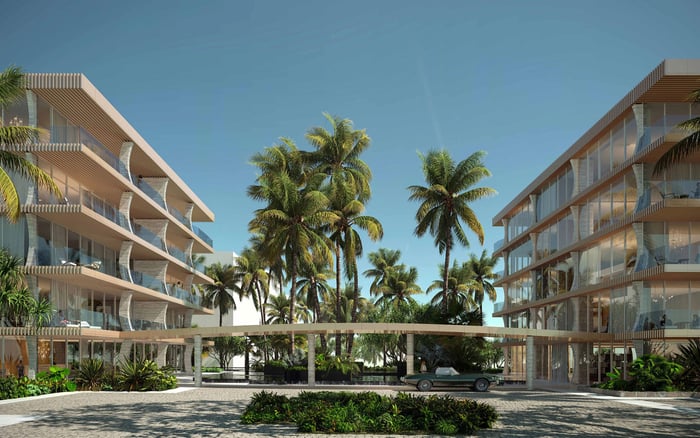
For the estate owner, the most sensitive losses are usually not spare bedrooms. They are the private drive, the horizon line, the separation from street-level activity, the ability to entertain without friction, and the feeling that home begins before the front door. A well-chosen Edgewater condominium can answer several of those concerns through elevated views, larger outdoor living opportunities, quieter residential positioning, and a more deliberate arrival sequence.
The vocabulary matters. Waterview is not merely a feature for this buyer. It can be the psychological replacement for grounds, garden, or open lawn. Terrace space is not an amenity add-on. It is where morning coffee, evening conversations, and the sensation of private air survive the move upward. Pool and wellness programming are not lifestyle ornaments. They reduce the operational burden of maintaining a private estate while preserving daily rituals.
Edgewater also benefits from its relationship to the broader city without forcing the resident to live inside the densest commercial mood. The buyer can remain close to the cultural and dining corridors of Wynwood, the Design District, Downtown, and Brickell while returning to a more residential vertical setting. That balance is precisely what many high-end downsizers are seeking.
Midtown Miami is compelling for a different type of downsizer. Its strength is not estate replacement. Its strength is everyday immediacy. A buyer who wants to walk to coffee, dine casually without planning, simplify errands, and feel connected to a neighborhood grid may find Midtown more natural than Edgewater.
This is especially true for owners who are not trying to replicate the formality of a large home. They may be leaving a suburban property because they actively want less ceremony: a lock-and-leave residence, a more social rhythm, access to restaurants and fitness, and the ability to move between Midtown, Wynwood, and the Design District with ease.
Midtown can also feel less precious, in a useful way. It is more mixed-use, more practical, and often more openly urban. That makes it attractive to buyers who want a pied-a-terre mindset, a second-home base, or a residence that supports work, art, dining, and spontaneous plans. It can be an excellent answer for the downsizer who values activation over serenity.
But for the estate-to-condo buyer who is sensitive to privacy, view quality, parking experience, guest arrival, and outdoor living, Midtown may feel like a lifestyle pivot rather than a true estate translation. That does not make it lesser. It makes it different.
The smartest buyers begin with friction, not floor plans. Which parts of estate living will be painful to lose? If the answer is garden scale, private outdoor entertaining, and visual calm, Edgewater deserves priority. If the answer is household management, driving, isolation, and excess maintenance, Midtown may solve the problem more elegantly.
New-construction also changes the conversation. For some downsizers, new-construction is the cleanest bridge because it reduces renovation fatigue, improves amenity expectations, and offers a more contemporary relationship between indoor and outdoor rooms. Yet the label alone is never enough. A new building with the wrong exposure, compromised elevator flow, or undersized outdoor space can feel less luxurious than an older residence with better proportions.
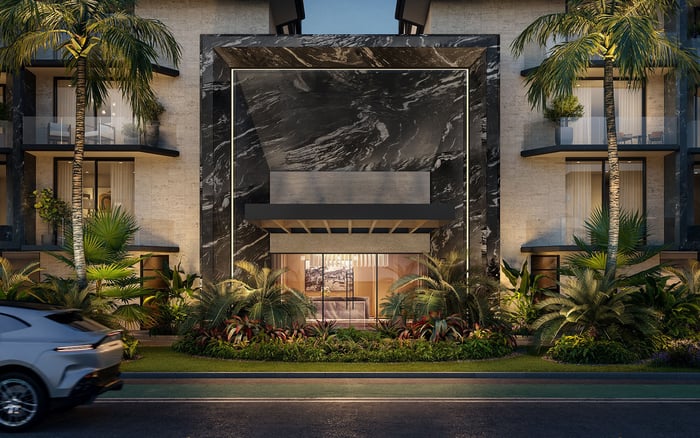
Arrival should be studied with unusual care. Estate owners are accustomed to threshold control. In a condominium, that control is transferred to the porte cochere, lobby, elevator sequence, parking, staff culture, and the way guests are received. A beautiful residence can disappoint if the path to the front door feels too public or too compressed.
The same is true inside the unit. Ceiling height, storage, kitchen function, staff or service access, sound separation, and the relationship between the primary suite and entertaining spaces all matter. Downsizing is not a mathematical reduction. It is a choreography problem.
Choose Edgewater if the primary goal is to preserve the emotional grammar of estate living: privacy, outlook, calm, space to host, and a graceful separation from the city below. Edgewater is also the more persuasive answer for buyers who want the bay to do some of the work that land used to do.
Choose Midtown if the primary goal is liberation from the estate. Midtown suits the buyer who wants more movement, fewer obligations, immediate neighborhood texture, and a residence that supports an active Miami life rather than a quieter retreat from it.
The best decision may come from spending full days in both locations rather than touring buildings in isolation. Visit in the morning, at school pickup hours, at dinner time, and late evening. Watch traffic, lobby tempo, pedestrian energy, and the way the neighborhood feels when you are not being shown property. Luxury is not only what the residence offers. It is what the address asks of you every day.
For the true estate-to-condo transition, Edgewater usually matters more because it has a stronger chance of preserving the emotional requirements of high-end ownership. It can offer a softer landing for buyers accustomed to view, privacy, and a sense of retreat.
Midtown Miami remains highly relevant, but its appeal is different. It is less about replacing an estate and more about rewriting daily life around convenience, culture, and walkability. For the right buyer, that is not a compromise. It is the entire point.
Is Edgewater better than Midtown Miami for downsizing from an estate? Often, yes, if the buyer is trying to preserve privacy, views, and a more residential feeling after leaving a large home.
Who should choose Midtown Miami instead? Midtown is better for buyers who prioritize walkability, dining, retail convenience, and a more active urban rhythm.
Does downsizing mean sacrificing luxury? Not necessarily. The right condominium can replace maintenance burden with service, amenities, security, and better daily efficiency.
Why does Waterview matter so much to estate owners? Waterview can provide the sense of openness and visual privacy that land or gardens once supplied in a single-family home.
Is terrace space essential? For many high-end downsizers, yes. Terrace space helps preserve outdoor rituals and entertaining habits in a vertical residence.
Should buyers focus first on square footage? No. Flow, storage, ceiling height, arrival, service, and outdoor living often matter more than raw size.
Is pool access a meaningful replacement for a private pool? It can be, especially when paired with service, wellness amenities, privacy, and a strong residential atmosphere.
How important is proximity to Wynwood? It is important for buyers who want cultural access, dining, galleries, and a more spontaneous urban lifestyle.
Is new-construction always preferable? No. New-construction can be attractive, but exposure, layout, privacy, and building culture remain more important.
What is the simplest way to decide? Decide whether you are preserving estate habits or replacing them with a more walkable urban life.
For a discreet conversation and a curated building-by-building shortlist, connect with MILLION.
If branded residences are on your mind — as a home or as an allocation — we would be glad to share what we are seeing, privately.
Begin a quiet conversation