A discerning comparison of two Sunny Isles oceanfront ownership models: Regalia’s low-density privacy and Turnberry Ocean Club’s service-rich private-club experience.

At the highest end of Sunny Isles Beach, the decisive distinction is rarely the ocean view alone. It is how a building shapes daily life: how often residents encounter one another, how much service surrounds the home, and how complex the property may be to operate over time.
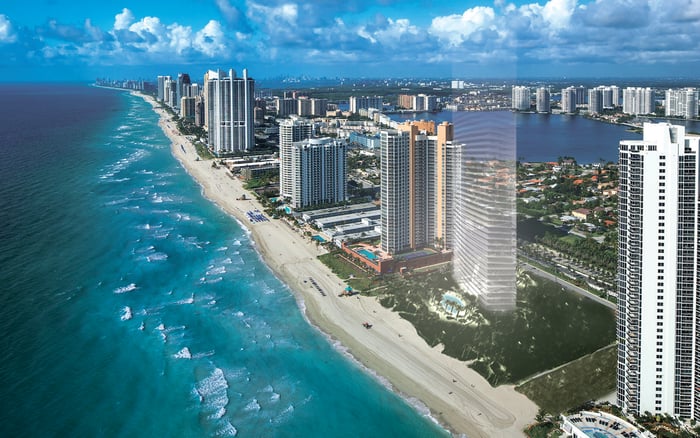
Regalia Sunny Isles Beach and Turnberry Ocean Club Sunny Isles offer notably different answers. Regalia is an ultra-boutique, low-density oceanfront condominium defined by one residence per floor. Turnberry Ocean Club adopts a vertical private-club concept, pairing expansive homes with branded concierge service and a multilayered amenity platform.
Neither approach is inherently superior. The better purchase is the one whose operating philosophy reflects the buyer’s actual habits. The central principle is to buy not only the residence, but also the rhythm, staffing model, governance structure, and long-term obligations surrounding it.
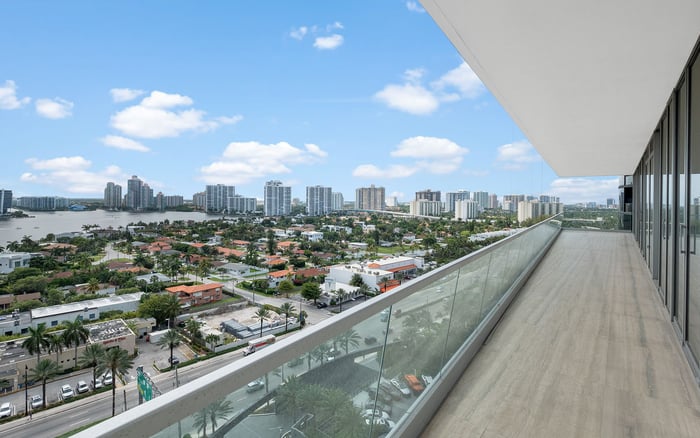
Regalia’s clearest differentiator is architectural privacy. One residence per floor limits same-floor neighbors and shared residential corridors, giving arrivals and departures a more secluded character. For owners who view discretion as a functional requirement rather than a marketing flourish, that configuration can be compelling.
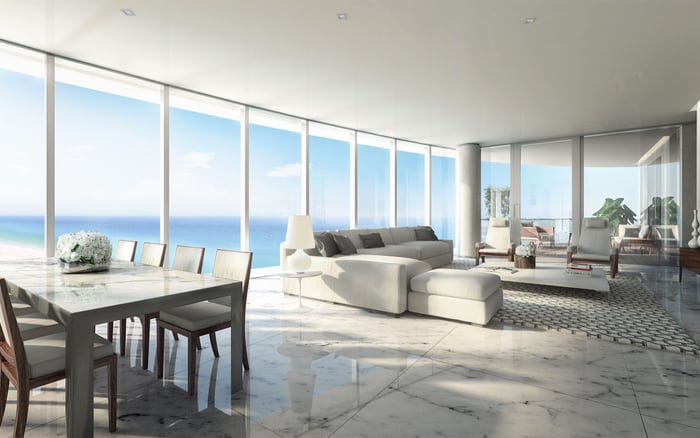
The tower occupies the boutique end of the Sunny Isles market. Its proposition emphasizes expansive residences, premium finishes, direct oceanfront living, and limited residential density. The experience favors seclusion and architectural simplicity over the social energy of a large private club.
That restraint may suit buyers who travel with private staff, maintain established lifestyle memberships elsewhere, or simply want the condominium to recede into the background. It may be less suitable for an owner who expects an extensive calendar of on-property services and amenities to animate every stay.
Privacy should still be tested in person. Buyers should observe the route from vehicle arrival to residence entry, elevator use, staff visibility, guest handling, and the practical separation of service activity from resident circulation.
Turnberry Ocean Club approaches luxury through service depth. Its identity is tied to a broader Turnberry brand and service ecosystem, with branded concierge service at the center of the resident experience. Rather than minimizing the building’s role, the private-club model makes it more visible and active.
This may appeal to owners who want resort-level amenities and managed services integrated into everyday residence. A multilayered amenity platform can also make shorter visits feel effortless, particularly when owners prefer the property to provide much of their leisure and hospitality infrastructure.
The tradeoff is operational complexity. Additional amenities and service layers can demand greater staffing, maintenance, scheduling, and oversight. Buyers should therefore distinguish the promise of a branded experience from its current delivery. They should also verify whether any Turnberry-related privileges are deeded, transferable, discretionary, or governed by separate dues and usage rules.
For a broader Sunny Isles comparison, The Ritz-Carlton Residences® Sunny Isles offers another service-forward proposition, while Muse Residences Sunny Isles Beach expands the local frame for contemporary luxury ownership. These visits are most useful when assessed through the same privacy, staffing, and governance criteria.
Oceanfront ownership can make two buildings appear comparable on a listing page, even when their daily experiences differ substantially. At Regalia, value is closely tied to the scarcity of neighbors and the calm created by low residential density. At Turnberry Ocean Club, value is more closely tied to the availability and execution of services, amenities, and a club-like environment.
A primary resident may prioritize consistency across ordinary weekdays: response times, staffing coverage, access protocols, and the ease of receiving guests. A second-home buyer may focus instead on arrival readiness, residence care during absences, and how effectively the building supports brief stays. Both should determine which services they will genuinely use, because unused amenities may remain part of the ownership cost structure.
The purchase contract is only one component of a sophisticated review. Before committing, buyers and their advisers should examine association budgets, reserve funding, structural-inspection documentation, insurance coverage and deductibles, amenity staffing costs, and recent board minutes. Special assessments, litigation, rental rules, and the association’s history of capital planning also warrant direct verification.
This work matters for both towers, though the questions may differ. At Regalia, buyers should consider how a small ownership base shares major building obligations and whether reserves align with anticipated capital needs. At Turnberry Ocean Club, the inquiry should test whether the service and amenity platform is adequately funded without compromising future maintenance.
Governance deserves particular scrutiny. Service quality, access policies, and privacy practices can evolve after owner-controlled governance takes hold. Prospective owners should separate original positioning from current operations, then determine whether board priorities and resident expectations remain aligned with the building’s stated identity.
A useful inspection is experiential as well as documentary. Visit at more than one time of day, ask how guests and vendors are processed, understand elevator protocols, and assess whether staffing feels polished or intrusive. The right result is highly personal: one buyer’s attentive service is another’s unwanted visibility.
Resale analysis should begin with the durability of each building’s core proposition. Regalia’s one-residence-per-floor plan is a clear, readily understood privacy attribute. Turnberry Ocean Club’s proposition depends more heavily on the sustained quality of its concierge, amenities, and broader service ecosystem. In each case, future appeal may be shaped by how faithfully the association preserves what made the property distinctive.
Buyers should avoid viewing headline association costs in isolation. The more useful questions are what the operating budget delivers, whether reserves are credible, and how costs could change as systems age or insurance conditions evolve. Current asking prices, closed sales, fees, assessments, and insurance expenses should all be confirmed at the time of purchase rather than inferred from the building’s positioning.
The final choice is direct. Regalia is likely to resonate with the buyer who wants minimal neighbor interaction and a home that feels singular within the tower. Turnberry Ocean Club is likely to appeal to the buyer who expects frequent concierge support and a fuller private-club lifestyle. The most durable decision comes from matching either model to real behavior, not an occasional vacation ideal.
What is Regalia’s principal privacy advantage? Its one-residence-per-floor layout reduces same-floor neighbors and shared residential corridors.
What defines the Turnberry Ocean Club experience? It pairs expansive residences with branded concierge service and a multilayered, private-club-style amenity model.
Which property may better suit a privacy-focused buyer? Regalia may be the stronger fit for someone who prioritizes low density, seclusion, and minimal neighbor interaction.
Which property may better suit a service-focused buyer? Turnberry Ocean Club may suit an owner who expects frequent concierge assistance, managed services, and resort-level amenities.
Are Turnberry-related privileges automatically included? Buyers should verify whether privileges are deeded, transferable, discretionary, or subject to separate dues and rules.
What financial documents should buyers review? Review association budgets, reserve funding, insurance terms and deductibles, staffing costs, assessments, and recent board minutes.
Why do structural records matter? Structural-inspection documents and capital plans help buyers assess prospective obligations and the association’s approach to maintenance.
Can service and privacy policies change? Yes. Owner-controlled governance can alter staffing, access practices, amenity operations, and the resident experience.
How should a second-home buyer compare the towers? Consider arrival readiness, residence care during absences, service usage, privacy expectations, and the cost of maintaining each model.
What is the best way to make the final choice? Pair document review with multiple property visits, then select the operating model that reflects how you will actually live.
If you'd like a private walkthrough and a curated shortlist, connect with MILLION.
If branded residences are on your mind — as a home or as an allocation — we would be glad to share what we are seeing, privately.
Begin a quiet conversation