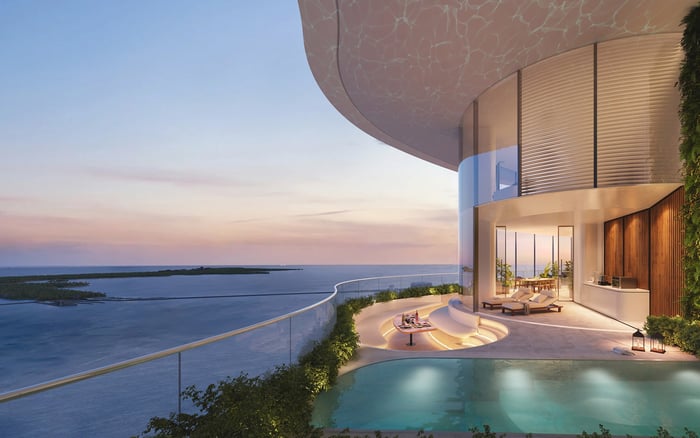
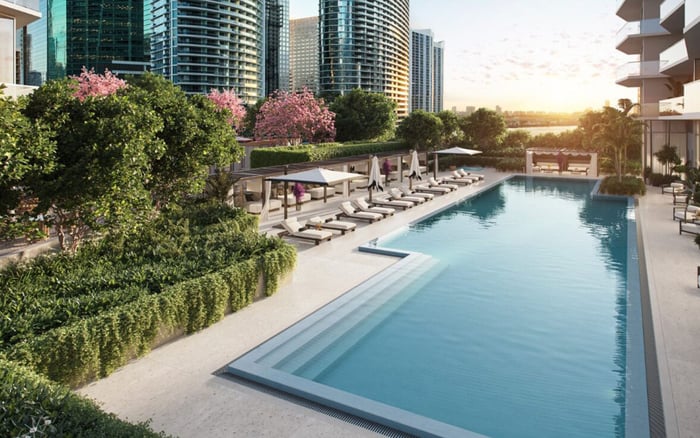
Pool-equipment noise at Miami Tropic Residences should be read as a lifestyle variable, shaping how terraces, pool decks, loggias, cabanas, and open indoor-outdoor rooms feel during daily use.
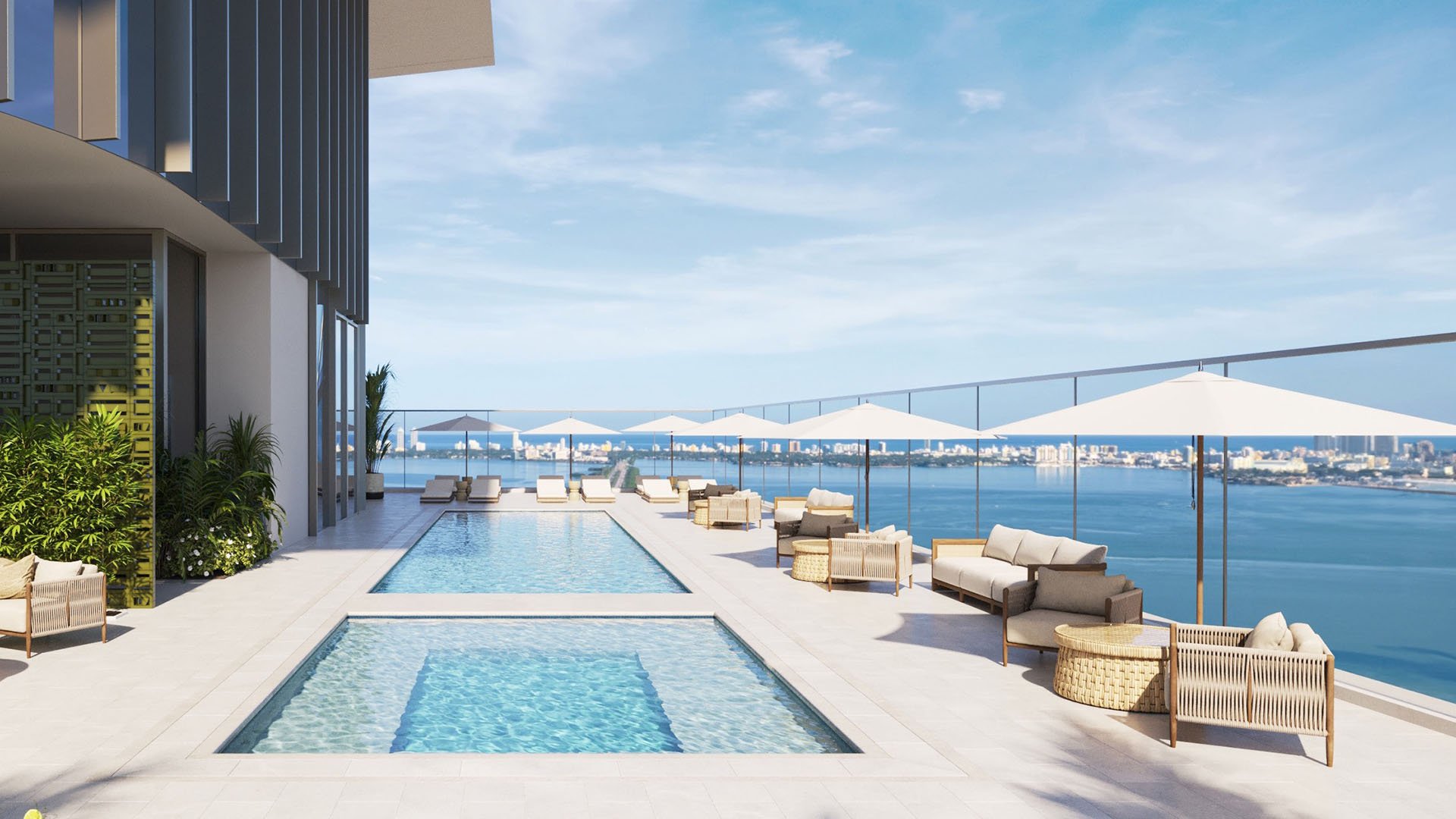
At Miami Tropic Residences, pool-equipment noise should be treated as a lifestyle factor, not merely a maintenance detail concealed behind landscaping or a service gate. In South Florida, the pool is rarely a seasonal amenity. It is part of the daily architecture of leisure: a morning swim, a shaded afternoon by the cabana, an evening drink on the terrace, a quiet dinner beside the water.
That is why the sound profile of pumps, heaters, chillers, and water features matters. At its best, pool equipment recedes into the background as a soft, consistent hum. In less considered settings, it becomes a persistent irritant that follows the household across terraces, decks, cabanas, waterfront seating, and even adjoining interiors when large openings are in use.
For buyers evaluating Miami Tropic Residences, the question is not simply whether the pool works beautifully. It is whether the pool lives beautifully. The answer depends on equipment selection, installation location, construction detailing, and operating schedule.
A common mistake is to judge mechanical sound only at the equipment pad. That reveals part of the story, but not the whole of it. Pool-equipment noise should be evaluated by how it travels across the property, around corners, through side yards, over water, into courtyards, and toward the spaces where residents actually spend time.
A pump that seems modest beside the equipment area may read differently from a dining terrace at night. A water feature that feels atmospheric during a gathering may be too assertive during a quiet morning. A chiller that is acceptable at midday may become more noticeable when the surrounding neighborhood settles and the household opens sliding doors for cooler air.
This is especially relevant in homes with expansive glass, minimal thresholds, and fluid indoor-outdoor plans. The same features that make South Florida living feel effortless can also make a residence more acoustically exposed. When the boundary between salon and terrace disappears, exterior mechanical sound becomes part of the interior atmosphere.
Year-round outdoor living changes the standard for comfort. In colder climates, pool equipment may be less relevant for long stretches. In Miami, patios, loggias, pool decks, summer kitchens, roof decks, and waterfront lounges can be in regular use across the calendar.
The most sensitive moments are often early morning and late evening, when temperatures are cooler and residents naturally move outdoors. These are also the hours when intrusive sound can feel more pronounced. A low mechanical tone may be acceptable when traffic, conversation, music, and daytime movement fill the background. At dawn or after dinner, that same tone can become the dominant sound in the landscape.
For Miami Tropic Residences households, operating schedules deserve as much attention as equipment specifications. The right schedule can preserve both performance and atmosphere. The wrong schedule can place the loudest operating periods directly into the household’s most valued outdoor moments.
A polished pool setting can seduce quickly. Still water, stone, shade, landscaping, and waterfront air all communicate ease. The better test is how that setting performs when the mechanical systems are running.
A practical review should begin with the equipment sources themselves: pumps, heaters, chillers, and water features. Each can shape the overall acoustic profile. Buyers should understand where the equipment sits in relation to bedrooms, terraces, cabanas, neighboring outdoor spaces, and primary entertaining areas. They should also consider whether construction detailing creates buffers or unintentionally channels sound toward the places the household uses most.
Dense luxury settings add another layer. Nearby neighbors may be using their own outdoor rooms at the same time, particularly in prime evening hours. Thoughtful noise control is therefore both a private comfort issue and a neighborly one. In South Florida’s dense waterfront districts, this sensitivity can be as relevant as view corridors or elevator privacy.
Pool-equipment noise does not exist in isolation. It interacts with walls, courtyards, glass, hardscape, water, planting, and the daily rituals of a household. A long side passage may carry sound. A reflective wall may sharpen it. An open corner may allow it to drift. A planted buffer, thoughtful enclosure, or better equipment siting may soften how the sound is perceived.
This is why the conversation belongs early in design and due diligence. Equipment selection matters, but so does installation location. Construction detailing matters, but so does the family’s routine. A residence used primarily for quiet mornings and intimate dinners requires a different sensitivity than one oriented around frequent daytime entertaining.
Terms such as pool, terrace, and balcony may sound like amenity language, but for serious buyers they are also acoustic clues. Any outdoor area intended for lingering should be understood as a listening position. Stand where coffee will be served. Sit where dinner will be hosted. Open the sliding doors as they would be opened in real life. The goal is to assess the lived soundscape, not a theoretical diagram.
True luxury is not only visual. It is sensory. The best residences manage light, air, privacy, temperature, circulation, and sound with equal care. Pool-equipment noise belongs within that larger standard because it affects the cadence of daily life.
At Miami Tropic Residences, households should weigh pool sound alongside views, finishes, amenities, and the usability of outdoor space. A spectacular deck loses some of its grace if the mechanical note is always present. A cabana becomes more inviting when the ambient environment supports conversation, reading, and rest. A waterfront setting feels more complete when equipment disappears into the background rather than competing with the breeze.
This does not mean buyers should expect silence. Pools are active systems, and outdoor living always carries some ambient sound. The more useful standard is refinement: does the mechanical presence feel integrated, occasional, and appropriate, or does it become the defining acoustic feature of the space?
For a household evaluating pool-equipment noise, four questions are especially useful. First, what equipment is producing sound, including pumps, heaters, chillers, and water features? Second, where is that equipment located in relation to the spaces the household values most? Third, how does sound travel when doors are open, when the property is quiet, and when neighboring outdoor areas are active? Fourth, how do operating schedules align with daily routines?
A complete review also includes design, applicable regulation, equipment operation, and household habits. The regulatory piece should be handled carefully by qualified local advisors, without assuming a generic standard will answer the lifestyle question. A condition can be technically acceptable and still feel wrong for a particular terrace dinner or early swim.
The most elegant outcome is not necessarily the most complex. It is the one where equipment, placement, enclosure, scheduling, and daily use are aligned so the pool supports the residence rather than announcing itself.
Why does pool-equipment noise matter at Miami Tropic Residences? Because outdoor living is central to the experience, mechanical sound can shape comfort on terraces, decks, cabanas, and adjoining interiors.
Which pool systems are most relevant to review? Pumps, heaters, chillers, and water features are the key sources to consider when assessing the overall sound profile.
Should buyers judge noise only beside the equipment pad? No. The more important question is how sound travels to the spaces where residents actually sit, dine, swim, and relax.
Why are mornings and evenings especially sensitive? These cooler periods are often when households use outdoor areas most, and background noise may be lower.
Can open indoor-outdoor layouts increase exposure to noise? Yes. Large sliding doors, minimal thresholds, and open plans can allow exterior mechanical sound to become part of the interior environment.
Is pool-equipment noise only a technical issue? No. It is also a lifestyle issue because it affects conversation, rest, dining, and the perceived calm of outdoor rooms.
What should homeowners consider beyond equipment choice? Installation location, construction detailing, operating schedules, and daily household routines all influence the experience.
Does density make the issue more important? Yes. In dense luxury settings, nearby neighbors may also use outdoor spaces frequently, making sound control more consequential.
Should buyers expect complete silence from a pool system? Not necessarily. A more realistic goal is a refined background presence that does not dominate the outdoor setting.
How should pool noise fit into overall due diligence? It should be reviewed alongside views, finishes, amenities, privacy, and the true usability of outdoor living areas.
If you'd like a private walkthrough and a curated shortlist, connect with MILLION.
If branded residences are on your mind — as a home or as an allocation — we would be glad to share what we are seeing, privately.
Begin a quiet conversation