A discreet executive guide to using Miami International Boat Show week as a real-world test of South Florida living, from marina access and broadband to tax residency, flood diligence, airport connectivity, and neighborhood rhythm.

The Miami International Boat Show is more than a showcase of vessels, marine products, and yachting services. For executives who work from home, it can serve as a compressed, unusually useful rehearsal for South Florida life. Its Miami and Miami Beach setting is the point: the week forces buyers to experience causeways, waterfront access, parking, marina conversations, airport timing, and neighborhood rhythm while the region is under real demand.
A buyer who tours a residence only in ideal conditions sees architecture. A buyer who moves between show activity, crosses causeways, parks near Miami Beach, meets a marina operator, takes a work call from a prospective neighborhood, and times the ride to the airport sees a life system. In South Florida, that system matters as much as square footage.
For the work-from-home principal, the first question is not whether a residence is beautiful. It is whether the address supports the cadence of the week. How often do you need Miami International Airport for board meetings, client dinners, family office visits, or headquarters travel? For executives who still travel frequently, airport access can be a decisive part of the home search.
Regional movement also matters. Rail, airport, and roadway access can change the feel of a South Florida base, especially for executives who split time between Miami-Dade, Broward, and Palm Beach. A Brickell base may suit the executive who wants a dense urban rhythm, fast access to downtown Miami, and a vertical home-office lifestyle. In that context, The Residences at 1428 Brickell represents the city-facing version of the decision: less about retreat, more about proximity, efficiency, and skyline energy.
The boat show is a useful stress test because it reveals friction. If a prospective home feels convenient only outside peak event traffic, that is not enough. Test the route at the hours you would actually move.
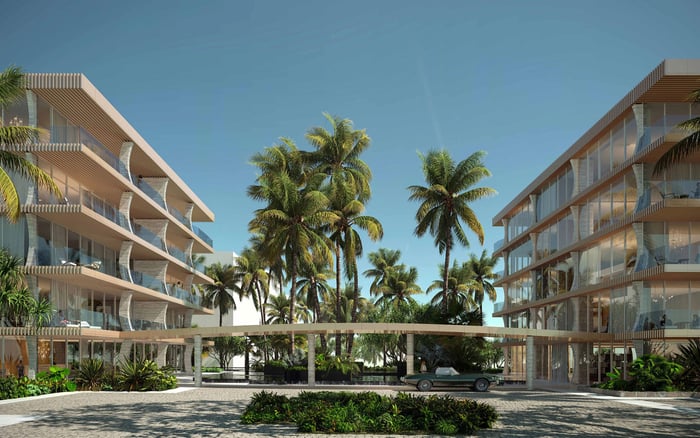
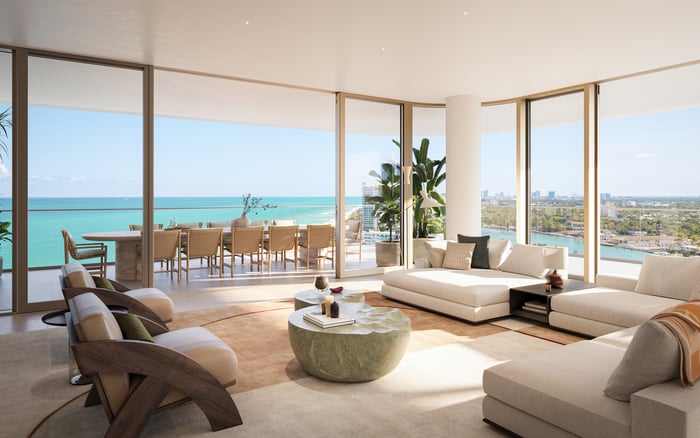
The show atmosphere exposes the differences between Miami Beach, downtown Miami, Biscayne Bay, and marina-adjacent districts. Miami Beach brings beach culture, hotel energy, and immediate access to much of the city’s boat-show rhythm. It also requires a clear-eyed look at parking, bridge movement, service access, and seasonal traffic. A buyer considering The Perigon Miami Beach should use boat-show week to understand not only the romance of Miami Beach, but also the practical rhythm of arrivals, departures, service access, and evening plans.
Downtown Miami and nearby bayfront districts feel different. The energy turns toward Biscayne Bay, marina access, hospitality, and in-water activity. That does not mean every nearby residence is equally convenient for boating. It means the buyer has a live laboratory for comparing home, berth, bridge, and airport.
Water views are not a boating plan. Marina fit should be treated as a separate due-diligence category. Before choosing a South Florida base, executives with boats should compare marina location, bridge-clearance constraints, dockage availability, hurricane plans, and travel time from home to berth. The most elegant residence can become impractical if the vessel is in the wrong place.
This is where Broward County deserves serious consideration. Fort Lauderdale has a deep yachting identity, and for many owners the appeal is the concentration of marine services, waterfront neighborhoods, and marina access. A buyer looking at St. Regis® Residences Bahia Mar Fort Lauderdale should evaluate Fort Lauderdale not as a fallback to Miami, but as a distinct yachting ecosystem with its own logic.
For some executives, the ideal solution may be a residence in one location and a berth in another. For others, the priority is reducing the minutes between a morning call and an afternoon departure on the water. Boat-show week gives that question urgency.
Remote work quality is not a neighborhood generality. Broadband should be verified at the specific address before committing to a purchase or long lease. In luxury property, buyers often scrutinize finish levels, views, and privacy, yet assume connectivity will be solved. It should not be assumed.
Executives should also test the room itself. Is there a quiet office position away from elevator cores, service corridors, pool decks, or street noise? Is there space for dual screens, confidential calls, visiting assistants, and secure document storage? Does the building or home have practical backup plans for interruptions? These details rarely appear in a glamour tour, but they define daily performance.
Florida’s tax environment remains a major relocation consideration for many executives. Long-term housing costs also deserve attention because primary-residence treatment and local property-tax rules can affect carrying costs. The purchase decision should therefore be coordinated with tax, legal, and residency advisers before the emotional favorite becomes the final choice.
In South Florida, resilience is not separate from luxury. Flood risk should be checked parcel by parcel using official flood resources because flood exposure can influence risk assessment and insurance context. Wind exposure, storm planning, building systems, and evacuation practicality also belong in the same conversation as finishes and views.
Insurance availability and cost should be reviewed early. A luxury address does not exempt a buyer from insurance complexity, especially in coastal and waterfront settings. Ask for realistic carrying-cost scenarios before contract deadlines become tight.
County property records are another executive-grade tool. Miami-Dade records can be used when comparing Miami, Miami Beach, Brickell, Coconut Grove, and bayfront districts. Broward records are important for Fort Lauderdale, Las Olas, Harbor Beach, and other waterfront bases. Palm Beach County records matter when comparing Palm Beach, West Palm Beach, Boca Raton, Delray Beach, and nearby coastal or intracoastal areas. For a quieter Boca Raton rhythm, Alina Residences Boca Raton belongs in a different lifestyle conversation than Brickell or Miami Beach, even if the executive workday is equally digital.
Use the show as a structured test. On the first day, move through the core Miami and Miami Beach areas you would actually use and record real transfer times. Include parking, rideshare delays, bridge movement, and the emotional feel of each district. On the second day, meet marina operators and ask specific questions about dockage, hurricane plans, service providers, and vessel access. On the third day, tour residences only after you understand where the boat, airport, train station, and family routines fit.
If Palm Beach County is part of the search, compare the pace deliberately. A residence such as Alba West Palm Beach speaks to buyers who want regional connectivity and a more measured urban-waterfront environment. The right answer is not always the most famous address. It is the address that lets the executive work privately, travel efficiently, live well, and use the water without friction.
Why is the Miami International Boat Show useful for relocation planning? It lets buyers test traffic, marina access, parking, neighborhood feel, and waterfront routines during a high-demand week.
Should an executive tour homes before or after testing routes? Test routes first. A beautiful residence only works if the airport, marina, meetings, family routine, and daily errands feel practical.
Should I choose Miami or Fort Lauderdale for a boating lifestyle? Miami offers global energy and major airport connectivity, while Fort Lauderdale can be especially compelling for marine services and marina access.
How important is airport access for remote executives? It is very important if board, client, headquarters, or family office travel remains part of the schedule.
Is regional rail access relevant to a luxury home search? Yes. Regional rail access can add another mobility layer when comparing Miami-Dade, Broward, and Palm Beach County bases.
What should I check before relying on a home office? Verify broadband at the exact address and test the quietness, layout, privacy, and backup practicality of the work area.
How should boat owners evaluate a residence? Compare the home-to-berth travel time, bridge-clearance constraints, dockage availability, marina services, and hurricane planning.
Why do flood considerations matter for luxury buyers? Flood exposure can vary by parcel and may affect risk planning, insurance context, and long-term carrying costs.
What professional advisers should relocating executives involve? Buyers should coordinate with tax, legal, insurance, and residency advisers before making a final primary-residence decision.
What is the best way to shortlist comparable options for touring? Start with location fit, delivery status, and daily lifestyle priorities, then compare stacks and elevations to validate views and privacy.
If you'd like a private walkthrough and a curated shortlist, connect with MILLION.
If branded residences are on your mind — as a home or as an allocation — we would be glad to share what we are seeing, privately.
Begin a quiet conversation