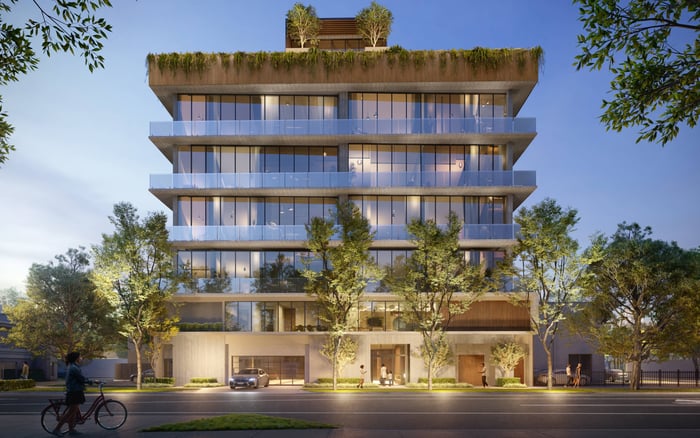
At a wellness-branded residence, the decisive amenity may be the team that makes every other amenity usable. Buyers should test staffing, training, continuity, budgets and post-closing commitments before treating a service promise as an everyday reality.

For buyers evaluating The Well Coconut Grove, the relevant question is more exacting than how many amenities appear in a presentation: Who will make those amenities work day after day?
Concierge depth warrants consideration apart from amenity count. A treatment room, wellness program or residents’ space has limited practical value if reservations are difficult, requests move slowly or responsibility passes ambiguously between teams. The service layer converts physical infrastructure into a reliable lifestyle experience.
This distinction is particularly relevant in new construction, where purchasers may be evaluating a future operating model rather than an established record. The essential question is whether facilities merely exist or can be accessed consistently.
A wellness-focused residence may need personnel to coordinate treatments, reservations, programming, deliveries, maintenance and other resident requests. Those functions can overlap, but they are not interchangeable. Concierge, security, wellness and maintenance teams can carry distinct responsibilities, training requirements and access considerations.
Thin staffing can compromise an otherwise extensive physical package. If one desk must manage arrivals, bookings, deliveries and complex resident requests simultaneously, the promise of ease may become a sequence of delays. Adequate coverage, by contrast, can help a building remain composed as demand rises.
Headcount alone is not enough. Training matters when a residence promises hospitality-grade service rather than conventional condominium management. Continuity matters as well. A stable team can retain preferences, understand recurring needs and build institutional knowledge, supporting personalization without requiring residents to explain the same request repeatedly.
Buyers should begin by identifying who will operate the concierge function and whether service standards are documented. They should then ask how staff will be trained, supervised and evaluated. Marketing terms such as attentive, seamless or personalized cannot substitute for a defined operating structure.
Useful questions include:
The same questions can sharpen comparisons with nearby propositions such as Four Seasons Residences Coconut Grove and Mr. C Tigertail Coconut Grove, without assuming that different brands, operating arrangements or residential concepts are equivalent.
Operating budgets and association fees should be weighed against the labor required to deliver a promised experience. A sophisticated service model requires sufficient personnel, training, management and coverage. The relevant question is not whether fees appear high or low in isolation, but whether the budget supports the stated service standard.
Buyers should examine the assumptions behind labor costs and ask what could happen if expenses diverge from projections. They should also clarify which functions are included in common operations and which services may carry separate charges. A long amenity list without sufficient labor support can create a mismatch between presentation and lived experience.
The distinction between developer-stage promises and enforceable post-closing commitments is equally important. Purchasers should determine where service obligations are documented, who can modify them and how standards will be governed after closing.
When the objective is to understand wellness branding, a useful South Florida comparison can extend beyond Coconut Grove. The Well Bay Harbor Islands offers another context for asking how a wellness identity translates into operations. The point is not to presume identical service, but to sharpen the questions applied to each property.
For an end user or long-stay resident, service quality may matter more than a collection of rarely used rooms. The most practical test is to imagine an ordinary week involving a delivery, maintenance request, wellness reservation and late arrival. Then determine who handles each moment, during which hours and under what standard.
At The Well Coconut Grove, the central due-diligence question is whether the completed residence will have enough qualified personnel to translate its concept into dependable everyday service. Amenity count describes inventory. Concierge depth reveals whether that inventory can become effortless, personal and consistently available.
What does concierge depth mean in a luxury residence? It refers to the coverage, training, capacity and continuity behind the concierge function, not merely the presence of a desk.
Why can staffing matter more than amenity count? Staff coordinate access, reservations and requests, turning physical amenities into services residents can use reliably.
What should buyers ask about overnight coverage? Ask who receives requests after hours and whether overnight responsibilities rest with concierge, security or another team.
Why is concierge training important? Hospitality-grade service requires personnel who can handle varied requests consistently, discreetly and within defined responsibilities.
How does staff continuity affect residents? Continuity supports remembered preferences, institutional knowledge and a more consistent daily experience.
Should wellness spaces be staffed? Buyers should determine which spaces will be actively programmed and staffed and which will operate as self-service facilities.
How should association fees be evaluated? Consider whether the operating budget can support the labor, supervision and coverage required by the promised service model.
Are developer-stage service promises binding? Buyers should identify which commitments are documented and enforceable after closing rather than relying solely on marketing language.
What response-time information should a buyer request? Ask whether standards exist for routine requests, urgent issues, reservations and communication when a request cannot be completed promptly.
What is the simplest way to test the service proposition? Map several ordinary resident requests to the responsible team, expected hours and documented service standard.
To compare the best-fit options with clarity, connect with MILLION.
If branded residences are on your mind — as a home or as an allocation — we would be glad to share what we are seeing, privately.
Begin a quiet conversation