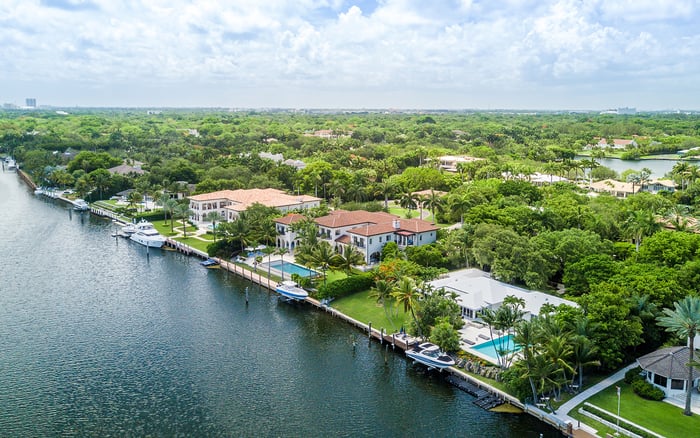
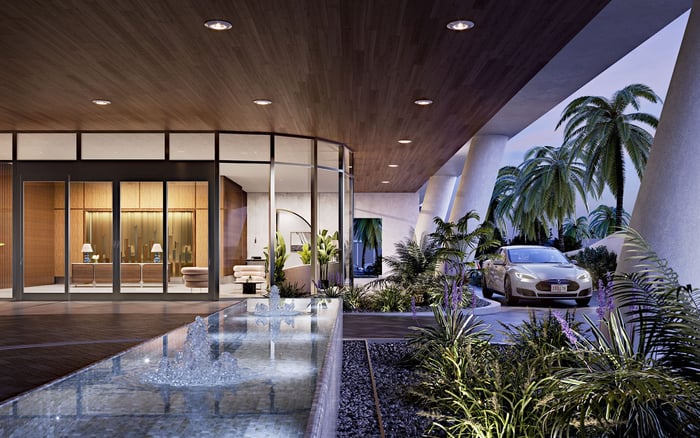
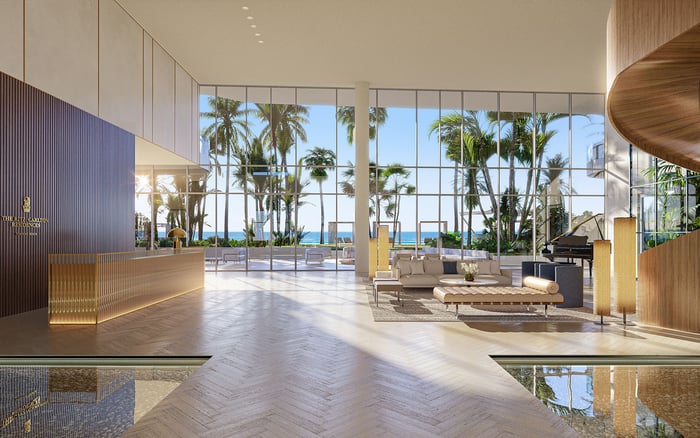
From Coral-gables courtyards to Brickell’s glass-forward skyline, South Florida’s top-tier buyers tend to gravitate toward two architectural dialects. Mediterranean Revival delivers heritage, romance, and a sense of established prestige. Tropical Modern answers the climate with shade, airflow, and indoor–outdoor continuity. This MILLION Luxury editorial lays out what each style signals, how it lives day to day, and how to evaluate them through the lens of neighborhood fit, renovation pathways, and long-term desirability.
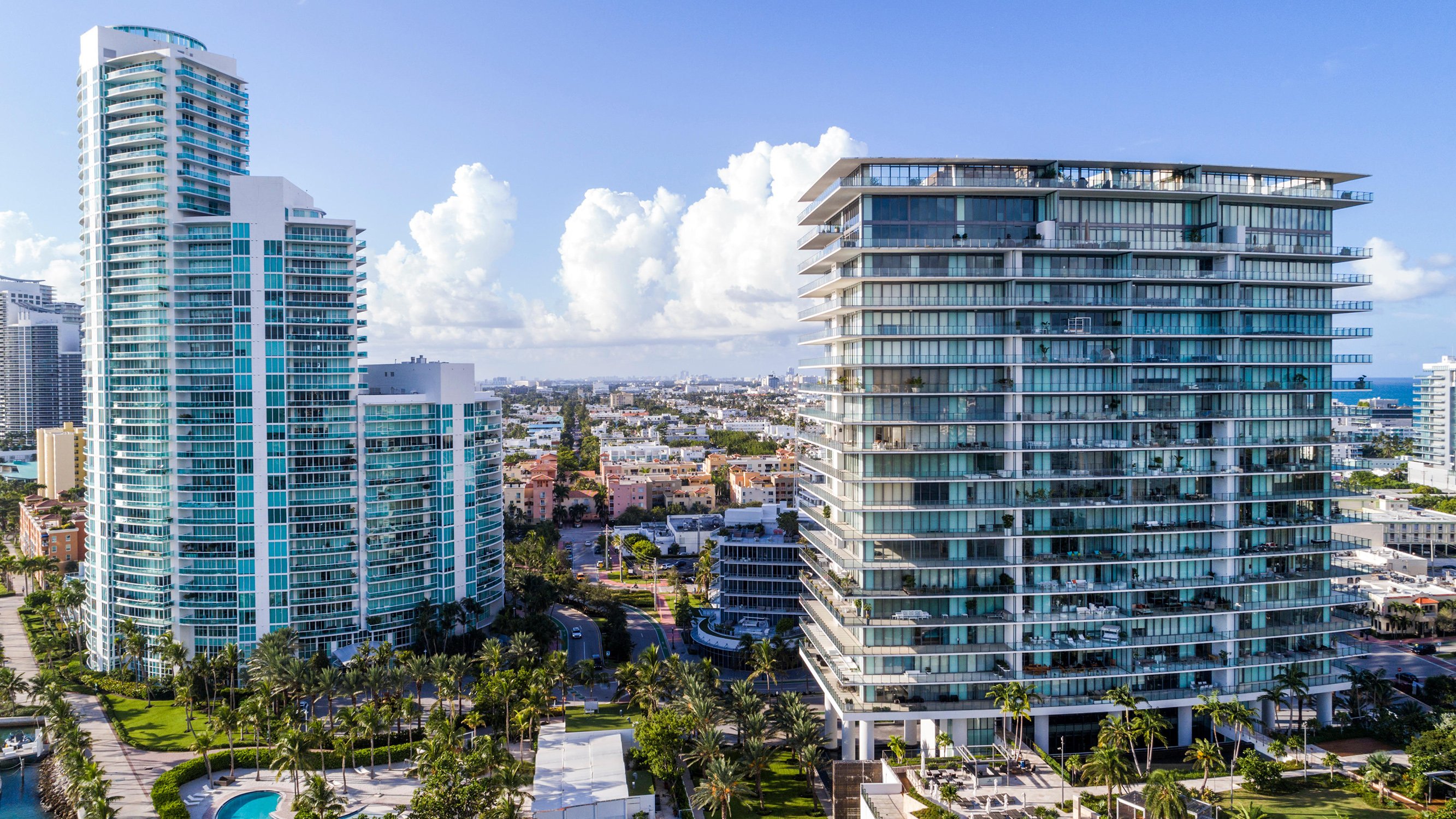
In South Florida, architecture is rarely a surface decision. At the upper end of the market, style functions as shorthand for lifestyle, upkeep, privacy, and even buyer psychology. A home that reads “classic” can feel established and settled, regardless of how recently it was renovated. A home that reads “modern” can feel calibrated to the climate and to current expectations around light, glass, and seamless entertaining.
What makes the region especially compelling is that two design languages continue to anchor ultra-premium conversations: Mediterranean Revival and Tropical Modern. They are not true opposites. They are two credible answers to the same brief: how to create a sense of arrival, discretion, and resort-level comfort in a hot, bright, outdoor-oriented environment.
That distinction matters across the map, from Miami-beach waterfront living to the high-rise cadence of Brickell, and through legacy neighborhoods such as Coral-gables and Coconut-grove where mature canopy, lot character, and architectural continuity still shape demand.
Mediterranean Revival became a defining South Florida residential style during the 1920s land boom, and its “Old World” vocabulary continues to carry weight in luxury housing. The cues are immediate and legible: stucco walls, clay tile roofs, arched openings, courtyards, and wrought-iron detailing. Even when interiors are fully updated, the exterior language can still communicate permanence, tradition, and a sense of legacy.
In day-to-day living, Mediterranean Revival succeeds because it choreographs arrival. You typically move through framed thresholds, shaded loggias, and courtyard moments that deliver privacy before you ever reach the main living areas. In a region where sunlight is intense and outdoor life is constant, that rhythm of shade, enclosure, and reveal can feel not only romantic, but also practical and comfortable.
The style also carries preservation gravity. South Florida’s design expectations were shaped by landmark-era projects and a longstanding preservation legacy, which has helped embed Mediterranean-coded design as “classic” local luxury. For certain buyers, particularly those who view real estate as a multigenerational asset, that classic read translates into confidence. It signals that the home belongs to the place and is less likely to feel dated simply because trends shift.
At the very top of the market, “historic-looking” prestige can still anchor record-setting narratives. Widely covered listings in Palm Beach have shown how renovated estates with a historically framed identity can be positioned at extraordinary asking prices. The practical takeaway for South Florida buyers is not about any single property. It is about the durable premium placed on heritage, craftsmanship, and a sense of place that you can understand in a glance.
Mediterranean Revival, done well, also supports a particular kind of privacy. Courtyard layouts, perimeter walls, and layered circulation can create a compound-like feeling. For buyers who prioritize seclusion, security, and a slower, more atmospheric home experience, those spatial cues can matter as much as square footage.
If Mediterranean Revival is about romance and permanence, Tropical Modern is about performance and ease. It is often described as climate-responsive contemporary architecture, defined by clean lines and strong indoor–outdoor continuity. In South Florida, that is not a marketing phrase. It is a lived response to sun, humidity, and the desire to use outdoor space year-round.
Typical Tropical Modern strategies include broad roof overhangs and other shading devices, generous glazing that blurs the boundary between inside and out, and layouts that prioritize breezes, daylight, and outdoor living zones. Done well, the home feels bright without feeling exposed, and open without sacrificing comfort. The design is meant to work with the environment, not simply look good against it.
High-end residential work in Miami continues to reflect this direction. For example, a luxury Tropical Modern home project in Brickell has been highlighted for its contemporary approach and indoor–outdoor emphasis, reinforcing that this language is not limited to resort properties or new towers. It has become a default for buyers who want a home that reads as current while still feeling grounded in landscape.
Tropical Modern also aligns neatly with today’s future-facing expectations in luxury, including smart home integration, energy-conscious systems, and wellness-forward amenities. Many of these features are easiest to incorporate when the design begins with performance as a baseline, including orientation, daylight management, and the relationship between interior volumes and exterior rooms.
In day-to-day terms, Tropical Modern tends to emphasize effortless entertaining. Living spaces often open outward, and outdoor areas are treated as true extensions of the plan. For buyers who want an ease-forward, light-filled environment that feels distinctly contemporary, the language communicates that intention immediately.
Style preference often sharpens when you attach it to a neighborhood. South Florida is not a single aesthetic market. It is a collection of luxury submarkets with different rhythms, lot types, and buyer priorities.
In Coral-gables and Coconut-grove, the story is more layered. Both are distinct luxury submarkets where architecture and lifestyle diverge, and where tradition coexists with new construction. Market reporting for Coral Gables and Coconut Grove luxury condos in Q2 2025 showed sales volume up 8.8% year over year to 62 sales, the median price up 14.1% to $1,825,000, and price per square foot up 4.8% to $855. Those figures underscore continued demand in legacy neighborhoods, including areas with deep Mediterranean Revival roots.
Coconut-grove is also widely described as architecturally diverse. Rather than being dominated by a single look, it mixes historic cottages and revival styles with newer modern builds. That diversity is precisely why sophisticated buyers can choose based on lifestyle: a courtyard-driven, revival-coded home that feels quietly secluded, or a glass-forward contemporary residence that turns the canopy into the view. In the condo context, the same indoor–outdoor sensibility can be expressed through terraces, landscaping, and a calmer, greener cadence. For buyers who want that Grove rhythm with refined, design-forward execution, Park Grove Coconut Grove illustrates how contemporary living can still feel anchored to landscape and light.
In Miami-beach, the market supports both languages, depending on the pocket and the buyer’s intent. Some buyers want a home that reads as “old world” elegance, particularly where privacy, gates, and the feeling of a compound matter. Others want an ocean-facing contemporary residence that behaves like a modern resort suite, with proportion, restraint, and direct connection to the outdoors.
That is where the residential conversation often shifts from single-family styling to branded, service-rich buildings. The appeal is not only design. It is operational ease, staffing, and amenity curation that supports a seamless lifestyle. In that Miami Beach continuum, properties such as 57 Ocean Miami Beach can speak to a buyer who values a refined beachfront lifestyle with a contemporary lens, while Setai Residences Miami Beach and The Ritz-Carlton Residences® Miami Beach reflect the enduring draw of hospitality-level service paired with a strong design identity.
The practical lesson is that “best style” is rarely a universal answer. The strongest choices tend to be the ones that feel inevitable for the setting, whether that means matching the skyline in Brickell, honoring established character in Coral-gables, or leaning into the service-first equation in Miami-beach.
Many of the most persuasive luxury homes in South Florida are now hybrids. Mediterranean Revival residences often modernize by simplifying heavy ornament, opening plans, and expanding glass openings to increase light and improve indoor–outdoor flow. Design trend coverage has also noted a “Modern Mediterranean” direction that keeps recognizable cues while adapting to contemporary materials and floor plan preferences.
Tropical Modern homes, conversely, often warm up over time. Owners introduce texture and depth through natural stone, wood, and shaded outdoor rooms that feel less like a gallery and more like a retreat. The strongest examples tend to avoid extremes. They embrace performance and clarity, while still recognizing that luxury in a coastal climate is as much about comfort and tactility as it is about minimalism.
For buyers evaluating resale and long-term desirability, this hybrid reality is useful. If you fall for a Mediterranean shell, you are not necessarily committing to a traditional interior. If you choose Tropical Modern, you are not required to live in a cool-toned, hard-edged space. Both styles can be tuned, and the best outcomes usually come from editing with restraint rather than doubling down on caricature.
In the ultra-premium tier, the next buyer’s perception is a form of liquidity. Architecture influences that perception in direct, predictable ways, especially in a market where many purchases are discretionary and comparison-driven.
Mediterranean Revival communicates:
Tropical Modern communicates:
Neither message is universally “better.” Each attracts a different definition of value. Some buyers want the confidence of tradition and the comfort of layered privacy. Others want the clarity of modern planning, strong light management, and a home that feels aligned with how they live now.
It is also worth recognizing that execution is the differentiator. A beautifully renovated Mediterranean Revival home can feel fresh, light, and highly functional. A Tropical Modern home can feel serene and livable, not sterile. In both cases, the market tends to reward authenticity, proportion, and thoughtful material choices that suit South Florida’s climate.
Do you want your home to feel like a destination or a device? A Mediterranean Revival residence often feels like a destination, with layered thresholds and courtyards. Tropical Modern often feels like a device for living well, optimized for light, movement, and outdoor use.
How important is indoor–outdoor continuity? If you want walls of glass, broad overhangs, and outdoor living zones treated as true rooms, Tropical Modern is typically the cleaner fit. If you prefer outdoor moments that are more private and framed, Mediterranean courtyards and loggias can be more satisfying.
What is your renovation appetite? A classic revival home can reward renovation, but it can also demand a sharper eye to avoid over-complication. Tropical Modern can be simpler to edit, but achieving warmth and acoustic comfort can take intention.
Does the neighborhood reward the look? In Brickell, modernity reads as congruent. In Coral-gables and Coconut-grove, the market supports both, and buyer preference often hinges on greenery, privacy, and walkability. In Miami-beach, service-rich buildings and ocean adjacency can make the interior experience more important than the exterior style.
What do you want your home to say when you are not there? For many second-home owners, the home is a statement even in absence. Mediterranean can read as timeless and guarded. Tropical Modern can read as current, open, and quietly confident.
If you are torn, treat the decision less as a referendum on taste and more as an alignment exercise. The right answer is the one that matches how you want to arrive, host, retreat, and maintain the property over time, within the context of the neighborhood that holds the value.
Is Mediterranean Revival still relevant for new luxury buyers? Yes. Its curb appeal and historic prestige remain persuasive, and many owners modernize interiors to meet contemporary expectations.
Is Tropical Modern only for new construction? Not necessarily. While it is common in new builds, the principles of shade, airflow, and indoor–outdoor continuity can guide renovations as well.
Which style tends to perform better in resale? At the high end, performance is often driven by location, uniqueness, and execution. Both styles can command premiums when they feel authentic to the neighborhood and are updated thoughtfully.
How do I choose if I love both? Let lifestyle decide. If you want courtyards and layered privacy, lean Mediterranean. If you want glass, openness, and climate-driven design, lean Tropical Modern.
To explore architecture-led buying opportunities across Miami-beach, Brickell, Coral-gables, and Coconut-grove, visit MILLION Luxury.
If branded residences are on your mind — as a home or as an allocation — we would be glad to share what we are seeing, privately.
Begin a quiet conversation