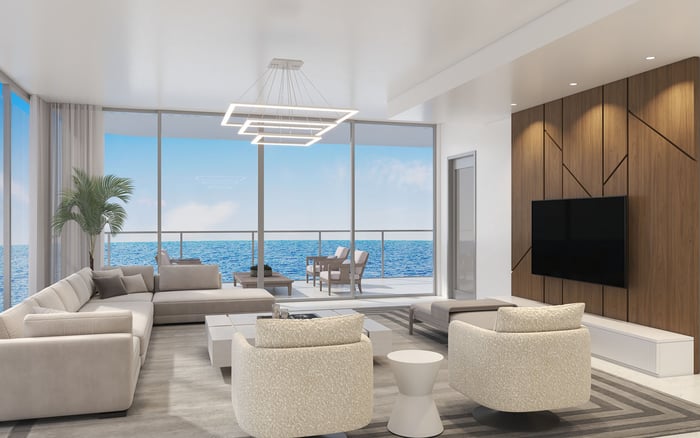
A considered departure plan for Broward oceanfront owners connects humidity monitoring, leak response, authorized access, and storm preparation, with responsibilities settled before the residence is left unoccupied.

An oceanfront residence should be as thoughtfully managed when empty as when occupied. For a Broward owner leaving for several months, the central question is not simply whether the home can send an alert. It is whether someone can interpret it, gain authorized access, and arrange an appropriate response while the owner is elsewhere.
The most useful departure plan connects three functions: monitoring interior conditions, responding to water, and enabling lawful, practical entry. Storm preparation belongs alongside them, but remains distinct from routine settings for an unoccupied residence. A written plan should distinguish an ordinary absence from an equipment concern, an active leak, or an evacuation.
Begin with building management, the person overseeing the residence, and the relevant service professionals. Ask each party to define what they will monitor, what they can address, and what requires separate authorization. Name a primary contact and an alternate so that every notification does not depend on the owner's availability.
For a buyer considering 2000 Ocean Hallandale Beach, this is a useful Hallandale Beach due-diligence question: what arrangements would an extended absence require? A project's identity should never substitute for confirmation of its actual procedures. Apply the same discipline to a residence already owned.
Keep the operating brief concise. Identify contacts, access arrangements, equipment instructions, insurer details, and the agreed escalation sequence. Ask participants to confirm their roles before departure; an unanswered message is not an accepted assignment.
Treat humidity monitoring as a residence-specific plan, not a universal number copied into an app. Ask the HVAC professional to recommend operating settings, alert thresholds, and sensor locations suited to the residence and its equipment. Document those recommendations, including who should investigate an unusual reading and what that person should record.
Discuss how alerts will reach both the owner and the designated local responder. Ask the installer how the selected system behaves when power or connectivity is interrupted, and whether any proposed backup supports the intended functions. Resolve these equipment questions before relying on remote oversight.
A practical handover should include an agreed test of notifications and a demonstration for the person receiving them. Establish an inspection schedule with the service team and insurer rather than assuming weekly or biweekly visits constitute a universal standard. Give each visit a clear purpose: record observations, note departures from agreed operating conditions, and escalate unresolved concerns.
Ask the plumbing professional where detection would be useful, which valves serve the residence, and what a proposed automatic shutoff can actually isolate. Confirm building approval and operating instructions before installation or programming. Treat detection, notification, and shutoff as distinct functions in the owner's plan.
A leak originating in another unit or a common wall may require building maintenance to isolate a riser. Closing the affected residence's own valve may not address that source. The response brief should therefore include management's contact details, not simply a plumber's number.
For owners evaluating Auberge Beach Residences & Spa Fort Lauderdale, these operational questions belong in the Fort Lauderdale ownership discussion alongside the residence itself. Ask who coordinates an investigation when the source may lie beyond the unit, without presuming a particular service or response time is included.
Do not assume a staffed lobby guarantees entry for a caretaker or contractor. Ask management to confirm the applicable entry authority, owner authorization requirements, key arrangements, identification procedures, and after-hours process. Clarify what changes during a storm or evacuation, when ordinary arrangements may be unavailable.
The owner, management, and designated responder should understand who requests access, who approves it, and who accompanies a contractor if required. Any permission should follow the building's governing requirements. A practical contact sheet cannot create entry rights that do not otherwise exist.
Rehearse the communication sequence before leaving. If an alert arrives while the owner is unreachable, the local representative should know whom to contact and which decisions fall within their authorization. Agree on spending permissions separately rather than leaving them for negotiation during an incident.
Broward's hurricane season runs June 1 through November 30. If an absence overlaps that period, establish who will carry out storm preparations and when the owner expects confirmation. Review current county and federal flood-zone maps to understand the property's flood exposure.
Preparations include bringing loose balcony or terrace items indoors, clearing gutters where applicable, and arranging appropriate protection for windows and doors. Coordinate exterior work and protective measures with management rather than assuming an owner can independently modify shared or regulated elements.
Before evacuation, turning off electricity, gas, and water where feasible is a separate decision from routine absence operation. Reconcile those actions with building procedures and professional instructions; evacuation guidance is not a blanket instruction to disconnect an unattended home's operating systems for months. Unplug small appliances and electronics as appropriate, distinguishing them from equipment deliberately retained for monitoring and conditioning. Store important documents, including deeds, in a watertight container.
Condominium association coverage and repair responsibilities are not interchangeable with an owner's protection for personal property and interior finishes. Floor, wall, and ceiling coverings, appliances, water heaters, and built-in cabinetry are among the items that can fall outside the association's stated insurance and repair responsibilities. Have the specific policies, governing documents, and circumstances reviewed before drawing conclusions about coverage or liability.
When considering The Ritz-Carlton Residences® Pompano Beach, make that review part of the Pompano Beach ownership budget and planning process. The question is not merely whether insurance exists, but how it addresses the owner's selected finishes and possessions.
For an active leak, prioritize stopping the source if safe, contacting building management, and promptly reaching the appropriate insurer and mitigation contractor. Notify management in writing, preserve photographs, and maintain a timestamped account. Do not wait for visible damage to worsen before seeking help. Safety and building authorization remain essential throughout.
Before departure, request final confirmation that contacts, permissions, notifications, and storm responsibilities are understood. Keep the plan accessible to authorized participants and revisit it when equipment, personnel, or travel dates change. The objective is a clear chain of responsibility, not a collection of devices with no one assigned to act.
For a considered approach to Broward oceanfront ownership, explore MILLION.
If branded residences are on your mind — as a home or as an allocation — we would be glad to share what we are seeing, privately.
Begin a quiet conversationHurricane season runs June 1 through November 30. Owners away during that period should assign storm-preparation responsibilities before departure.
Ask the HVAC professional to recommend and document thresholds and operating settings appropriate to the residence. Do not assume a single number suits every home and system.
Have the relevant HVAC and plumbing professionals recommend locations for the residence and selected equipment. Confirm any required building approval before installation.
Do not assume a universal weekly or biweekly requirement. Agree on a schedule with the service team and insurer that addresses the residence and applicable policy conditions.
No. Water originating in another unit or a common wall may require building maintenance to shut off a riser instead.
Do not assume that they can. Confirm entry authority, required permissions, identification procedures, and after-hours arrangements with management.
Stop the water source if it is safe to do so and contact building management. Promptly contact the appropriate insurer and mitigation contractor, while preserving photographs and a timestamped account.
No. Interior coverings, appliances, water heaters, cabinetry, and personal property require a specific coverage review; responsibility for a particular incident depends on the circumstances and governing documents.
Evacuation guidance to turn off utilities where feasible should not be treated as a routine months-long operating plan. Coordinate absence settings and storm actions separately with management and service professionals.
Bring loose balcony or terrace items indoors before wind can pick them up. Store important documents, including property deeds, in a watertight container.