A buyer’s framework for evaluating flood-claim records, critical-equipment elevations, insurance coverage, and operational continuity at Mr. C Tigertail, without mistaking luxury services for verified resilience.
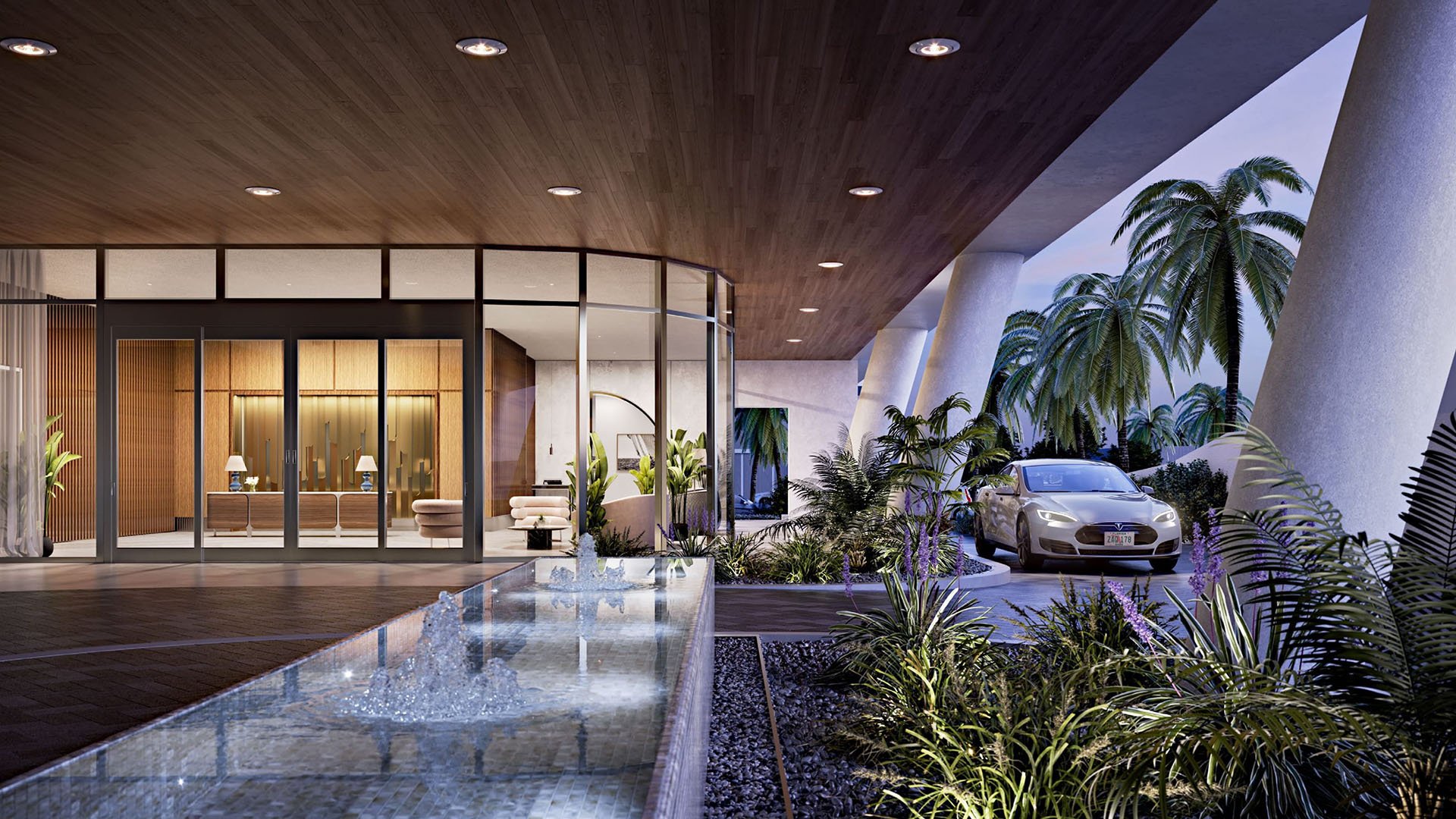
At Mr. C Tigertail Coconut Grove, the acquisition question extends beyond the residence: what can the building sustain when normal conditions are interrupted? For a buyer who values privacy, reliable access, and the ability to work from home, operational resilience belongs alongside architecture and service in the purchase decision.
The property is at 2678 Tigertail Avenue, Coconut Grove, Miami, FL 33133. The Coconut Grove residences development broke ground in June 2019 and reached completion in summer 2024. That recent timeline offers context, not proof of flood resilience or uninterrupted operations.
Three inquiries require separate treatment: historical losses, physical exposure, and plans to maintain or restore essential services. Building-specific flood-claim history remains unverified. The disclosed amenities do not establish critical-equipment elevations or detailed continuity procedures. These are open diligence questions, not findings of a defect.
Do not describe the property as claim-free or as having never flooded. Request available insurance loss runs, flood-policy declarations, and claim history through the appropriate association and insurance channels. Ask which dates, insured entities, and areas of the property each record covers.
The supporting file should include remediation records, post-storm engineering assessments, and relevant board minutes. The objective is to connect any documented event to its cause, affected systems, corrective work, and outstanding obligations. A claim amount alone cannot answer those questions.
Ask separately about water incidents and insurance claims. If an incident is disclosed, determine whether it involved external flooding, drainage, waterproofing, or another cause. Do not treat every water event as equivalent. Have the association clarify any gaps between the incident file and the insurance record.
For buyers also considering Park Grove Coconut Grove, apply the same documentary standard to each acquisition. Compare the evidence supplied; do not infer relative safety from branding or appearance.
Parking allocations are useful ownership details, not engineering evidence. Penthouse 1 has been marketed with three attached garage spaces; Unit 1009 has been marketed with two garage spaces. Neither allocation establishes the garage’s elevation, flood protection, or the location of essential equipment. The penthouse allocation is unit-specific, not a building-wide standard.
Request garage and equipment-room plans showing floor and critical-equipment elevations relative to the design flood elevation. Ask a qualified engineer to reconcile those drawings with existing conditions and review drainage, waterproofing, and floodproofing details.
The inspection scope should locate electrical switchgear, transformers, fire and domestic-water pumps, sump pumps, elevator machinery, HVAC, access-control equipment, and telecommunications infrastructure. Their placement at garage level has not been established. The task is to identify their actual locations and what protects them.
Disclosed specifications do not establish flood barriers, dry-floodproofing, elevated mechanical equipment, generator capacity, or pump redundancy. Non-disclosure does not establish absence. Obtain the specifications before concluding that protection is adequate or missing.
Address-based federal and county flood-map tools can help establish the applicable designation, which remains unconfirmed here. Local vulnerability screening can add context, but it cannot replace a review of building-specific elevations and equipment.
A generator’s presence, if confirmed, is only the beginning. Request its capacity, fuel arrangements, expected runtime under identified loads, maintenance records, and load-bank test results. Ask for a written schedule of supported equipment, not a general assurance of backup power.
Review pumps with the same discipline: capacity, discharge routes, backup power, redundancy, and maintenance logs. An engineering review should assess whether the proposed protection and backup systems work together, not merely whether individual components appear on a plan.
The buyer’s question is practical: which functions remain available, for how long, and under what conditions? Seek explicit answers for elevators, water service, access controls, telecommunications, and any cooling or residential circuits claimed to receive emergency power. Do not assume that emergency power means normal household operation.
Advertised services include 24-hour valet and security, concierge reception, and property management. Amenities also include fiber-optic internet, Wi-Fi throughout the residences, a custom resident app, and a business lounge with meeting rooms.
These offerings describe everyday convenience. They do not confirm diverse internet connections, backup power for network equipment, app availability during outages, or independent emergency power and post-storm availability for the lounge.
Ask management to demonstrate the continuity plan through a specific scenario: a power interruption coinciding with restricted garage access. Who issues the vehicle-removal instruction? Who authorizes elevator shutdown? How are residents contacted if the app or internet is unavailable? Who monitors pumps, and when must staff leave?
A buyer evaluating Four Seasons Residences Coconut Grove can ask the same questions without assuming equivalent systems or procedures. Translate service expectations into property-specific operating evidence.
For an owner who may be away, a usable plan requires more than contact information. Request written vehicle-removal rules, generator priorities, pump-monitoring responsibilities, resident-notification procedures, re-entry criteria, vendor arrangements, and restoration targets.
The disclosed amenities do not establish a written flood-response protocol covering garage flooding, power loss, elevator shutdown, or staff evacuation. Request the current operational documents and ask who is responsible for each decision. Clarify which targets are planning objectives rather than guarantees.
Household arrangements should follow that review. Identify who can act on the owner’s behalf, what access is permitted during restrictions, and how the household will receive updates outside the resident app. For someone maintaining a working residence, confirm an alternative workspace rather than assuming the business lounge will remain available.
Have an insurance adviser compare the master, flood, and unit-owner policies. Review contents, improvements, loss assessments, temporary housing, deductibles, and water-related exclusions. The purpose is to understand the household’s potential obligations and coverage gaps, not to assume that one policy fills the gaps in another.
Then assemble a concise decision file: verified loss records, an engineer’s assessment of equipment exposure, documented backup capabilities, the written continuity plan, and the insurance comparison. Mark each material question as resolved, unresolved, or requiring corrective action. Before proceeding, ask the appropriate adviser to explain what unresolved items mean for ownership.
The purchase standard is neither immunity from disruption nor reassurance without documentation. It is a clear understanding of what is protected, what may stop functioning, who responds, and how recovery is intended to proceed. That clarity is part of a considered luxury acquisition.
For a discreet conversation about your Coconut Grove acquisition priorities, connect with MILLION.
If branded residences are on your mind — as a home or as an allocation — we would be glad to share what we are seeing, privately.
Begin a quiet conversationThe property is at 2678 Tigertail Avenue, Coconut Grove, Miami, FL 33133.
The development reached completion in summer 2024, following groundbreaking in June 2019. Recent construction does not by itself establish flood resilience.
Building-specific flood-claim history remains unverified. Buyers should request available insurance loss runs, flood-policy declarations, claim history, and supporting remediation records.
The applicable flood zone is not established here. Buyers should use official address-based flood-map tools and obtain building-specific elevation information.
Penthouse 1 has been marketed with three attached garage spaces, while Unit 1009 has been marketed with two garage spaces. These are unit-specific details, not a building-wide parking standard.
Garage-level placement of critical equipment has not been established. Request plans and an engineering review identifying equipment locations, elevations, and protective measures.
Publicly disclosed specifications do not establish generator capacity or pump redundancy. That does not mean these systems are absent; buyers should obtain specifications and testing records.
A business lounge with meeting rooms is advertised, but its independent emergency power, backup connectivity, and post-storm availability are not confirmed.
Request vehicle-removal rules, elevator shutdown procedures, generator priorities, pump monitoring, resident communications, staff evacuation, re-entry criteria, vendor arrangements, and restoration targets.
Review the master, flood, and unit-owner policies with an insurance adviser. Compare coverage for contents, improvements, loss assessments, and temporary housing, along with deductibles and water-related exclusions.