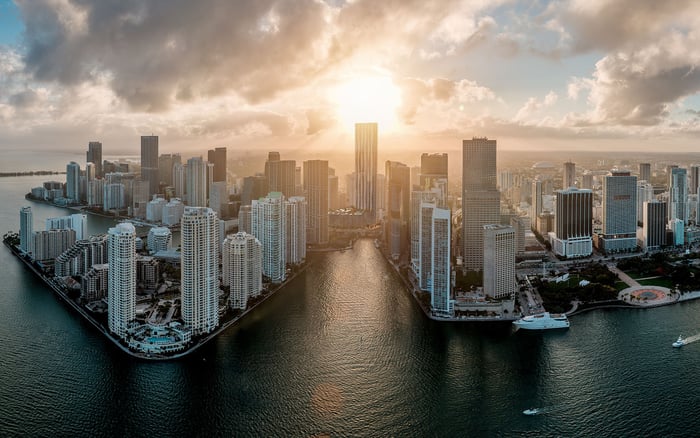
A Miami second home should feel effortless, but true lock-and-leave ownership is built on rigorous diligence. This guide outlines the financial, legal, insurance, operational, and building-level reviews sophisticated buyers should complete before closing.

The appeal is clear: a polished waterfront residence, hotel-caliber service, and the freedom to arrive for a long weekend without the demands of full-time ownership. Yet in Miami, true lock-and-leave luxury is defined less by aesthetics than by systems. The most successful second-home buyers underwrite convenience with the same rigor they bring to the acquisition itself.
That means looking beyond finishes and views to the building’s operational realities, the asset’s durability, and the carrying costs that can shift materially after closing. In towers such as St. Regis® Residences Brickell or newer waterfront offerings like The Perigon Miami Beach, buyers are often pursuing a low-friction lifestyle. The diligence process should test whether that promise is truly supported by reserves, insurance, staffing, and governance.
For MILLION Luxury readers, the question is not whether Miami remains compelling. It is whether a specific residence will remain elegant, insurable, and uncomplicated to own when you are three time zones away.
For second-home buyers, sticker price is rarely the deciding number. The more revealing figure is annual carry. In Miami condos, HOA dues are a major line item, and they deserve the same scrutiny as mortgage terms or tax estimates. Review the current budget, governing documents, audited financials, and recent board materials carefully. Meeting minutes often reveal what glossy marketing does not: deferred maintenance, insurance disputes, pending capital projects, litigation, or early discussions of higher dues.
Reserves matter just as much. When reserve funding is weak, major repairs often return in the form of special assessments. Roofs, facades, elevators, plumbing lines, and structural work can materially alter the economics of ownership, particularly in older coastal stock. Underwrite any likely assessment as though it were part of the purchase price rather than an abstract future risk.
This is especially relevant in neighborhoods where buyers compare established inventory with newer product such as Una Residences Brickell. Newer construction can offer more predictable maintenance in the near term, but even then, the association’s long-term funding discipline remains central.
Property taxes also deserve a sober assessment. Florida has no state income tax, but second-home owners still need to model local property taxes carefully and account for the absence of homestead benefits on a non-primary residence. Over time, that difference can be meaningful.
Florida’s insurance market has tightened notably, making pre-closing verification essential. Sophisticated buyers should not settle for a casual assurance that a property is insurable. Confirm the actual availability of coverage, the cost of wind and hazard policies, and whether the structure benefits from mitigation features such as impact-resistant openings or stronger roof systems.
Condo buyers should also examine the master policy closely. Association coverage may leave important gaps for unit owners, especially where deductibles are high or the scope of replacement is narrower than expected. A lock-and-leave owner wants clarity on what is covered by the association, what must be covered individually, and what the claims process is likely to look like after a storm.
Flood-zone status and elevation should be checked early, not late. FEMA risk classifications can shape both insurance requirements and carrying costs, and waterfront convenience can come with added complexity. For absentee owners, resilience extends beyond insurance alone. Drainage performance, seawall condition where relevant, backup power planning, and outage recovery protocols all influence how quickly a property becomes usable after severe weather.
That resilience lens is particularly important in trophy coastal settings such as 57 Ocean Miami Beach, where buyers are purchasing an experience as much as a residence. The diligence question is whether the building’s design, operations, and risk planning can support that experience year after year.
The lock-and-leave thesis depends on service quality. A beautiful residence loses its ease quickly if package management, access control, valet operations, preventive maintenance, or emergency response are inconsistent. Buyers should ask direct questions about management continuity, staffing turnover, and the day-to-day routines that protect units when owners are absent.
This is not a cosmetic issue. High employee turnover can erode institutional knowledge and service consistency. For second-home owners, that may translate into slower issue detection, less reliable vendor coordination, and weaker oversight during storm preparation or post-storm recovery.
If you expect the residence to generate income during periods of nonuse, professional management deserves its own underwriting. Many owners retain property managers, with pricing commonly structured at roughly 8 to 12 percent of rental income or as a flat monthly fee depending on scope. The right operator can be indispensable, but only if responsibilities are clearly defined: inspections, guest coordination, owner reporting, repairs, inventory management, and storm-readiness protocols.
In newer lifestyle-driven buildings such as The Well Bay Harbor Islands, buyers are often drawn to curated service and wellness programming. Those amenities are only as strong as the operating team that sustains them.
Every elegant acquisition still begins with document work. Miami-Dade property records are searchable, giving buyers and title professionals a practical way to verify ownership history, tax status, and recorded matters tied to the asset. That review should be paired with a close examination of permitting and building compliance. Unresolved work, open permits, failed inspections, or code issues can become an expensive inheritance after closing.
Seller disclosures also warrant careful attention. Buyers should probe for any known history involving flood intrusion, moisture, mold, leaks, or prior remediation. In a humid, storm-prone market, past events matter not simply because they occurred, but because they can affect insurability, future maintenance, and resale confidence.
For condos, Florida’s statutory framework is not background noise. It governs reserves, financial reporting, association disclosures, and maintenance obligations. Buyers should ensure counsel reviews those materials in context rather than treating them as routine annexures to a contract.
Foreign buyers need an additional layer of tax planning. FIRPTA can require withholding when a U.S. real property interest is sold by a foreign person, so ownership structure and exit strategy should be discussed with tax counsel well before closing, not after.
Many second-home buyers like the option of offsetting carrying costs, even if rental income is not the primary motivation. In Miami, that flexibility cannot be assumed. Vacation rentals are regulated, and buildings often impose their own leasing restrictions on top of local compliance requirements.
Ask a precise set of questions: Are short-term rentals permitted at all? Is there a minimum lease term? Are there caps on the number of leases per year? Are registration, licensing, or guest-screening protocols required? A residence that appears ideal on paper may not fit your ownership model if the rental rules are incompatible with intermittent use.
This is one of the clearest distinctions between a true personal retreat and a part-time investment property. MILLION Luxury advises buyers to decide which category they are pursuing before contract, because the due diligence file will differ accordingly.
Luxury buyers are often told to focus on design pedigree, amenities, and arrival experience. Those things matter, but the lock-and-leave buyer should be slightly less romantic and slightly more forensic. Review reserve studies. Read the latest board minutes. Price insurance before contingencies expire. Inspect envelope, electrical, and structural systems with Florida standards in mind. Verify flood exposure, permitting history, and title records. Ask who will physically look after the residence when you are gone.
A second home in Miami should feel effortless. The path to that ease is not guesswork. It is disciplined diligence performed before the keys change hands.
What is the first due diligence item for a Miami second-home condo? Start with the budget, reserves, meeting minutes, and any indication of pending assessments, because these documents often reveal the true cost of ownership.
Why are condo reserves so important? Weak reserves can lead to special assessments for major repairs, which can materially change your annual carrying costs after closing.
Should buyers review the HOA master insurance policy? Yes. Master policies may leave gaps, especially around deductibles and what the association will actually replace after a loss.
How early should flood and wind insurance be priced? Early in the contract period. Insurance availability and cost can materially affect both affordability and lender requirements.
Do lock-and-leave owners typically hire property managers? Many do, especially if they rent the residence or spend extended periods away. Fees are often structured as a share of rental income or a flat monthly amount.
Can every Miami second home be used as a short-term rental? No. Local rules and individual building restrictions may limit or prohibit short-term leasing.
What building records should buyers review besides financials? Ask for recent board minutes, reserve documentation, and any materials referencing litigation, insurance issues, or major capital projects.
Why does staffing matter in a luxury building? Consistent staffing supports service quality, security, maintenance oversight, and smoother coordination when owners are away.
What should foreign buyers evaluate beyond the purchase contract? They should obtain tax counsel on ownership structure and future sale planning, including potential FIRPTA withholding implications.
How can buyers verify a property’s history before closing? Their title team and counsel should review public ownership, tax, permit, and compliance records along with seller disclosures.
For a tailored shortlist and next-step guidance, connect with MILLION Luxury.
If branded residences are on your mind — as a home or as an allocation — we would be glad to share what we are seeing, privately.
Begin a quiet conversation