A precise residence strategy for buyers moving from Beverly Hills to Fisher Island, with clear distinctions among Florida homestead exemption, Save Our Homes portability, and post-closing reassessment.
A move from Beverly Hills to Fisher Island may appear to be a single residential transition, but Florida property-tax planning separates it into three questions. First, does the new residence qualify for Florida homestead treatment? Second, does the owner have an eligible Save Our Homes assessment benefit from a prior Florida homestead? Third, when will a change of ownership place the acquired property at just value for assessment purposes?
For a buyer arriving directly from California with no prior Florida homestead, portability is unavailable. Property-tax benefits associated with a Beverly Hills residence do not cross state lines into Florida. The buyer may still apply for the regular Florida homestead exemption on the Fisher Island residence, provided the applicable requirements are met, but there is no accumulated Florida Save Our Homes benefit to transfer.
The essential planning move is to separate homestead eligibility from portability before setting the closing calendar.
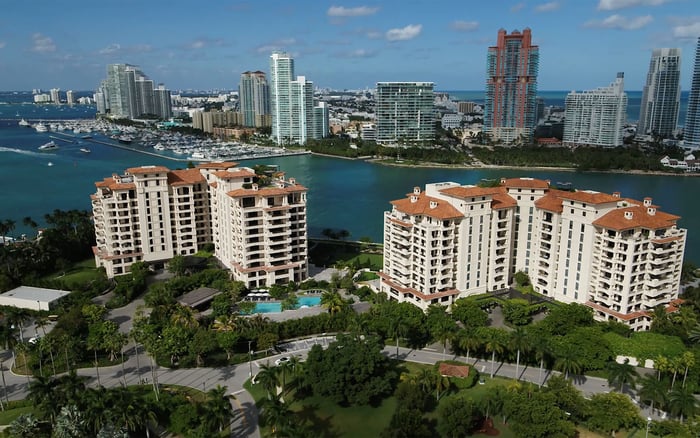
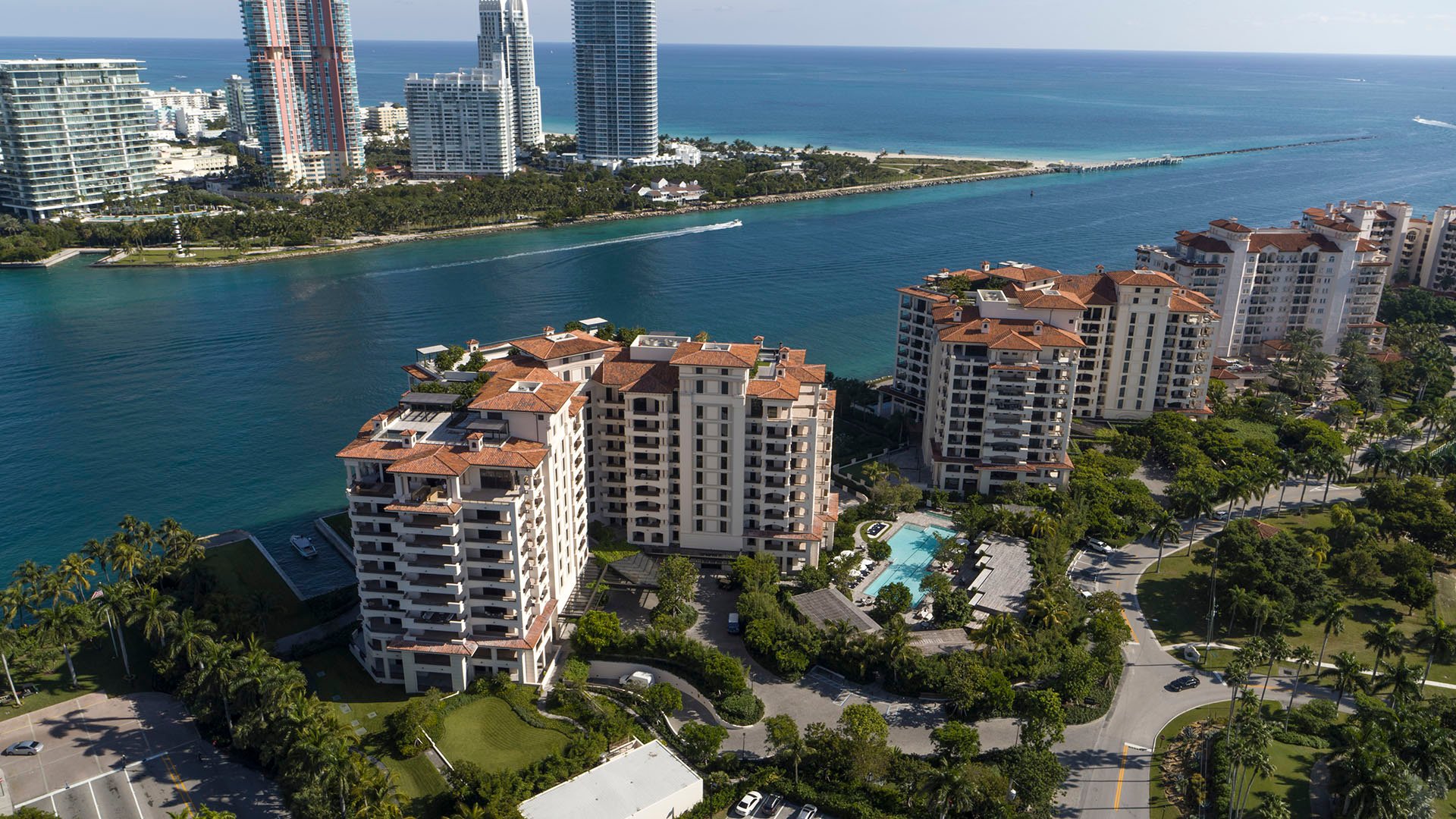
That distinction should shape the acquisition analysis, whether the residence is at Palazzo del Sol or elsewhere on the island. Closing establishes ownership. It does not automatically create a homestead exemption, transfer an exemption, or move an assessment benefit.
Florida homestead property protected by Save Our Homes is reassessed annually on January 1, with increases constrained by the applicable statutory cap. A change of ownership generally causes the property to be assessed at just value on the following January 1, subject to statutory exceptions. For a luxury buyer, the relationship among the closing date, occupancy, residency evidence, and the next assessment date is materially important.
The new homestead application must be submitted to the property appraiser in the county where the residence is located. Because Fisher Island is in Miami-Dade County, the Miami-Dade County Property Appraiser handles the application. Homestead and portability filings generally must be completed by March 1 of the year in which the benefit is claimed.
A prudent calendar therefore works backward. Before closing, the buyer's advisers should test the intended ownership structure and anticipated occupancy against homestead eligibility. Around the move, the buyer should organize evidence supporting Florida residence. Once the residence is established, the required application should be filed rather than treated as an automatic consequence of closing.
Miami-Dade's Save Our Homes assessment cap for 2025 was 2.9%, based on the applicable CPI change. That figure describes the cap for that year; it should neither be used as a forecast for later years nor confused with a cap on the tax bill itself.
Save Our Homes portability is distinct from the homestead exemption. It transfers an eligible assessment benefit, not the exemption itself. The benefit is measured as the difference between the prior Florida homestead's market value and its capped assessed value.
If a buyer moving from Beverly Hills previously maintained a qualifying Florida homestead, that history may change the analysis. To request portability, the owner files Form DR-501T with the new homestead application, Form DR-501. Up to $500,000 of accumulated Save Our Homes assessment benefit may transfer to a qualifying new Florida homestead.
When the new homestead has an equal or higher just value, the full eligible assessment difference can generally transfer, subject to the $500,000 limit. When the new homestead has a lower just value, the benefit is calculated proportionally rather than dollar-for-dollar. For purchasers considering The Residences at Six Fisher Island, the relevant comparison is not simply between the two purchase prices. It is between the prior Florida homestead's qualifying assessment difference and the new property's just value within the statutory framework.
An eligible owner must establish the new Florida homestead within three years of January 1 of the year the prior homestead was abandoned. This is a statutory benchmark, not a simple three-year countdown from the former residence's sale date.
That distinction can matter when a family maintains several homes, changes its principal residence before a sale, or spends an extended period between Florida homesteads. A residence plan should identify when the prior Florida homestead was abandoned, the January 1 from which the window runs, and the filing year for the new claim. Assumptions based solely on deed or closing dates can produce the wrong deadline.
Loss or removal of homestead status also eliminates the property's existing Save Our Homes protection and can trigger reassessment. A second-home decision can therefore become a property-tax decision if it changes which residence is treated as the homestead. The issue deserves review before-not after-the household changes its occupancy pattern.
A seller's current assessed value may reflect years of Save Our Homes protection tied to the seller's ownership history. It is not a reliable proxy for the buyer's post-closing assessment. The conservative approach is to evaluate the acquisition on the expectation that a change of ownership generally brings assessment at just value on the following January 1, while separately modeling any exemption or valid portability benefit the buyer may secure.
This discipline applies across Fisher Island's residential spectrum. A resale opportunity at Palazzo della Luna and an estate-scale purchase at The Links Estates at Fisher Island may present different capital profiles, yet both require the same separation of purchase price, just value, exemption eligibility, and portable assessment benefit.
For investment analysis, avoid treating the homestead exemption as a generic feature of the property. It is tied to an eligible owner's new application and residence circumstances. Likewise, waterfront appeal and amenity access do not alter the filing mechanics. Lifestyle informs the purchase; statutory timing governs the property-tax position.
Within buyer's-guide planning, the strongest sequence is concise: confirm whether any prior Florida homestead exists, identify its abandonment benchmark, assess the proposed ownership structure, establish the Fisher Island residence, and complete the proper Miami-Dade filings by the applicable deadline. If portability is relevant, Form DR-501T should accompany Form DR-501.
The transaction team should also distinguish legal ownership from homestead eligibility. Entity selection, trust arrangements, occupancy, residency evidence, and statutory exceptions can affect the outcome. Tax and legal advisers should review the particular facts before the closing date and residence timeline are fixed.
For the direct Beverly Hills buyer with no earlier Florida homestead, the strategy is simpler but no less time-sensitive: assume California benefits will not transfer, budget for reassessment, establish Florida homestead eligibility deliberately, and file a new application. For the buyer with prior Florida homestead history, add a documented portability review and protect the statutory window.
For discreet guidance on aligning a Fisher Island acquisition with your residence strategy, connect with MILLION.
If branded residences are on your mind — as a home or as an allocation — we would be glad to share what we are seeing, privately.
Begin a quiet conversationNo. Save Our Homes portability applies between qualifying Florida homesteads, so California property-tax benefits cannot transfer into Florida.
No. The owner must submit a new homestead application for the Fisher Island residence.
It is filed with the Miami-Dade County Property Appraiser because Fisher Island is in Miami-Dade County.
It is the transfer of an eligible assessment benefit from a prior Florida homestead, not the transfer of the homestead exemption itself.
The owner files Form DR-501T with the new homestead application, Form DR-501.
Homestead and portability applications generally must be completed by March 1 of the year in which the benefit is claimed.
Up to $500,000 of accumulated assessment benefit may transfer to a qualifying new Florida homestead.
The transferable benefit is calculated proportionally rather than transferred dollar-for-dollar.
A change of ownership generally causes assessment at just value on the following January 1, subject to statutory exceptions.
The new Florida homestead must be established within three years of January 1 of the year the prior homestead was abandoned.