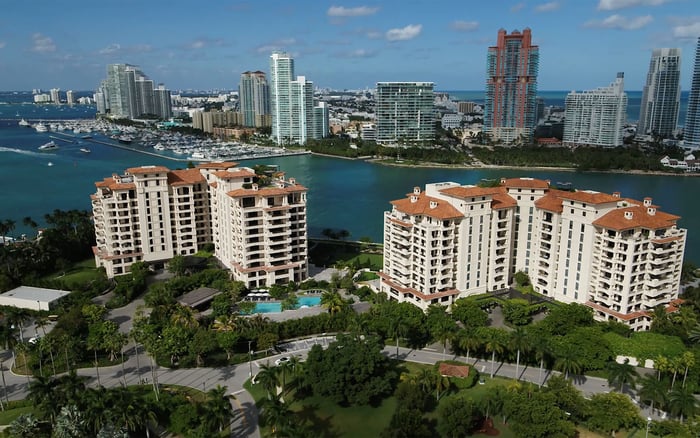
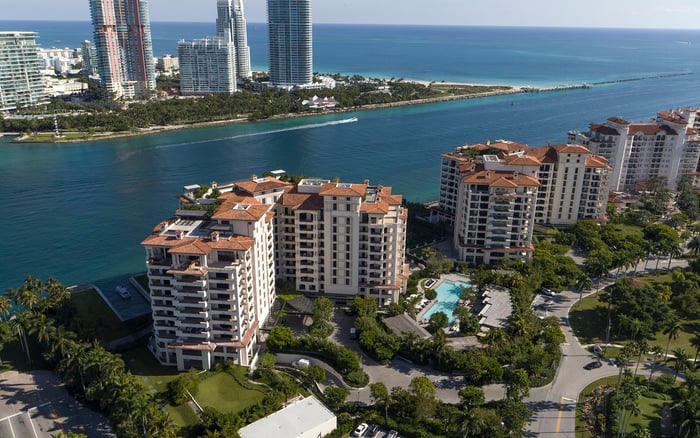
At Six Fisher Island, rental flexibility depends on more than an executed lease. Buyers should examine the condominium’s current approval requirements alongside FICA transportation clearance, tenant identification, guest registration, and separate Fisher Island Club privileges before underwriting occupancy or entertaining plans.

For a buyer considering The Residences at Six Fisher Island, flexibility should not be reduced to a single question: “Can I lease the residence?” The more useful inquiry has four parts: Can the tenant lease the home, enter Fisher Island, register guests, and use Fisher Island Club facilities?
Each permission arises through a distinct procedure. The condominium governs its leasing and screening framework. Fisher Island Community Association, or FICA, controls island entry through the Transportation System. Guest access requires advance clearance and identity verification. Club privileges are separate again, with reservations and sponsorships available only through members in good standing.
This layered structure is central to the island’s private character, but it also shapes timing, tenant expectations, entertaining, and investment planning. A signed lease is essential, yet it does not independently guarantee immediate access or occupancy.
On Fisher Island, the right to lease and the ability to arrive are distinct permissions.
Before relying on a rental strategy, request the condominium’s current declaration, bylaws, rules, lease application, screening criteria, fee schedule, meeting calendar, approval timeline, guest policy, and Club-access terms. A definitive lease minimum, annual rental cap, application fee, or approval period specifically for The Residences at Six Fisher Island has not been established.
That distinction matters. Florida community associations may impose tenant-screening fees when their governing documents authorize both the screening process and the fee. The operative documents-not an informal summary or a prior owner’s experience-should therefore anchor the analysis.
A complete review should establish what the applicant must submit, which standards apply, who grants approval, whether a meeting is required, and when decisions are made. Buyers focused on investment or rental potential should also test these requirements against realistic lease-commencement dates. Even a premium tenant may face an administrative sequence that cannot be compressed at will.
Within Fisher Island, buyers comparing Palazzo del Sol or Palazzo della Luna should conduct the same project-specific document review. Proximity does not make the rules of separate condominiums interchangeable.
Once the condominium or homeowners association has provided any required advance approval, the workflow continues. Property managers must forward the completed lease, tenant-registration documents, and required association approvals to Fisher Island Public Safety. Through the clearance process, the tenant receives an identification card and a tenant “T” number.
FICA may deny Transportation System access when an owner has not secured advance condominium or homeowners-association approval where required. Rental timing should therefore account for association review, document delivery, tenant registration, identification issuance, and island clearance before the planned occupancy date.
Automatic Transportation System access is generally limited to unit owners and Club equity members with approved identification. A tenant’s route is procedural; it does not become automatic merely because the parties have executed a lease. Owners should coordinate the property manager, leasing representative, tenant, and Public Safety well before move-in, then confirm that each step is complete before promising possession.
This is a defining consideration in a gated community where arrival itself is controlled. It is also why a closing file should include current operational instructions, not just recorded condominium documents.
Guest access is another distinct layer. Managers, hotel representatives, tenants, and vendors must contact the Public Safety Department’s Access Control Division to arrange guest clearance. Authorized parties can make those arrangements in person, by telephone, email, fax, or another method accepted by Access Control.
Upon arrival, guests must present government-issued identification or a FastAccess Pass for clearance verification. Public Safety officers and Guest Clearance Agents confirm that guests, members, employees, and vendors have proper authorization before entry.
For owners or tenants who entertain frequently, the operational implication is straightforward: visits require preparation. Short-notice dinners, rotating household staff, visiting advisers, and multiple arrivals may require more coordination than they would in an openly accessible waterfront tower. Hospitality remains entirely possible, but disciplined guest management becomes part of the residential experience.
Guests cannot independently clear additional visitors. Holders of association-approved Guest Cards likewise cannot authorize others for Transportation System access. Hosts should understand precisely who may submit a clearance request and avoid assuming that one approved guest can extend access to a broader party.
Tenant documentation is also provided to the Fisher Island Club to facilitate any applicable access to Club facilities, but this administrative connection should not be mistaken for equivalence. Island entry, lawful occupancy, and Club use remain separate matters.
Fisher Island Club reservations and sponsorships may be made only by members in good standing. Occupying a property therefore does not necessarily confer unrestricted booking or sponsorship privileges. The Club’s formal equity-membership inquiry requests details including family, occupation, employer, address, and contact information, underscoring that membership follows its own process.
A buyer should obtain written clarity on what, if anything, a tenant may use, reserve, or sponsor. The same discipline applies when evaluating The Links Estates at Fisher Island: residence ownership, transportation authorization, guest clearance, and Club standing should each be verified on its own terms.
The strongest diligence process translates broad lifestyle intentions into specific scenarios. If the residence will serve primarily as a second home, ask how family members, household employees, vendors, and recurring guests will be registered. If leasing is contemplated, map the approval and clearance sequence backward from the desired occupancy date. If frequent entertaining is essential, review who can arrange clearance, what guests must present on arrival, and how late changes are handled.
In buyer’s guides to ultra-prime property, “flexibility” should mean verified operational freedom-not merely permissive language in a sales conversation. At The Residences at Six Fisher Island, the practical checklist should include:
The current lease application and all supporting-document requirements.
Screening standards, authorized fees, meeting dates, and expected review time.
Any lease-duration limits, frequency restrictions, or annual rental caps in force.
The required path from condominium approval to Public Safety registration.
Tenant identification, “T” number, and Transportation System clearance procedures.
Guest-registration authority, arrival identification, and vendor protocols.
The tenant’s precise Club access, reservation, and sponsorship rights.
None of these questions diminishes the appeal of Fisher Island. They clarify the compact between privacy and spontaneity. Buyers who understand that compact before closing can structure leases more carefully, set accurate expectations, and preserve the discreet rhythm that makes the island distinctive.
For private guidance on Fisher Island ownership and acquisition strategy, connect with MILLION.
If branded residences are on your mind — as a home or as an allocation — we would be glad to share what we are seeing, privately.
Begin a quiet conversationNo. Required association approval, document delivery, tenant registration, identification issuance, and Transportation System clearance may still need to be completed.
FICA controls island entry through its Transportation System, separately from the condominium’s leasing rules.
Property managers must forward the completed lease, tenant-registration documents, and any required condominium or homeowners-association approvals.
The clearance process provides a tenant identification card and a tenant “T” number after required documents are submitted.
Yes. Access may be denied if the owner failed to obtain required advance condominium or homeowners-association approval.
An authorized party must arrange clearance with Access Control, and the arriving guest must present government-issued identification or a FastAccess Pass.
No. Guests do not have independent clearance privileges, and Guest Card holders cannot clear other people for Transportation System access.
No. Club access is distinct from occupancy and island entry, while reservations and sponsorships require a member in good standing.
No definitive project-specific lease minimum, annual rental cap, application fee, or approval timeline is established in the reviewed public materials. Buyers should obtain the current governing documents and fee schedule.
Allow time for association approval, document delivery, tenant registration, identification issuance, and island clearance before occupancy.