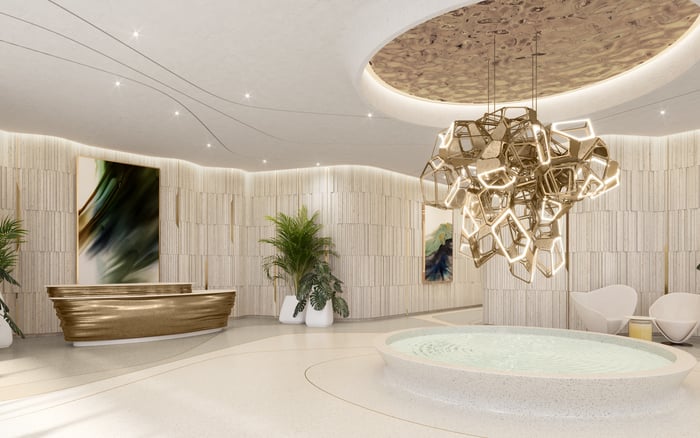
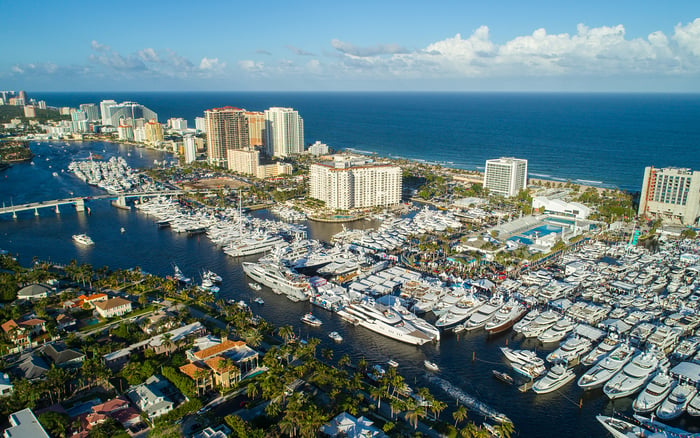
For buyers shopping Fort Lauderdale’s premier waterfront addresses, Las Olas Isles and Harbor Beach offer two distinct definitions of luxury: one built around walkable, downtown-adjacent canals; the other centered on gated privacy, beach access, and efficient ocean runs. This MILLION Luxury editorial breaks down the practical differences that matter most: boating logistics, daily lifestyle, privacy, and how to interpret market signals when metrics differ by source.
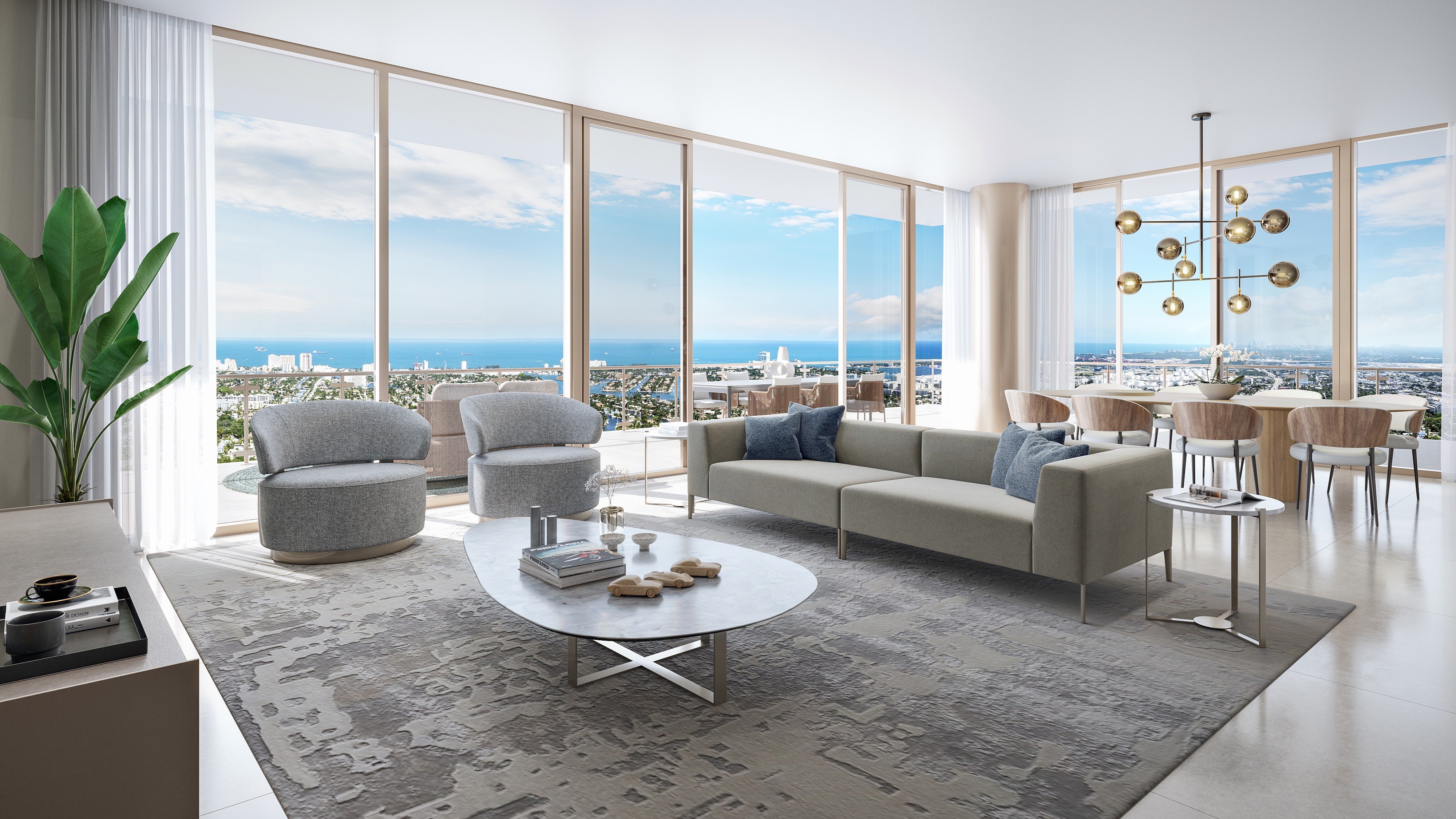
Fort Lauderdale has long been marketed as the “Venice of America,” a nickname frequently tied to the city’s expansive network of navigable waterways, often cited at roughly 300 miles. For serious buyers, that geography is not a slogan. It is the operating system of the market, and it explains how two neighborhoods can sit only minutes apart yet live with entirely different rhythms.
Las Olas Isles and Harbor Beach are perennial contenders on the short list. Both deliver the core promise of Fort Lauderdale luxury: water at your doorstep and a lifestyle organized around the boat. The differences show up in practical, lived-in ways. Las Olas Isles is prized for its immediate proximity to Las Olas Boulevard, the city’s primary dining and shopping corridor. Harbor Beach, by contrast, sits on the barrier island and is commonly described as a gated community with resident-oriented private beach amenities.
In other words, you are not choosing between “good” and “better.” You are choosing between two philosophies of waterfront living. Do you want your canal home to function as a downtown key, where evenings can pivot to restaurants and galleries without ceremony? Or do you want your neighborhood to feel protected, beach-forward, and quietly separated from the city’s tempo?
The best outcomes come from matching the address to your habits. Buyers who make this decision well tend to be specific about how they will actually use the home: how often the boat leaves the dock, how much privacy they expect day to day, and how much they value walking versus driving. Those preferences, more than any headline metric, will determine which neighborhood feels effortless.
Las Olas Isles sits immediately off, and closely connected to, Las Olas Boulevard. For ultra-premium buyers, that adjacency is often the deciding feature. The neighborhood reads as residential and dock-centric, yet it remains in close orbit to the city’s social spine. You are not opting out of Fort Lauderdale’s energy; you are positioning yourself to access it on demand.
In practical terms, Las Olas Isles is often positioned as boater-friendly because it concentrates waterfront frontage and private docks. That density changes how the property is lived in. The dock becomes an extension of the home, not a separate “boat area,” and the water becomes part of the daily scene. Many owners value the ritual of canal living: watching slow-moving boat traffic, using the dock as an outdoor room, and treating the vessel as both transport and backdrop.
The urban-accessible nature of the area also affects how ownership feels. A coffee run does not need to be a planned outing. A late reservation feels less like logistics and more like a simple decision. If you host friends staying at nearby hotels or downtown residences, the coordination tends to be straightforward. Even when the home is quiet, you remain close to the part of the city that anchors dining, shopping, and evening plans.
That said, this is still a waterfront neighborhood with real operating considerations. Canal routes, bridge timing, and vessel dimensions matter. Buyers who love Las Olas Isles typically accept that sophistication as part of the charm: the home feels like a private address, but it exists inside an active, navigable network.
For buyers who prefer a “lock-and-leave” approach while staying close to the same energy, newer luxury inventory along the coastline can complement a Las Olas-centric routine. Residences like Four Seasons Hotel & Private Residences Fort Lauderdale can appeal to those who prioritize service, amenity depth, and a turnkey arrival experience, while still keeping Las Olas Boulevard within the broader orbit of an evening out.
Harbor Beach occupies different geography, and it carries a different mood. Set on Fort Lauderdale’s barrier island in the city’s southeast area, it is known for proximity to Port Everglades and the Atlantic Ocean. That location is not only about views and sand. It influences how owners use their boats, how quickly they can transition from dock to open water, and how “separate” the neighborhood feels from the city’s interior tempo.
Harbor Beach is commonly described and marketed as gated, with an emphasis on privacy and controlled access. For many luxury buyers, “gated” is not a status marker. It is an operational preference. It can translate into fewer unknown cars circulating through the neighborhood, more predictable street activity, and a quieter feel even during peak season.
A signature differentiator is resident access to a private beach or beach club style amenity, often described as resident-focused beachfront facilities. In practice, that changes the day-to-day. A morning walk is simple. An afternoon swim does not have to feel like an excursion. There is an ease to shifting between dock culture and shoreline leisure, and for certain households, that is the defining luxury.
Harbor Beach also sits within the broader Broward coastal development ecosystem, where oceanfront residential standards are often hospitality-forward. When your lifestyle is oriented around sand and shoreline as much as boating, oceanfront residences can be part of the same personal map. Auberge Beach Residences & Spa Fort Lauderdale is one example of the market’s appetite for an oceanfront, service-driven standard that aligns with a barrier-island sensibility.
In short, Harbor Beach tends to appeal to buyers who want the neighborhood itself to function like a retreat. Privacy, controlled entry, and the beach posture are not just amenities; they are the structure of the lifestyle.
Most serious buyers can summarize their boating priorities in one sentence: “We want to get out quickly.” Both neighborhoods support a boating lifestyle, but they answer that desire differently, and the differences are not theoretical.
In Las Olas Isles, routing toward the ocean can involve passing major drawbridges. Bridge clearance and bridge openings become practical considerations for certain vessels, especially those with meaningful air draft or owners who prefer a schedule that does not depend on bridge timing. Buyers are also commonly advised that canal depth and width can vary by location within Las Olas Isles. That variability matters for draft, turning radius, and dock planning.
None of this is an argument against the neighborhood. It is an argument for precision. Many owners are perfectly comfortable building their routine around known routes and bridge openings. For others, particularly those stepping up in vessel size or boating frequency, the elegance of the address comes with a layer of navigation planning that should be acknowledged early.
Harbor Beach is often marketed with a boating advantage tied to proximity to Port Everglades and the inlet, supporting an ocean-access lifestyle that can feel more direct. Buyers who keep their boats active, especially those who value quick offshore runs, may weigh this heavily. Just as importantly, Harbor Beach’s barrier-island setting can reduce the sense that you are “traveling through the city” to reach open water.
The most effective way to approach this category is to treat boating constraints as due diligence, not neighborhood lore. For Las Olas Isles, that can include confirming bridge schedules relevant to your route and verifying canal conditions with professionals who understand your vessel’s dimensions. For Harbor Beach, it can include assessing your preferred route to open water and how neighborhood access protocols intersect with your service providers.
Boating is where the lifestyle promise meets physical reality. When you align the home’s waterways with your vessel and your patience for planning, the experience becomes easy. When you ignore those constraints, the experience can become unnecessarily complicated.
Fort Lauderdale’s boating culture is sophisticated enough to accommodate more than one ownership model. Not every owner wants a boat behind the home, and not every home can comfortably support the vessel an owner ultimately intends to keep. In the luxury segment, flexibility is often the smartest form of convenience.
Marina-based strategies are part of the city’s waterfront fabric. Near Las Olas, Las Olas Marina markets slips that can accommodate very large vessels, with the marina’s marketing indicating capacity up to 315 feet. Even if you never intend to keep a yacht at that scale, the presence of serious yachting infrastructure matters. It signals a market built to support everything from weekend cruising to complex yachting logistics, with service networks that tend to follow.
For the buyer who wants Las Olas Isles for its neighborhood lifestyle but prefers to keep a larger vessel at a dedicated facility, the “home plus slip” structure can be an elegant solution. It preserves the walkable, social energy of Las Olas while removing the friction of bridge timing from everyday boating. You keep the canal address as a lifestyle choice, while treating the marina as an operations choice.
Conversely, buyers who prioritize private docks as part of the property’s identity may still maintain a marina relationship as overflow. That might be for visiting vessels, seasonal shifts in boat usage, or simply a preference to keep the home’s dock visually clean and uncluttered.
This is where the idea of a Boat-slip becomes less transactional and more strategic. A slip is not only storage. It is access, convenience, and often an ecosystem of support. For buyers comparing Las Olas Isles and Harbor Beach, thinking in terms of “home plus slip” versus “home plus dock” can clarify what you are actually purchasing: not just a property, but a daily operating plan for the water.
Luxury buyers are rarely looking for a single number to validate a decision, but they do want to understand trajectory and relative positioning. Fort Lauderdale’s neighborhood data can be useful, provided you keep each metric tied to its source and its methodology.
Zillow publishes neighborhood-level Home Value Index pages for both Las Olas Isles and Harbor Beach. These can be helpful for context and trend direction, but they are not the same thing as current median listing prices or closed-sale medians.
Redfin provides a Harbor Beach housing market snapshot that typically includes median sale price, price per square foot, and market dynamics. Realtor.com provides neighborhood market indicators and search hubs that can be used to observe active inventory and pricing posture for both Las Olas Isles and Harbor Beach.
The key is to avoid mixing the measures as if they are interchangeable. A sale-based median can lag or lead a listing-based median depending on what inventory is currently on the market. A value index is a modeled estimate rather than a direct summary of recent closings. When those measures diverge, it is not automatically noise. It can be a signal that inventory mix is changing, or that buyer expectations and seller pricing are temporarily out of sync.
For ultra-luxury context, individual listings can also illustrate top-of-market posture in Harbor Beach, where showcase properties are publicly visible through major portals. Without memorizing specific details, scanning the upper end can reveal what the market consistently rewards: privacy, dockage, and an indoor-outdoor plan that feels coherent rather than improvised.
Market interpretation is ultimately about discipline. Use indices for directional context, closed-sale reporting for evidence of executed price levels, and active listings to understand present-day seller positioning. When you keep each dataset in its proper lane, the picture becomes clearer, and decision-making becomes more confident.
Not every Fort Lauderdale buyer wants the maintenance profile of a single-family waterfront home. Many want the aesthetic of waterfront living paired with modern building systems, security, and amenity programming. In that case, the neighborhood conversation often expands into a “vertical versus horizontal” decision.
Fort Lauderdale’s newest residential offerings are frequently purchased for a specific rhythm: arrive, unpack, and be living at full speed within minutes. For a buyer who still spends significant time on the water, the building becomes a base of operations rather than a project. This can be especially relevant for second-home owners, frequent travelers, and anyone who prefers that the home is consistently guest-ready.
St. Regis® Residences Bahia Mar Fort Lauderdale speaks to the market’s appetite for branded living and a marina-adjacent coastal setting, a natural fit for buyers who want a curated environment with proximity to yachting culture.
Similarly, Andare Residences Fort Lauderdale can serve as a modern alternative for buyers who want the city’s dining and cultural access with a newer, design-forward residential experience. Even when the primary target is a canal home, many families explore a condominium as a complementary hold: a pied-a-terre for certain seasons, or a transitional residence while they renovate a single-family purchase.
This is not a detour from the Las Olas Isles versus Harbor Beach decision. It is an adjacent lens. Some buyers ultimately choose a single-family home for the primary lifestyle and add a condo for convenience. Others start with the condo, learn the city’s patterns, and then graduate into a canal or barrier-island home once their preferences are proven in real time.
The most reliable way to choose between Las Olas Isles and Harbor Beach is to answer a short list of lifestyle questions honestly, and to treat the answers as operating requirements rather than preferences.
First, define your “friction tolerance.” If bridge openings, canal navigation, and variable waterway characteristics feel like part of the charm, Las Olas Isles can be deeply satisfying. If the idea of planning around bridges feels like an annoyance you will resent, Harbor Beach’s ocean-proximate positioning may better match your temperament.
Second, decide which you value more on a daily basis: walkable urban access or beach privacy. Las Olas Isles is designed for a life that can start on the dock and end on Las Olas Boulevard. Harbor Beach is built for those who want the neighborhood itself to feel like a retreat, with controlled access and private beach amenities anchoring the experience.
Third, be direct about boating scale. If your ambitions may grow beyond what a given canal and route comfortably supports, consider a marina-plus-home model early rather than trying to force a property to solve a problem it was not built to solve. In Fort Lauderdale, sophisticated boating infrastructure makes this approach realistic for many owners.
Finally, treat data as a lens, not a verdict. Use neighborhood value indices for trend awareness, sale-based reporting for evidence of executed price levels, and active listings to see what sellers believe the market will pay right now. When the metrics disagree, ask why before you conclude anything.
In Fort Lauderdale, luxury is rarely a single feature. It is the ease with which your home supports your preferred version of the city, whether that means stepping from canal to boulevard, or from gate to sand.
Is Las Olas Isles considered close to downtown Fort Lauderdale? Yes. Las Olas Isles is positioned immediately off and near Las Olas Boulevard, a core downtown dining and shopping corridor.
Is Harbor Beach actually gated? Harbor Beach is commonly described and marketed as a gated community with an emphasis on privacy and controlled access.
Which neighborhood is better for direct ocean access boating? Harbor Beach is often positioned as convenient for ocean access due to its barrier-island location near Port Everglades and the inlet, while Las Olas Isles routes can involve drawbridges.
Do I need to worry about canal depth in Las Olas Isles? Buyers are often advised that canal depth and width can vary by location within Las Olas Isles, so vessel draft and maneuvering should be reviewed case by case.
For discreet guidance on Fort Lauderdale waterfront buying, connect with MILLION Luxury.
If branded residences are on your mind — as a home or as an allocation — we would be glad to share what we are seeing, privately.
Begin a quiet conversation