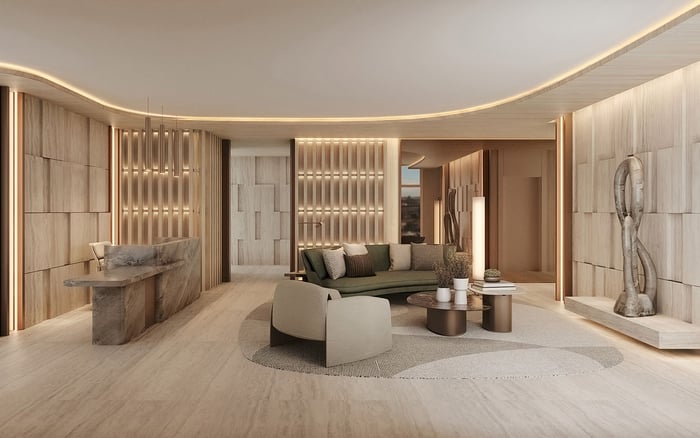
A practical family-buyer guide to outdoor-room furniture storage at La Maré Bay Harbor Islands, covering terrace usability, safety, storm readiness, association rules, and long-term furniture care.

At La Maré Bay Harbor Islands, the outdoor room is not a decorative extra for family buyers. It is part of how the residence may live every day: breakfast outside before school, a shaded reading corner, a place for children’s toys, a dining setting for grandparents, or a calm evening lounge after the beach. That makes furniture storage a purchase-planning issue, not a post-closing errand.
The question is simple, but often overlooked: where does everything go when the outdoor room is not in use? Cushions, lounge chairs, dining pieces, toys, umbrellas, covers, and seasonal accessories all need a plan. In a luxury condominium setting, the answer is rarely as casual as pushing items into a garage or spare room. Families should understand the storage logic before ordering furniture, approving an interior design scheme, or assuming a terrace can absorb every layer of outdoor living.
For buyers considering La Maré Bay Harbor Islands, storage belongs in the same conversation as closet programming, kitchen layout, parking, and service access. It affects convenience, safety, storm readiness, furniture longevity, and the true usability of outdoor living space.
A family terrace can accumulate objects quickly. A sophisticated outdoor sofa may require multiple cushions. A dining table adds chairs, pads, and tableware accessories. Younger children bring pool toys, scooters, beach buckets, and lightweight play pieces. Even families with a refined aesthetic need practical places for these items when guests arrive, when wind picks up, or when outdoor surfaces are being cleaned.
The first buyer question should be direct: is there dedicated private storage suitable for outdoor-room items, or would the family rely on interior closets intended for clothing, linens, luggage, and household supplies? If it is the latter, the outdoor lifestyle may begin competing with the interior organization of the home.
This is especially relevant for boutique condominium living, where scale, privacy, and finish quality may be central to the appeal. A beautifully composed residence can still become inconvenient if cushions must be stacked in a hallway, toys migrate into bedroom closets, or wet outdoor fabrics are brought into conditioned interiors without a dry, ventilated place to rest.
Families should request the rules governing visible terrace storage before assuming that storage boxes, furniture covers, bins, or loose accessories can remain outside. In many luxury buildings, exterior appearance is part of the collective value proposition. A terrace may be private in use while still visible within the architectural composition of the building.
That means the storage plan should address not only capacity, but presentation. Can furniture covers be used? Are storage trunks permitted? Must certain items be removed from view? Are children’s toys allowed to remain on the terrace between uses? Are there restrictions on umbrellas, lightweight chairs, or boxes that alter the appearance of the outdoor room?
The word terrace may suggest openness and ease, but in a condominium environment it also implies shared standards. Buyers should review the condominium documents, association rules, and any design guidelines related to outdoor furnishings. The most elegant outdoor room is one that functions within the building’s rules without requiring daily negotiation.
In South Florida, outdoor furniture storage is inseparable from storm preparation. Families should ask whether terrace furniture can remain outside year-round or must be moved during storms, maintenance, or association-directed preparations. The answer may influence everything from furniture weight to fabric choice to the number of pieces a family should buy.
A practical due diligence question is: where does everything go before a storm? If the residence has weather-protected zones, enclosed cabinetry, built-in storage, or access to private storage areas, the family can plan accordingly. If storage falls entirely on the owner, the furniture plan should be more disciplined. Oversized sectionals, large umbrellas, abundant loose cushions, and children’s play equipment may be beautiful on a clear day, but burdensome when they must be removed or secured quickly.
Buyers should also ask whether building staff, management, or the association provides any storm-season support, or whether owners carry full responsibility for preparing and storing loose outdoor items. This distinction matters for families who travel, split time between residences, or expect household staff to manage day-to-day logistics.
Storage is also a safety question. Loose cushions, lightweight chairs, toys, and bins can obstruct terrace circulation or create tripping points. Parents should walk through the outdoor room as they would a playroom, breakfast area, or entry sequence. Where will children move? Where will adults carry trays? Where does a stroller, toy basket, or small outdoor table go when the space must be cleared?
The safest plan is not necessarily the emptiest. It is the most intentional. A family may want designated zones for seating, dining, and play, along with a defined storage path that does not block doors, thresholds, or circulation. If the terrace is meant to feel like an extension of the interior, the storage plan should support that continuity rather than disrupt it.
This is where early design coordination matters. Families should ask designers to integrate storage into the outdoor-room furniture plan before ordering major pieces. A sectional that looks perfect in a rendering may be too large to store, too difficult to move through service corridors, or too dependent on loose cushions with no dry location.
Outdoor furniture choices should be tested against storage volume, elevator access, service corridors, and loading logistics. If a piece is difficult to deliver, it may also be difficult to remove, protect, or reposition. Families should ask whether the furniture plan works not only on installation day, but also during maintenance, storm preparation, and seasonal refreshes.
Fabric care is another quiet cost. Cushions and outdoor textiles last longer when they have a dry, ventilated storage location that reduces unnecessary exposure to moisture, sun, and repeated wear. Inadequate protection can shorten the useful life of furniture and accessories, turning outdoor living into a recurring replacement expense.
New-construction buyers often focus on floor plans, views, amenity programs, and finish packages. The more durable question is how the home will behave in daily use. At La Maré Bay Harbor Islands, family buyers should connect the outdoor-room dream to the practical realities of storage, protection, and access.
A disciplined buyer should ask the sales team and project representatives specific questions. Is any built-in storage planned for terraces, loggias, or rooftop areas if those spaces are part of the residence? Is there enclosed cabinetry or a weather-protected zone? Are private storage areas assigned, available, or sized for outdoor-room items? What can remain visible outside? What must be moved before a storm? Who is responsible for moving it?
Families comparing Bay Harbor residences with nearby Bal Harbour options should also compare storage culture, not just views and finishes. The difference between a terrace that photographs beautifully and one that works for a family is often the invisible infrastructure behind it.
The goal is not to reduce the outdoor program. It is to make it more livable. A family that understands storage can choose better furniture, protect investment pieces, preserve terrace circulation, and avoid turning interior closets into holding zones for outdoor life.
Why should family buyers ask about outdoor-room furniture storage at La Maré Bay Harbor Islands? Because storage affects daily convenience, child safety, storm preparation, and how well the outdoor room functions as family space.
What items should buyers plan to store? Cushions, lounge chairs, dining pieces, toys, umbrellas, covers, bins, and seasonal outdoor accessories should all be included in the plan.
Is interior closet space enough for outdoor furniture storage? Families should not assume so. They should ask whether dedicated private storage is available for outdoor-room items.
Can terrace furniture stay outside all year? Buyers should confirm whether furniture may remain outside or must be moved during storms, maintenance, or association-directed preparations.
What association rules matter most? Rules on visible storage, furniture covers, boxes, bins, and exterior appearance can shape how the terrace is used every day.
How does storage relate to hurricane preparation? Loose outdoor items may need to be removed or secured, so buyers should know where those pieces go and who handles them.
Why does ventilation matter for cushions and fabrics? A dry, ventilated storage location can help reduce wear from moisture, sun exposure, and repeated use.
Should designers be involved before furniture is ordered? Yes. Designers should coordinate furniture scale, storage volume, access routes, and family routines before major pieces are selected.
Can outdoor storage affect child safety? Yes. Loose cushions, lightweight chairs, toys, and bins can obstruct circulation or create avoidable hazards on the terrace.
What is the best single question to ask? Ask where every outdoor item goes before a storm, after a family gathering, and during routine building maintenance.
To compare the best-fit options with clarity, connect with MILLION.
If branded residences are on your mind — as a home or as an allocation — we would be glad to share what we are seeing, privately.
Begin a quiet conversation