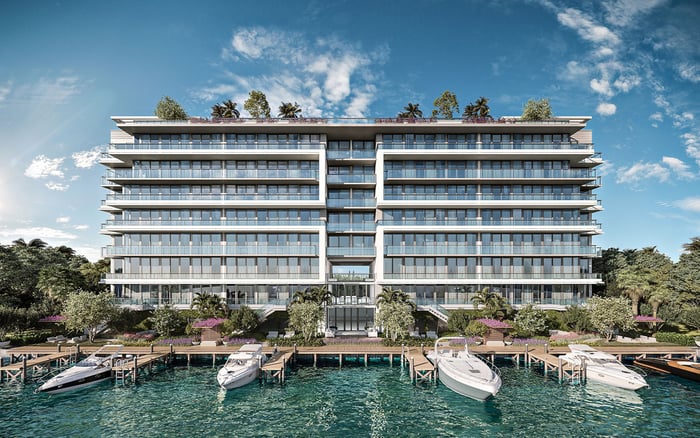
A discreet buyer’s guide to evaluating dock logistics at La Maré Bay Harbor Islands before allowing waterfront views to dominate the decision.

For buyers drawn to La Maré Bay Harbor Islands, the first seduction is obvious: water, light, and the particular calm of Bay Harbor’s residential waterfront. Yet seasoned waterfront buyers understand that a beautiful bay view is not the same as a usable boating lifestyle. The two can overlap, but they should never be treated as identical.
The right way to approach La Maré Bay Harbor Islands is through a dual lens. One lens studies architecture, exposure, privacy, terrace experience, and interior livability. The other examines the operational life of the water’s edge: who may use it, under what conditions, at what cost, and with what limitations. For a high-end buyer, that second lens can be the difference between owning a waterfront residence and owning a residence that genuinely supports a waterfront routine.
This is not a warning against waterfront living. It is an argument for precision. In a market where language such as “water access,” “dockage,” or “boating lifestyle” can carry very different meanings from one property to another, the most elegant purchase is the one in which the romance has been tested against the paperwork.
The first question is not whether the water looks compelling from the residence. It is whether any boating-related benefit is private, shared, deeded, assigned, leased, licensed, waitlisted, or governed entirely by association discretion. Those words matter. A deeded right can operate differently from a revocable use right. An assigned slip can differ from a first-come arrangement. A shared dock can feel effortless for one owner and constrained for another, depending on timing, vessel habits, and guest policies.
Before relying on any waterfront marketing language, ask for the governing documents, dock rules, marina-use agreements, slip-assignment terms, insurance requirements, and maintenance obligations. If a sales conversation mentions dock access, the next question should be document-based: where is that right written, how long does it last, and what can change after closing?
The same discipline applies when comparing Bay Harbor options. A buyer considering Onda Bay Harbor or La Baia North Bay Harbor Islands should not compare only views, terraces, or lobby atmosphere. The water’s usability must be evaluated through the exact language of each building’s documents.
Aesthetic waterfront exposure is easy to understand. Operational boat usability is more technical. If the residence is being evaluated partly for boating, a buyer should request current documentation before assuming that a specific vessel can be accommodated.
The core questions are practical. What is the permitted slip length? What beam clearance is available? What draft depth is relevant at the dock and along the approach? Is there any bridge clearance issue for the intended route? Is the turning area comfortable for the vessel, captain, and prevailing conditions? Are there restrictions on tenders, lifts, personal watercraft, overnight stays, fueling, cleaning, or commercial crew access?
The answer may be perfectly acceptable for a buyer’s lifestyle, but it should be verified before emotional commitment. A residence can deliver a superb water view and still require separate planning for vessel storage or access. Conversely, a less dramatic view can sometimes pair with more practical water logistics. The luxury is not merely seeing the bay. The luxury is knowing exactly how the bay can be used.
Even where dock use is available, the association layer shapes the lived experience. Owners should clarify access timing, loading zones, guest-vessel rules, service-provider protocols, noise standards, after-hours use, and procedures for contractors or captains. The daily choreography of waterfront living depends on these details.
Maintenance funding is another essential question. Dock structures, seawall conditions, utilities, lighting, access gates, and related systems require attention over time. A sophisticated buyer should understand whether costs are included in general common expenses, allocated to slip users, assessed separately, or handled through another structure. Insurance obligations should be equally clear, including any requirements for vessel coverage, owner indemnity, and proof of compliance.
Hurricane protocols deserve particular focus. Buyers should ask how vessels are handled before named storms, who is responsible for removal or securing, what deadlines apply, and whether the association has authority to mandate action. In South Florida, waterfront ownership is at its best when the beautiful days and the difficult days have both been planned for.
Bay Harbor Islands has become a compelling address for buyers who want intimacy, water proximity, and access to the broader Miami Beach and Bal Harbour lifestyle without choosing a tower-district rhythm. That is precisely why document-first comparison matters. Boutique waterfront living often feels personal and serene, but smaller-scale buildings can also have highly specific rules governing shared amenities and limited waterfront infrastructure.
When evaluating Bay Harbor Towers, Alana Bay Harbor Islands, or La Maré, the goal is not to crown a universal winner. The goal is to match the building’s rules to the buyer’s actual life. A seasonal owner with no vessel may prioritize view, terrace privacy, and concierge simplicity. A year-round boater may care more about loading, crew coordination, maintenance clarity, and predictable access.
In search shorthand, this may read as a Bay Harbor, boat slip, marina, waterview, and new construction conversation. In real life, it is a question of fit. The most refined buyers do not ask, “Is there water?” They ask, “What does ownership allow me to do with the water, and what responsibilities come with that privilege?”
Before signing, ask for the complete waterfront packet. That should include the condominium declaration, rules and regulations, any marina or dock-use agreement, current fee schedule, insurance requirements, assignment procedure, maintenance obligations, and any transfer limitations. If a slip or dock right is being represented as part of the purchase, the contract should reflect the exact nature of that right.
Then test the physical conditions against the intended vessel. Do not rely on general statements such as “fits most boats” or “ideal for boaters.” Request current dimensions, restrictions, and operating rules in writing. If the buyer has a captain, marine surveyor, insurance adviser, or maritime attorney, bring them into the review early. Their questions are often different from a real estate buyer’s questions, and that is precisely the point.
Finally, separate permanent value from optional convenience. A bay view may support enduring emotional and market appeal, while dock access may depend on rules, assignments, fees, and physical limitations. Both can be valuable, but they should be valued differently.
La Maré Bay Harbor Islands should be evaluated as a waterfront residential opportunity where the view is only one part of the story. The more important exercise is to confirm the present, written, enforceable reality of any boating-related benefit. That means distinguishing the poetry of waterfront living from the mechanics of dock ownership or use.
For the right buyer, that scrutiny does not diminish the appeal. It protects it. Once the rights, rules, costs, and limitations are understood, the bay view can be enjoyed without ambiguity. In the upper tier of South Florida real estate, certainty is its own amenity.
Is a bay view the same as dock access at La Maré Bay Harbor Islands? No. A bay view is visual exposure, while dock access depends on written rights, rules, and physical usability.
What should buyers verify first if boating matters? Start by confirming whether any dock or slip use is deeded, assigned, leased, shared, waitlisted, or association-controlled.
Can I assume a specific boat will fit? No. Buyers should verify slip length, beam clearance, draft depth, bridge clearance, and turning conditions before relying on fit.
Which documents matter most? Review the declaration, association rules, dock-use agreements, slip-assignment terms, fee schedules, insurance requirements, and maintenance obligations.
Why do guest-vessel rules matter? Guest-vessel rules can affect entertaining, captain access, temporary tie-ups, loading, and the overall rhythm of waterfront ownership.
Should storm protocols be reviewed before purchase? Yes. Hurricane procedures can determine owner duties, vessel-removal timing, securing requirements, and association authority during severe weather.
Are marina costs always included in association fees? Not necessarily. Costs may be general, user-specific, separately assessed, or structured another way, so written confirmation is essential.
How should buyers compare Bay Harbor waterfront buildings? Compare documents and rules as carefully as views, finishes, amenities, and pricing, because waterfront language can vary significantly.
Is this a concern only for owners with boats? No. Dock rules, maintenance costs, storm protocols, and waterfront operations can influence the broader ownership experience.
What is the best way to shortlist comparable options for touring? Start with location fit, delivery status, and daily lifestyle priorities, then compare stacks and elevations to validate views and privacy.
For a discreet conversation and a curated building-by-building shortlist, connect with MILLION.
If branded residences are on your mind — as a home or as an allocation — we would be glad to share what we are seeing, privately.
Begin a quiet conversation