A property-specific guide to evaluating Key Biscayne waterfront purchases through effective flood maps, elevation documentation, and carefully reviewed flood-insurance coverage.
On Key Biscayne, the appeal of a waterfront residence is immediate. The more consequential questions require documentation: Which flood zone applies to the address? How does the building's lowest floor compare with the applicable base-flood elevation? What flood coverage is available, and what will the lender require?
These questions deserve attention before a buyer settles on an ownership budget. A waterfront designation is not a flood determination, and a neighboring property's paperwork cannot substitute for the subject property's records. The objective is not to reduce an exceptional home to a risk category, but to understand the purchase with the same precision applied to its architecture, privacy, and setting.
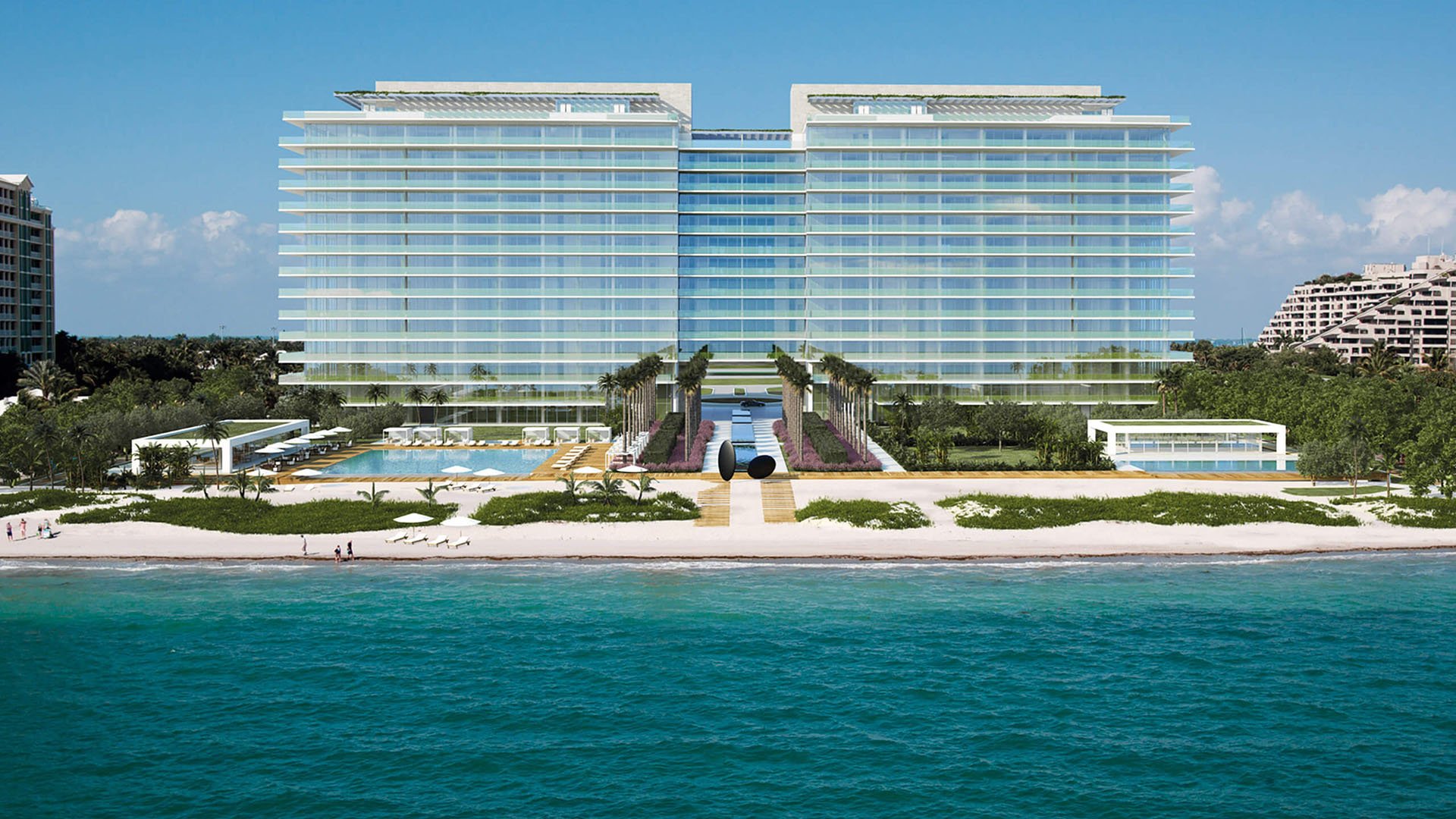
For a buyer considering Oceana Key Biscayne, the starting point is an address-level review-not an assumption based on the property's name or island location. A project reference alone establishes neither a flood designation nor an insurance obligation.
An exact-address flood-zone lookup allows buyers to review mapped exposure rather than infer it from neighborhood character or proximity to the water. Flood Insurance Rate Maps identify mapped hazards and are used to determine flood-insurance requirements.
Both AE and VE are high-risk Special Flood Hazard Areas. VE additionally identifies coastal high-hazard areas exposed to flooding and storm-driven wave action. These designations are not interchangeable. Ask the transaction team to confirm which applies to the specific property.
VE areas have at least a one-in-four chance of flooding over a 30-year mortgage. That is a long-horizon risk measure, not a prediction of when an individual residence will flood. It is nevertheless a reason to treat the map designation as a material ownership consideration.
Request a copy of the address-level determination for the transaction file, including identification of the effective map used. Resolve any discrepancy between that determination and a listing, seller statement, or older appraisal before relying on those materials.
Flood maps can be revised. An earlier determination may therefore be insufficient for a new purchase, even when the seller has owned the property for years.
Treat preliminary and currently effective mapping as distinct. Ask which map governs the property today and whether proposed mapping warrants a separate discussion with the insurance adviser and lender. Do not assume a preliminary designation has replaced the effective one.
This distinction matters when comparing documents prepared at different times. If two records appear inconsistent, request an explanation rather than choosing the more favorable designation. A clear record of the map used for underwriting is more useful than an unexplained collection of screenshots.
An elevation certificate documents building-elevation information that can help evaluate the structure's lowest floor relative to the applicable base-flood elevation. Request the certificate, if available, and have a qualified professional review it alongside the relevant map and property documents.
There is no single island-wide base-flood elevation to apply indiscriminately. The comparison must be property-specific. Ask the reviewer to explain which building measurement is being evaluated and whether the documents correspond to the structure being purchased.
For condominium buyers, a residence's floor number is not a complete elevation analysis. Request the relevant building documentation and ask the insurance adviser what additional information is needed. The goal is a documented assessment, not an inference from the view.
The same discipline applies to a broader search that includes Vita at Grove Isle. Compare each candidate's own records rather than carrying an elevation assumption from one address to another.
Standard homeowners insurance generally excludes flood damage. Buyers should not assume their homeowners policy covers storm surge or other flooding simply because it addresses other storm-related losses.
Key Biscayne participates in the National Flood Insurance Program, making separate federally backed flood coverage available to eligible property owners. Previous flooding does not, by itself, prevent an owner from obtaining that coverage. Availability, however, is not a substitute for reviewing the protection appropriate to a particular purchase.
Flood insurance is generally required for buildings in Special Flood Hazard Areas when they secure federally regulated or federally backed mortgages. Confirm the applicable requirement directly with the lender. A financing requirement and the buyer's preferred level of protection are separate questions; both deserve explicit answers.
Request property-specific quotes early enough to review coverage limits, deductibles, exclusions, and the proposed effective date with an insurance professional. Do not build the ownership budget around an assumed island-wide premium. The useful number is a quote for the actual property and proposed coverage.
For a resale purchase, request available elevation documentation, surveys, flood-related disclosures, and claims records. These are due-diligence requests, not statements that any particular property has flooded or carries a specific claims history.
For a condominium, also request association flood-policy documents. Ask the insurance adviser to explain how the proposed individual coverage relates to the association's coverage, and seek written clarification of any unresolved responsibility. Do not assume the association policy answers every question.
Keep the review focused on the documents supplied for the transaction. A seller's existing premium or policy can be a useful discussion point, but seek a quote for the buyer's proposed purchase rather than treating existing paperwork as a binding offer of coverage.
A search may extend from Key Biscayne to Miami Beach, including The Perigon Miami Beach. Keep the comparison property-specific: effective flood designation, elevation documentation, proposed insurance, and any association materials requested for review. A shared waterfront setting does not establish equivalent exposure or coverage.
Second-home buyers should apply the same discipline. Before proceeding, assemble a concise file containing the current address-level map determination, available elevation records, lender requirements, and reviewed insurance quotes. Record unresolved questions and identify who will answer them before the purchase advances.
The strongest decision is not necessarily the property with the most reassuring description. It is the one whose setting, documented exposure, coverage options, and ownership commitments the buyer understands. Waterfront living can remain an emotional choice while the acquisition itself is rigorously informed.
For a discreet perspective on your South Florida waterfront search, connect with MILLION.
If branded residences are on your mind — as a home or as an allocation — we would be glad to share what we are seeing, privately.
Begin a quiet conversationUse an exact-address flood-zone lookup and confirm the currently effective map. Do not rely solely on neighborhood descriptions, listing language, or a neighboring property's determination.
Both are high-risk Special Flood Hazard Areas. VE additionally identifies coastal high-hazard areas exposed to flooding and storm-driven wave action.
VE areas are described as having at least a one-in-four chance of flooding over a 30-year mortgage. This is a long-horizon risk measure, not a prediction for an individual home.
Flood insurance is generally required for buildings in Special Flood Hazard Areas securing federally regulated or federally backed mortgages. Confirm the requirement for the specific purchase with the lender.
Standard homeowners insurance generally excludes flood damage. Review separate flood coverage rather than assuming homeowners insurance covers storm surge or other flooding.
It documents building elevations that can help evaluate the lowest floor relative to the applicable base-flood elevation. Review it alongside the property's relevant map and documents.
Do not apply a single island-wide figure. Check the applicable map and property documentation for the address being purchased.
Previous flooding does not, by itself, prevent a Key Biscayne owner from obtaining National Flood Insurance Program coverage. Confirm eligibility and proposed coverage for the property.
No. Distinguish proposed mapping from the map currently governing the property and discuss potential changes separately with the lender and insurance adviser.
Request association flood-policy documents and property-specific insurance quotes. Ask an insurance adviser to explain how the proposed individual coverage relates to the association's coverage.