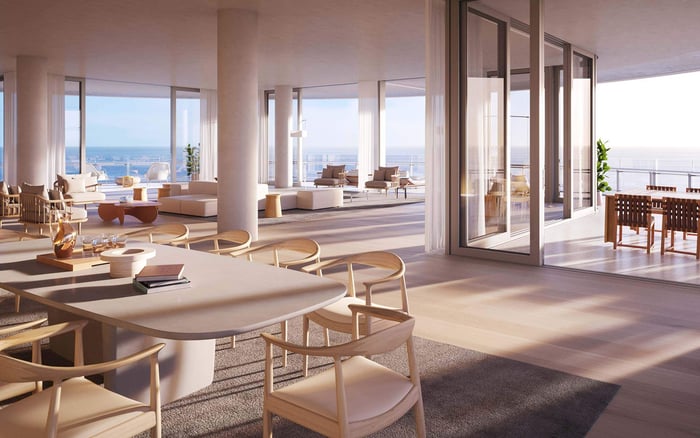
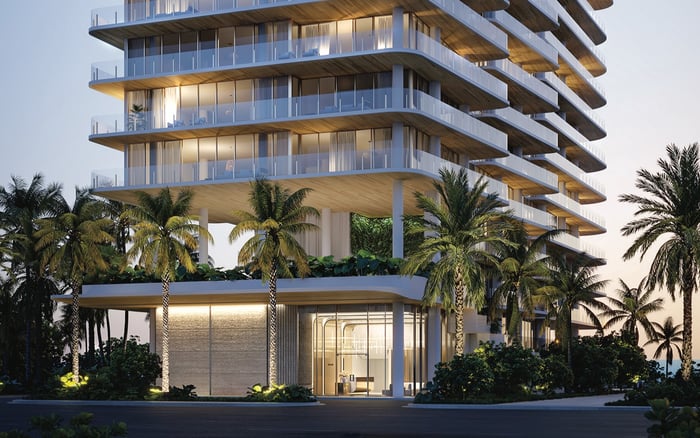
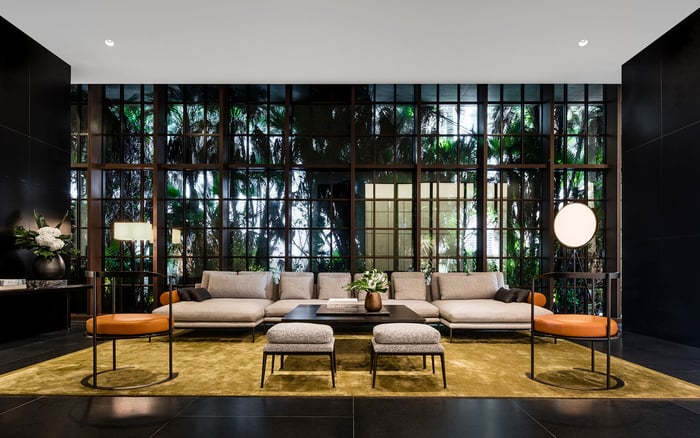
Eighty Seven Park and The Delmore offer distinct settings and residential scales, but neither can be ranked for acoustic privacy on the supplied evidence. A discerning buyer’s review should focus on the specific residence, its neighboring spaces, mechanical relationships, and documented sound-isolation performance.
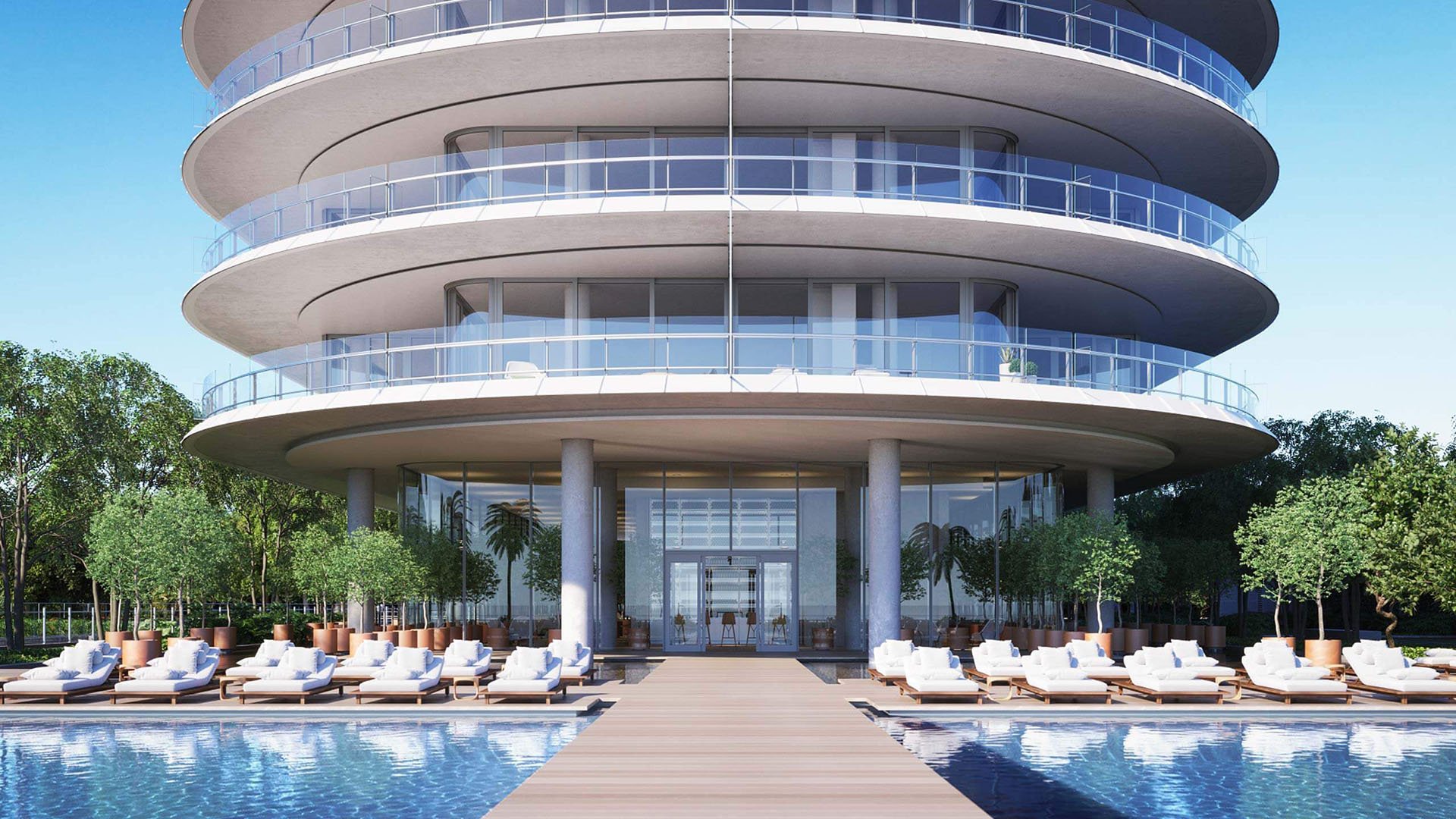
Privacy at the upper end of South Florida real estate demands a more exact vocabulary than quiet, exclusive or boutique. A buyer may value controlled access, screened terraces and freedom from neighboring sound equally, yet each calls for a different line of inquiry. Eighty Seven Park and The Delmore make that distinction especially useful: their settings and residential scales are established, but a defensible acoustic comparison remains open.
The first clarification is geographic. Despite the familiar Eighty Seven Park Surfside designation, the property stands at 8701 Collins Avenue in Miami Beach, not within Surfside proper. The Delmore is in Surfside. That distinction matters to the comparison, but neither municipal address determines interior quiet.
The central principle is straightforward: a building’s identity cannot substitute for evidence about a particular residence. Before assigning a premium to privacy, define what it must deliver in the rooms where you will live.
Eighty Seven Park is an 18-story oceanfront tower developed by Terra and Bizzi & Partners, with approximately 68 residences. Renzo Piano Building Workshop designed the building, and West 8 provided its landscape architecture. Residences range from approximately 1,400 to 7,000 square feet. These are meaningful attributes of scale and design, not acoustic specifications.
The Delmore Surfside rises 12 stories and has a stated count of 37 residences. That smaller count establishes a different residential scale. It does not establish fewer audible disturbances, better bedroom separation or stronger isolation between homes.
The productive comparison is therefore not simply 68 versus 37. It is the residence under consideration in relation to its immediate surroundings: the spaces beside it, above it, below it and across its entrance. Ask for those relationships to be identified on plans, rather than inferred from the building’s dimensions or architectural reputation.
Eighty Seven Park borders a 35-acre public park to the south, while a two-acre residents-only garden lies to the north. These landscapes create exposures distinct from the ocean-facing side and distinguish publicly accessible surroundings from private landscaped space. They do not establish a measured interior sound environment.
Review each orientation on its own terms. Which direction does the primary bedroom face? Where are its windows and terrace doors? What can be seen from neighboring outdoor spaces? When access is available, assess the rooms with exterior doors closed, then consider the terrace separately. Keep observations about outlook, enclosure and sound distinct.
Impact-rated windows are described for Eighty Seven Park residence #404, but that detail does not establish a whole-building façade acoustic rating. A buyer considering another residence should request information specific to that home, rather than extend the description across the tower. Even for #404, the acoustic question remains: what performance is documented for the relevant window and façade assemblies?
The available information does not establish a complete acoustic-rating or field-test package for Eighty Seven Park. That is a disclosure limitation, not evidence of poor isolation or proof that additional specifications and testing do not exist. Nor does the available information support naming an acoustic winner between the two projects.
The next step is a targeted document request. Ask what acoustic specifications are available for shared walls and floor-ceiling assemblies, whether testing has been completed, and which locations or assemblies the results cover. Request a clear distinction between intended performance and measurements taken in completed spaces.
Keep the inquiry tied to the home under consideration. For a bedroom sharing a boundary with another residence, ask what lies on the opposite side. For rooms beneath another home, request the corresponding layout above. Have an appropriately qualified acoustic adviser assess the relevance of any documents offered, rather than treating a rating in isolation as a guarantee.
The goal is not a larger stack of paperwork. It is a traceable connection between the buyer’s concern, the specific construction detail and the evidence offered in response.
The Delmore’s disclosed height and residence count do not establish whether mechanical rooms, shafts or service functions are buffered from bedrooms. On the available evidence, such buffering should not be treated as a confirmed feature of either project.
Ask the project team or seller to mark mechanical and service relationships on the relevant plans. The request should cover the residence’s own level and the levels immediately above and below. Identify any equipment spaces, shafts or service areas adjoining sleeping rooms, and ask what separation is specified at each adjacency.
Then separate location from performance. A plan can establish where a space sits; applicable technical details and relevant testing address its acoustic treatment. Do not treat an adjacency as an automatic defect-or an unmarked sales plan as proof of separation.
Where access to completed spaces permits, arrange an assessment under agreed operating conditions. Record which systems were running and which rooms were accessible. A brief impression during a visit should remain an observation, not become a whole-building conclusion.
Use three separate review categories. Access privacy concerns who can reach the residence and how. Visual privacy concerns sightlines into interiors and outdoor living areas. Acoustic privacy concerns sound within the home, including its relationship to neighboring residences and building functions. Residence count provides context for these categories, not a common measure of performance.
Eighty Seven Park’s residents-only garden establishes a private landscaped area. It does not, by itself, answer questions about bedroom sightlines, entrance arrangements or sound isolation between residences. Apply the same discipline to The Delmore’s smaller residence count.
If a Surfside shortlist also includes Arte Surfside, carry these categories into that evaluation without assuming equivalent specifications. A consistent set of questions makes comparisons more useful while preserving the distinctions that must be established for each property.
Before committing, organize the findings into three columns: documented characteristics, observations from access or inspection, and unanswered questions. Keep each item tied to the exact residence. Ask for applicable documents to support material representations about separation or buffering, with specialist review where appropriate.
Neither architectural pedigree nor limited residence count needs to be discounted. They simply belong in a different part of the purchase decision from verified acoustic performance. The strongest conclusion is not that one address is quieter, but that both deserve precise, residence-level scrutiny before privacy becomes part of the valuation.
For a discreet conversation about your South Florida residential priorities, connect with MILLION.
If branded residences are on your mind — as a home or as an allocation — we would be glad to share what we are seeing, privately.
Begin a quiet conversationEighty Seven Park is at 8701 Collins Avenue in Miami Beach, rather than within Surfside proper.
Eighty Seven Park is 18 stories with approximately 68 residences. The Delmore is 12 stories with a stated count of 37 residences.
The available evidence does not establish an acoustic winner. A meaningful comparison requires documentation relevant to the specific residences and assemblies being evaluated.
No. Its residence count establishes building scale, not sound-isolation performance or bedroom buffering.
A complete acoustic-rating or field-test package is not established in the reviewed brochure. That does not mean testing or additional specifications do not exist.
The available information does not confirm mechanical or service-space buffering from bedrooms at either property. Buyers should request applicable plans and technical details.
The impact-rated window description for Eighty Seven Park residence 404 does not establish a whole-building façade acoustic rating.
A 35-acre public park borders the property to the south, and a two-acre residents-only garden lies to the north. Neither establishes measured interior quiet.
Request applicable shared-wall and floor-ceiling acoustic specifications, any relevant testing, and plans identifying adjoining spaces. Have a qualified adviser assess how the documents relate to the residence.
Evaluate access arrangements, visual sightlines and acoustic isolation separately. A private garden or smaller residence count should not substitute for evidence in the other categories.