Cipriani Residences Brickell pairs a substantial hospitality program with the financial considerations of long-term condominium ownership. Understanding preliminary assessments, service inclusions, reserves and unit-level expenses is essential to evaluating its appeal.

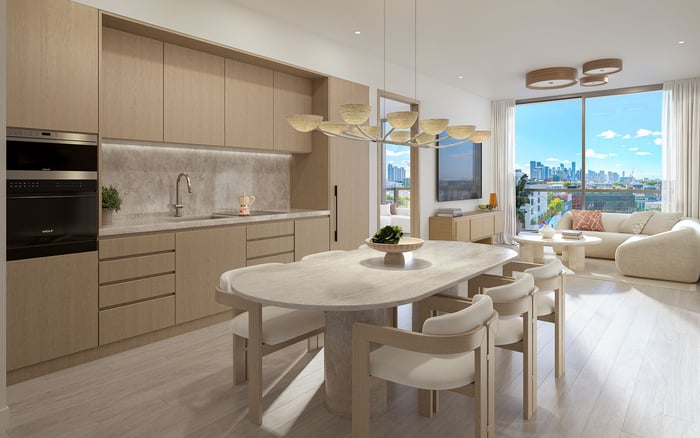
At Cipriani Residences Brickell, the proposition extends beyond Italian cabinetry, Wolf and Sub-Zero appliances, wine storage and Calacatta-marble bathrooms. Planned for 397 residences at 1420 South Miami Avenue, the development promises a residential experience shaped by hospitality: dining at home, assistance while away and shared spaces for leisure and entertaining.
For a buyer, the central question is not simply whether those services appeal. It is how they are delivered, which expenses are shared and which remain personal. Advertised amenities and preliminary assessment estimates describe different aspects of ownership. Neither, on its own, establishes the full annual cost.
An elegant service offering deserves equally disciplined financial review. Convenience has value, but that value is personal; an owner's obligation to fund common expenses is contractual.
The advertised program includes a Director of Residences, residential concierge, 24-hour security, controlled access, covered parking and complimentary valet service. In-home dining and 24-hour catering by Cipriani are also offered, alongside private dining spaces.
Additional advertised support includes in-residence spa treatments, personal training, plant care, away-from-home maintenance, pet grooming and walking, and a house limousine service. These offerings can make ownership more convenient, particularly for residents who divide their time between homes.
Availability, however, does not establish inclusion in condominium assessments. Buyers should request a written service-and-fee schedule identifying included services, separately charged offerings, booking conditions and any minimum spending requirements. Even complimentary valet warrants clarification: confirm its scope and whether associated operating expenses appear in the common budget.
For buyers also considering St. Regis® Residences Brickell, the useful comparison rests on documentation rather than atmosphere. Apply the same questions to each property's proposed service obligations. Similar hospitality language does not establish identical inclusions or costs.
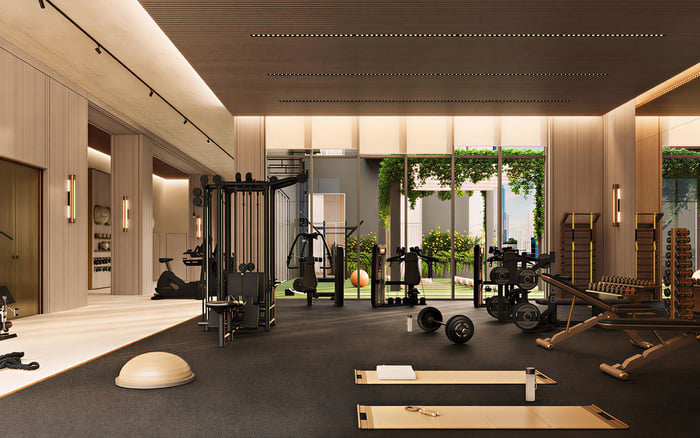
Cipriani's advertised amenity program exceeds 50,000 square feet. The planned resort deck includes two swimming pools, cabanas, a landscaped sun terrace and food-and-beverage service. Wellness and recreation offerings include a fitness center, golf simulator, pickleball court and spa with sauna, ice plunge and treatment rooms.
A social lounge, private salon, screening room, library, children's playroom and outdoor play area broaden the appeal. Together, these spaces suggest a building intended to support daily life, not merely offer occasional diversions.
For underwriting, that breadth calls for scrutiny of staffing, cleaning, maintenance, utilities and equipment replacement. It does not establish a measurable branded-service premium or guarantee future assessment increases. The question is whether the proposed budget credibly supports the advertised operating hours, service standards and physical facilities.
Preliminary monthly condominium assessment estimates span two ranges: $0.80-$2.50 per square foot and $1.50-$2.25 per square foot. The narrower range is described as covering valet, concierge, pools and common-area maintenance. Neither should be treated as a verified adopted budget.
For a hypothetical 2,000-square-foot residence, the narrower range produces the following illustration:
| Illustrative common charges | Lower estimate | Upper estimate | | --- | --- | --- | | Monthly | $3,000 | $4,500 | | Annually | $36,000 | $54,000 |
The broader range would produce $1,600-$5,000 monthly for the same assumed residence size. These calculations illustrate uncertainty, not competing promises. Obtain the unit-specific assessment projection and confirm the allocation method and measurement basis. Do not assume a simple square-foot calculation determines the actual obligation.
When comparing with The Residences at 1428 Brickell, use a consistent worksheet. Separate common charges from owner-level expenses and confirm each budget's inclusions before interpreting a lower monthly figure as better value.
Taxes, owner insurance, utilities, interior maintenance, discretionary services and possible special assessments sit outside the illustrative common-charge figures. Financing costs, if applicable, require a separate calculation.
A preliminary tax assumption is approximately 2% of assessed value annually. This is not a unit-specific determination and should not be applied automatically to a purchase price. Obtain an individualized estimate before relying on it in a long-term ownership model.
Indicative annual insurance figures range from $2,000-$5,000 or more for HO-6 coverage and $500-$3,000 or more for flood coverage. These are neither binding quotes nor confirmation of a particular residence's coverage requirements. Review the association's insurance program alongside proposed owner coverage, deductibles and exclusions.
Second-home ownership warrants an additional personal-services allowance. Away-from-home maintenance, plant care and transportation may be useful, but advertised availability does not establish price. Model anticipated use separately from mandatory expenses.
Request the latest line-item operating budget, unit-specific assessment projection, reserve study or reserve assumptions, insurance program, developer disclosures and service-provider contracts. The aim is to understand both the opening operating model and how replacement needs will be funded.
Reserve review should address pools, elevators, façades, garages, mechanical systems, spa equipment and landscaping. Ask what is funded, which assumptions support those amounts and what remains uncertain. An attractive initial assessment is no substitute for understanding future capital obligations.
Service contracts deserve equal attention. Ask who provides each service, how its cost is allocated, which renewal or termination provisions apply and how a change in provider might affect delivery. These are diligence questions, not assertions that any particular contractual risk exists here.
The occupancy target is summer 2027. Treat it as a target, not a guaranteed delivery date, and keep occupancy assumptions separate from contractual commitments when planning other housing arrangements.
The Canaletto Collection comprises 74 residences, including six penthouses, across the tower's top 18 floors. Its penthouses are described as offering oversized terraces, some with private dipping pools, plus upgraded finishes and custom millwork through a 1508 London design package.
Select buyers are advertised as receiving priority private-dining access, a private speakeasy and dedicated global concierge services. Confirm eligibility, scope and charging arrangements in writing. For any residence with a private pool or extensive terrace, establish maintenance responsibilities and associated expenses rather than assuming they are shared.
The strongest ownership decision connects the services a buyer will genuinely use with a clearly documented financial commitment. Cipriani's hospitality proposition can be evaluated on its own merits, without assuming guaranteed savings, appreciation or an inevitable fee trajectory.
For a discreet assessment of Brickell ownership options and the questions that matter before purchase, connect with MILLION.
If branded residences are on your mind — as a home or as an allocation — we would be glad to share what we are seeing, privately.
Begin a quiet conversationThe development is planned for 1420 South Miami Avenue in Miami's Brickell neighborhood, with 397 residences.
The advertised program encompasses more than 50,000 square feet, including two swimming pools, wellness facilities and spaces for dining, recreation and entertaining.
Advertised availability does not establish inclusion. Buyers should obtain a written schedule identifying included services and separately charged offerings.
Preliminary marketing ranges are $0.80–$2.50 and $1.50–$2.25 per square foot monthly. Neither is established here as a verified adopted budget.
Using the $1.50–$2.25 estimate produces illustrative charges of $3,000–$4,500 monthly, or $36,000–$54,000 annually. Actual obligations require a unit-specific projection.
Taxes, owner insurance, utilities, interior maintenance, discretionary services and possible special assessments require separate consideration. Financing expenses also apply where relevant.
Tax guidance uses approximately 2% of assessed value annually, while indicative insurance ranges are $2,000–$5,000 or more for HO-6 and $500–$3,000 or more for flood coverage. These are not unit-specific determinations or binding quotes.
Review the reserve study or assumptions for pools, elevators, façades, garages, mechanical systems, spa equipment and landscaping. Ask how replacement needs are reflected in the proposed funding plan.
It comprises 74 residences, including six penthouses, across the top 18 floors. Select buyers are advertised as receiving additional dining and concierge privileges, whose terms should be confirmed.
Summer 2027 is a publicized target, not a guaranteed delivery date. Buyers should distinguish planning assumptions from contractual commitments.