A discreet comparison of Key Biscayne and Fisher Island for luxury buyers weighing family practicality, privacy, controlled arrival, and long-term residential fit.

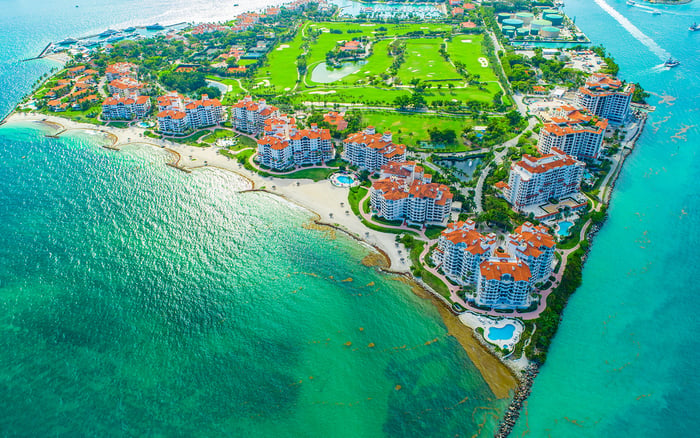
Key Biscayne and Fisher Island are often discussed as neighboring expressions of Miami privacy, but the more useful comparison is not simply which is more exclusive. It is how each address asks a household to function. One leans toward family island practicality, with a residential rhythm that can feel easier in daily life. The other emphasizes maximum arrival control, privacy, and a more deliberately separated way of moving through the day.
For a buyer with children, visiting relatives, household staff, advisors, trainers, drivers, and frequent entertaining, the distinction matters. The question is not whether one island is better. It is whether the household wants life to feel open, flexible, and familiar, or composed, curated, and highly controlled from the first point of arrival.
A search may begin with Key Biscayne or Fisher Island as simple location labels. In practice, those labels often reveal a deeper preference about access, spontaneity, routine, and the degree to which home should operate as a private world.
Key Biscayne tends to appeal to buyers who want the emotional reward of island living without making every movement feel ceremonial. For families, practicality is not a compromise. It is the luxury of frictionless days: school-year routines, recurring guests, children’s activities, wellness appointments, errands, and the unglamorous but essential mechanics of a full household.
That is why the Key Biscayne conversation frequently begins with lifestyle cadence. Does the family want an island address that still feels usable on a Tuesday morning? Can grandparents visit without the arrival itself becoming an event? Will teenagers, tutors, friends, and service providers fit naturally into the pattern of the home? These are not secondary questions. They are the architecture of ownership.
For condominium-oriented buyers, Oceana Key Biscayne is often evaluated within that broader desire for a polished but livable island base. The appeal is less about announcing arrival and more about creating a refined environment that can support full-time use, extended seasonal stays, and family continuity.
Key Biscayne also suits buyers who prefer privacy without total separation. The distinction is subtle but important. Some owners want discretion, yet still value a familiar local pattern around meals, sports, school schedules, and casual social life. For them, the most valuable amenity may be the ability to live beautifully without over-managing every transition.
Fisher Island speaks to a different instinct. Here, the attraction is not simply privacy, but the discipline of controlled arrival. For certain buyers, that control is the point. The home is not just a residence. It is a protected sequence: approach, entry, reception, movement, and retreat.
This is especially compelling for principals whose lives involve visibility, sensitive meetings, staff coordination, or a preference for a more contained social environment. The best Fisher Island fit is often a buyer who wants fewer unplanned encounters and a more intentional relationship between public life and private residence.
Projects such as Palazzo del Sol and Palazzo della Luna belong in this discussion because their names have become part of the way buyers frame Fisher Island living. Palazzo del Sol Fisher Island and Palazzo della Luna Fisher Island are not merely address references in buyer conversations. They signal a desire for an environment where arrival, privacy, and hospitality are treated as part of the residential experience.
For buyers considering single-residence scale or estate-like intent, The Links Estates at Fisher Island adds another dimension to the conversation. It reflects the buyer who is not only choosing a building or home, but a way of controlling household boundaries. In the same island vocabulary, The Residences at Six Fisher Island may appeal to those who want a more contemporary residential lens while remaining aligned with the privacy-first mindset.
The most effective way to compare the two islands is to separate family logistics from privacy logistics. Family logistics ask: How many people need to come and go? How often do children host friends? Are there rotating caregivers, chefs, drivers, tutors, or trainers? Does the household travel often, or does it need a stable weekday pattern?
Privacy logistics ask a different set of questions: Who should be able to approach the residence? How visible should daily movement be? How much separation does the owner want between home life and the city? Does convenience mean speed, or does it mean control?
A Key Biscayne buyer may accept a somewhat more permeable rhythm if it makes the household feel relaxed and functional. A Fisher Island buyer may accept more formality if it preserves privacy and emotional quiet. Both are luxury positions. They simply define luxury differently.
The Gated-community question is often misunderstood. It is not only about security. At the high end, it is about choreography: who is received, where they are received, and how the household maintains its sense of order.
For some families, too much choreography can make everyday life feel heavy. For others, that same structure is precisely what protects the quality of life they are buying. The right answer depends on temperament. A family that enjoys frequent informal hosting may prefer a setting that feels easier for guests and children. A principal who prizes discretion may prefer an environment where every arrival is filtered through a more controlled sequence.
This is why buyers should resist choosing on prestige alone. Prestige is visible from the outside. Residential fit is felt from the inside, after the third school run, the tenth dinner guest, the recurring staff change, and the first season of extended family visits.
Before touring, the household should write down its non-negotiables. Not the marketing language, but the operating realities. How often will the residence be occupied? Is it a primary home, seasonal base, or legacy property? Are children central to the decision? Will staff be full-time, part-time, or on call? Does the owner want guests to arrive easily, or only with intention?
Then consider emotional tone. Key Biscayne may feel more natural to buyers who want refined island living with a family-forward rhythm. Fisher Island may feel more persuasive to buyers who want the residence to function as a private enclave with a strong sense of threshold.
The best purchase is the one that reduces friction for the life the buyer actually leads. In that sense, the comparison is not about compromise. It is about alignment.
Is Key Biscayne better for families? It can suit buyers who prioritize a practical island rhythm and household flexibility. The right fit depends on school routines, guests, staff, and daily movement.
Is Fisher Island more private? Fisher Island is commonly chosen by buyers who place a premium on controlled arrival and separation. That privacy-oriented mindset is central to its appeal.
Which island is better for a primary residence? Either can work as a primary residence if the operating style fits. Key Biscayne may feel easier for daily family use, while Fisher Island may feel more controlled.
Which option is better for a seasonal home? Seasonal buyers should focus on arrival, guest access, staff coordination, and how often the home will be used. The better choice is the one that stays effortless.
Should I choose by building first or island first? Start with the island lifestyle, then evaluate buildings or residences. A beautiful property in the wrong operating environment can become inconvenient.
Are project names important in this comparison? Yes, because projects often express the lifestyle language of each island. They help buyers understand whether the setting feels practical, private, or both.
What matters most for households with staff? Predictable access, service flow, parking or arrival coordination, and privacy expectations matter. These details should be tested before making an offer.
Can a family outgrow Fisher Island privacy? Some families may find highly controlled living less spontaneous as children grow. Others value the structure more as household complexity increases.
Can Key Biscayne still feel private? Yes, privacy is not limited to maximum control. Many buyers define privacy as comfort, discretion, and enough separation without making life feel rigid.
What is the simplest way to choose? Ask whether your household values ease of daily circulation or control of every arrival more. That answer usually clarifies the island decision.
For a discreet conversation and a curated building-by-building shortlist, connect with MILLION.
If branded residences are on your mind — as a home or as an allocation — we would be glad to share what we are seeing, privately.
Begin a quiet conversation