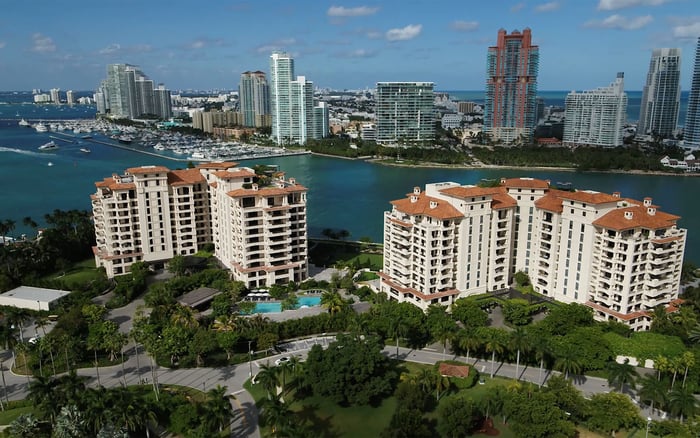
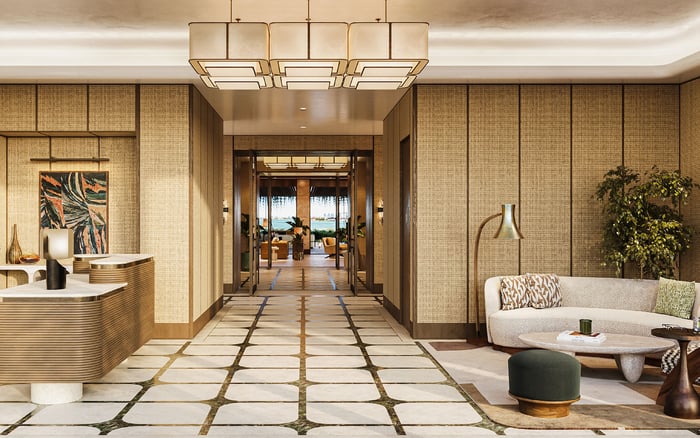
For affluent families choosing between Key Biscayne and Fisher Island, the real distinction is not prestige but operating style. Key Biscayne delivers easier daily movement, public-school access, and more spontaneous hosting. Fisher Island offers a tighter privacy envelope, more controlled access, and a resident-only rhythm that rewards households willing to plan around transfers and off-island schooling.
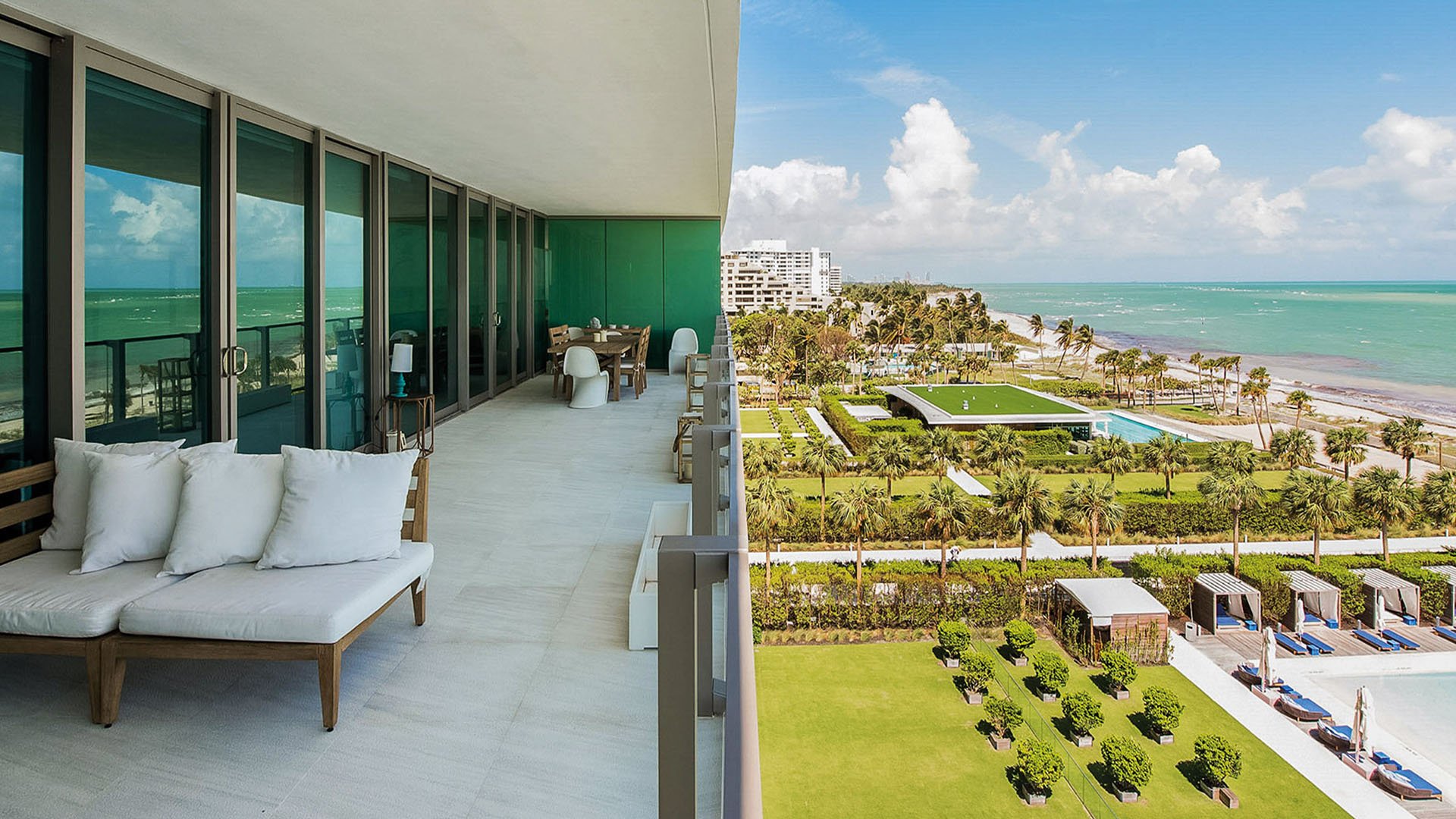
In the upper tier of South Florida real estate, Key Biscayne and Fisher Island can appear similar at a glance. Both offer water, prestige, and a palpable sense of remove from mainland intensity. Yet for families, the decision is rarely about scenery alone. It comes down to how a household actually moves through the week: school mornings, grandparents arriving for long weekends, tutors coming in, staff timing, and whether privacy is best expressed as quiet insulation or tightly controlled access.
That is where the distinction sharpens. Key Biscayne functions as an incorporated village with public roads and municipal governance. Fisher Island operates as a private island community with resident-focused access and a more deliberately controlled perimeter. One is easier. The other is more sealed.
For buyers weighing both, the smartest lens is not which address feels more exclusive in the abstract. It is which one better matches the cadence of family life you intend to lead.
If seclusion is the first priority, Fisher Island makes the stronger case. Access is tied to private-island transportation and resident-controlled entry procedures, creating a higher threshold between residents and the outside world. That structure is central to its appeal. Families who value a highly protected environment, limited outsider presence, and resident-exclusive amenities will usually find Fisher Island better aligned with that objective.
This is also why homes such as The Links Estates at Fisher Island and The Residences at Six Fisher Island resonate with ultra-private buyers. The draw is not only the architecture or finish level. It is the island framework itself.
Key Biscayne, by contrast, feels insulated rather than sealed. It is calm, affluent, and coastal, but it remains publicly connected through the Rickenbacker Causeway. Its beaches and parks are more public-facing, which means the village offers less absolute seclusion than Fisher Island while still feeling far removed from much of Miami.
For many families, that distinction is not a drawback. It is the appeal. Key Biscayne preserves a polished residential atmosphere without requiring every arrival, errand, or social plan to be managed around island transfer logistics.
For households with children, schooling often settles the issue faster than aesthetics. Key Biscayne families have access to Miami-Dade County public schools and can also pursue private-school options across greater Miami. That public-school fallback matters, even for buyers who expect to choose private education. It gives the household optionality, especially when a child’s needs change or commuting priorities shift.
Private-school families in either location often look at institutions such as Gulliver, Ransom Everglades, and St. Andrew’s. But the experience of reaching those schools differs. On Key Biscayne, daily departures still fit within ordinary road-based life. On Fisher Island, the absence of an on-site school means families typically rely on off-island private schooling, tutoring, or homeschooling arrangements, all layered onto the island’s transfer system.
This is why Key Biscayne often wins the schooling conversation for full-time family use. It is not that the school brands are entirely different. It is that the logistics are lighter. Morning routines, extracurricular coordination, and backup plans all tend to be easier when the home functions within a normal village road network.
Buyers looking at family-oriented waterfront living often make similar comparisons elsewhere in the market. On Key Biscayne, Oceana Key Biscayne speaks to those who want a polished oceanfront address without sacrificing practical connectivity. In nearby urban neighborhoods, buildings such as Arbor Coconut Grove also appeal to school-focused families who value access and day-to-day fluidity.
Luxury buyers sometimes underestimate how much guest logistics shape the enjoyment of a home. In reality, the difference is immediate.
On Key Biscayne, visitors can generally drive or use rideshare directly to a residence without separate island transfer coordination. That makes holiday weekends, dinner plans, family visits, and vendor access materially simpler. It also tends to reduce friction for nannies, house managers, fitness instructors, and part-time staff. A family that entertains often, or regularly hosts visiting relatives, usually feels this advantage within the first month of ownership.
Fisher Island requires more planning. Guest visits depend on private-island transportation and controlled entry procedures. For some owners, that is precisely the luxury. It filters spontaneity and protects privacy. For others, especially those with active children and a high volume of weekend visitors, it can become a meaningful operational consideration.
This is the central trade-off. Key Biscayne is better suited to spontaneous hosting and everyday movement. Fisher Island is better suited to families willing to trade convenience for a tighter layer of control.
Pricing broadly follows these realities. Fisher Island generally sits at the ultra-luxury end of the market, with a premium tied closely to exclusivity, private amenities, and controlled access.
Key Biscayne is also expensive by any rational measure. But compared with Fisher Island, buyers are typically paying for a different proposition: prestige, water adjacency, and a refined family setting with easier mobility.
That is why some buyers who could afford either still choose Key Biscayne. They are not trading down. They are choosing a more usable pattern of life.
This same distinction appears across South Florida’s upper echelon. A buyer drawn to a more private island setting may also compare residences such as Palazzo del Sol Fisher Island before deciding how much convenience they are willing to trade for seclusion.
Key Biscayne is usually the stronger fit for families who want:
Easier daily school commuting
A public-school option in reserve
Smoother guest arrivals
Simpler staff and vendor access
A residential setting that still feels socially and geographically connected
Fisher Island is usually the stronger fit for families who want:
Maximum practical seclusion
Controlled entry as part of the value proposition
Resident-exclusive surroundings
A household comfortable with planned arrivals and departures
Privacy that outranks convenience in the decision hierarchy
Neither choice is universally superior. They solve different problems. Key Biscayne is the elegant answer for families who live actively and host naturally. Fisher Island is the rarer answer for families who want the home itself to function as a filter.
If your family’s luxury is defined by ease, flexibility, and the ability to move through school, sport, guest, and staff schedules without friction, Key Biscayne is the more intelligent buy. It offers prestige with practicality, and for many full-time households that is the more durable form of value.
If your family’s luxury is defined by controlled access, a more private perimeter, and a willingness to organize daily life around that privilege, Fisher Island stands apart. It is the choice for buyers who do not mind planning because privacy is non-negotiable.
In shorthand: Key Biscayne is easier to live in. Fisher Island is harder to penetrate.
Is Fisher Island more private than Key Biscayne? Yes. Its resident-controlled access and private transportation framework create a more secluded environment than Key Biscayne’s public-road village setting.
Is Key Biscayne better for school-age children? For many families, yes. Public-school access and easier off-island commuting make day-to-day school logistics simpler.
Are there schools on Fisher Island? Not in the provided information. Families there generally rely on off-island private schools, tutoring, or homeschooling arrangements.
Can families in both places consider the same private schools? Yes. Families in either location may evaluate similar private-school options across greater Miami.
Which location is easier for hosting guests? Key Biscayne. Visitors can typically arrive by car or rideshare without separate island transfer planning.
Which community is better for maximum seclusion? Fisher Island. Its controlled entry and resident-only orientation are central to its appeal.
Is Key Biscayne still private by Miami standards? Yes. It feels notably insulated, though not as perimeter-controlled as Fisher Island.
Why is Fisher Island typically positioned at a higher price level? Its premium is closely tied to exclusivity, private amenities, and controlled access.
Does Key Biscayne offer better flexibility for staff and vendors? Yes. Its normal road access tends to make routine service arrivals more straightforward.
Which should a full-time family choose? Usually Key Biscayne for ease, and Fisher Island for privacy-first living. The right answer depends on whether convenience or seclusion matters more.
If you'd like a private walkthrough and a curated shortlist, connect with MILLION.
If branded residences are on your mind — as a home or as an allocation — we would be glad to share what we are seeing, privately.
Begin a quiet conversation