A buyer-focused comparison of two distinct luxury propositions in Miami: Kempinski Residences Miami Design District offers design-led, highly walkable urban living, while Four Seasons Residences Coconut Grove centers on privacy, greenery, and a more boutique waterfront rhythm.
In Miami, prestige is no longer defined by a single formula. For some buyers, luxury means stepping directly into galleries, fashion houses, destination dining, and a neighborhood that carries energy from morning coffee through evening cocktails. For others, it means tree canopy, a marina atmosphere, private terraces, and a home that feels removed from the city's louder tempo. That contrast is precisely what makes Kempinski Residences Miami Design District and Four Seasons Residences Coconut Grove such compelling counterparts.
Both are branded luxury residences, both promise service-rich ownership, and both are tailored to discerning buyers who expect hospitality standards at home. Yet they answer different questions. Kempinski is for the buyer drawn to culture-forward urban living in a dense, design-centric district. Four Seasons is for the buyer who prefers a more residential atmosphere shaped by greenery, water views, and a quieter sense of arrival.
This comparison is less about which address is objectively better and more about which setting reflects the way one intends to live.
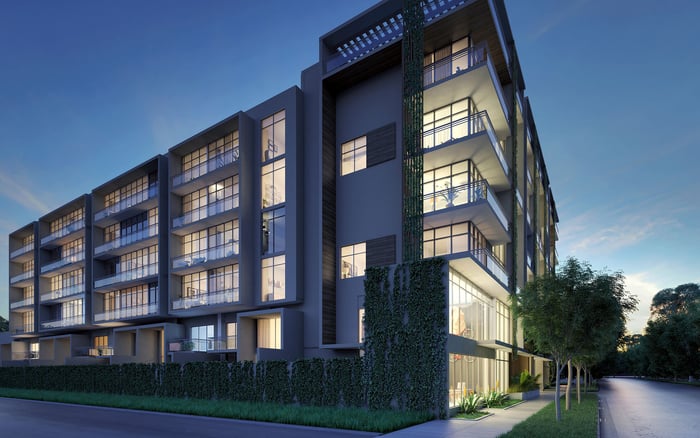
Kempinski stands in Miami's Design District, an environment defined by galleries, showrooms, acclaimed restaurants, and luxury retail. The appeal is not simply proximity to amenities. It is the ability to move through daily life on foot while remaining immersed in architecture, fashion, art, and public-facing design. The district's mixed-use character creates a more urban, layered, and contemporary setting than many other prestige enclaves in South Florida.
That context matters. A residence here is part of the street experience, not detached from it. Buyers who already respond to places such as 888 Brickell by Dolce & Gabbana or Casa Bella by B&B Italia Downtown Miami will recognize the appeal of a home that feels interwoven with design and cultural programming.
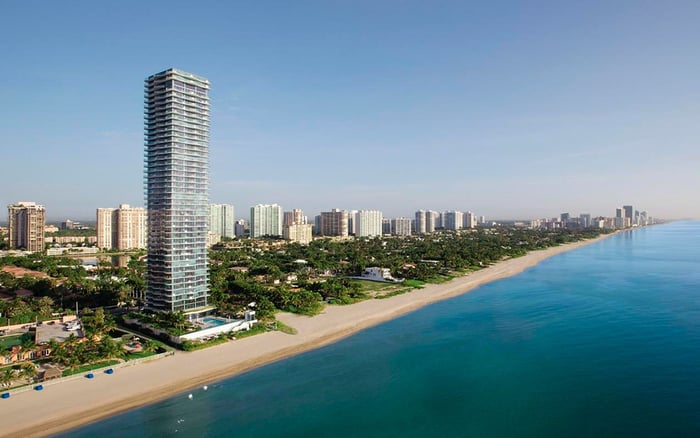
Coconut Grove offers nearly the inverse proposition. The neighborhood is known for mature tree canopy, village character, marinas, and a waterfront identity that feels established rather than newly assembled. Even at the upper end of the market, the area generally reads as lower-rise and less dense than the urban core. That has a direct effect on daily experience: quieter streets, softer edges, and a more residential rhythm.
For buyers who appreciate the Grove's layered calm, projects such as Arbor Coconut Grove and Vita at Grove Isle illustrate the same broader preference for privacy, greenery, and a more intimate relationship to the bay.
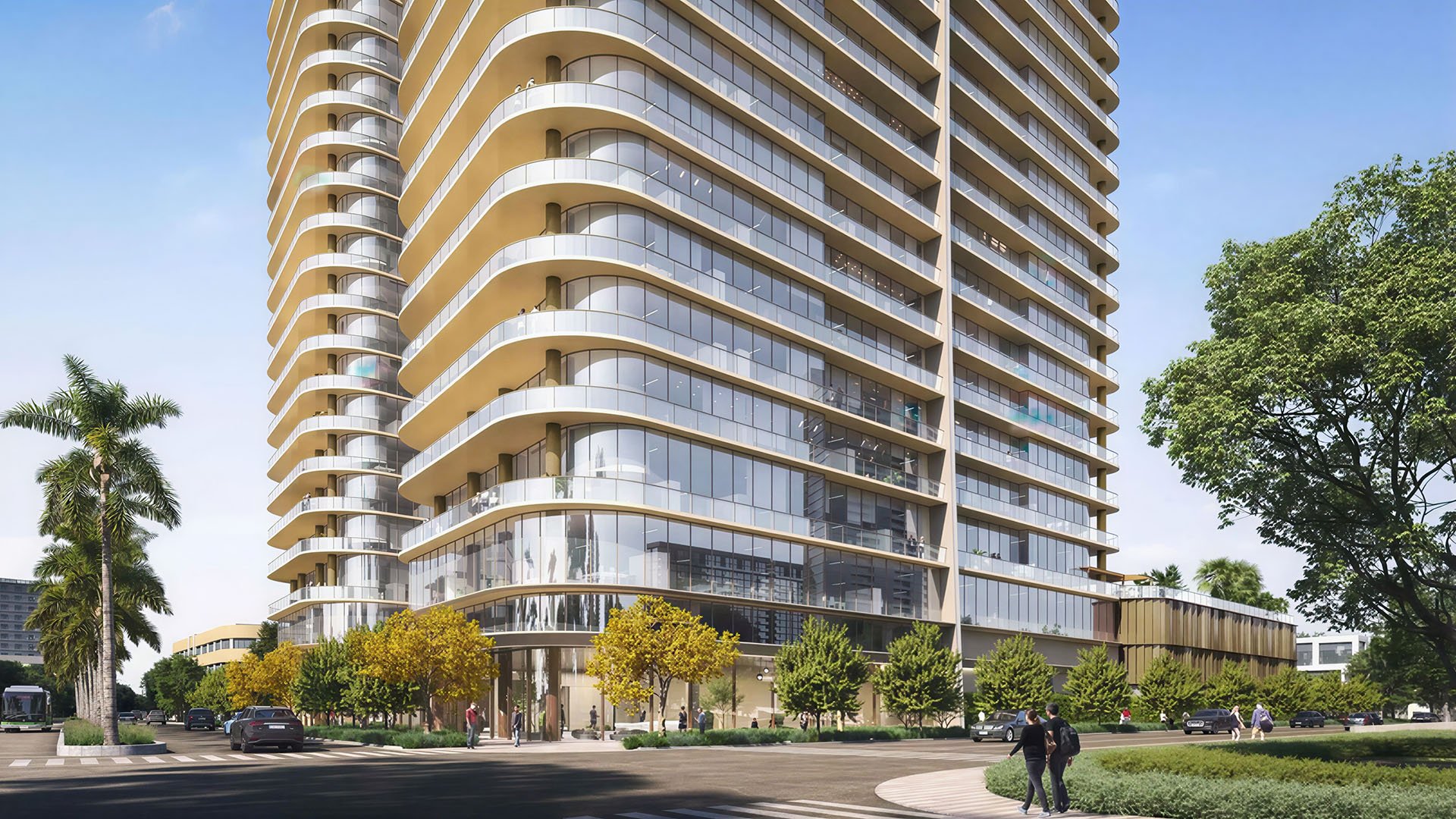
Kempinski brings a distinct form of international hospitality cachet. The project has been presented as the Swiss brand's first U.S. residential offering, developed by Terra and Natura Investments, with architecture by Herzog & de Meuron. That combination places the residence in a design-led conversation. It suggests a buyer who values authorship, concept, and a building that participates in the public realm rather than simply screening itself off from it.
The design emphasizes transparency, natural light, and a stronger visual connection to the surrounding district. Ground-level gallery and retail components reinforce the idea that this is not simply a private tower with amenities tucked inside. It is intended to contribute to the cultural life of the neighborhood.
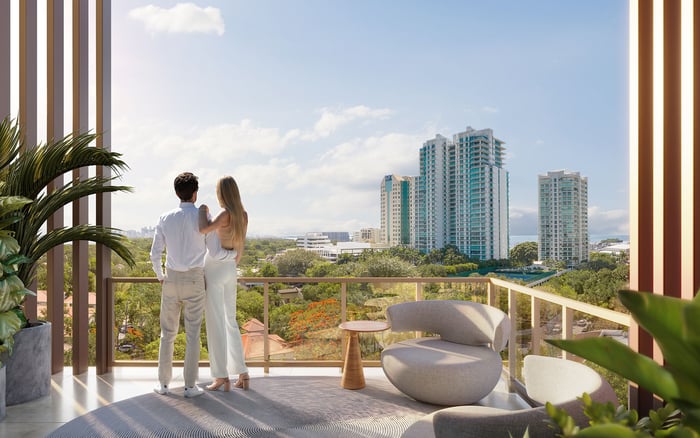
Four Seasons Residences Coconut Grove, developed by Related Group, belongs to the Four Seasons Private Residences collection and carries a different sensibility. Here, the branding signals consistency of service and a highly polished residential experience, but the tone is more sheltered than theatrical. Water views, private terraces, and a quieter, more residential luxury feel sit at the center of the offering.
This difference in scale is also meaningful. Kempinski is the larger project, with about 156 residences. Four Seasons Coconut Grove, at about 67 residences, reads as more boutique. In practical terms, that smaller inventory can translate into greater scarcity and a more private internal atmosphere, while Kempinski offers a broader expression of urban branded living.
On paper, the two projects share much of what luxury buyers now consider baseline: concierge, housekeeping, pool, spa, fitness, and hospitality-driven service. In practice, the emphasis differs.
At Kempinski, the amenity story feels tied to the energy of the district. Dining, wine-oriented spaces, wellness components, and public-facing cultural integration suggest a residence designed for buyers who enjoy movement, social connection, and a seamless transition between private space and neighborhood life. The building's hospitality profile is part of its appeal, but so is its permeability.
At Four Seasons Coconut Grove, the amenities are framed around retreat. Concierge and housekeeping remain central, yet the broader lifestyle leans toward waterfront dining, restorative wellness, and leisure shaped by a calmer residential setting. It is the kind of environment where the value lies not only in service, but in a slower pace and greater separation from the city.
That distinction can feel subtle during a tour, but decisive after closing. One residence extends you into Miami. The other pulls you back from it.
Publicly disclosed pricing indicates a meaningful difference in entry point. Kempinski residences have been reported from above $2 million, with penthouses above $5 million. Four Seasons Residences Coconut Grove has been presented from around $4 million. Those figures should be read as directional rather than absolute, especially as sponsor inventory and resales evolve, but the spread remains informative.
Kempinski's lower reported threshold suggests a comparatively more accessible entry into branded luxury for buyers prioritizing design, walkability, and neighborhood immersion. Four Seasons Coconut Grove's higher pricing aligns with its smaller scale, waterfront orientation, and the premium many buyers place on seclusion within an established residential enclave.
This does not make one the value play and the other the splurge. Instead, it highlights two distinct luxury equations. At Kempinski, buyers are paying for cultural adjacency, architectural authorship, and a vibrant urban setting. At Four Seasons, buyers are paying for scarcity, privacy, and a lifestyle shaped by water and greenery.
Kempinski Residences Miami Design District is best suited to the collector, aesthete, or globally minded city buyer who wants daily walkability and enjoys being surrounded by visual culture. It fits owners who view luxury not only as comfort, but as access: access to design, restaurants, showrooms, and a neighborhood with momentum. For some, that is a highly contemporary expression of Miami living.
Four Seasons Residences Coconut Grove will likely resonate more with the buyer who wants a home that feels composed, residential, and quietly protected. It is especially persuasive for those drawn to marina life, mature landscaping, water views, and a setting that prioritizes discretion over visibility. In Coconut Grove, luxury feels less performative and more personal.
In truth, both properties reflect how the South Florida market has become more nuanced. Buyers are not choosing only between price points or amenity decks. They are choosing between identities: a residence that plugs them into the city's cultural circuitry, or one that gives them a serene vantage point just outside it.
That is the real comparison, and the answer depends entirely on the life one wants the home to hold.
Is Kempinski Residences Miami Design District more urban than Four Seasons Residences Coconut Grove? Yes. Kempinski is positioned within the Design District's walkable mix of galleries, retail, and dining, while Four Seasons in Coconut Grove is more residential and secluded.
Which project is more boutique in scale? Four Seasons Residences Coconut Grove is the smaller project at about 67 residences, compared with roughly 156 at Kempinski.
Which one appears to have the lower entry price? Reported pricing places Kempinski above $2 million and Four Seasons Coconut Grove around $4 million, making Kempinski the lower entry point based on disclosed figures.
Does Kempinski emphasize architecture and public-facing design? Yes. Its design language centers on transparency, natural light, and cultural integration at ground level.
Does Four Seasons Coconut Grove focus more on privacy? Yes. The project emphasizes water views, private terraces, and a calmer residential atmosphere.
Are both residences service-driven? Yes. Both highlight concierge and housekeeping alongside wellness and leisure amenities.
Who is Kempinski best for? It best suits buyers who want art, dining, retail, and daily walkability at their doorstep in a high-energy district.
Who is Four Seasons Coconut Grove best for? It is better aligned with buyers seeking greenery, privacy, boating-adjacent living, and an established neighborhood feel.
Is the Design District denser than Coconut Grove? Yes. The Design District has a more mixed-use, urban character, while Coconut Grove generally remains lower-rise and less dense.
What is the biggest difference between the two? Lifestyle. Kempinski offers culture-forward city living, while Four Seasons Residences Coconut Grove centers on leafy privacy and waterfront calm.
For a discreet conversation and a curated building-by-building shortlist, connect with MILLION Luxury.
If branded residences are on your mind — as a home or as an allocation — we would be glad to share what we are seeing, privately.
Begin a quiet conversation