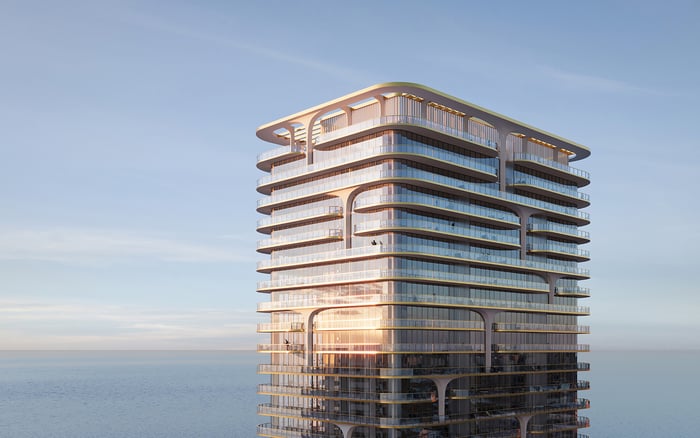
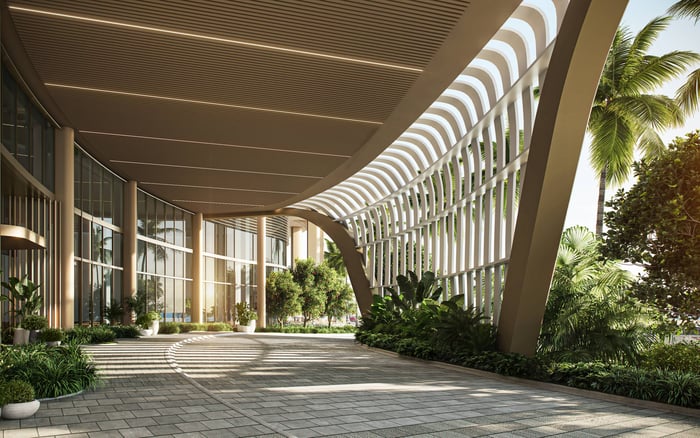
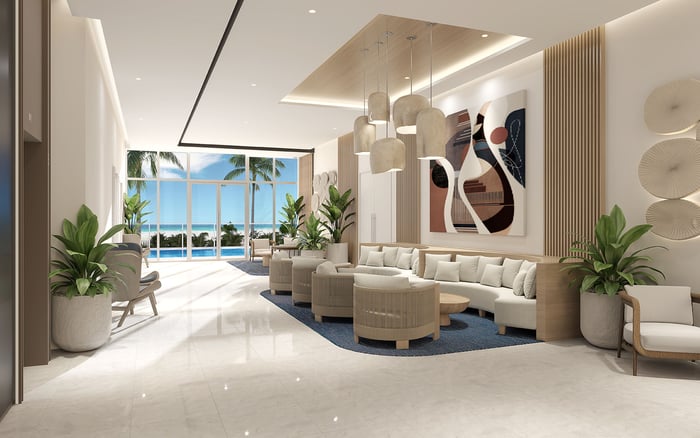
Waldorf Astoria Residences Pompano Beach is framed less as a seasonal escape than as a branded oceanfront condominium calibrated for year-round South Florida life, pairing hospitality-level service with the practical expectations of a primary residence.
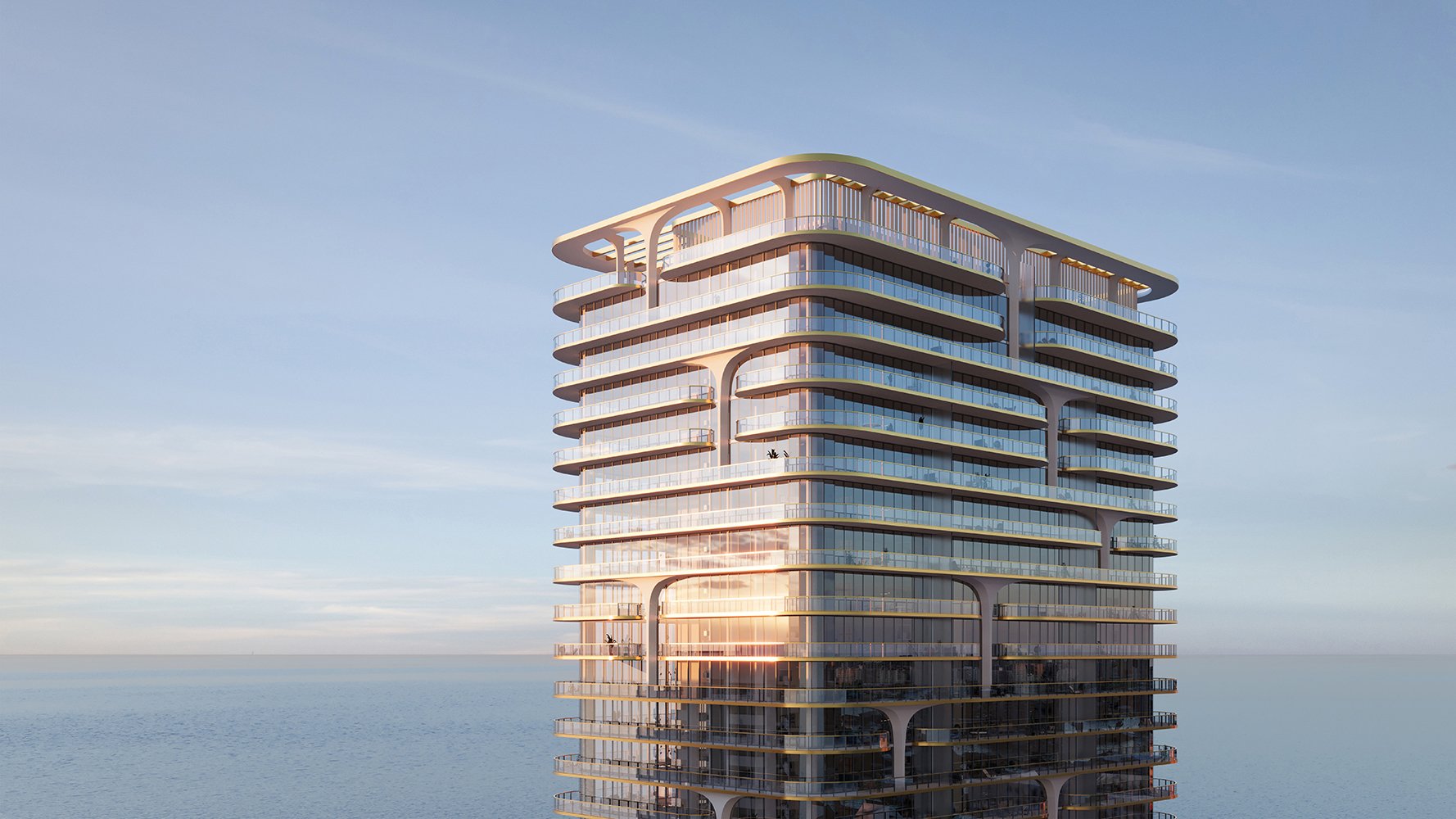
Waldorf Astoria Residences Pompano Beach enters the market with a premise that is both glamorous and practical: an oceanfront luxury condominium that draws from the language of five-star hospitality while being framed for people who intend to live in South Florida for more than a long weekend.
That distinction matters. In South Florida, the difference between a beautiful second-home apartment and a credible primary residence is not merely aesthetic. It is measured in how a building handles parking, storage, work-from-home routines, school access, storm preparation, privacy and the quiet reliability of daily operations. The appeal of Waldorf Astoria Residences Pompano Beach is that it is presented as a hybrid: a branded oceanfront condominium, a luxury service platform and a practical full-time home.
The Waldorf Astoria name gives the project an immediate luxury-hospitality identity. But the more important question for serious buyers is not whether the brand is recognizable. It is whether the building can translate that brand into a livable residential rhythm.
Pompano Beach has become an increasingly visible part of the broader conversation around prime Broward coastal living. The beachfront district is being framed as a maturing urban coastal area, positioned between the established luxury corridors of Fort Lauderdale, Hillsboro Beach and Boca Raton. For buyers who want oceanfront presence without defaulting to the most familiar addresses, that shift is significant.
The competitive set nearby is already expanding. Buyers looking specifically at Pompano Beach may compare Waldorf Astoria with The Ritz-Carlton Residences® Pompano Beach, Armani Casa Residences Pompano Beach or W Pompano Beach Hotel & Residences, each of which reinforces how the city is being read by luxury buyers. Farther north, Rosewood Residences Hillsboro Beach speaks to the same coastal migration of branded and highly serviced residential concepts.
For search-minded buyers, terms such as Pompano Beach, Broward and oceanfront are more than labels. They describe a location strategy: stay close to the beach, remain within a residential coastal environment and still access the wider South Florida lifestyle without committing to a denser urban core.
One of the most meaningful positioning points is that Waldorf Astoria Residences Pompano Beach is described as a relatively low-density, all-residential tower rather than a hotel-condo or a mixed hotel-residential project. That distinction changes the everyday experience.
In a mixed hospitality environment, residents may share a sense of place with transient guests, event traffic and hotel operations. In an all-residential setting, the expectation is different. Privacy, predictability and domestic calm become central to the value proposition. For a buyer considering full-time occupancy, that can be as important as the view.
This is where the project’s pitch becomes more nuanced. It is not simply promising resort-style amenities. It is positioning those amenities within a building intended to function as home. That means the service program must support daily living rather than overwhelm it. The best branded residences understand this balance: the experience should feel elevated, not theatrical.
The amenity and service program at Waldorf Astoria Residences Pompano Beach is positioned closer to a five-star resort experience than a conventional condominium. Yet the article-worthy point is not luxury service in the abstract. South Florida has no shortage of polished amenity decks and attended lobbies. The more valuable test is whether service makes a resident’s everyday life easier.
For a full-time owner, convenience compounds. A building that handles arrival, maintenance coordination, hospitality touchpoints and resident requests with precision becomes part of the household infrastructure. Over time, that matters as much as the first impression.
The Waldorf Astoria association gives the project a service vocabulary from the start. The stronger residential interpretation is that owners can expect the prestige of a recognized luxury brand while still seeking the privacy and reliability of a primary home. That is the balance many affluent South Florida buyers now prize: hotel-level attentiveness without the feeling of living in a hotel.
The full-time-living positioning is especially important because the project is being discussed through practical buyer-use considerations. Parking, storage, work-from-home functionality, school access and hurricane resilience all belong in the same conversation as finishes and ocean views.
Parking affects daily convenience, household logistics and guest flow. Storage matters because a primary residence must absorb sports equipment, seasonal items, luggage, documents and the less photogenic parts of real life. Work-from-home functionality is no longer a bonus, particularly for owners who divide professional life across multiple markets but spend most of the year in South Florida.
School access also signals that the building is not being treated only as a seasonal retreat. Even for buyers without school-age children, that consideration suggests a residential ecosystem rather than a purely vacation-oriented address. Hurricane resilience, meanwhile, is a sober and necessary part of coastal ownership. In South Florida, confidence in a building’s preparedness is part of luxury.
This is where second-home and new-construction buyers often ask different questions. A second-home owner may focus on lock-and-leave ease. A full-time owner asks whether the residence can handle weekdays, storms, deliveries, guests, work calls, family routines and quiet evenings with equal competence.
The rise of branded residences in South Florida has made buyers more sophisticated. A name alone is not enough. The strongest projects use branding to clarify expectations: service quality, design discipline, resident experience and long-term identity.
Waldorf Astoria Residences Pompano Beach appears to sit within that evolution. It is not being framed only as a trophy address, but as a best-in-class residential tower with hotel-level service. That is a subtle but meaningful difference. The buyer is not just acquiring association with a global hospitality name. The buyer is evaluating whether the brand can make day-to-day coastal life feel smoother, more private and more carefully managed.
For Pompano Beach, that is also a statement of market maturity. The presence of multiple luxury residential concepts suggests that the city’s beachfront is being considered with greater seriousness by buyers who may once have limited their search to Miami Beach, Fort Lauderdale, Sunny Isles or Palm Beach County.
Because not every project detail should be assumed, buyers should keep the evaluation grounded in use. The most important questions are practical: how the building separates residential life from service operations, how storage is handled, how parking works, how well residences support remote work and how hurricane planning is communicated.
For many affluent buyers, the emotional decision happens quickly. The oceanfront setting, the brand and the promise of service are easy to understand. The disciplined decision takes longer. It requires asking how the building will feel on a Tuesday morning, during peak season, after a long flight, during a school week or ahead of a major storm.
That is the real luxury test. A property may impress at arrival, but a full-time residence must keep earning trust. Waldorf Astoria Residences Pompano Beach is most compelling when viewed through that lens: not as a fantasy of resort life, but as a serviced coastal home designed to support the full calendar.
What is Waldorf Astoria Residences Pompano Beach? It is positioned as an oceanfront luxury condominium in Pompano Beach branded under the Waldorf Astoria name.
Is it being presented as a full-time residence or a vacation property? The project is being framed for year-round South Florida living, not only seasonal or second-home use.
How does the Waldorf Astoria brand matter for owners? The brand gives the residences a luxury-hospitality identity and supports the building’s service-oriented positioning.
Is the project described as a hotel-condo? It is described as a relatively low-density, all-residential tower rather than a hotel-condo or mixed hotel-residential project.
What practical issues should full-time buyers consider? Parking, storage, work-from-home functionality, school access and hurricane resilience are central considerations.
Why is Pompano Beach relevant for luxury buyers? Its beachfront district is being framed as a maturing urban coastal area within Broward’s luxury residential landscape.
How does the service program compare with a conventional condominium? The amenity and service program is positioned closer to a five-star resort experience than a standard condominium.
Who is the likely buyer for this type of residence? The positioning speaks to affluent buyers who want hotel-level service without losing the function of a primary home.
What makes the all-residential format important? It supports privacy, consistency and a more residential atmosphere than a building shared with hotel operations.
What is the core appeal of the project? Its appeal is the combination of branded prestige, oceanfront living, private residential function and service reliability.
If you'd like a private walkthrough and a curated shortlist, connect with MILLION.
If branded residences are on your mind — as a home or as an allocation — we would be glad to share what we are seeing, privately.
Begin a quiet conversation