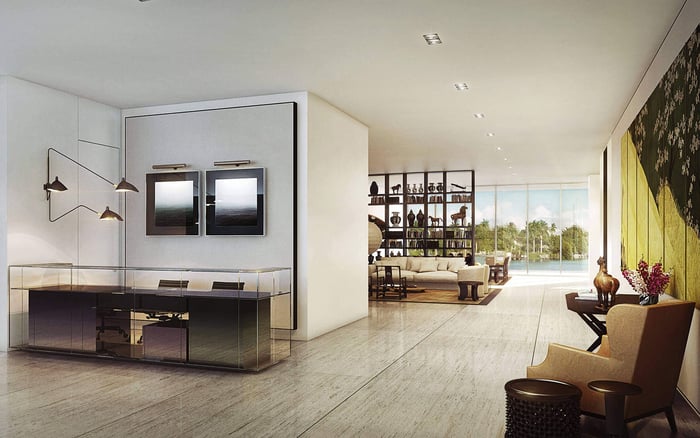
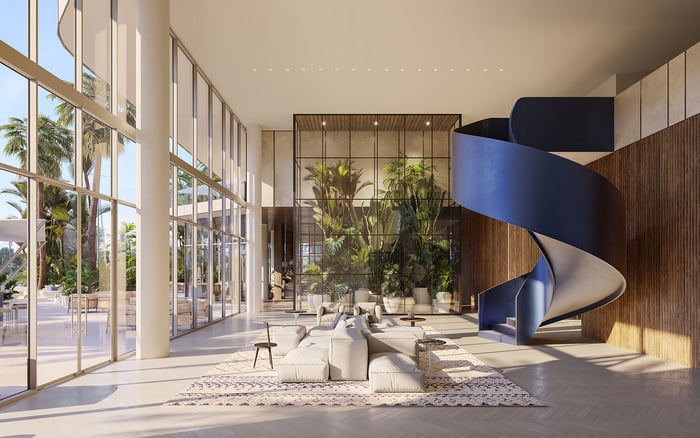
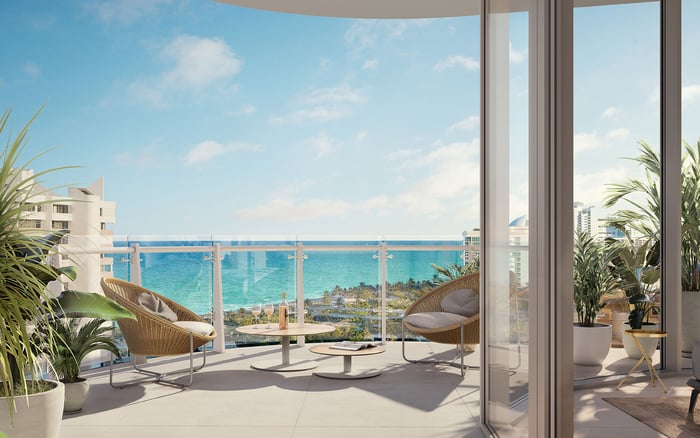
A buyer-focused look at how The Ritz-Carlton Residences® Miami Beach frames private entertaining through branded service, controlled access, low-rise design, gardens, and marina living without the transient traffic of a hotel-style model.
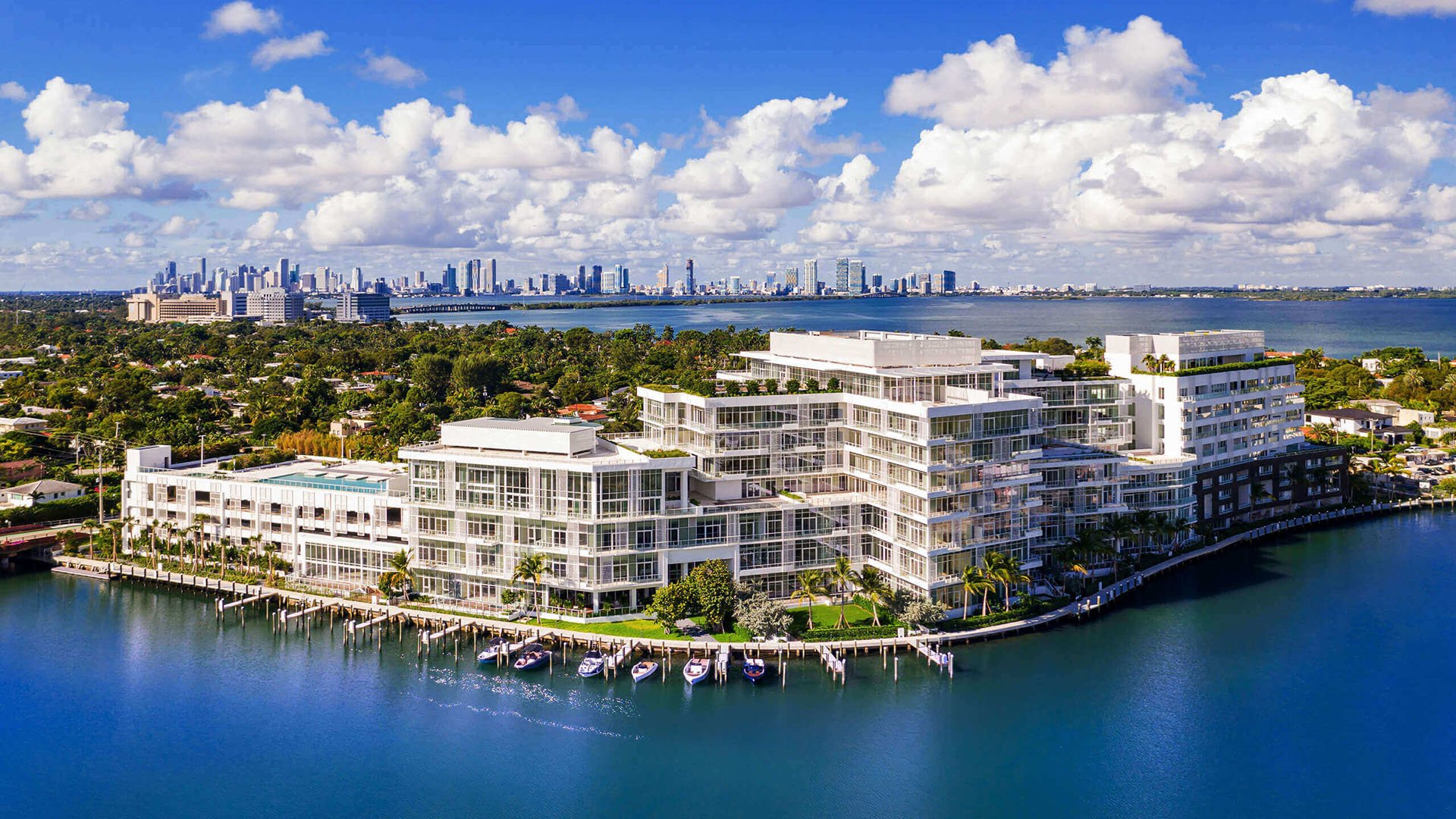
For certain Miami Beach buyers, the most valuable amenity is not spectacle. It is control. The ability to receive family, friends, business associates, and visiting guests with polish, while preserving the feeling of being at home, has become a defining test of ultra-luxury residential design. The Ritz-Carlton Residences® Miami Beach speaks directly to that priority.
Its proposition is deliberately residential. This is a branded luxury condominium enclave, not a hotel-integrated resort organized around nightly arrivals and departures. The distinction matters. A hotel-condo may deliver recognizable service, but it often asks owners to share daily circulation with transient guests moving through lobbies, elevators, pools, and amenity areas. Here, “no hotel keys” is central to the identity: the property is not designed around hotel-room churn.
That difference shapes the experience of entertaining. The support is hospitality-grade, but the environment remains controlled. Guests arrive as invited guests of residents, not as part of a broader public hospitality ecosystem. For owners who entertain often, that can be the difference between a polished evening and a public one.
In a residential-only branded setting, the service culture is applied to long-term resident satisfaction rather than occupancy, conferences, banquet revenue, or public-facing food and beverage activity. The point is not to remove service. It is to direct it toward the needs of owners and residents.
That orientation has practical consequences. Staff priorities can be shaped around familiar households, recurring preferences, and the rhythm of private life. Visitors are understood as owners, vetted long-term occupants, or invited guests. The resulting atmosphere is less about resort throughput and more about continuity.
This is why The Ritz-Carlton Residences® Miami Beach belongs in the broader conversation around Miami Beach and branded residences, but with an important caveat. It uses Ritz-Carlton service culture as a residential management overlay, not as a transient hotel operation. Buyers comparing the area’s private-residence landscape may also consider Shore Club Private Collections Miami Beach and The Perigon Miami Beach, yet the question at this address is especially precise: how much service can a property provide while still feeling quietly residential?
The best private entertaining buildings do more than provide rooms. They choreograph access. At The Ritz-Carlton Residences® Miami Beach, the entertainment value comes from hospitality support delivered inside a controlled private-residence environment. An owner can host with confidence without placing guests in a setting that feels shared with a public hotel population.
The absence of public-facing food and beverage outlets reinforces this quieter character. There is less reason for outside traffic to move through the property simply to dine, drink, attend an event, or experience the brand. The result is not austerity. It is discretion.
For a host, this can matter at every scale. A family lunch, a business conversation, a holiday dinner, or a weekend gathering all benefit from support that is present but not theatrical. Service should anticipate, not intrude. The setting should elevate the occasion without making the owner feel as if the home has become an annex of a resort.
The property’s physical language also supports the privacy argument. Rather than present itself as a conventional resort tower, the residence is characterized by low-rise massing. That choice helps create a more enclave-like identity, with architecture and design associated with Piero Lissoni and collaborators.
The gardens are not simply decorative. Lush landscaping softens the residential setting and frames a more private atmosphere. In a city where many high-end addresses compete through height, skyline visibility, and dramatic arrivals, this property leans into the quieter value of enclosure and proportion.
The private marina adds another layer to the lifestyle proposition. Marina access is not merely an amenity label for this audience. It can shape how residents come and go, how weekends are structured, and how guests experience arrival and departure. For buyers whose Miami life is connected to the water, the combination of service, privacy, gardens, and a private marina gives the property a distinct residential rhythm.
This is where design, architecture, and lifestyle intersect. The design supports the service model, and the service model supports how the home is used. Nearby branded-residence comparisons may include The Ritz-Carlton Residences® Pompano Beach and The Ritz-Carlton Residences® South Beach, while the Miami Beach property’s low-rise, garden-framed, marina-oriented setting gives it a particular tone: refined, supported, and intentionally less exposed.
The clearest buyer for this address is not necessarily the person seeking maximum resort energy. It is the owner who values service deeply, but does not want the social visibility that can accompany hotel-style operations.
That owner may host often. They may welcome family from out of town, business associates after a meeting, or friends arriving by water. They may expect assistance with the details that make private entertaining feel effortless. But they also want to know that the building’s priorities are residential, not public.
This is a subtle luxury. It is less about announcing abundance and more about removing friction. When a property avoids shared hotel guest circulation and focuses staff attention on owners and residents, privacy becomes part of the service itself.
For buyers evaluating this type of residence, the core question is not simply, “What amenities exist?” It is, “Who are those amenities serving?” At The Ritz-Carlton Residences® Miami Beach, the answer is framed around owners and residents first.
That is the central distinction from a hotel-condo model. A hotel-integrated residence can offer energy, brand visibility, and a steady pulse of activity. A residential-only branded property offers a different luxury: service without the sense that one is sharing a home environment with nightly guests.
For entertaining, that difference can be decisive. The best host environments are generous without being porous. They allow people in, but only within a structure the owner controls. This property’s blend of Ritz-Carlton service standards, low-rise residential planning, lush gardens, private marina, and absence of hotel keys creates a clear thesis: hospitality support can exist without hotel-style intrusion.
Is The Ritz-Carlton Residences® Miami Beach a hotel-condo? No. It is positioned as a branded luxury residential property rather than a hotel-integrated resort.
What does “no hotel keys” mean for residents? It means the property is not designed around transient nightly hotel guests, which helps reduce public-style traffic.
Why is this important for entertaining? Owners can host in a supported environment while preserving the privacy and control of a residential enclave.
Does the property still offer Ritz-Carlton service culture? Yes. The service model applies Ritz-Carlton standards to residential management and owner-focused support.
How does it differ from hotel-integrated branded residences? It is positioned to avoid shared guest circulation through everyday residential spaces such as lobbies, pools, elevators, and amenities.
Is there public-facing food and beverage activity? The absence of public-facing food and beverage outlets is part of its quieter residential character.
Who is the ideal buyer for this property? It suits owners who entertain family, friends, and business guests but prefer discretion over resort-style exposure.
What role does the private marina play? The private marina is part of the property’s lifestyle proposition and reinforces its waterfront residential appeal.
How does the design support privacy? Low-rise massing and lush gardens help create a more private, enclave-like setting.
Is this mainly about amenities or privacy? The core value is privacy plus service, with entertaining support delivered in a controlled residential environment.
For a confidential assessment and a building-by-building shortlist, connect with MILLION.
If branded residences are on your mind — as a home or as an allocation — we would be glad to share what we are seeing, privately.
Begin a quiet conversation