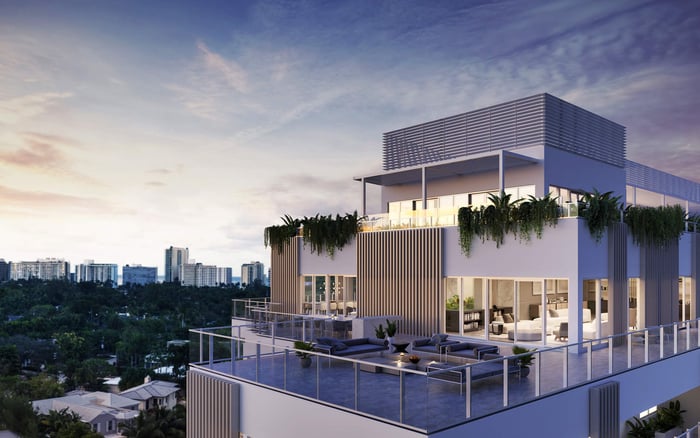
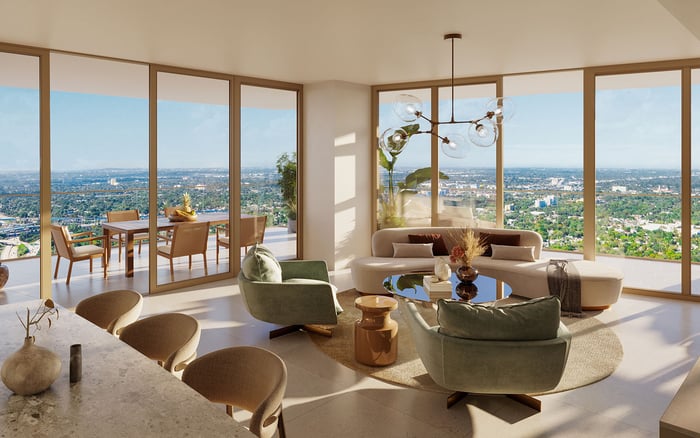
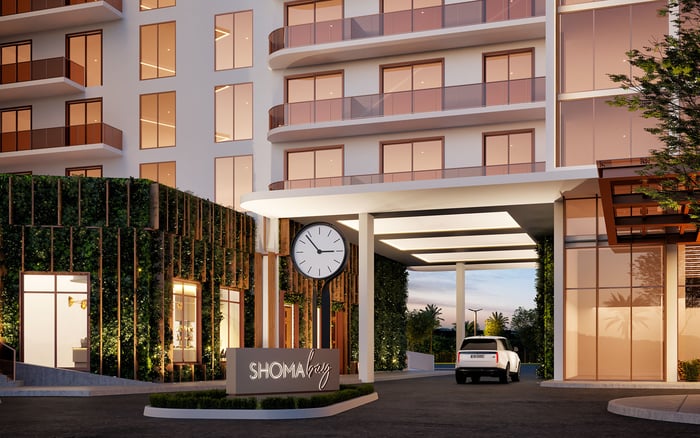
A discreet buyer’s guide to evaluating Shoma Bay North Bay Village through the lens of bayfront light, reflected glare, floor height, orientation and future view security.
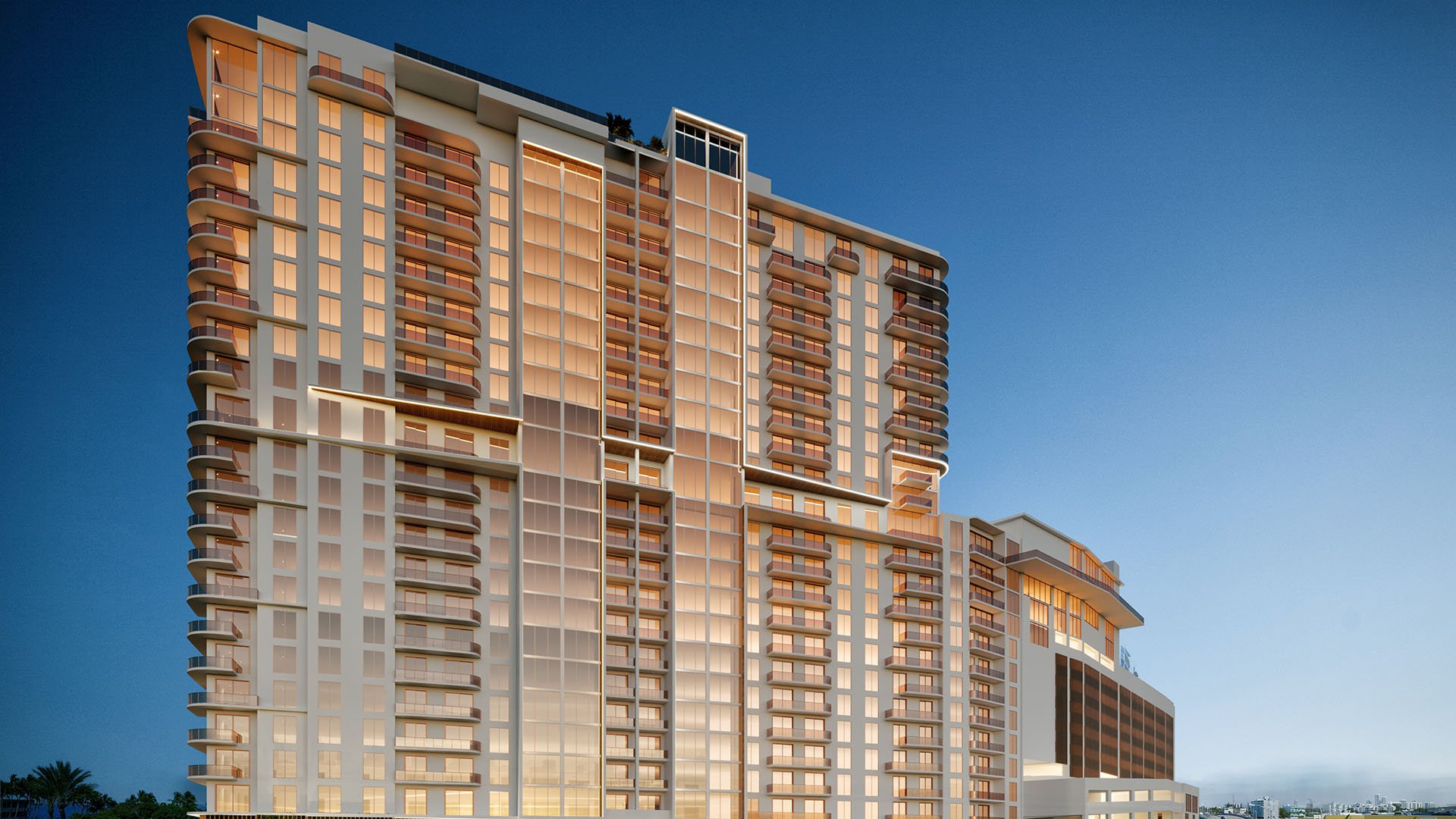
At Shoma Bay North Bay Village, the appeal begins with a simple proposition: life at the edge of Biscayne Bay, framed by water, sky, and the in-between geography that places North Bay Village between mainland Miami and Miami Beach. For luxury buyers, that setting is not merely scenic. It is technical. It shapes how natural light enters a residence, how reflection behaves across glass and balcony edges, and how a view should be valued over time.
The mistake is treating every “water view” as equal. In a compact island market, the more disciplined question is not simply whether a unit faces the bay. It is which stack, which line, which floor, which orientation, and which future view corridor are being considered. Shoma Bay sits in a location where open-water surroundings can intensify brightness and reflection. That can be beautiful, especially when the interior plan and finish palette are selected with care. It can also require more thoughtful due diligence than a buyer might apply in an inland urban condo.
This is why the Shoma Bay conversation belongs in the same serious category as other waterfront evaluations across South Florida, from Continuum Club & Residences North Bay Village to bay-facing residences in Bay Harbor Islands and Edgewater. The view is only the beginning. The lived experience depends on how light performs hour by hour.
Bayfront light changes throughout the day. Morning, midday, and late-day sun can affect Shoma Bay residences differently depending on facade direction and exposure across the water. A residence that feels softly luminous during one showing may be far brighter at another hour. A line that seems calm under cloud cover may read differently on a clear, high-glare afternoon.
For a serious buyer, this calls for multiple viewing windows whenever possible. Morning visits can reveal how early light enters bedrooms, kitchens, and primary living areas. Midday visits can show whether brightness is diffused or direct. Late-day visits may expose deeper reflections, particularly across water-facing glass and balcony surfaces.
This does not make brightness a defect. In many cases, luminous interiors are central to South Florida luxury. The point is calibration. Buyers should understand whether a residence offers soft bayfront light, dramatic sun exposure, or a stronger glare profile that will influence daily routines, furniture placement, and interior material choices.
Water-facing glass and balcony conditions can create glare scenarios that differ from inland towers. Biscayne Bay acts as a reflective surface, especially when the sun is high or angled across the water. At Shoma Bay, that means buyers should evaluate not only the view outward, but also the light returning into the residence.
Practical mitigation is usually design-driven. Window treatments can soften direct brightness. Interior materials matter: highly polished floors, reflective stone, and glossy cabinetry can amplify glare, while warmer woods, textured fabrics, and matte finishes can make strong light feel more composed. Balcony shading and furniture placement can also influence comfort.
This is where lifestyle becomes relevant. A collector who wants sun-protected wall space may assess glare differently from a seasonal owner who prizes dramatic light over the bay. A full-time resident working from home may care deeply about screen visibility and afternoon brightness. A second-home buyer may prioritize the visual theater of water and sky.
Comparable questions appear in other water-oriented markets. At La Baia North Bay Harbor Islands and Onda Bay Harbor, for example, buyers often think carefully about how water exposure, glass, and orientation shape daily use. Shoma Bay belongs to that same broader due-diligence vocabulary.
Few phrases in luxury real estate are more seductive than “protected view.” At Shoma Bay, buyers should separate present reality from enforceable certainty. A current open view can be compelling, but that does not automatically mean it is legally protected. In many cases, protected-view language functions more like a marketing concept than a guarantee unless supported by recorded rights, applicable restrictions, or official development constraints.
North Bay Village’s compact island geography makes this especially important. Nearby redevelopment can matter materially to future view corridors. A buyer evaluating a bay-facing residence should review adjacent and nearby parcels, zoning potential, approved projects, and likely future build-out around the tower. The question is not whether change will occur in a specific way. The question is whether the purchase decision has accounted for reasonable future-view uncertainty.
High floors may reduce some obstruction risk, but they do not erase the issue. A higher residence can preserve broader sky and water exposure, yet future massing, angles, and nearby development still deserve scrutiny. High floors should be analyzed as one factor among several, not as a substitute for parcel-level due diligence.
The luxury buyer’s shorthand is often too broad: bay view, water view, skyline view. At Shoma Bay, those categories should be broken down. One line may capture open water while also receiving intense reflected light. Another may offer a more angled view with gentler brightness. A lower floor may feel more connected to the water, while a higher floor may deliver a wider panorama.
The most intelligent comparison is residence by residence. Ask how the view sits from the primary bedroom, not only the living room. Stand at the kitchen island and assess whether glare crosses the work surface. Step onto the balcony and look not just straight ahead, but laterally toward neighboring parcels. Consider whether the most attractive view is permanent, probable, or simply present today.
This same level of precision is useful across Miami’s waterfront corridors. A buyer comparing Shoma Bay with Aria Reserve Miami, for instance, should not rely on a generic water-view label. Waterfront living is local, directional, and highly sensitive to context.
Begin with orientation. Determine how the specific residence receives morning, midday, and late-day sun. Then test the interiors in person when possible. Brightness that feels glamorous for five minutes can feel very different during a full afternoon of use.
Next, study the view corridor. Identify what is open water, what is across another parcel, and what depends on current surrounding conditions. Do not assume that a current view is protected unless the protection is specific and enforceable.
Then consider the design response. Window treatments, interior finish selections, balcony furnishings, and lighting design can all help make a bright bayfront residence more comfortable. Finally, review nearby development context with care. North Bay Village is small enough that surrounding parcels can have outsized influence on long-term value perception.
The most refined Shoma Bay purchase is not the one that simply has the boldest view. It is the one where waterfront exposure, water-view quality, light behavior, and future-view assumptions have all been examined with equal seriousness.
Is glare a reason to avoid Shoma Bay? Not necessarily. Glare is a bayfront due-diligence topic, and many buyers value the brightness when it is matched with the right orientation and interiors.
Should I tour a Shoma Bay residence more than once? Yes. Morning, midday, and late-day visits can reveal very different light conditions across the same line.
Are all water views at Shoma Bay equal? No. Stack, line, floor height, and orientation can create materially different view and brightness experiences.
Does a high floor guarantee a protected view? No. High floors may reduce some obstruction concerns, but they do not automatically remove future-view uncertainty.
What does “protected view” mean for a buyer? It should mean more than marketing language. Buyers should look for enforceable support before treating a view as protected.
Why does North Bay Village require special view due diligence? Its compact island geography means nearby redevelopment can meaningfully affect future view corridors.
Can interior design reduce reflected glare? Yes. Window treatments, matte finishes, textured materials, and thoughtful furniture placement can help soften strong light.
Is a balcony important in evaluating glare? Yes. Balcony depth, exposure, and surface reflection can influence how light enters and feels inside the residence.
Should buyers review nearby parcels before purchasing? Yes. Parcel context, zoning potential, approved projects, and likely build-out should all be part of the review.
What is the best way to shortlist comparable options for touring? Start with location fit, delivery status, and daily lifestyle priorities, then compare stacks and elevations to validate views and privacy.
For a tailored shortlist and next-step guidance, connect with MILLION.
If branded residences are on your mind — as a home or as an allocation — we would be glad to share what we are seeing, privately.
Begin a quiet conversation