A discreet look at how Ocean House Surfside uses the idea of private arrival to define privacy, calm, recognition, and everyday value in Surfside’s boutique oceanfront market.
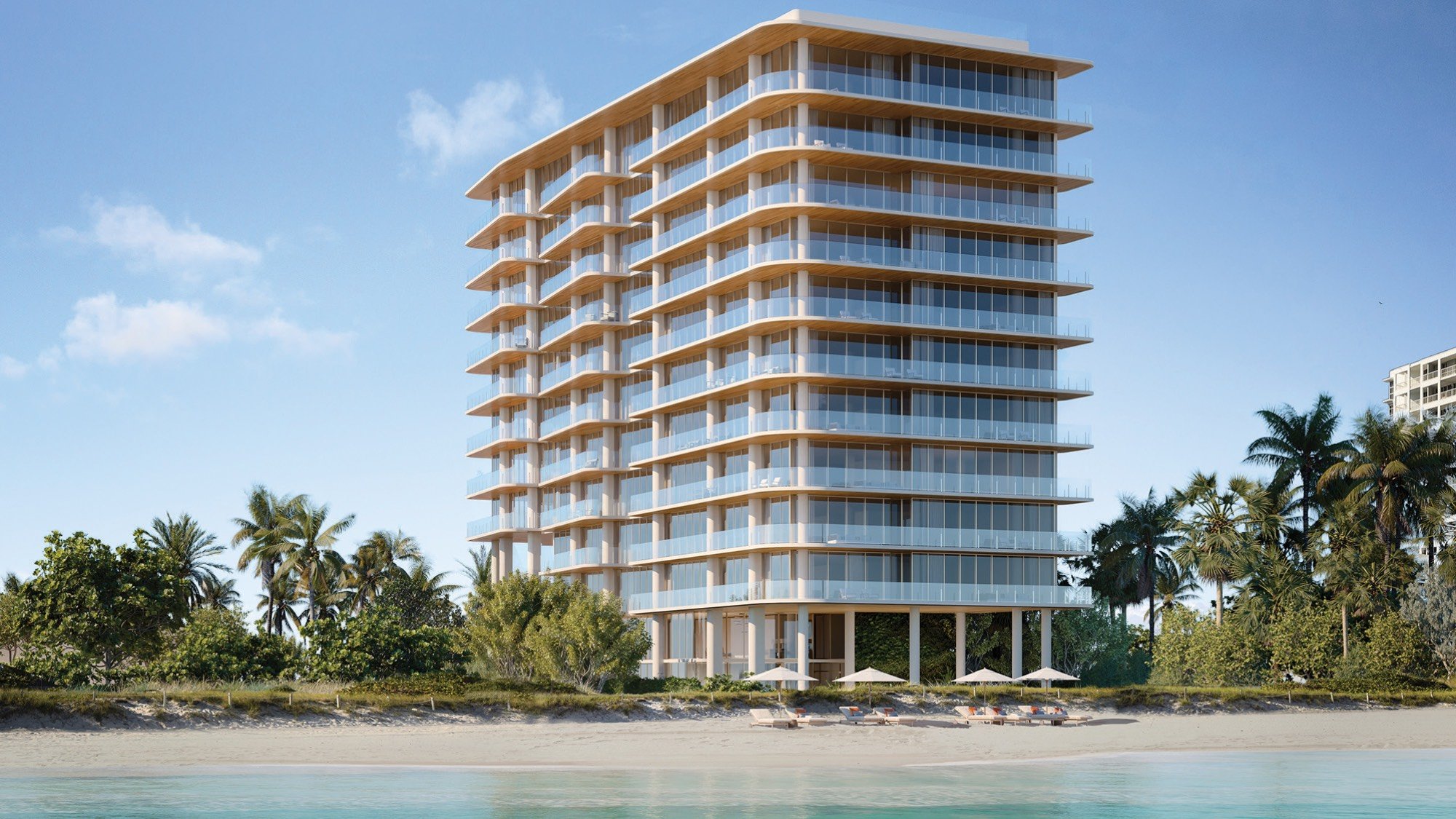
At the highest end of South Florida real estate, the first luxury a resident experiences is not always a view, a finish, or an amenity. It is the way the building receives them. At Ocean House Surfside, private arrival becomes a lens for understanding the entire resident experience, from the moment a vehicle approaches the property to the point at which the owner reaches the residence itself.
That distinction is especially important in Surfside, where the luxury market is defined less by scale than by composure. The neighborhood’s most compelling oceanfront addresses often trade spectacle for discretion. They do not need to announce themselves loudly. Their value is felt in the reduction of friction, the control of access, and the sense that the building is calibrated around a small, highly private audience.
Ocean House Surfside fits within that boutique oceanfront conversation. Rather than reading like a large resort-style condominium, its positioning is best understood through intimacy, privacy, and the refined choreography of daily movement. For ultra-luxury buyers, that choreography can be just as meaningful as the residence behind the door.
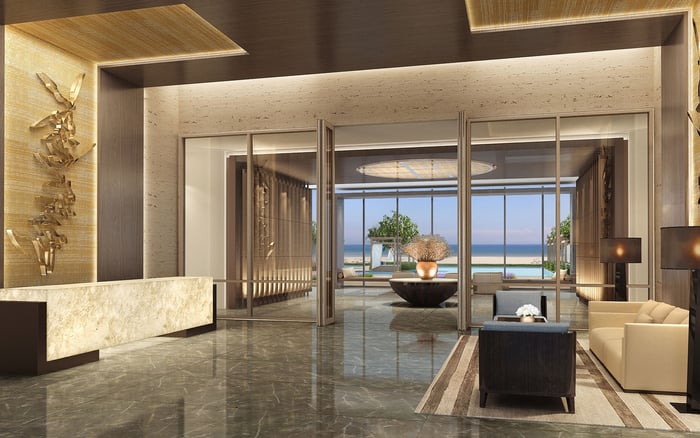
Private arrival is often described too narrowly, as if it were only a driveway, a porte cochere, or a lobby. For Ocean House Surfside, the more precise framing is sequential. Arrival begins with the vehicle approach, continues through drop-off and entry, passes through reception or concierge interaction, moves into vertical circulation, and culminates in the residence.
Each step matters because each step either protects privacy or compromises it. A well-considered arrival experience limits unnecessary exposure to passersby, visitors, service activity, or residents outside one’s immediate daily rhythm. It also creates a psychological shift. The city recedes, the pace slows, and the home begins before the front door.
That emotional separation is one of the strongest arguments for boutique luxury. In larger buildings, arrival can become public theater. The lobby is grand, the room is social, and the experience can feel almost hotel-like. That has its own appeal. But buyers drawn to Ocean House Surfside are more likely to prioritize control, efficiency, and the quiet assurance of being personally recognized.
South Florida has no shortage of dramatic residential entrances. Some are conceived as stages, with expansive public-facing lobbies, branded gestures, and a hospitality sensibility designed to impress guests as much as residents. Ocean House Surfside suggests another luxury language, one based on discretion rather than theatricality.
This does not mean the arrival should feel diminished. The opposite is true. In the ultra-premium market, restraint can be the stronger signal. A calm transition, a controlled threshold, and an intuitive path to the residence communicate that the building is not trying to perform for everyone. It is designed to serve the people who live there.
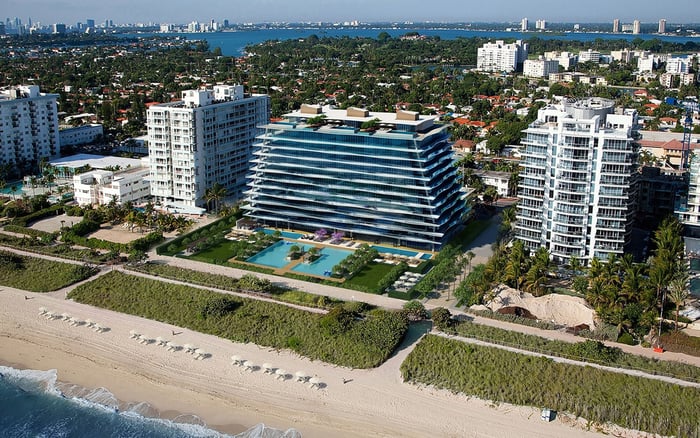
That distinction is central in Surfside. Nearby, projects such as The Delmore Surfside and Fendi Château Residences Surfside also speak to the area’s appetite for oceanfront residential experiences with a more private, collected tone. The common thread is not sameness of architecture or programming. It is the premium placed on residential calm.
The appeal of private arrival is clearest in ordinary moments. Returning from dinner, coming home after travel, receiving family, moving from car to elevator, or passing through the reception area should feel effortless. The fewer the interruptions, the more valuable the experience becomes.
For a resident, this creates a sense of personal continuity. The building recognizes the rhythm of the household. It reduces unwanted encounters. It allows the owner to enter and leave without feeling on display. In luxury real estate, this is not a minor convenience. It is a form of service design.
Ocean House Surfside can therefore be read as a project where the resident experience depends as much on refined everyday touchpoints as on conventional markers such as views, finishes, and amenities. Those markers remain important, but they are expected at this level. What separates one ultra-luxury residence from another is often the subtle quality of movement through the property.
Because public technical detail is limited, the conversation around Ocean House Surfside is best kept at the level of experience rather than unverified infrastructure. The important point is not to speculate about precise driveway layouts, elevator configurations, parking design, or security systems. The important point is to understand why controlled circulation matters.
For ultra-luxury buyers, privacy is not simply about being hidden. It is about predictability. Who sees the resident arrive? How direct is the movement from the threshold to the home? Does the reception experience feel personal or generic? Does the building help separate public life from private life?
This is why arrival can function as a value signal. A residence may have exceptional interiors, but if the path to that residence feels exposed or inefficient, the emotional value is weakened. Conversely, a calm and controlled arrival sequence can make the entire property feel more rare.
In the broader oceanfront market, Eighty Seven Park Surfside and The Surf Club Four Seasons Surfside have helped reinforce the idea that Surfside buyers respond to privacy, setting, and a composed residential atmosphere. Ocean House Surfside belongs to that same buyer conversation, even while its own appeal should be understood on its individual terms.
The most sophisticated residential buildings treat the threshold as part of the home, not as a neutral space between street and residence. That is the deeper significance of private arrival at Ocean House Surfside. The experience is not simply logistical. It is emotional, social, and architectural in the broadest sense.
A resident arriving home should feel a narrowing of the world. The public street gives way to a protected environment. The greeting is calm. The path is legible. The movement upward is controlled. By the time the door opens, the transition has already done its work.
This is why private arrival resonates so strongly in Surfside’s upper tier. The neighborhood offers oceanfront proximity without the constant intensity of larger urban districts. Buyers are not only purchasing square footage or views. They are purchasing the feeling of return, the ability to move through the day with less friction, and the confidence that home remains genuinely private.
For prospective buyers, the key is to evaluate Ocean House Surfside not only by what can be seen inside a residence, but by how the building will feel over hundreds of daily arrivals and departures. The best luxury is often cumulative. It reveals itself in small moments that repeat.
The private-arrival concept suggests a project oriented around discretion, controlled access, efficiency, security, and personal recognition. Those are practical priorities, but they also create atmosphere. A home that receives its owner well changes the way the owner feels before they ever step inside.
That is the quiet strength of Ocean House Surfside. In a market where many developments compete through spectacle, it invites a more nuanced question: how does the building protect the resident’s sense of privacy from the street to the sanctuary?
What is the main appeal of Ocean House Surfside? Ocean House Surfside is positioned around ultra-luxury residential living in Surfside, with privacy and a calm arrival experience central to its appeal.
What does private arrival mean in this context? It refers to the full sequence of coming home, including approach, drop-off, entry, reception, circulation, and arrival at the residence.
Is private arrival only about security? No. Security is part of the appeal, but the larger value is privacy, efficiency, reduced exposure, and a more composed daily experience.
How does Ocean House Surfside differ from resort-style condominiums? It is better understood within Surfside’s boutique oceanfront market, where discretion and residential intimacy matter more than large-scale spectacle.
Why is Surfside attractive to privacy-focused buyers? Surfside offers oceanfront luxury with a quieter residential character than many larger, more public South Florida destinations.
Are exact arrival features publicly detailed? Public information is limited, so the most reliable discussion is experiential rather than focused on unverified driveway, elevator, or security specifics.
Does private arrival affect property value? In the ultra-luxury segment, controlled access and private circulation can be meaningful value signals because they shape daily livability.
Who is the likely buyer for Ocean House Surfside? The likely buyer values privacy, efficiency, recognition, and a refined transition from public surroundings into a private home environment.
How should buyers evaluate the arrival experience? Buyers should consider how exposed, direct, calm, and personal the movement from street to residence feels during ordinary daily use.
Is Ocean House Surfside part of a broader Surfside luxury trend? Yes. It reflects Surfside’s continuing appeal to buyers seeking oceanfront residences with discretion, intimacy, and controlled residential environments.
For a tailored shortlist and next-step guidance, connect with MILLION.
If branded residences are on your mind — as a home or as an allocation — we would be glad to share what we are seeing, privately.
Begin a quiet conversation