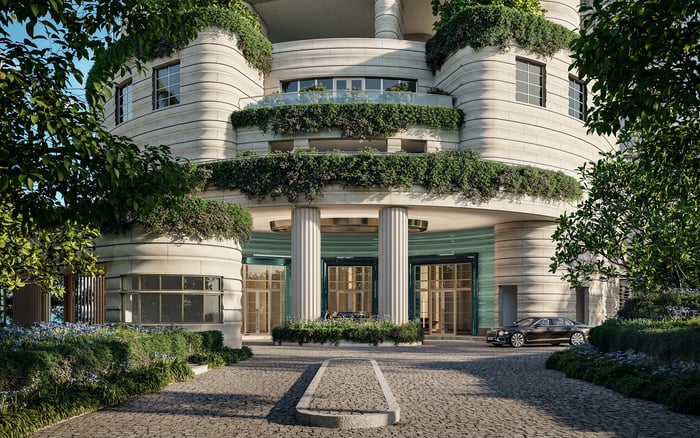
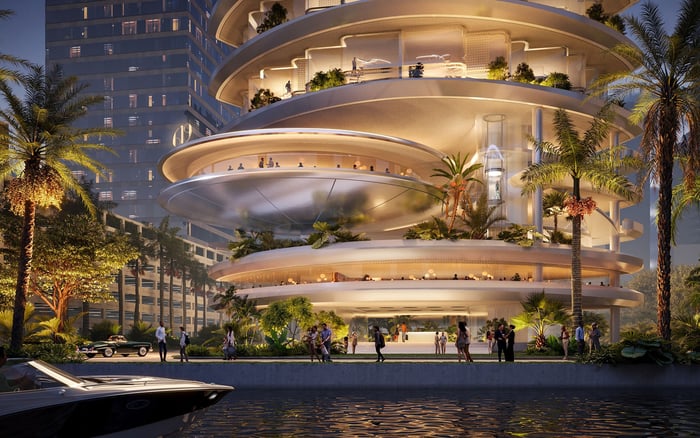
A discreet buyer-focused look at controlled access, arrival privacy, staff protocol, and due diligence questions for Kempinski Residences Miami Design District.
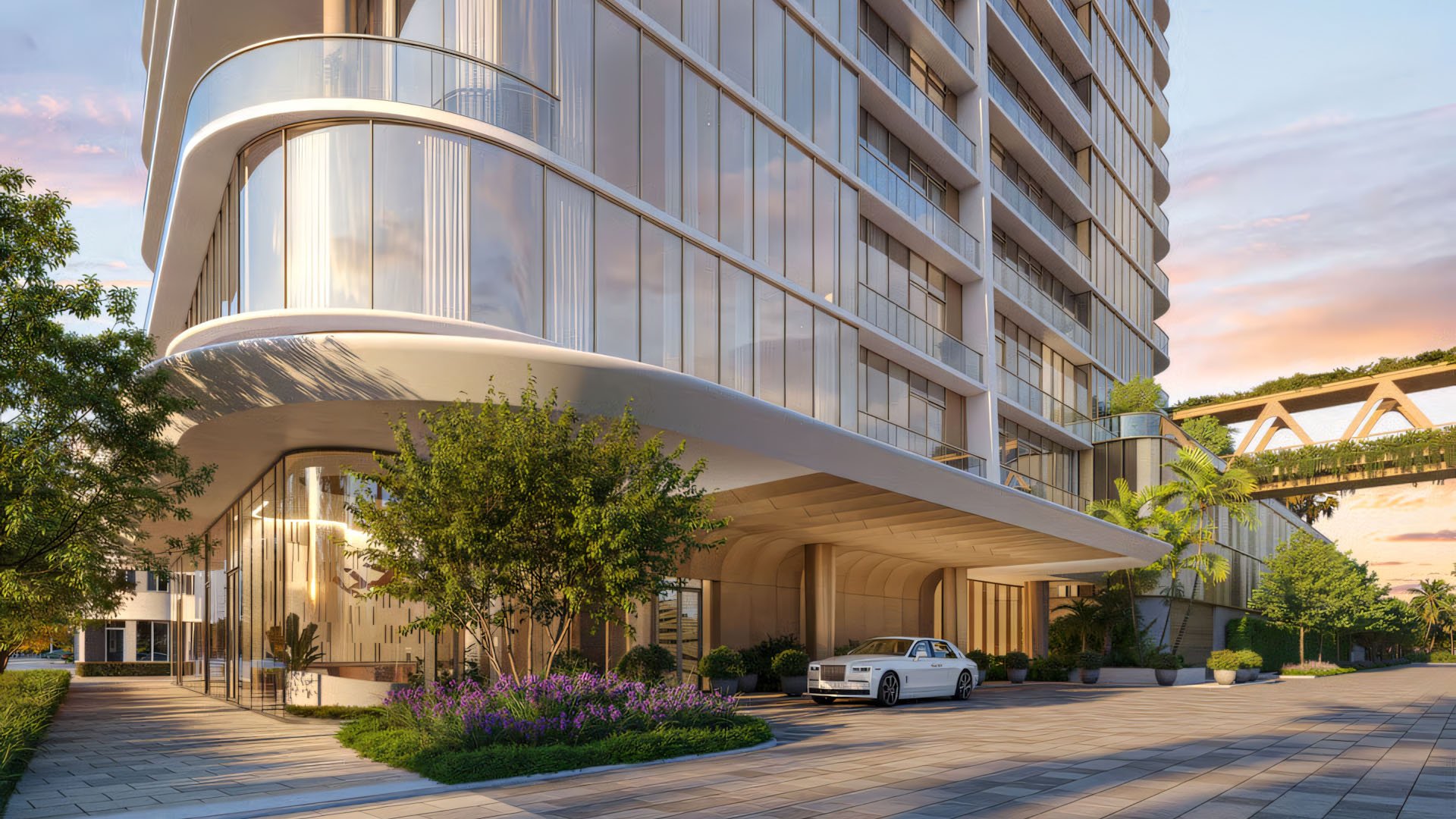
In Miami’s luxury market, security is no longer a back-of-house concern. It is part of the architecture of daily life, particularly for buyers who value privacy as much as finish level. At Kempinski Residences Miami Design District, the essential questions extend beyond views, materials, and brand alignment. They concern how a resident arrives, how guests are received, how service providers circulate, and how quietly the building protects the cadence of private life.
The Design District adds a distinct layer to that conversation. It is public-facing, design-conscious, and closely watched by people attuned to art, fashion, dining, and architecture. For many residents, that is precisely the appeal. The neighborhood offers cultural energy without requiring a beachfront or resort identity. But for a primary residence, pied-a-terre, or discreet seasonal base, that energy makes access control more important, not less.
The best luxury buildings do not make residents feel surveilled. They make residents feel unbothered. The distinction is subtle but meaningful. A truly private residential experience is not defined by visible barriers alone. It is defined by a sequence that feels composed, predictable, and intuitive from the first point of entry to the residence door.
For today’s high-net-worth buyer, security has expanded beyond cameras and personnel. It includes elevator discipline, package management, guest identity protocol, parking movement, service access, digital permissions, and staff training. Buyers are asking whether the building can support privacy during everyday routines, not only during exceptional moments.
That question is especially relevant for collectors, executives, public figures, and families who split time across multiple homes. A residence may be technically secure, but the lived experience depends on how consistently procedures are applied. Does the property distinguish between invited guests, short-notice visitors, domestic staff, wellness providers, drivers, and contractors? Is there a private rhythm for residents who do not want to cross paths with every arrival in the lobby? Are back-of-house routes designed to preserve the calm of primary amenity spaces?
This is why buyers comparing the Design District with other urban luxury addresses often look beyond square footage. In Brickell, for example, projects such as 888 Brickell by Dolce & Gabbana sharpen the conversation around branded living, hospitality tone, and vertical privacy. In each case, the question is less about whether a building has security and more about how security is absorbed into the resident experience.
A private residence starts at the curb. The arrival sequence should be assessed with the same seriousness as floor plan or exposure. Where does a resident pause? How visible is the entry from surrounding streets? Can a driver wait without creating friction? Is the transition from vehicle to reception calm, covered, and legible?
For buyers who entertain, the arrival experience is also a social signal. It should feel polished without feeling theatrical. Guests should be welcomed efficiently, but not casually. Residents should be able to authorize access without turning every evening into a concierge negotiation. The most successful systems feel gracious because they remove uncertainty.
This is where branded residences face a higher standard. The promise of a global hospitality name implies a level of service fluency, but residential privacy requires a different temperament from hotel energy. A great private residence is attentive without being performative. Staff should know when to step forward, when to remain invisible, and when a routine needs to be handled away from public view.
Comparable buyer expectations can be seen across Miami’s new urban luxury corridor. At 619 Residences by Foster + Partners + Nobu Hospitality, the conversation naturally turns to architecture, hospitality, and privacy in a highly connected setting. The lesson for Design District buyers is clear: brand prestige matters only when daily access feels controlled, discreet, and genuinely residential.
Because access systems are often discussed in broad terms, serious buyers should ask direct, practical questions. How are residents, guests, and service providers credentialed? What happens when a vendor arrives unannounced? Are deliveries routed through a dedicated process? Can elevators be programmed to limit unnecessary circulation? How does management handle high-profile guests or events in the neighborhood?
These questions are not adversarial. They are part of intelligent due diligence. In the ultra-prime segment, privacy expectations vary widely. A buyer who wants a lively social building may prioritize one kind of service culture. A buyer seeking a low-profile residence may require a stricter operational framework. The right answer depends on lifestyle, travel schedule, family composition, and tolerance for visibility.
For search clarity, many buyers also compare New-construction, Boutique, Exclusive-area, Investment, Downtown, and Brickell options before narrowing their field. Those categories are imperfect, but they help frame the decision. A Boutique residence may feel intimate, while a larger Downtown or Brickell address may offer a different scale of staffing and amenities. An Investment lens may prioritize liquidity and brand recognition, while an Exclusive-area lens may favor scarcity and daily discretion.
The Design District offers a different form of privacy from Miami Beach, Surfside, or the bayfront. Waterfront privacy often comes from physical separation, view corridors, and a resort-like buffer. Design District privacy is more urban. It depends on entry choreography, vertical circulation, staff professionalism, and the ability to move between cultural life and private residence without friction.
This is why buyers may compare Kempinski Residences Miami Design District with addresses outside the neighborhood. A project such as The Residences at Mandarin Oriental, Miami speaks to a different Miami lifestyle, one shaped by island proximity and established hospitality associations. Meanwhile, Miami Design Residences Midtown Miami keeps the conversation closer to the city’s creative core, where access, walkability, and neighborhood identity become part of the value equation.
Neither model is inherently superior. The right fit depends on whether a buyer wants seclusion from the city or controlled immersion within it. The Design District buyer is often not escaping Miami. They are curating their access to it.
A polished sales presentation can describe security, but a private client should read the building operationally. Look at sightlines. Observe how many decision points exist between arrival and the residence. Ask whether guest access feels elegant or exposed. Consider how staff will handle a busy evening, a family arrival, a private dinner, or a last-minute delivery.
The most valuable residences anticipate these moments before they happen. They make privacy feel like a default setting. They reduce unnecessary encounters. They protect residents from avoidable inconvenience. In a market where luxury is often described through visible amenities, the more meaningful value may be what never interrupts the day.
For Kempinski Residences Miami Design District, the central buyer question is therefore not simply whether the building is secure. It is whether its security culture will feel natural, discreet, and durable over time. In the best residential settings, controlled access is not a feature to be noticed. It is the quiet condition that allows everything else to feel effortless.
Why is controlled access important for Design District residences? The neighborhood’s cultural visibility makes privacy planning especially relevant. Buyers should focus on arrival, guest flow, service access, and elevator protocol.
Does luxury security always mean visible security? No. In the best buildings, security is often felt through calm procedures, trained staff, and reduced friction rather than overt display.
What should buyers ask before purchasing? Ask how residents, guests, vendors, drivers, and deliveries are handled. The answers reveal how private the building may feel day to day.
Is branded residential living automatically more discreet? Not automatically. Brand quality can elevate service expectations, but discretion depends on management culture and operational discipline.
How does Design District privacy differ from waterfront privacy? Waterfront privacy often relies on separation and setting. Design District privacy depends more on choreography, staffing, and controlled movement.
Should buyers visit at different times of day? Yes. Arrival patterns, street activity, and lobby rhythm can feel different during daytime, evening, and event-adjacent periods.
Are service routes important in a luxury residence? Very important. Well-planned service circulation helps preserve the calm of resident areas and reduces unnecessary interaction.
What role does elevator control play? Elevator access can shape privacy by limiting circulation and helping residents move efficiently between entry points, amenities, and homes.
Is this topic relevant for second-home buyers? Yes. Owners who travel frequently often value predictable access control, secure deliveries, and a residence that can operate smoothly in their absence.
What is the most important privacy question to ask? Ask how the building protects daily routine, not just special situations. True discretion is measured in ordinary moments.
For a tailored shortlist and next-step guidance, connect with MILLION.
If branded residences are on your mind — as a home or as an allocation — we would be glad to share what we are seeing, privately.
Begin a quiet conversation