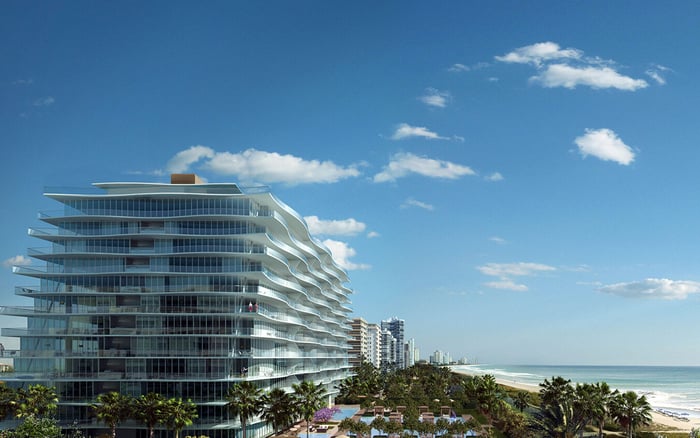
A discreet buyer due-diligence guide to reading Faena House Miami Beach service charges, operating budgets, reserves, assessments, and peer luxury carrying costs.

At Faena House Miami Beach, the essential ownership question is not limited to price, view, terrace depth, or interior finish. It is whether the condominium’s operating structure can support the standard of service, privacy, maintenance, and long-term preservation that an ultra-luxury oceanfront building requires.
That is the proper lens for Faena House Miami Beach. A buyer is not simply acquiring a private residence on the sand. The buyer is entering an ongoing operating-cost ecosystem shaped by staffing, hospitality-style expectations, common-area upkeep, insurance, reserves, and the physical realities of maintaining a high-value building in a marine environment.
For a Faena House Miami Beach purchaser, the language of diligence should include Oceanfront ownership, Beach-access service, Resale discipline, Investment underwriting, and peer context extending from Miami Beach to Surfside. The romance of the building matters, but the budget explains how that romance is sustained.
The first document to request is the current operating budget. The second is the prior-year budget. The comparison is often more revealing than either document alone, because it can separate ordinary expense growth from a one-time increase or a structural reset in the building’s cost base.
Review it line by line. How much is assigned to staffing, amenities, insurance, utilities, maintenance, management, and reserves? Are increases concentrated in a few categories, or spread across the full budget? Is the association absorbing higher costs through monthly assessments, reserve adjustments, or special assessments?
In a building positioned at this level, a low monthly figure is not automatically favorable if it underfunds service or defers maintenance. A higher figure is not automatically problematic if it accurately supports the building’s operating promise. The more sophisticated question is whether the budget is coherent.
Buyers should ask how service charges are calculated. The formula may be tied to unit size, percentage ownership interest, equal allocation, or another method set by the condominium documents. This matters because two residences in the same building can carry different financial obligations depending on the governing structure.
Request the relevant pages of the declaration and budget materials, then verify the formula against the specific residence being considered. For large-format residences, the allocation method can materially affect monthly carrying cost and future exposure to budget increases.
The same discipline applies when comparing Faena House to newer or competing Miami Beach product such as 57 Ocean Miami Beach or The Perigon Miami Beach. The headline monthly number is useful only after the buyer understands which services are included, how costs are allocated, and whether reserves are being handled conservatively.
Ultra-luxury buildings live or disappoint through service. At Faena House, labor and hospitality-style standards are likely central budget drivers to review. Buyers should ask how staffing is structured, which services are delivered in-house, which are handled by vendors, and whether the budget realistically supports the level of attention owners expect.
Security, valet, concierge, pool and beach service, janitorial work, landscaping, management, and mechanical maintenance all deserve careful review. The point is not to reduce every service to a cost-cutting exercise. The point is to understand whether the building’s service culture is stable, properly staffed, and financially sustainable.
Vendor contracts are part of this review. Ask when major contracts renew, whether recent renewals increased materially, and whether any service levels changed. In a refined building, small shifts in staffing or vendor scope can alter the daily experience more than a buyer may expect.
Oceanfront ownership carries a particular maintenance vocabulary. Insurance, façade care, waterproofing, corrosion prevention, storm-readiness, terrace conditions, exterior envelope performance, and mechanical resilience should all be discussed before contract deadlines expire.
A beachfront condominium is exposed to salt air, wind, water, sun, and storm cycles. That does not diminish the appeal. It simply means the building’s long-term budget should be read with the same seriousness as the floor plan. Ask whether any major capital projects are planned, including mechanical systems, exterior work, terrace repairs, elevator work, or amenity upgrades.
This is where reserve discipline becomes crucial. Buyers should request the reserve schedule and ask whether reserves are fully funded, partially funded, or dependent on future owner votes. The answer may shape both monthly costs and potential assessment risk.
Ask directly whether the condominium association has recently levied special assessments or is considering future assessments. The answer should be supported by documents, not conversation alone. Recent financial statements, board minutes, and association communications can reveal whether owners have raised concerns about fee increases, insurance, reserves, or deferred maintenance.
Board minutes can be especially useful because they show what the community is actively discussing. A budget may show the numbers, while minutes can show the pressure points behind those numbers. Are insurance premiums a central concern? Are reserves being debated? Are capital projects being sequenced over multiple years?
None of these questions should be read as adversarial. In the upper tier of Miami Beach ownership, serious buyers ask serious questions. A well-run building should be able to explain how its costs support its standards.
Faena House is positioned within a broader Faena-branded luxury environment, which makes one additional line of inquiry important: are any services, amenities, billing arrangements, or operational relationships shared with, billed by, or otherwise connected to the broader ecosystem?
The answer may be simple, but it should be clarified. Buyers should understand what is controlled by the condominium association, what is provided through third-party vendors, and whether any brand-adjacent service expectations create recurring costs. In luxury real estate, lifestyle value and operating obligation often sit close together.
Peer comparisons should be thoughtful. A buyer looking at Setai Residences Miami Beach may be studying a different service profile than a buyer evaluating a quieter boutique oceanfront building. A buyer comparing Surfside or Bal Harbour options, including The Surf Club Four Seasons Surfside, should compare not only price and views, but staffing models, reserve posture, insurance exposure, and the number of owners over which fixed costs are spread.
In a small, ultra-luxury condominium, fixed costs can be spread across a limited number of owners. That can be entirely appropriate, but it should be underwritten with care. Elevators, building systems, management, security, and core maintenance do not become inexpensive simply because a building is intimate.
For some buyers, that intimacy is precisely the point. Fewer residences can mean more discretion, more privacy, and a calmer ownership experience. The tradeoff is that each owner may carry a more meaningful share of fixed operating costs and future capital needs.
This is why per-unit charges should be evaluated in context. A larger building may distribute certain expenses across more owners, while a smaller building may deliver a more private experience at a different cost structure. Neither model is inherently superior. The correct model is the one the buyer understands before closing.
The central question is not, “How much are the monthly charges?” It is, “Does the budget support the service level and long-term maintenance expected at Faena House?” That is the standard a serious buyer should apply.
A complete review should include the operating budget, prior-year budgets, reserve schedule, recent financial statements, board minutes, governing documents, assessment history, vendor contracts where available, and any disclosures about planned capital work. The buyer should then benchmark carrying costs against peer oceanfront luxury buildings in Miami Beach, Surfside, and Bal Harbour.
The result should be a clear view of what ownership costs, why it costs that amount, and whether the building’s financial structure protects the lifestyle being purchased. In the best buildings, the budget is not a distraction from luxury. It is one of luxury’s operating foundations.
What is the first service-charge document a buyer should request? Start with the current operating budget, then compare it with prior-year budgets to identify recurring growth or unusual increases.
Why do staffing costs matter so much at Faena House? Ultra-luxury, high-service buildings rely heavily on labor and hospitality-style operations, which can be central budget drivers.
Should a buyer ask about special assessments? Yes. Ask whether any assessments were recently levied or are being considered, then confirm the answer through association documents.
What reserve questions are most important? Request the reserve schedule and ask whether reserves are fully funded, partially funded, or dependent on future owner votes.
How does the oceanfront setting affect diligence? It makes insurance, façade maintenance, waterproofing, corrosion prevention, terraces, and storm-readiness especially important.
Are monthly charges always based on unit size? Not necessarily. They may be based on unit size, percentage ownership interest, equal allocation, or another governing-document formula.
Why review board minutes? Board minutes can reveal owner concerns about fee increases, reserves, insurance, deferred maintenance, and planned capital work.
Should vendor contracts be reviewed? Yes. Security, valet, concierge, pool and beach service, janitorial, landscaping, management, and mechanical contracts all matter.
How should Faena House be benchmarked? Compare carrying costs against peer oceanfront luxury buildings in Miami Beach, Surfside, and Bal Harbour with similar service expectations.
What is the key underwriting question? Ask whether the operating budget supports the service, privacy, and long-term maintenance standard expected by owners.
To compare the best-fit options with clarity, connect with MILLION.
If branded residences are on your mind — as a home or as an allocation — we would be glad to share what we are seeing, privately.
Begin a quiet conversation