Winter polo season sharpens the argument for a Coral Gables pied-à-terre that privileges timing, privacy, service, and ease over pure spectacle.
Winter polo season has a way of clarifying what a South Florida residence is meant to do. A buyer who visits only occasionally during the rest of the year may suddenly need a home base that performs several roles at once: a quiet point of arrival, a polished place to host, a wardrobe and equipment anchor, and a retreat after a full social calendar.
That is why the strongest pied-à-terre is not simply the prettiest apartment or the most recognizable address. It is the residence that makes the season feel effortless. For many high-net-worth buyers, the question becomes less about acquiring more square footage and more about owning better-positioned time.
Coral Gables deserves particular attention in that conversation. It offers a composed residential rhythm that can feel more measured than a purely waterfront or nightlife-led address, while still keeping the owner connected to the wider South Florida circuit. In a season defined by movement, invitations, shifting plans, and selective entertaining, that balance can be the real luxury.
A winter-season pied-à-terre should not compete with the owner’s primary residence. It should complement it. Coral Gables is compelling because its value proposition is rooted in discretion, landscape, dining, culture, and architectural restraint. It can serve as a refined private base rather than a statement made for everyone else.
That is especially relevant for polo-season buyers who may already have homes in New York, London, Palm Beach, Aspen, or the Caribbean. They are not necessarily seeking another trophy in the conventional sense. They are looking for an address that improves the cadence of their time in South Florida.
A residence such as Cora Merrick Park fits naturally into this discussion because the Merrick Park area speaks to convenience without sacrificing an elevated residential feel. The appeal is not only the home itself, but the way a well-located residence can support a morning appointment, a lunch, a change of clothes, and an evening plan without turning the day into logistics.
For many searches, the practical shorthand becomes Coral Gables for atmosphere, second home for flexibility, and new construction for lower-friction ownership. That may sound simple, but in the winter season, simplicity is exactly what sophisticated buyers are often trying to acquire.
The word “positioned” matters. In South Florida, buyers often speak about views, finishes, and amenities, yet the most consequential feature during a busy season may be how a residence sits within the owner’s actual life. Does it simplify arrivals? Does it allow a guest to be hosted without compromising privacy? Does it let the owner attend one event and still make another? Does it provide a dignified place to pause between commitments?
For this reason, a better-positioned pied-à-terre is not necessarily the largest or most overtly branded choice. It is the one that reduces friction across the week. Storage, parking, elevator experience, lobby discretion, service reliability, and ease of movement in and out of the residence matter enormously when the home is used intensively for short windows.
In Coral Gables, Ponce Park Coral Gables is the kind of project a buyer may consider when the brief is less about seasonal spectacle and more about everyday grace. The attraction is a lifestyle that can absorb activity without becoming noisy itself.
That distinction is important. The winter calendar can be highly social, but the residence should not always feel social. The strongest pied-à-terre gives its owner a controlled environment, one where the day can be edited rather than merely endured.
A serious seasonal residence should be judged by performance. The ideal pied-à-terre should allow an owner to arrive with minimal preparation, entertain selectively, sleep well, dress properly, and leave without a long checklist. Service and planning can be as important as finishes.
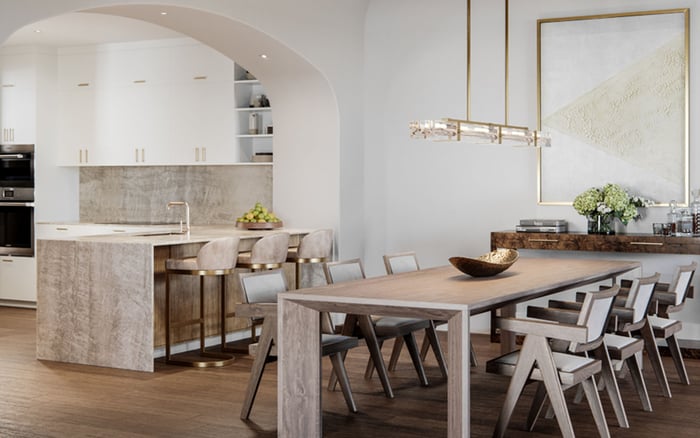
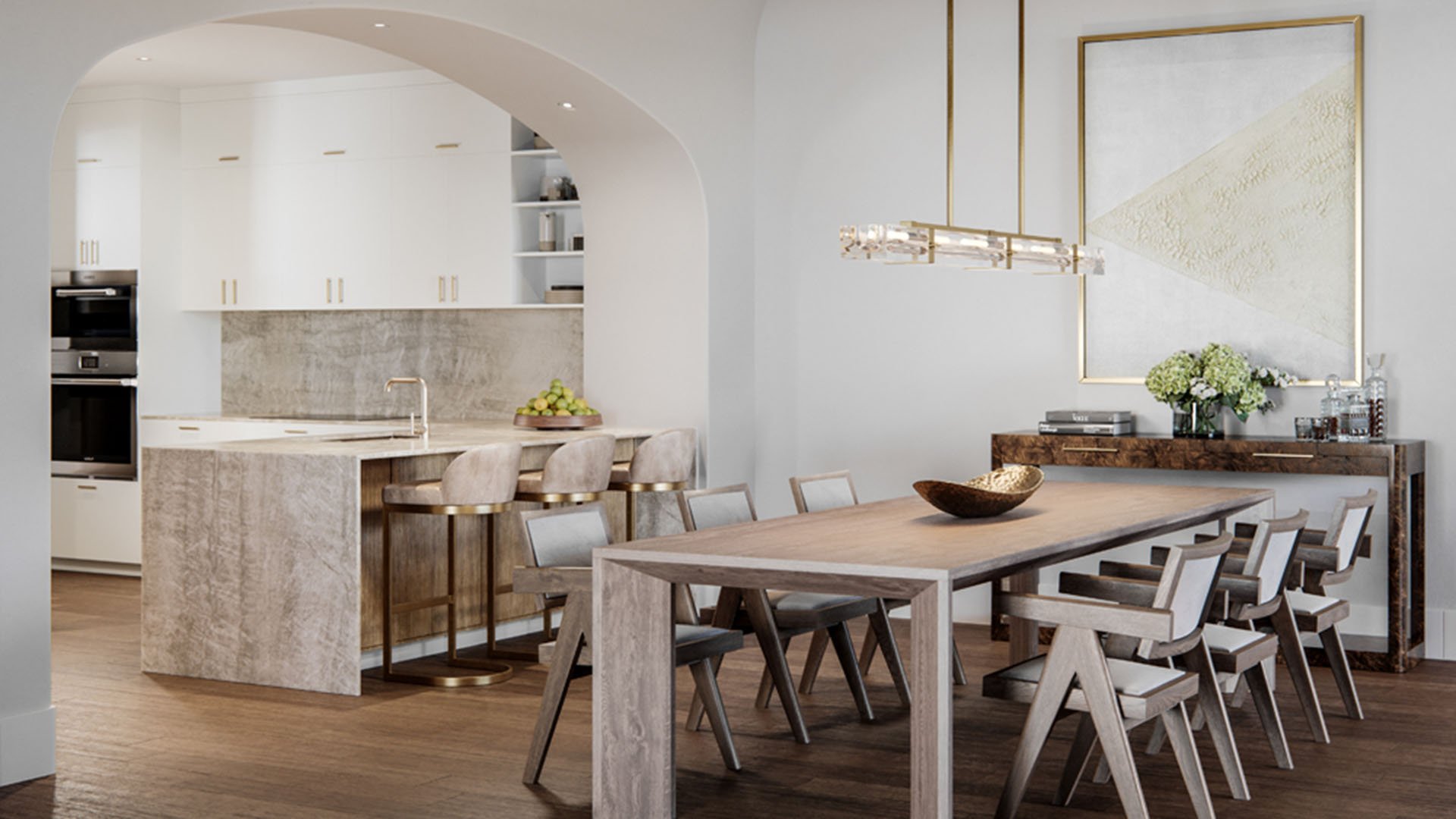
Buyers should look for layouts that avoid wasted space, kitchens that support both private use and catered evenings, terraces that feel usable rather than ornamental, and bedrooms that function as true retreats. A second bedroom or flexible den can be more valuable than grand but inefficient volume. The best plan is the one that makes a short stay feel complete.
Security and privacy are equally central. A winter-season owner may have guests, drivers, household staff, or family arriving at different times. The building must manage that choreography calmly. The residence should feel ready whether the owner is staying for two nights or two weeks.
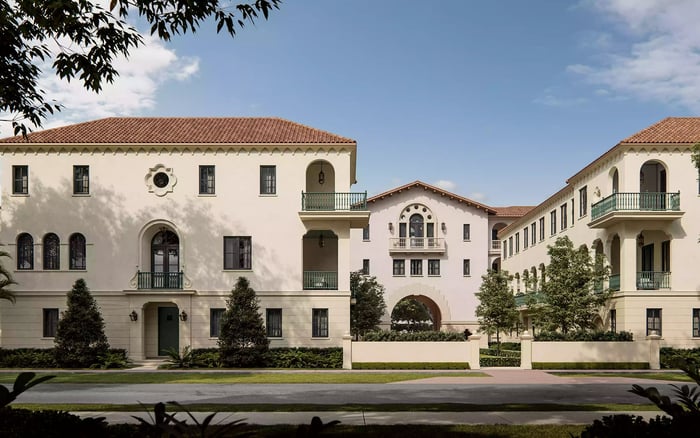
This is where a village-scale concept can be attractive. The Village at Coral Gables offers a useful lens for buyers who want the intimacy of a neighborhood setting rather than the vertical drama of a conventional tower. For a pied-à-terre, the emotional temperature of the address matters.
The obvious seasonal choices are often beach, island, marina, or downtown. Each can be excellent for the right buyer. But winter polo season can expose the limits of choosing purely for scenery. If the owner spends more time moving across the region than sitting in front of the view, the better home may be the one that sits more intelligently within the owner’s calendar.
Coral Gables can also appeal to buyers who want a softer hand. It is polished without being theatrical. It supports dining, wellness, errands, and family time in a way that feels residential rather than performative. For owners who already experience enough visibility in their public lives, that restraint can be valuable.
Still, the best strategy may not be to think in absolutes. A buyer weighing Coral Gables may also compare nearby or complementary urban options such as 2200 Brickell when business access and a more metropolitan rhythm are part of the brief. The point is not to chase every prestige node. It is to define the daily route that matters most and buy accordingly.
A pied-à-terre is often described as a lifestyle purchase, but the most durable examples tend to have strong optionality. They can serve the owner during winter season, accommodate family visits, support extended stays, and remain relevant if the owner’s South Florida pattern changes over time.
That makes Coral Gables interesting for a buyer who is not ready to commit to a large estate but wants more permanence than a hotel suite. The residence can become a seasonal headquarters, a future downsizing option, or a stepping stone toward deeper South Florida ownership.
The discipline is to avoid buying for a fantasy version of the season. A glamorous event calendar is not the same as daily livability. The right pied-à-terre should be beautiful, but it should also be calm, resilient, and easy to operate. During winter polo season, the address that saves an owner an hour, protects privacy, and makes each transition smoother may be the more luxurious purchase.
Why consider Coral Gables for a winter polo-season pied-à-terre? Coral Gables can offer a composed residential base for buyers who want privacy, convenience, and refinement during a busy South Florida season.
Is a pied-à-terre different from a traditional second home? Yes. A pied-à-terre is usually more focused on efficient, selective use, while a traditional second home may be designed for longer stays and broader family living.
What matters most in a seasonal residence? Layout, privacy, service, parking, storage, and ease of arrival often matter as much as views or square footage.
Should buyers prioritize new construction? New construction can be attractive when a buyer wants modern systems, lower maintenance demands, and a more lock-and-leave ownership experience.
How large should a Coral Gables pied-à-terre be? The right size depends on use, but efficiency is crucial. A well-planned smaller residence can outperform a larger home with wasted space.
Is Coral Gables too quiet for seasonal buyers? Not necessarily. Its quieter character can be an advantage for owners who want a calm base between social, sporting, and business commitments.
Can a pied-à-terre still work for entertaining? Yes, if the floor plan supports hosting without compromising the private areas of the residence.
Should buyers compare Coral Gables with Brickell or Miami Beach? Yes. The right comparison depends on whether the buyer values residential calm, business proximity, waterfront living, or nightlife access most.
What is the biggest mistake in buying for winter season? Buying for image rather than actual routine can lead to a residence that feels impressive but inconvenient.
How should a buyer start the search? Begin by mapping the seasonal calendar, expected guests, service needs, and preferred daily routes before focusing on individual buildings.
For a confidential assessment and a building-by-building shortlist, connect with MILLION.
If branded residences are on your mind — as a home or as an allocation — we would be glad to share what we are seeing, privately.
Begin a quiet conversation