A buyer-oriented look at how view-corridor risk can influence waterfront condo value, resale liquidity, carrying confidence, and the true premium paid for a South Florida residence.
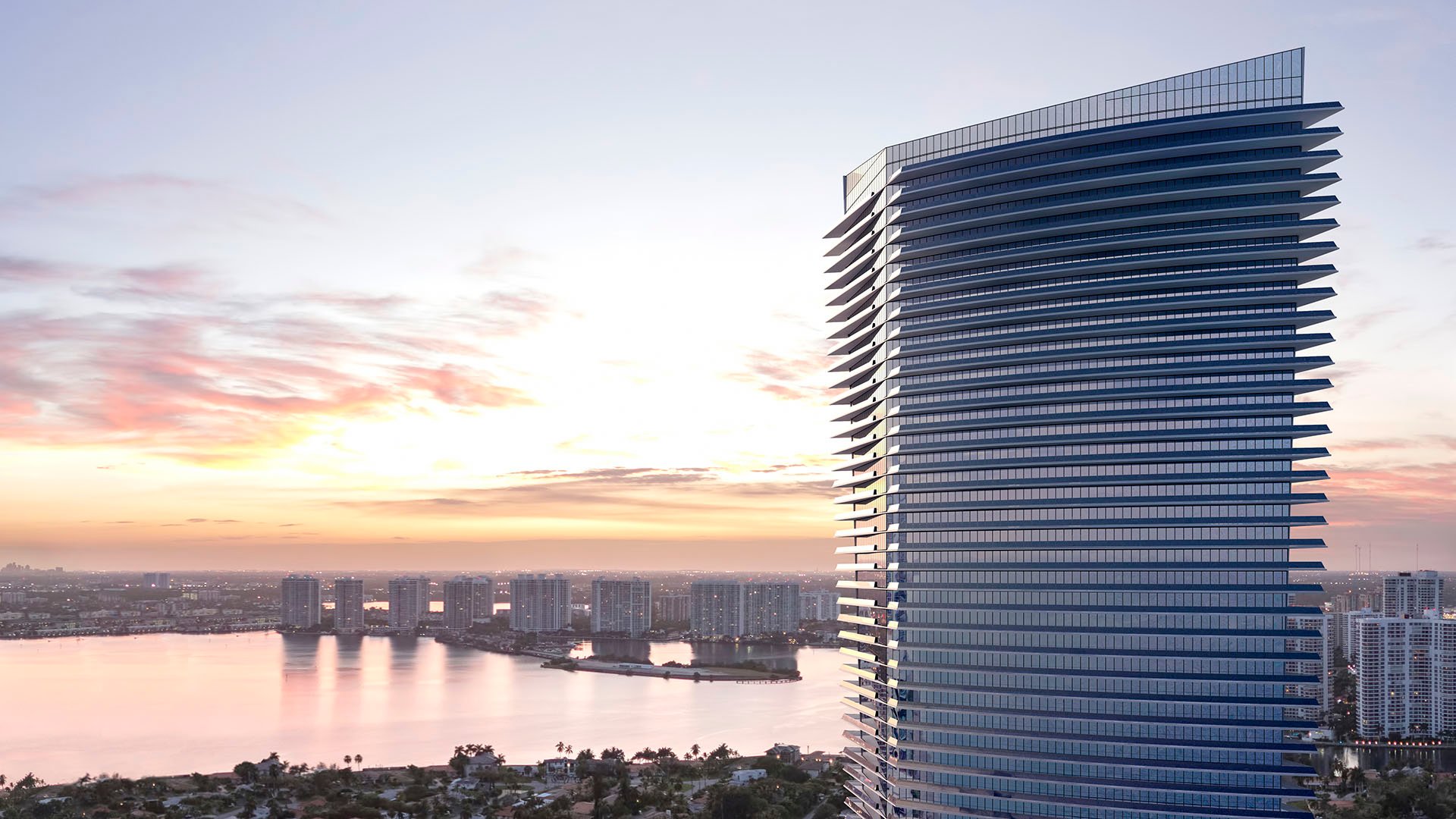
In South Florida luxury real estate, a waterfront condominium is rarely valued by interior finish alone. The floor plan, ceiling height, services, private outdoor space, arrival sequence, and building reputation all matter. Yet for many buyers, the defining asset is the view: ocean, bay, Intracoastal, river, marina, skyline, or a layered composition of water and city.
That view is not simply an amenity. It is a component of price. It shapes how a residence feels in the morning, how it photographs at resale, how guests experience the terrace, and how a future buyer compares it with the next available line. When the view is vulnerable, the real cost of ownership can shift, even if the contract price appears rational on paper.
View-corridor risk is the possibility that a view may be reduced, reframed, or materially changed by future development, nearby redevelopment, marina changes, infrastructure, landscaping, or the vertical massing of a neighboring parcel. For a buyer considering waterfront property, the issue is not whether every view can be guaranteed. It is whether the price properly reflects the durability of the visual asset.
The most obvious cost is aesthetic. A residence purchased for an uninterrupted water panorama may feel different if that panorama later becomes a partial water view between structures. The more important cost, however, is financial. A compromised or uncertain view can influence resale depth, buyer urgency, negotiation leverage, and the number of comparable units competing directly against the property.
A unit with a protected, legible view is easier to explain. A buyer walks in, understands the premium, and can imagine living with it every day. A unit with a beautiful but uncertain view often requires a longer conversation. The future buyer may ask what can be built nearby, what is already approved, what is merely rumored, and whether today’s premium should be discounted for a possible change tomorrow.
That uncertainty can affect liquidity. In a strong market, the best views often attract the cleanest demand. In a more selective market, buyers underwrite risk more carefully. A view that once felt like an emotional advantage may become a diligence item, and diligence items tend to slow decisions.
Pricing & Trends conversations often focus on price per square foot, days on market, or neighborhood momentum. For waterfront condos, that is not enough. The better question is: how much of the price is attributable to the view, and how durable is that view likely to be?
Two residences in the same building may have similar interiors and very different risk profiles. A higher-floor corner with broad exposure may justify a different view premium than a lower residence looking across a parcel that could eventually change. A bayfront unit may offer extraordinary light and water movement, while another line may depend on a narrow angle between neighboring towers. Both can be desirable, but they should not be priced as though the visual asset carries the same risk.
In Brickell, for example, buyers often compare water, skyline, river, and city exposures within a dense vertical environment. A residence at The Residences at 1428 Brickell may be evaluated differently from another Brickell home depending on height, orientation, surrounding parcels, and whether the most important sightline is broad or narrowly threaded. The premium is not simply for being in Brickell. It is for the specific view plane and how convincingly it can be understood.
A useful way to assess view-corridor risk is to sort views into three categories: protected, probable, and speculative.
A protected view is the strongest. It may face open water, a low-rise protected area, a park, or another condition that makes meaningful obstruction less likely. Protection is not always absolute, but the buyer can see a clearer relationship between the residence and the environment beyond the glass.
A probable view is attractive but requires interpretation. The sightline may cross neighboring land, existing structures, marina uses, or an area where future change is plausible. It can still be a superb purchase, but the price should leave room for uncertainty.
A speculative view is the most delicate. It depends on today’s emptiness, a low structure that may not remain low, or an angle that could be affected by a future tower. The risk is not necessarily a reason to walk away. It is a reason to pay with discipline.
In Miami Beach, the calculus can feel different because oceanfront, park-adjacent, and coastal exposures create their own visual hierarchy. A buyer drawn to 57 Ocean Miami Beach may be thinking about sand, horizon, and wellness-oriented coastal living, while another buyer may prioritize skyline drama or bay sunsets elsewhere. Each view type has its own durability questions.
Many buyers assume higher is always safer. Often, higher floors do reduce certain obstruction risks, but height alone is not a complete answer. Orientation matters. So do the distance to neighboring parcels, the width of the view cone, the depth of setbacks, and whether the residence looks over a corridor that is already constrained or one that could evolve.
Lower floors can also be compelling when the view is experiential rather than panoramic. A lower waterfront residence may create a stronger relationship with boats, tree canopies, waves, pool decks, or the life of a marina. The risk is that a lower view may be more sensitive to changes at the property edge. In that case, the buyer should separate lifestyle appeal from long-term defensibility.
For Sunny Isles Beach buyers, tower spacing, ocean orientation, and lateral views can be central to value. A residence near the coastline, such as St. Regis® Residences Sunny Isles, invites a different view analysis from an urban bayfront address. The question is not which is superior. The question is whether the selected exposure justifies the premium being paid.
A sophisticated buyer does not simply ask whether a unit has a view. The buyer asks what kind of view it has, what portion of the price is being paid for it, and what evidence supports that premium.
Negotiation should begin with comps, but comps need adjustment. A recent sale in the same building may not be equivalent if the line, floor, view angle, or neighboring exposure differs. Even two ocean-facing residences can have different desirability if one offers a broad horizontal sweep and the other looks across a tighter corridor.
When risk exists, the buyer may seek a better entry price, a more favorable closing structure, or a larger reserve for future resale uncertainty. The goal is not to punish the seller. It is to avoid paying a protected-view price for a view that is merely probable.
In Edgewater and bayfront Miami, buildings such as Villa Miami demonstrate why buyers study both the immediate water relationship and the broader urban context. In dense waterfront neighborhoods, the most informed buyer treats the skyline and the bay as separate assets, then asks how each might change.
Investment thinking does not remove emotion from a purchase. It protects the buyer from confusing beauty with certainty. A residence can be the right home even if the view carries some risk, provided the price, hold period, and exit expectations align.
A long-term owner may accept more uncertainty if the residence delivers daily pleasure, privacy, services, and a building experience that cannot be easily replicated. A shorter-term owner should be more careful, because any future buyer may revisit the same risk during resale. View questions can become price questions quickly when timing matters.
This is especially true for second-home purchasers who may use the residence seasonally. If the property is held partly for wealth preservation, the view should be underwritten like any other premium feature. Not all premiums are equally liquid.
In West Palm Beach, a waterfront or near-water residence such as Alba West Palm Beach may appeal to buyers who want a calmer relationship between city life and water access. The same discipline applies: understand the line, the outlook, the nearby context, and the premium embedded in the asking price.
Before signing, buyers should ask for a view study that is practical rather than theatrical. Stand in the residence at different times of day. Look from the primary bedroom, the main living area, the kitchen, and the deepest point of the terrace. A spectacular view from one corner may not be the view experienced from daily living spaces.
Study neighboring parcels, current structures, likely redevelopment patterns, and the building’s own stack plan. Ask whether the view is dependent on one open parcel or spread across a broader horizon. Review association materials and available public information with qualified counsel and advisors. If a material portion of the purchase price is tied to the view, the diligence should be equally material.
Finally, compare the subject residence against alternatives that solve the risk differently. A slightly smaller unit with a more durable view may be the better luxury purchase than a larger unit whose premium relies on uncertainty. In South Florida, true value often lies not in the most dramatic view, but in the most enduring one.
What is view-corridor risk? It is the possibility that a residence’s current view may be changed or reduced by future development, redevelopment, or other physical changes nearby.
Does every waterfront condo have view-corridor risk? Every view should be reviewed, but risk varies widely by location, floor height, orientation, and what sits between the residence and the water.
Can a view ever be fully guaranteed? Buyers should be cautious about assuming any view is permanent. Some views are more defensible than others, but diligence remains essential.
How does view risk affect price? It can reduce the premium a buyer should pay today if future obstruction or visual change could affect resale appeal.
Are higher floors always better? Higher floors can help, but orientation, neighboring parcels, and the width of the view corridor can matter just as much.
Is a partial water view still valuable? Yes. A partial water view can be highly desirable when the price, floor plan, light, and building quality are aligned.
Should sellers disclose potential view changes? Disclosure obligations depend on the facts and the transaction. Buyers should rely on qualified legal and real estate guidance.
How should investors treat view premiums? Investors should separate the view premium from the base residence value and consider how easily a future buyer will accept that premium.
Can interior design offset a weaker view? Excellent design helps, but it rarely replaces the pricing power of a strong, durable outlook in a waterfront market.
What is the best first step for a buyer? Start by identifying what portion of the price is tied to the view, then test whether that view is broad, narrow, protected, or uncertain.
To compare the best-fit options with clarity, connect with MILLION.
If branded residences are on your mind — as a home or as an allocation — we would be glad to share what we are seeing, privately.
Begin a quiet conversation