A buyer-focused look at how valet capacity, parking choreography, and arrival logistics can reshape the true carrying cost of a South Florida seasonal residence.

For a seasonal pied-à-terre in South Florida, the purchase price is only the opening number. Buyers typically model association dues, insurance, taxes, club memberships, housekeeping, and travel. Far less attention goes to the choreography at the front drive, where a building’s valet capacity can quietly reshape the real cost of ownership.
In a primary residence, an inconvenient garage routine can become part of the week. In a seasonal home, that friction is concentrated into the most valuable weeks of the year. Every delayed departure for dinner, every difficult guest arrival, and every vendor bottleneck before a weekend in residence draws down the purpose of the property itself. The issue is not merely parking. It is the building’s ability to convert privacy, time, and service into a seamless daily rhythm.
For the ultra-premium buyer, valet capacity should be read as part of the residence’s operating system. It affects how many cars a household can use comfortably, whether visiting family can arrive without friction, how easily a driver can coordinate airport transfers, and how vendors access the home when the owner is away. In the best buildings, the answer feels invisible. In the wrong setting, it becomes a recurring cost paid in time, workarounds, and diminished ease.
Valet capacity is not simply the number of attendants standing at the porte cochere. A strong operation depends on the width and depth of the arrival court, garage circulation, queuing space, guest parking protocols, self-park alternatives, vehicle retrieval systems, and management discipline during peak periods.
A buyer should look beyond the polished first impression. How does the building handle simultaneous dinner departures? What happens when residents, guests, delivery vehicles, chauffeurs, and service providers arrive at the same time? Is there a protected place for a waiting car, or does congestion spill into the street? Can household staff coordinate access without repeated calls to the owner? Are oversized vehicles, EV charging, and long-term seasonal storage handled in a way that matches the building’s price point?
The answer matters because a pied-à-terre is often managed remotely. Owners may arrive after a flight expecting the residence to be opened, stocked, and ready. If vendors struggle to enter, if a car cannot be positioned on time, or if guest arrivals require intervention, the owner becomes the logistics manager of a home purchased to reduce friction.
Seasonal ownership compresses use. A residence may be enjoyed intensely for holidays, winter weekends, school breaks, family visits, and short escapes from the Northeast or abroad. That makes time feel more expensive. A 20-minute inconvenience is not just a delay. It is a larger percentage of a limited stay.
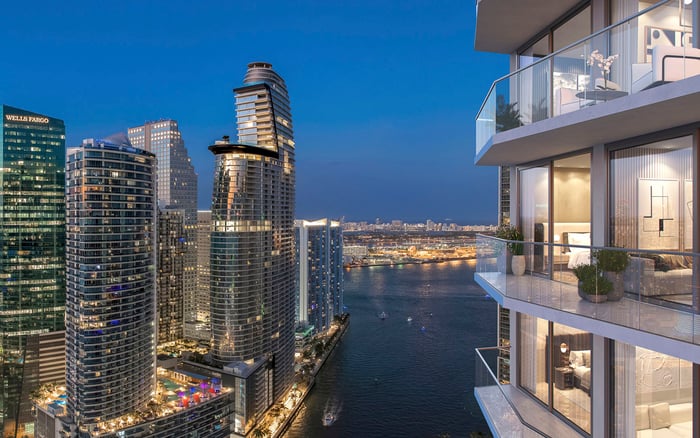
In Brickell, for example, the appeal of a pied-à-terre is often built around walkability, dining, business access, and a lock-and-leave lifestyle. Yet many owners still rely on cars for airport transfers, club visits, school trips, medical appointments, and evenings beyond the neighborhood. At a vertical address such as The Residences at 1428 Brickell, buyers should consider parking and arrivals part of the same luxury equation as views, wellness spaces, and private amenities.
The same logic applies across Miami Beach, Sunny Isles Beach, Fort Lauderdale, and Palm Beach County. Seasonal households often host overlapping guests. Adult children may arrive separately. A chef, housekeeper, florist, dog walker, or yacht crew member may need access. The building that can absorb those movements without making them feel like a favor has a meaningful advantage.
Different South Florida markets create different forms of valet pressure. In Miami Beach, constrained sites and destination traffic can make arrival design especially important. A buyer considering The Perigon Miami Beach should evaluate how beach access, visiting friends, and household vendors will intersect at peak times, not only how the residence lives once inside the front door.
In Sunny Isles Beach, oceanfront towers often serve families who arrive for extended seasonal stays. Multiple vehicles, relatives, nannies, drivers, and beach-day logistics can all converge at the lobby. For buyers studying Bentley Residences Sunny Isles, the parking conversation belongs alongside privacy, elevator experience, and the convenience of moving from residence to car without ceremony.
Fort Lauderdale introduces another layer: boating, beach access, events, and airport convenience. At St. Regis® Residences Bahia Mar Fort Lauderdale, the buyer’s question is not only whether the building has a graceful arrival, but whether that arrival can remain graceful when residents are moving between land, water, dining, and travel.
West Palm Beach and Palm Beach buyers may think less about density and more about weekend guests, club schedules, cultural evenings, and quick trips. A residence such as Alba West Palm Beach should be examined through the lens of how smoothly it supports a household that may be present intermittently but expects full-service readiness every time.
The first cost is time. If the building struggles during peak hours, owners compensate by calling cars early, waiting downstairs, using rideshare or private drivers more often, or adjusting plans around the building’s operational limits. None of those costs may appear in the offering documents, but they shape the lived price of the home.
The second cost is vehicle strategy. A seasonal owner may choose to keep a car in the building, ship a vehicle seasonally, rely on a driver, rent when needed, or avoid ownership entirely. Valet capacity influences each choice. A building with dependable service can make car ownership feel effortless. A constrained one can make even a modest vehicle routine feel overbuilt.
The third cost is household management. When arrivals are complicated, staff time increases. Housekeepers, assistants, property managers, and vendors spend more effort coordinating access. The owner may pay directly through service bills or indirectly through added oversight. For a second-home buyer who values discretion, that hidden managerial burden can be more irritating than the financial cost.
The fourth cost is investment confidence. Future buyers will not evaluate only floor plans and finishes. They will also judge whether the building lives at the level implied by its price. A residence with a beautiful lobby but a strained arrival sequence may face harder questions at resale than a comparable home with more fluid service design.
A serious buyer should test the valet experience the way one tests light, ceiling height, terrace depth, and water views. Visit during high-use periods when possible. Watch how cars queue. Notice whether the staff appears calm or reactive. Observe how guests are received and whether the front drive feels like a private threshold or a traffic problem.
Ask direct questions about resident parking rights, guest parking, overnight guests, vendor access, EV charging, oversized vehicles, and seasonal storage. Clarify whether there is a self-park option, how retrieval requests are handled, and what procedures exist for peak holidays or building events. If the residence will be rented or lent to family, understand how access is controlled and whether the rules preserve both convenience and security.
Just as important, match the building to the household’s actual lifestyle. A couple that walks to dinner and uses a driver may need less capacity than a family with three visiting children and frequent guests. A buyer with a yacht, dogs, household staff, and regular entertaining will experience the arrival court very differently from an owner who visits quietly for long weekends.
South Florida’s best seasonal residences succeed because they make complexity feel effortless. The owner lands, arrives, steps inside, and begins living. That simple sequence depends on many things rarely photographed in marketing materials: driveway geometry, staff training, parking depth, elevator coordination, vendor protocols, and management culture.
Valet capacity is therefore not a minor operational detail. It is a proxy for how seriously a building understands service. For a seasonal pied-à-terre, the true premium is not only the view from the terrace. It is the confidence that the home will work beautifully during the few weeks when it matters most.
Why does valet capacity matter for a seasonal pied-à-terre? Seasonal owners use the home during compressed, high-value periods, so small delays can have an outsized effect on comfort and convenience.
Is valet capacity only about the number of parking spaces? No. It includes arrival court design, staffing, garage flow, retrieval systems, guest rules, and vendor access.
Should I ask about valet before making an offer? Yes. Parking and arrival operations should be part of diligence, especially in full-service luxury buildings.
Does this matter more in Brickell or Miami Beach? It can matter in both, though the pressure points differ. Brickell may involve vertical density, while Miami Beach may involve destination traffic and constrained sites.
How can valet affect my annual ownership cost? It can influence driver use, car storage decisions, staff coordination, guest management, and the value of your own time.
Is self-parking better than valet? It depends on the household. Some owners prefer control, while others value a fully serviced arrival and departure experience.
What should frequent hosts ask about? Ask how overnight guests, dinner guests, family members, and service providers are handled during busy periods.
Can valet operations affect resale? Yes. Buyers at the high end often remember whether a building feels effortless from the moment they arrive.
What if I rarely keep a car in South Florida? Valet still matters for airport pickups, guest arrivals, vendors, rental cars, and private drivers.
What is the best sign of a strong valet operation? Calm, predictable service during peak moments is the clearest indication that the building’s systems are working.
For a tailored shortlist and next-step guidance, connect with MILLION.
If branded residences are on your mind — as a home or as an allocation — we would be glad to share what we are seeing, privately.
Begin a quiet conversation