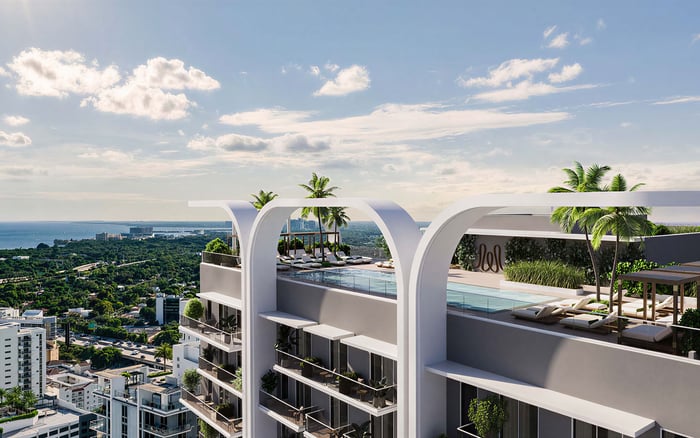
A buyer-focused framework for evaluating completed South Florida condominium towers with equal attention to physical certainty, insurance exposure, HOA economics, and the lived experience of daily ownership.

For many South Florida luxury buyers, a completed condominium tower offers a powerful form of reassurance. The lobby exists. The view can be walked. The elevator ride, garage sequence, amenity flow, and morning light are no longer renderings or promises. In a market where timing, construction risk, and delivery expectations matter, that tactile certainty has real value.
Yet completion should be the beginning of underwriting, not the end. A finished tower allows a buyer to test the residence against actual conditions, but it does not remove the need to evaluate insurance, association economics, governance quality, reserve discipline, service culture, and the practical rhythm of daily use. The most confident acquisition is not simply the one that feels complete. It is the one whose operating profile can withstand scrutiny.
Completed-tower confidence is a layered question: What can be physically verified, what must be financially modeled, and what will be experienced every day by the owner, family, guests, and staff?
A completed tower can reduce several uncertainties. Buyers can inspect finishes, sound transfer, corridor widths, valet performance, loading access, pool exposure, gym capacity, and the true relationship between the residence and its surroundings. The buyer is no longer relying solely on floor plans, sample materials, or staged assumptions.
This matters across segments. In Brickell, the question may be whether vertical living feels effortless despite density. In Miami Beach, a buyer may be more focused on privacy, beach access, service discretion, and the way the building handles peak seasonal occupancy. In Sunny Isles, sightlines, approach, elevator privacy, and resort-style amenities may carry more weight. Oceanfront ownership adds another dimension, because exposure, maintenance, and service expectations are inseparable from proximity to the water.
Still, completion does not guarantee financial elegance. A building can show beautifully and still carry rising insurance costs, association fee pressure, deferred maintenance issues, or operational friction. The prudent buyer separates emotional certainty from economic certainty.
Insurance is often discussed as a cost, but sophisticated buyers should treat it as a signal. It can reveal how the building is perceived from a risk standpoint, how the association manages coverage, and how ownership costs may behave over time. The premium itself is only part of the conversation. Deductibles, exclusions, coverage structure, claims history, and the association's approach to risk management all deserve attention.
For an ultra-premium buyer, the question is not merely whether insurance exists. The question is whether the insurance framework aligns with the value and complexity of the asset. A high-service tower with extensive amenities, water exposure, mechanical systems, and shared spaces requires more than a superficial review. The buyer should understand what the association insures, what the unit owner must insure separately, and how potential assessments might be handled if coverage does not fully absorb a future event.
Private insurance for the residence should also be considered early, especially for owners with art, wine, custom furnishings, staff use, or frequent travel. A completed tower lets buyers identify practical exposure points, including balcony use, storage, garage areas, and service corridors, before binding coverage.
Association fees are not simply monthly carrying costs. They are the economic expression of the building's service promise. In luxury towers, fees may support staffing, security, concierge, valet, amenity maintenance, landscaping, management, utilities, reserves, and ongoing operational quality. A low number can be less attractive if it understates the true cost of maintaining the property at the standard buyers expect.
The right analysis asks what the fee buys, whether the budget appears realistic, and how the association has handled prior adjustments. Buyers should review current budgets, reserve practices, pending capital projects, owner delinquency levels when available, litigation disclosures, meeting materials, rules, and any special assessments under discussion. The goal is not to find a building with no expense pressure. The goal is to understand whether the tower is governed with discipline and whether owners are funding the lifestyle they are consuming.
Resale buyers should be especially attentive. In a resale setting, there may be more operating history to examine, which can be an advantage when the buyer and advisory team read it carefully. In a new-construction context that has recently delivered, early budgets may still be settling into real-world patterns. Neither is inherently superior. Each demands a different underwriting posture.
The most elegant residence can disappoint if daily life is cumbersome. Completed towers offer the rare chance to test the choreography of ownership. Where does the driver wait? How intuitive is guest arrival? Does the elevator system support privacy during peak periods? Is the package room discreet and efficient? Can staff enter and work without disrupting the family? Does the pool feel serene at the hours the owner will actually use it?
Daily use is not a soft factor. It directly affects retention, satisfaction, and liquidity. A buyer purchasing for seasonal use may care about lock-and-leave procedures, arrival protocols, storage, housekeeping access, and building communication. A full-time resident may prioritize school runs, dog walking, grocery delivery, private elevator timing, wellness amenities, and the ease of hosting. An investor-minded owner may focus on rules, rental policies, wear patterns, and how the building preserves value through consistent operations.
Touring a completed tower only at a quiet hour can be misleading. A second visit during a busier period may reveal a more accurate picture of the building's rhythm. The best underwriting includes both the polished presentation and the ordinary day.
Luxury condominium ownership is communal ownership. Even the most private residence depends on the association's competence and the culture of the owner body. Governance quality can determine whether a tower remains polished, whether disputes are contained, and whether capital needs are addressed before they become disruptive.
Buyers should read rules not as boilerplate, but as a portrait of the building's priorities. Pet policies, contractor rules, guest procedures, rental restrictions, renovation protocols, noise standards, amenity reservations, and service access all influence the lived experience. A rule that seems minor during purchase can become central once the owner begins using the residence.
Culture matters as well. Some towers feel formal and discreet. Others are social, resort-like, or highly seasonal. A buyer seeking quiet permanence may not value the same environment as a buyer who wants energy, hospitality, and visible amenity life. Completed towers allow that culture to be observed rather than imagined.
A disciplined buyer should approach a completed tower with a structured checklist. First, confirm the physical condition of the residence and common areas, including systems, waterproofing indicators, windows, doors, terraces, mechanical spaces, and amenity wear. Second, review the association's financial materials, insurance framework, reserves, rules, and disclosures with qualified advisors. Third, test the residence against daily use: parking, elevator timing, staff access, deliveries, guest flow, pets, storage, and security.
Fourth, model ownership costs beyond the purchase price. Include association fees, private insurance, property taxes, maintenance, furnishings, staffing, seasonal preparation, and potential assessments. Fifth, evaluate exit logic. Even if the purchase is lifestyle-driven, the next buyer will ask the same questions about insurance, fees, governance, and daily use.
The strongest completed-tower acquisition is not necessarily the newest, tallest, or most dramatic. It is the one where the buyer understands the building as both an architectural object and an operating enterprise.
South Florida buyers are increasingly precise. They want beauty, but they also want control. They want service, but not operational opacity. They want immediacy, but not at the expense of long-term flexibility. Completed towers can meet that standard beautifully when the visible asset and the invisible structure are both sound.
The central discipline is simple: admire the view, then underwrite the building. Walk the lobby, then read the budget. Experience the amenities, then examine the rules. Feel the privacy, then test the arrival sequence. In the best acquisitions, romance and rigor do not compete. They reinforce one another.
Why do completed towers appeal to luxury buyers? They allow buyers to experience the residence, amenities, views, and service flow as they actually exist before committing.
Does completion remove construction risk entirely? It reduces delivery uncertainty, but buyers still need to examine condition, governance, insurance, and costs.
How should a buyer think about HOA fees? HOA fees should be evaluated as the cost of maintaining the building's service level, not simply as a monthly bill.
Why is insurance so important in South Florida condos? Insurance can affect carrying costs, assessment exposure, and the long-term economics of ownership.
Is a lower HOA fee always better? Not necessarily. A low fee may be attractive, but only if the building is still adequately staffed, maintained, and reserved.
What should buyers test during a completed-tower tour? They should test arrival, parking, elevators, amenity use, staff access, deliveries, noise, and privacy.
How does daily use affect resale value? Residences that live easily tend to be easier to explain, enjoy, and reposition when it is time to sell.
Should seasonal owners underwrite differently? Yes. They should emphasize lock-and-leave procedures, building communication, storage, maintenance, and arrival readiness.
What role do condo rules play in underwriting? Rules shape renovation flexibility, guest access, rentals, pets, staff movement, and the overall culture of the tower.
What is the best definition of completed-tower confidence? It is confidence built from physical verification, financial review, governance quality, and lived practicality.
For a discreet conversation and a curated building-by-building shortlist, connect with MILLION.
If branded residences are on your mind — as a home or as an allocation — we would be glad to share what we are seeing, privately.
Begin a quiet conversation