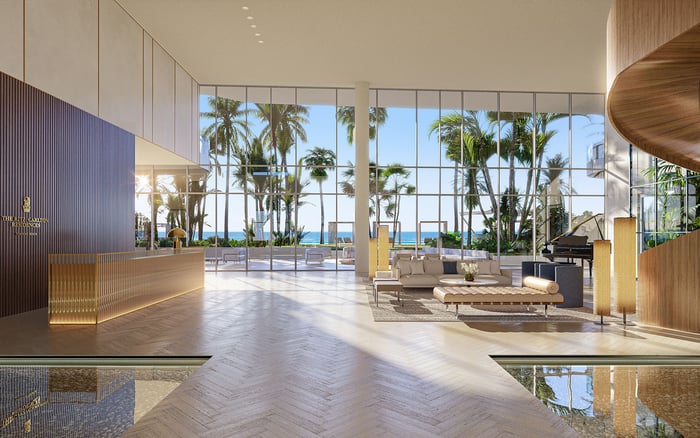
A private showing is the moment to test whether two serious work lives can coexist in one residence. This guide frames the questions, observations, and discreet stress tests that help luxury buyers evaluate acoustics, privacy, light, power, storage, outdoor access, and household flow before making an offer.
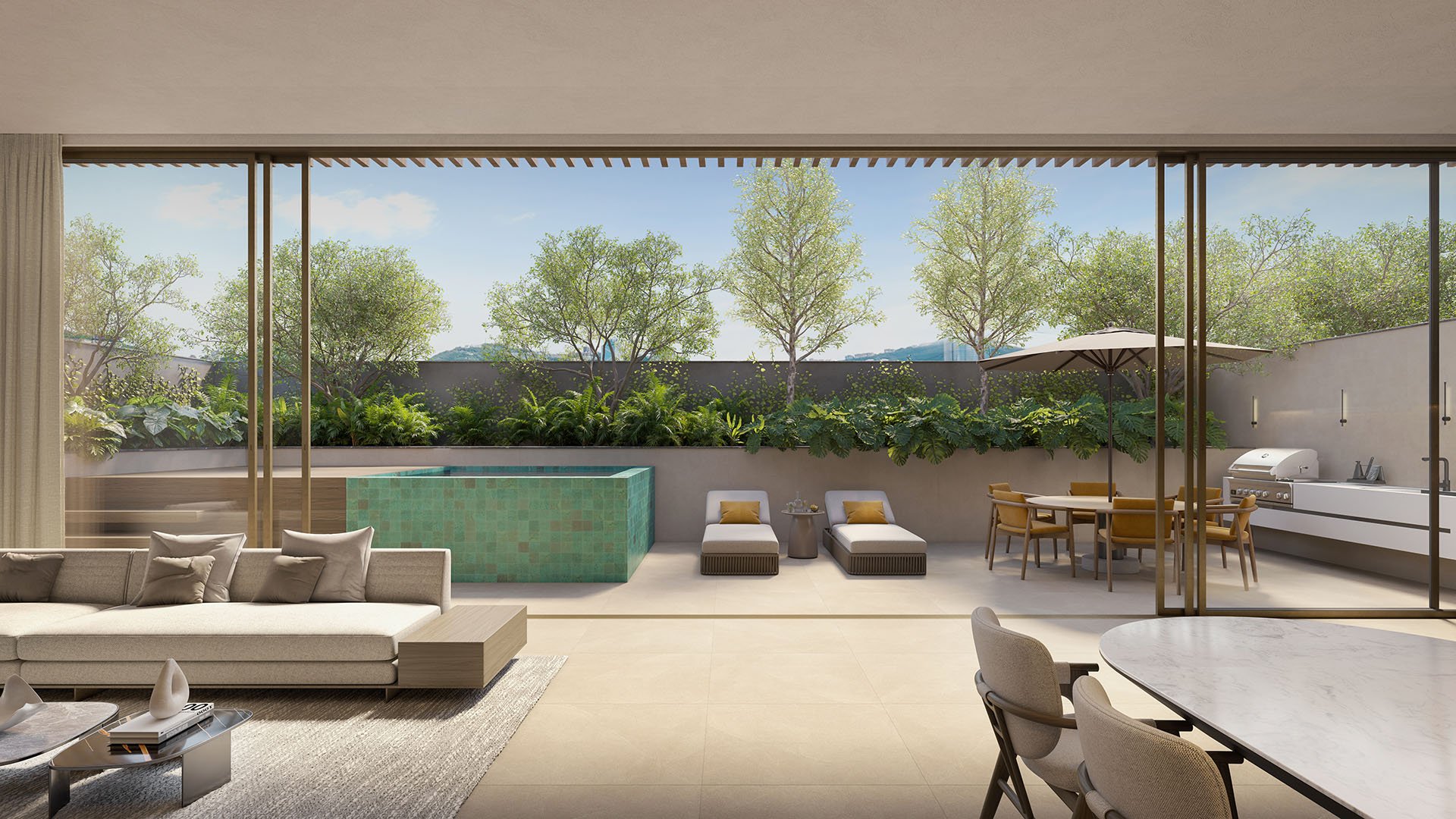
For many South Florida buyers, the home office is no longer a secondary convenience. It is a daily operating room for capital decisions, confidential calls, creative work, board conversations, and family logistics. When two people work seriously from the same residence, the standard becomes more exacting: the home must support two simultaneous work rhythms without turning privacy into negotiation.
A private showing is the rare moment when a buyer can move beyond beauty. Finishes, view corridors, ceiling heights, and furniture plans may be immediately legible, but the performance of dual offices is subtler. It is heard in the quiet after a door closes, seen in the way afternoon light hits a screen, felt in the distance between a video call and the kitchen, and revealed by the route a guest or staff member must take through the home.
Approach the showing as a controlled rehearsal. Bring the devices you actually use, not just a phone. Walk the residence as two professionals with separate demands. One office may require absolute silence and a composed background. The other may need collaborative energy, fast access to family spaces, or room for samples, documents, and monitors. The best layout is not always symmetrical. It is the one that lets both occupants work at full capacity without compromise.
Evaluate acoustics before furniture placement seduces the eye. Begin with doors closed. Have one person speak at normal call volume inside the first office while the other stands in the adjacent room, corridor, bedroom, and second office location. Then reverse the test. Listen for words, not just noise. A low murmur may be acceptable. Distinct language usually is not.
Pay attention to shared walls, pocket doors, glass partitions, air-conditioning returns, and open stair volumes. In expansive residences, sound can travel in unexpected ways through galleries, double-height rooms, and hard-surface corridors. A handsome library near the main living room may photograph beautifully but fail during a lunch meeting, piano lesson, or evening gathering.
If both offices are near bedrooms, test whether early calls or late international meetings will disturb rest. If one office faces an elevator foyer, service entry, or family room, consider whether that exposure aligns with the work being done there. Privacy is not only visual. It is acoustic discretion.
South Florida light is an asset until it becomes a workday obstacle. During the showing, place a laptop or tablet where each desk would realistically sit. Check the screen from seated height. Rotate slightly and observe whether water views, sunset exposure, reflective neighboring glass, or bright terraces create glare.
Ask how each room feels at different times of day. A morning-facing office may energize one person and exhaust another. A west-facing workspace can become dramatic in the late afternoon but visually difficult for video calls or detailed screen work. Window treatments matter, but they should not be expected to solve every problem. The stronger office has a natural balance of daylight, shade, and controllability.
Background is part of the light test. On camera, a view can read as elegance or as overexposure. A wall of art, millwork, or calm shelving may offer more authority than a full glass backdrop. If one office will host frequent video meetings, sit in the likely chair position and open the camera. The room should flatter the person using it without requiring constant adjustment.
The phrase dual home offices can mean many things. It may mean two enclosed rooms, one formal study plus one flexible den, or a primary office supported by a discreet secondary niche. The showing should clarify whether the arrangement is truly independent.
Walk the commute between both work zones. If one person must pass through the other’s office to reach a printer, terrace, storage, powder room, or coffee station, the layout may erode quickly under daily use. If both offices rely on the same small support area, test the pinch points. Two people preparing for calls at the same time can expose weaknesses that are invisible during a quiet tour.
Use clear shorthand for your priorities: commute convenience, outdoor pause, deeper open air, amenity proximity, or vertical privacy. The words matter less than the discipline behind them. Each residence should be evaluated against how your household actually works, not how a floor plan suggests it might.
Luxury buyers often notice stone, millwork, and appliance packages first. For dual offices, the invisible infrastructure is just as consequential. Count outlets from the seated desk position. Consider where monitors, chargers, lighting, docking stations, shredders, routers, and backup equipment would live without visible clutter.
Open closets and built-ins. A beautiful office with no concealed storage often becomes a temporary staging area for files, packaging, cables, and personal items. If the second office is a den or guest room, ask whether storage can be dedicated to work without compromising overnight guests.
Also consider the location of mechanical sound, housekeeping movement, and deliveries. A service corridor beside an office may be convenient, but it may also introduce interruption. A desk near the entry sequence may be visually impressive, yet too exposed for confidential work. In refined residences, the right office supports concentration while remaining composed when the door is open.
A dual-office home must work when life is in motion. During the showing, map a realistic weekday. Where do children arrive after school? Where does a private chef, housekeeper, assistant, trainer, or visiting family member move? Where does a dog bark, a package arrive, or a guest wait before dinner? These everyday moments determine whether the offices remain protected.
If one office is close to the primary suite, it may offer privacy but blur the boundary between work and rest. If another is near the kitchen, it may offer convenience but invite interruption. Neither is automatically wrong. The question is whether the location suits the person assigned to it.
Outdoor space deserves similar scrutiny. A nearby terrace can provide a restorative pause between calls, but it should not become a route that others use constantly. A balcony off an office can be an advantage if it is private, shaded, and separate from entertaining circulation. The finest arrangements make work feel supported, not confined.
Before leaving, stand in each proposed office for a few quiet minutes. Imagine a high-stakes call, a full inbox, a spouse working simultaneously, and activity elsewhere in the residence. The test is not whether the home can contain two desks. It is whether it can protect two professional identities.
Ask which room gets priority for silence, which needs the stronger video backdrop, which requires more storage, and which can tolerate proximity to family life. Ask whether the layout still works if one person changes roles, travels less, hires support, or begins taking earlier calls. A strong dual-office residence has resilience. It should adapt gracefully as schedules, teams, and habits evolve.
The most successful private showing ends with clarity. Not every beautiful room is a good office, and not every office needs to be grand. In South Florida luxury real estate, the new measure is precision: a home that can host the view, the family, the amenities, and the workday without friction.
Should both home offices be enclosed rooms? Ideally, at least one should be fully enclosed for confidential calls. The second may be flexible if acoustics, storage, and visual privacy are strong.
What is the first thing to test during a showing? Start with sound. A visually perfect office can fail quickly if voices carry into bedrooms, living areas, or the second workspace.
How do I test lighting without staying all day? Use a laptop camera and screen from the intended desk position. Ask how the room behaves in morning, midday, and late afternoon light.
Is a den acceptable as a second office? Yes, if it can support real work without constant conversion. Confirm doors, power, storage, and privacy before treating it as equal to a study.
Should offices be close together or separated? Separation often helps with simultaneous calls, but convenience matters. The right answer depends on each person’s work style and household flow.
What should I bring to the private showing? Bring a laptop, phone, charger, and any device you use for video calls. Real equipment reveals issues that a casual walkthrough can miss.
How important is the video call background? Very important for buyers who host frequent client, board, or investor calls. Test the camera view from the actual seated position.
Can outdoor space improve a home office? Yes, if it offers a quiet reset without creating traffic through the workspace. Privacy and shade matter as much as the view.
What is a common mistake buyers make? They count rooms instead of testing performance. Two attractive rooms do not always equal two functional offices.
When should I raise office concerns with my advisor? Raise them during or immediately after the showing, while the sensory details are fresh. A thoughtful advisor can help separate fixable issues from structural limitations.
When you're ready to tour or underwrite the options, connect with MILLION.
If branded residences are on your mind — as a home or as an allocation — we would be glad to share what we are seeing, privately.
Begin a quiet conversation